Kirjojen hintavertailu. Mukana 12 390 323 kirjaa ja 12 kauppaa.
Kirjailija
Leslie W. Kennedy
Kirjat ja teokset yhdessä paikassa: 11 kirjaa, julkaisuja vuosilta 1998-2019, suosituimpien joukossa Risk Balance and Security. Vertaile teosten hintoja ja tarkista saatavuus suomalaisista kirjakaupoista.
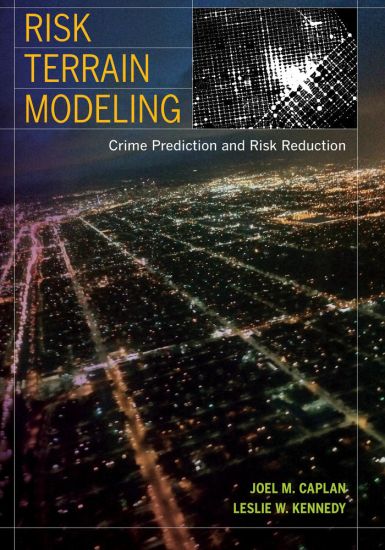
Imagine using an evidence-based risk management model that enables researchers and practitioners alike to analyze the spatial dynamics of crime, allocate resources, and implement custom crime and risk reduction strategies that are transparent, measurable, and effective. Risk Terrain Modeling (RTM) diagnoses the spatial attractors of criminal behavior and makes accurate forecasts of where crime will occur at the microlevel. RTM informs decisions about how the combined factors that contribute to criminal behavior can be targeted, connections to crime can be monitored, spatial vulnerabilities can be assessed, and actions can be taken to reduce worst effects. As a diagnostic method, RTM offers a statistically valid way to identify vulnerable places.
Work on risk has developed into a large industry applied in a variety of ways and locations. Here we locate crime research in the overall interdisciplinary study of risk and begin to address how risk can be used as a key element in our understanding of crime origins, evolution and prevention. We investigate how risk has been dealt with in crime theories and the usefulness of this concept in connecting crime perspectives together; we consider the ways in which risk is embedded in the evolution of crime; and how we might use the concept of risk to prevent crime and victimization. Using the criminal event perspective, we tie together risk with crime theories in a coherent fashion. Further, we explore how these ideas work in practical applications of crime control and prevention. The implicit notion of risk assessment practiced by police is explored and made explicit in our treatment of this topic in our last chapter. We believe that the increased interest in risk demands that we have a clearer idea of how it works within crime theories and how it can be successfully employed in improving police practice, providing the tools to act proactively on good intelligence and carefully thought out strategies.
Work on risk has developed into a large industry applied in a variety of ways and locations. Here we locate crime research in the overall interdisciplinary study of risk and begin to address how risk can be used as a key element in our understanding of crime origins, evolution and prevention. We investigate how risk has been dealt with in crime theories and the usefulness of this concept in connecting crime perspectives together; we consider the ways in which risk is embedded in the evolution of crime; and how we might use the concept of risk to prevent crime and victimization. Using the criminal event perspective, we tie together risk with crime theories in a coherent fashion. Further, we explore how these ideas work in practical applications of crime control and prevention. The implicit notion of risk assessment practiced by police is explored and made explicit in our treatment of this topic in our last chapter. We believe that the increased interest in risk demands that we have a clearer idea of how it works within crime theories and how it can be successfully employed in improving police practice, providing the tools to act proactively on good intelligence and carefully thought out strategies.
In confronting risk, individuals and all agencies cannot simply respond with endless resources in mitigating the damage that hazards engender—they have to establish a balance. Risk Balance and Security combines the conceptual underpinnings of risk assessment and management at both the individual and agency level with a clear analysis of how these relate to challenges faced in responding to crime, terrorism, public health threats, and environmental disasters. With a new understanding of how decisions are made about threats and hazards, and how this understanding may be applied in our preparedness, prevention, and response strategies, we will be able to better conceptualize our task for enhancing security in the future. Key Features Links theoretical ideas with real world examples: Clear discussions are presented of how risk is constructed in modern society and why that is important in our efforts to develop strategies to enhance security. Provides an interdisciplinary treatment of risk: To capture the realities facing public security today, ideas are drawn from a number of different disciplines. Illustrates real applications of solutions to security problems: Students are shown how agencies are dealing with specific threats to security. Compares individual-level and institutional-level assessments of risk and security: These divergences enable readers to appreciate the complexities of establishing security. Intended Audience This is an excellent text for undergraduate and graduate courses such as Disaster Research, Security, Police Studies, Emergency Planning, and Crime and Public Policy in the departments of criminology, criminal justice, political science, and public health.
In confronting risk, individuals and all agencies cannot simply respond with endless resources in mitigating the damage that hazards engender—they have to establish a balance. Risk Balance and Security combines the conceptual underpinnings of risk assessment and management at both the individual and agency level with a clear analysis of how these relate to challenges faced in responding to crime, terrorism, public health threats, and environmental disasters. With a new understanding of how decisions are made about threats and hazards, and how this understanding may be applied in our preparedness, prevention, and response strategies, we will be able to better conceptualize our task for enhancing security in the future. Key Features Links theoretical ideas with real world examples: Clear discussions are presented of how risk is constructed in modern society and why that is important in our efforts to develop strategies to enhance security. Provides an interdisciplinary treatment of risk: To capture the realities facing public security today, ideas are drawn from a number of different disciplines. Illustrates real applications of solutions to security problems: Students are shown how agencies are dealing with specific threats to security. Compares individual-level and institutional-level assessments of risk and security: These divergences enable readers to appreciate the complexities of establishing security. Intended Audience This is an excellent text for undergraduate and graduate courses such as Disaster Research, Security, Police Studies, Emergency Planning, and Crime and Public Policy in the departments of criminology, criminal justice, political science, and public health.
This book provides all the information you need to get started with Operation Safe Surroundings (OpSS) in your jurisdiction. This evidence-based violence prevention strategy will help you reduce crime and enhance public safety. OpSS is an effective and sustainable approach to problem-solving that: Maximizes existing resources to focus on places and people with the greatest needs; Balances policing and law enforcement tactics with all other options; and, Establishes a data-driven and transparent process for crime prevention and meaningful community engagement. This book is intended for police and other public safety practitioners, elected officials, community stakeholders, non-profit organization leaders, and anyone else interested in sharing the burden of public safety.
Risk-based policing is a research advancement that improves public safety, and its applications prevent crime specifically by managing crime risks. In Risk-Based Policing, the authors analyze case studies from a variety of city agencies including Atlantic City, New Jersey; Colorado Springs, Colorado; Glendale, Arizona; Kansas City, Missouri; Newark, New Jersey; and others. They demonstrate how focusing police resources on risky places and basing police work on smart uses of data can address the worst effects of disorder and crime while improving community relations and public safety. Topics include the role of big data; the evolution of modern policing; dealing with high-risk targets; designing, implementing, and evaluating risk-based policing strategies; and the role of multiple stakeholders in risk-based policing. The book also demonstrates how risk terrain modeling can be extended to provide a comprehensive view of prevention and deterrence.
This brief focuses on translational criminology practices as they relate to counter-terrorism and homeland security. The work provides a detailed and practical examination of how global threats (such as, terrorism and cybercrime) are managed through local response. It covers emerging strategies in data collection procedures, inter-agency cooperation, and new analytical techniques including risk-terrain modeling. In addition, it presents a common methodology, including steps in risk assessment, risk management, and decision-making, that can be used to frame and analyze global and local threats. The authors examine these issues using examples of how law enforcement responded to specific security threats including the 2013 Boston Marathon bombings, the 2003 terrorist attack in Istanbul, Turkey, and the 2010 Stuxnet attack on the Natanz nuclear facility in Iran. This work expands on existing literature covering the impact that globalization has on cross national threats, drawing on disciplines related to criminology, such as international relations and political science.
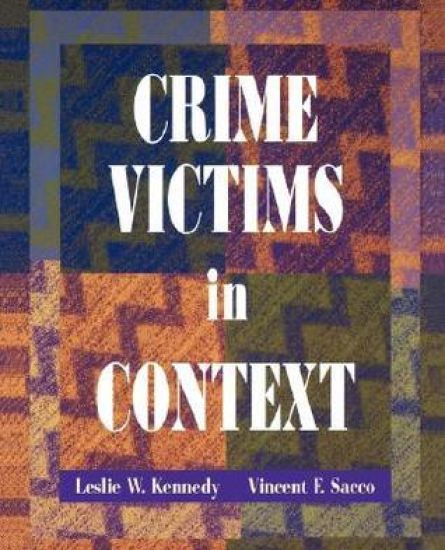
This is the most up-to-date and thought-provoking undergraduate text on the controversial topic of victimology available. It features a lively, engaging writing style. Designed for the American college and university market, this book is groundbreaking in its integrated approach to the study of society's crime victims and the forces that influence their victimization. This approach eases instruction by encouraging students to engage in critical thinking about victims--helping students understand how victimization relates to the social context in which victims live. Crime Victims in Context explores the following themes: * Ways in which the victim role is constructed in the media, in public discourse, and in political responses to crime. This sets the stage for rethinking the meaning of victimization.* Approaching victimization as a social event--the social exchanges, or transactions, between victim and offender.* An exploration of the aftermath of crime--examining the effects of crime on the victim, including the physical and socio-emotional costs of victimization.* Responses by the criminal justice system in the adjudication of offender guilt as well as victim support groups. Coverage includes both sides of such controversial issues as fear of crime, victim blaming, the "abuse excuse," white-collar victimization, and restorative justice. The discussion of culture and the discussion of victims and victimization as moral stratification are innovative features of this text. There is extensive treatment of victimization theories and a review of data-collection procedures used in collecting information about victimization. Numerous examples drawn from real life and recent research serve to illustrate points throughout the book. Internet references are also included.