Kirjojen hintavertailu. Mukana 12 657 676 kirjaa ja 12 kauppaa.

Kirjailija

Lewis A. Erenberg

Kirjat ja teokset yhdessä paikassa: 7 kirjaa, julkaisuja vuosilta 1981-2021, suosituimpien joukossa Steppin' Out. Vertaile teosten hintoja ja tarkista saatavuus suomalaisista kirjakaupoista.

Mukana myös kirjoitusasut: Lewis A Erenberg

7 kirjaa

Kirjojen julkaisuhaarukka 1981-2021.

The Rumble in the Jungle

The Rumble in the Jungle

Lewis A. Erenberg

University of Chicago Press
2021
nidottu
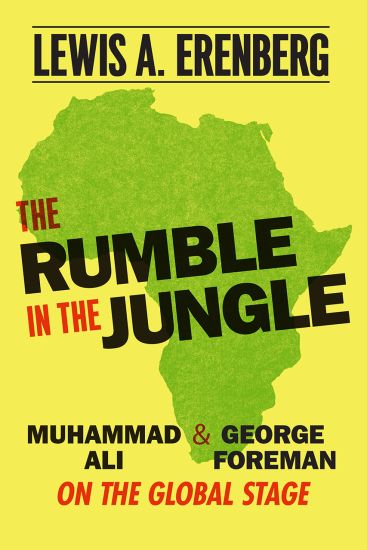
The 1974 fight between Muhammad Ali and George Foreman, staged in the young nation of Zaire and dubbed the Rumble in the Jungle, was arguably the biggest sporting event of the twentieth century. The bout between an ascendant undefeated champ and an outspoken master trying to reclaim the throne was a true multimedia spectacle. A three-day festival of international music—featuring James Brown, Miriam Makeba, and many others—preceded the fight itself, which was viewed by a record-breaking one billion people worldwide. Lewis A. Erenberg’s new book provides a global perspective on this singular match, not only detailing the titular fight but also locating it at the center of the cultural dramas of the day.TheRumble in the Jungle orbits around Ali and Foreman, placing them at the convergence of the American Civil Rights movement and the Great Society, the rise of Islamic and African liberation efforts, and the ongoing quest to cast off the shackles of colonialism. With his far-reaching take on sports, music, marketing, and mass communications, Erenberg shows how one boxing match became nothing less than a turning point in 1970s culture.
The Rumble in the Jungle

The Rumble in the Jungle

Lewis A Erenberg

University of Chicago Press
2019
sidottu
The 1974 fight between Muhammad Ali and George Foreman, staged in the young nation of Zaire and dubbed the Rumble in the Jungle, was arguably the biggest sporting event of the twentieth century. The bout between an ascendant undefeated champ and an outspoken master trying to reclaim the throne was a true multimedia spectacle. A three-day festival of international music--featuring James Brown, Miriam Makeba, and many others--preceded the fight itself, which was viewed by a record-breaking one billion people worldwide. Lewis A. Erenberg's new book provides a global perspective on this singular match, not only detailing the titular fight but also locating it at the center of the cultural dramas of the day. TheRumble in the Jungle orbits around Ali and Foreman, placing them at the convergence of the American Civil Rights movement and the Great Society, the rise of Islamic and African liberation efforts, and the ongoing quest to cast off the shackles of colonialism. With his far-reaching take on sports, music, marketing, and mass communications, Erenberg shows how one boxing match became nothing less than a turning point in 1970s culture.
The Greatest Fight of Our Generation

The Greatest Fight of Our Generation

Lewis A. Erenberg

Oxford University Press Inc
2007
nidottu
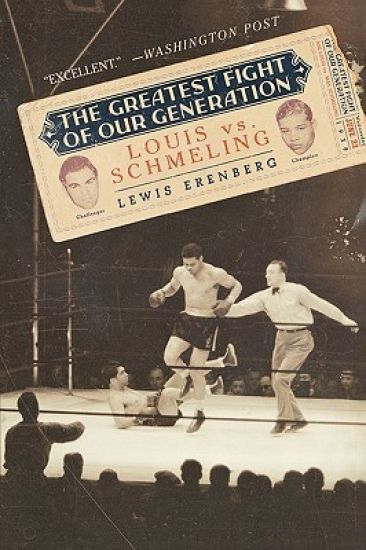
Held on June 22, 1938, in Yankee Stadium, the second Louis-Schmeling fight sparked excitement around the globe. For all its length--the fight lasted but two minutes--it remains one of the most memorable events in boxing history and, indeed, one of the most significant sporting events ever. In this superb account, Lewis A. Erenberg offers a vivid portrait of Joe Louis, Max Schmeling, their individual careers, and their two epic fights, shedding light on what these fighters represented to their nations, and why their second bout took on such international importance. Erenberg shows how in the first fight Schmeling shocked everyone with a dramatic twelfth-round knockout of Louis, becoming a German national hero and a (unwilling) symbol of Aryan superiority. In fact, the second fight was seen around the world in symbolic terms--as a match between Nazism and American democracy. Erenberg discusses how Louis' dramatic first-round victory was a devastating blow to Hitler, who turned on Schmeling and, during the war, had the boxer (then serving as a paratrooper) sent on a series of dangerous missions. Louis, meanwhile, went from being a hero of his race--"Our Joe"--to the first black champion embraced by all Americans, black and white, an important step forward in United States race relations. Erenberg also describes how, after the war, the two boxers became symbols of German-American reconciliation. With Schmeling as a Coca Cola executive, and Louis down on his luck, the former foes became friends, and when Louis died, Schmeling helped pay for his funeral. Here then is a stirring and insightful account of one of the great moments in boxing history, a confrontation that provided global theater on an epic scale.
Swingin' the Dream

Swingin' the Dream

Lewis A. Erenberg

University of Chicago Press
1999
nidottu
During the 1930s, swing bands combined jazz and popular music to create large-scale dreams for the Depression generation, capturing the imagination of America's young people, music critics and the music business. This book explores that world, looking at the racial mixing-up and musical swinging-out that shook the nation and has kept people dancing ever since. The text is a study of the big band era, chiefly during its golden hours in the 1930s; Lewis A. Erenberg places the music within a larger context and makes his case for its importance.
Swingin' the Dream

Swingin' the Dream

Lewis A. Erenberg

University of Chicago Press
1998
sidottu
During the 1930s, swing bands combined jazz and popular music to create dreams for a depression generation. This book explores that world, taking a look into the musical and racial integration. Long before organized baseball or the armed forces experienced racial integration, the fan culture that surrounded these big bands had broken down many barriers that separated people from different racial backgrounds. The author aims to show how a dance subculture forged in the late 1920s and early 1930s, became a music genre that symbolized American society. The book tells the story of swing's rapid rise and the music and culture that bolstered a nation during one of its lowest periods.
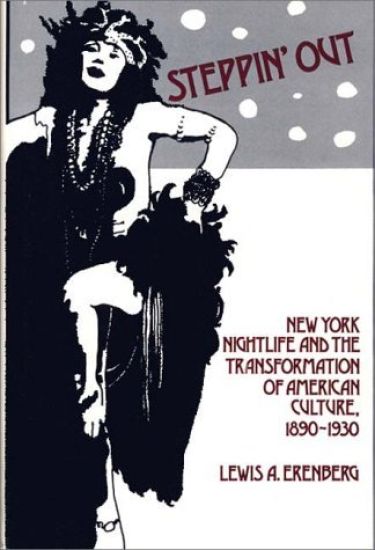
Steppin' Out

Steppin' Out

Lewis A. Erenberg

University of Chicago Press
1984
nidottu
Traces the evolution of New York City nightlife from the Gay Nineties to the Jazz Age, and discusses changes in spending, behavior, and social barriers