Kirjojen hintavertailu. Mukana 12 595 353 kirjaa ja 12 kauppaa.

Kirjailija

Lewis R. Gordon

Kirjat ja teokset yhdessä paikassa: 26 kirjaa, julkaisuja vuosilta 2000-2025, suosituimpien joukossa Black Nihilism and Antiblack Racism. Vertaile teosten hintoja ja tarkista saatavuus suomalaisista kirjakaupoista.

26 kirjaa

Kirjojen julkaisuhaarukka 2000-2025.

Black Nihilism and Antiblack Racism

Black Nihilism and Antiblack Racism

Devon R. Johnson; Lewis R. Gordon

BLOOMSBURY PUBLISHING PLC
2023
nidottu
This is an innovative work in Africana philosophical thought that links the phenomenon of nihilism in black America, in particular black American youth, to modern traditions of Western philosophy. Black Nihilism and Antiblack Racism engages defining themes of black existential life by offering a framework for considering the relationships between antiblack racism, pessimism, nihilism, weakness, strength, maturity, freedom, and hope in the 21st century. This book readdresses themes popularly raised by Cornel West in 1994 regarding the nature, causes, evaluations, diagnoses, and prognoses of what has been called, “nihilism in black America.” Black Nihilism and Antiblack Racism seeks to recontextualize discussions of nihilism and its possibilities for American cultural life. As a result, this book bears important questions, offers unique analyses, and suggests radical responses that are relevant for studies of black life and theories of justice in twenty-first century America.
Black Nihilism and Antiblack Racism

Black Nihilism and Antiblack Racism

Devon R. Johnson; Lewis R. Gordon

BLOOMSBURY PUBLISHING PLC
2021
sidottu
This is an innovative work in Africana philosophical thought that links the phenomenon of nihilism in black America, in particular black American youth, to modern traditions of Western philosophy. Black Nihilism and Antiblack Racism engages defining themes of black existential life by offering a framework for considering the relationships between antiblack racism, pessimism, nihilism, weakness, strength, maturity, freedom, and hope in the 21st century. This book readdresses themes popularly raised by Cornel West in 1994 regarding the nature, causes, evaluations, diagnoses, and prognoses of what has been called, “nihilism in black America.” Black Nihilism and Antiblack Racism seeks to recontextualize discussions of nihilism and its possibilities for American cultural life. As a result, this book bears important questions, offers unique analyses, and suggests radical responses that are relevant for studies of black life and theories of justice in twenty-first century America.
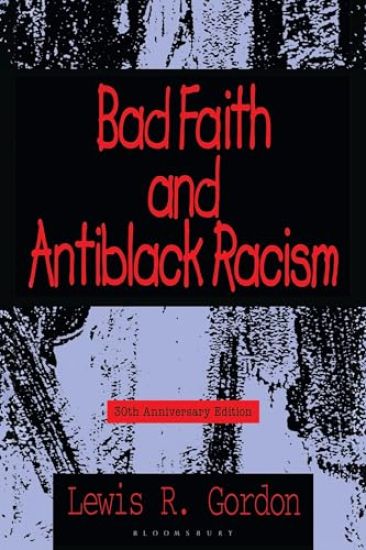
Bad Faith and Antiblack Racism

Bad Faith and Antiblack Racism

Lewis R. Gordon

BLOOMSBURY PUBLISHING PLC
2025
nidottu
In this contemporary classic, Lewis Gordon presents his iconic, detailed existential phenomenological investigation of antiblack racism as a form of Sartrean bad faith. Bad faith, the attitude in which human beings attempt to evade freedom and responsibility, is treated as a constant possibility of human existence. Antiblack racism, the attitude and practice that involve the construction of black people as fundamentally inferior and subhuman, is examined as an effort to evade the responsibilities of a human and humane world. Gordon argues that the concept of bad faith militates against any human science that is built upon a theory of human nature and as such offers an analysis of antiblack racism that stands as a challenge to our ordinary assumptions of what it means to be human.A foundational text in black existentialism, this 30th anniversary edition includes a substantial introduction by Mabogo Moreto address the ongoing importance of Gordon’s thought in critiquing and resisting racist bad faith in our contemporary moment.
Black Existentialism and Decolonizing Knowledge

Black Existentialism and Decolonizing Knowledge

Lewis R. Gordon

BLOOMSBURY PUBLISHING PLC
2023
sidottu
Black Existentialism and Decolonizing Knowledge collects key philosophical writings of Lewis R. Gordon, a globally renowned scholar whose writings cover liberation struggles across the globe and make field-defining contributions to the philosophy of existence, philosophy of race, Africana philosophy, philosophy of human sciences, aesthetics, and decolonization. Gordon’s expansive output ranges across phenomenology, anti-Blackness, activist thinkers, sexuality, Fanon, Jimi Hendrix, Black Jewish struggles, critical pedagogy, psychoanalysis, and Ubuntu philosophy. Edited by Rozena Maart and Sayan Dey, two decolonial thinkers from South Africa and India, this reader shifts attention away from colonial centres of power, encouraging global dialogue across students, scholars, and activists. Featuring a foreword by the celebrated novelist and postcolonial thinker, Ngugi wa Thiong'o, this reader includes a mixture of research articles, short critical essays, reflections, interviews, poems, and photographs in the creative pursuit of liberation.
Black Existentialism and Decolonizing Knowledge

Black Existentialism and Decolonizing Knowledge

Lewis R. Gordon

BLOOMSBURY PUBLISHING PLC
2023
nidottu
Black Existentialism and Decolonizing Knowledge collects key philosophical writings of Lewis R. Gordon, a globally renowned scholar whose writings cover liberation struggles across the globe and make field-defining contributions to the philosophy of existence, philosophy of race, Africana philosophy, philosophy of human sciences, aesthetics, and decolonization. Gordon’s expansive output ranges across phenomenology, anti-Blackness, activist thinkers, sexuality, Fanon, Jimi Hendrix, Black Jewish struggles, critical pedagogy, psychoanalysis, and Ubuntu philosophy. Edited by Rozena Maart and Sayan Dey, two decolonial thinkers from South Africa and India, this reader shifts attention away from colonial centres of power, encouraging global dialogue across students, scholars, and activists. Featuring a foreword by the celebrated novelist and postcolonial thinker, Ngugi wa Thiong'o, this reader includes a mixture of research articles, short critical essays, reflections, interviews, poems, and photographs in the creative pursuit of liberation.
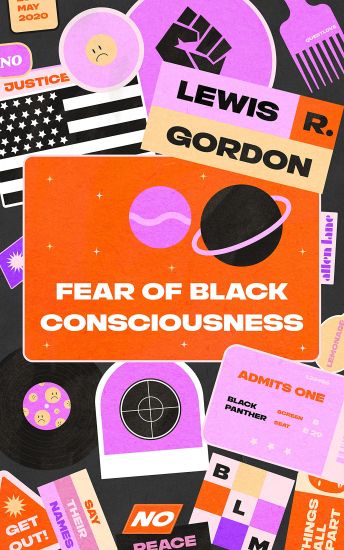
Fear of Black Consciousness

Fear of Black Consciousness

Lewis R. Gordon

PENGUIN BOOKS LTD
2023
pokkari
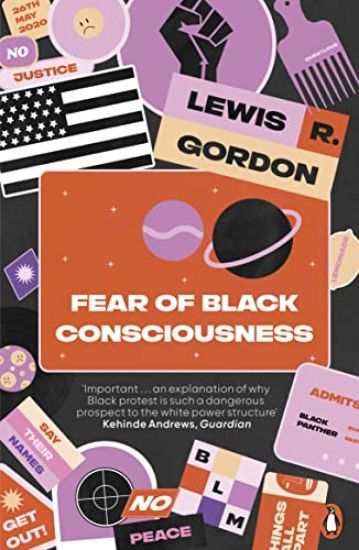
'Important . . . powerful . . . . an explanation of why Black protest is such a dangerous prospect to the white power structure' Kehinde Andrews, GuardianWhere is the path to racial justice? In this ground-breaking book, philosopher Lewis R. Gordon ranges over history, art and pop culture - from ancient African languages to the film Get Out - to show why the answer lies not just in freeing Black bodies from the fraud of white supremacy, but in freeing all of our minds. Building on the influential work of Frantz Fanon and W. E. B. Du Bois, Fear of Black Consciousness is a vital contribution to our conversations on racial politics, identity and culture. 'Expansive . . . reminds us that the ultimate aim of Black freedom quests is, indeed, universal liberation' Angela Y. Davis
Fear of Black Consciousness

Fear of Black Consciousness

Lewis R. Gordon

Picador USA
2023
nidottu
Lewis R. Gordon's Fear of Black Consciousness is a groundbreaking account of Black consciousness by a leading philosopher. Fear of Black Consciousness is an original and a bold intervention in the cultural and political conversation about systemic racism. Lewis R. Gordon, one of the leading scholars of Black existentialism and antiblackness, takes the reader on a journey through the historical development of racialized blackness, the problems racialization produces, and the many creative responses from black and nonblack communities in contemporary struggles for dignity and freedom. As he skillfully navigates the difficult and traumatic terrain, Gordon cuts through the mist of white narcissism and the versions of consciousness it perpetuates. He illuminates the different forms of invisibility that define black life, and he exposes the bad faith at the heart of many discussions about race and racism, not only in North America but also across the globe, including in countries where discussants regard themselves as "colorblind." Gordon reveals that these lies about race and its supposed irrelevance confer upon many white people an inherited sense of being extraordinary. More than being privileged or entitled, they act with a license to do as they please. But for many if not most blacks, living an ordinary life in a white-dominated society is an extraordinary achievement. Informed by Gordon's upbringing in Jamaica and the Bronx, and taking as touchstones the pandemic and the uprisings against police violence, Fear of Black Consciousness is a groundbreaking book that positions Black consciousness as a political commitment and creative practice, richly layered through art, love, and revolutionary action. It is sure to provoke, challenge, and inspire.
Fear of Black Consciousness

Fear of Black Consciousness

Lewis R. Gordon

Allen Lane
2022
sidottu
'Expansive . . . reminds us that the ultimate aim of Black freedom quests is, indeed, universal liberation' Angela Y. Davis'There is a movement from a suffering black consciousness to a liberatory Black consciousness in which revelation of the dirty laundry and fraud of white supremacy and black inferiority is a dreaded truth' Lewis Gordon, one of the leading scholars of Black Existentialism, has spent decades putting philosophical thought at the heart of activism for racial justice around the world. In this boldly original book, he delves into history, art, politics and popular culture to show how the process of racialization - and its absence - affects not only how individuals and society perceive black people but also how black people perceive themselves. Fear of Black Consciousness traces the ways in which the lived experience of black people has been rendered invisible in the Western world and the breadth of rich cultural expression that encapsulates the truth nonetheless - from ancient African languages to films such as Get Out and Black Panther. Gordon offers a stunning philosophical and social critique while highlighting the fundamental role of Black people as agents of history and of the social change required to build a humane world of dignity, freedom and respect.
Fear of Black Consciousness

Fear of Black Consciousness

Lewis R. Gordon

Farrar, Straus and Giroux
2022
sidottu
Lewis R. Gordon's Fear of Black Consciousness is a groundbreaking account of Black consciousness by a leading philosopher In this original and penetrating work, Lewis R. Gordon, one of the leading scholars of Black existentialism and anti-Blackness, takes the reader on a journey through the historical development of racialized Blackness, the problems this kind of consciousness produces, and the many creative responses from Black and non-Black communities in contemporary struggles for dignity and freedom. Skillfully navigating a difficult and traumatic terrain, Gordon cuts through the mist of white narcissism and the versions of consciousness it perpetuates. He exposes the bad faith at the heart of many discussions about race and racism not only in America but across the globe, including those who think of themselves as "color blind." As Gordon reveals, these lies offer many white people an inherited sense of being extraordinary, a license to do as they please. But for many if not most Blacks, to live an ordinary life in a white-dominated society is an extraordinary achievement. Informed by Gordon's life growing up in Jamaica and the Bronx, and taking as a touchstone the pandemic and the uprisings against police violence, Fear of Black Consciousness is a groundbreaking work that positions Black consciousness as a political commitment and creative practice, richly layered through art, love, and revolutionary action.
The Morality of Urban Mobility

The Morality of Urban Mobility

Shane Epting; Lewis R. Gordon

Rowman Littlefield
2021
sidottu
Cities’ transportation systems affect people, ecosystems, and future generations, and they increase tensions between historical preservation, social justice concerns, and future needs. In turn, all of these factors deserve consideration, but not equally. A just and moral way forward must prioritize values in how we give preference in planning decisions.Shane Epting illustrates that the problem of “moral prioritization” rests at the heart of these problems. To overcome such challenges, he develops a multi-tiered assessment system that shows how to evaluate complicated affairs in urban mobility. This book brings philosophical underpinnings of public works into full view, showing how the love of wisdom benefits the ongoing and future transportation issues of our increasingly urbanized world.
Melancholia Africana

Melancholia Africana

Nathalie Etoke; Lewis R. Gordon

Rowman Littlefield International
2019
sidottu
Melancholia Africana argues that in the African and Afro-diasporic context, melancholy is rooted in collective experiences such as slavery, colonization, and the post-colony. From these experiences a theme of loss resonates—loss of land, of freedom, of language, of culture, of self, and of ideals born from independence. Nathalie Etoke demonstrates that, beyond territorial expropriation and the pain inflicted upon the body and the soul, the violence that seals the encounter with the ‘other’ annihilates an age-old cycle of life. In the wake of this annihilation, continental and diasporic Africans strive to reconcile that which has been destroyed with what has been newly introduced. Their survival depends on their capacity to negotiate the inherent tension of their historical becoming. The book develops a transdisciplinary method encompassing historicism, critical theory, Africana existential thought, and poetics.
Melancholia Africana

Melancholia Africana

Nathalie Etoke; Lewis R. Gordon

Rowman Littlefield International
2019
nidottu
Melancholia Africana argues that in the African and Afro-diasporic context, melancholy is rooted in collective experiences such as slavery, colonization, and the post-colony. From these experiences a theme of loss resonates—loss of land, of freedom, of language, of culture, of self, and of ideals born from independence. Nathalie Etoke demonstrates that, beyond territorial expropriation and the pain inflicted upon the body and the soul, the violence that seals the encounter with the ‘other’ annihilates an age-old cycle of life. In the wake of this annihilation, continental and diasporic Africans strive to reconcile that which has been destroyed with what has been newly introduced. Their survival depends on their capacity to negotiate the inherent tension of their historical becoming. The book develops a transdisciplinary method encompassing historicism, critical theory, Africana existential thought, and poetics.
What Fanon Said

What Fanon Said

Lewis R. Gordon

C Hurst Co Publishers Ltd
2015
nidottu
Antiblack racism avows reason is white while emotion, and thus supposedly unreason, is black. Challenging academic adherence to this notion, Lewis R. Gordon offers a portrait of Martinican-turned-Algerian revolutionary psychiatrist and philosopher Frantz Fanon as an exemplar of "living thought" against forms of reason marked by colonialism and racism. Working from his own translations of the original French texts, Gordon critically engages everything in Fanon from dialectics, ethics, existentialism, and humanism to philosophical anthropology, phenomenology, and political theory as well as psychiatry and psychoanalysis. Gordon takes into account scholars from across the Global South to address controversies around Fanon's writings on gender and sexuality as well as political violence and the social underclass. In doing so, he confronts the replication of a colonial and racist geography of reason, allowing theorists from the Global South to emerge as interlocutors alongside northern ones in a move that exemplifies what, Gordon argues, Fanon represented in his plea to establish newer and healthier human relationships beyond colonial paradigms.
What Fanon Said

What Fanon Said

Lewis R. Gordon; Sonia Dayan-Herzbrun; Drucilla Cornell

Fordham University Press
2015
sidottu
Antiblack racism avows reason is white while emotion, and thus supposedly unreason, is black. Challenging academic adherence to this notion, Lewis R. Gordon offers a portrait of Martinican-turned-Algerian revolutionary psychiatrist and philosopher Frantz Fanon as an exemplar of "living thought" against forms of reason marked by colonialism and racism. Working from his own translations of the original French texts, Gordon critically engages everything in Fanon from dialectics, ethics, existentialism, and humanism to philosophical anthropology, phenomenology, and political theory as well as psychiatry and psychoanalysis. Gordon takes into account scholars from across the Global South to address controversies around Fanon's writings on gender and sexuality as well as political violence and the social underclass. In doing so, he confronts the replication of a colonial and racist geography of reason, allowing theorists from the Global South to emerge as interlocutors alongside northern ones in a move that exemplifies what, Gordon argues, Fanon represented in his plea to establish newer and healthier human relationships beyond colonial paradigms.
What Fanon Said

What Fanon Said

Lewis R. Gordon; Sonia Dayan-Herzbrun; Drucilla Cornell

Fordham University Press
2015
pokkari
Antiblack racism avows reason is white while emotion, and thus supposedly unreason, is black. Challenging academic adherence to this notion, Lewis R. Gordon offers a portrait of Martinican-turned-Algerian revolutionary psychiatrist and philosopher Frantz Fanon as an exemplar of "living thought" against forms of reason marked by colonialism and racism. Working from his own translations of the original French texts, Gordon critically engages everything in Fanon from dialectics, ethics, existentialism, and humanism to philosophical anthropology, phenomenology, and political theory as well as psychiatry and psychoanalysis. Gordon takes into account scholars from across the Global South to address controversies around Fanon's writings on gender and sexuality as well as political violence and the social underclass. In doing so, he confronts the replication of a colonial and racist geography of reason, allowing theorists from the Global South to emerge as interlocutors alongside northern ones in a move that exemplifies what, Gordon argues, Fanon represented in his plea to establish newer and healthier human relationships beyond colonial paradigms.
Of Divine Warning

Of Divine Warning

Jane Anna Gordon; Lewis R. Gordon

Paradigm
2010
nidottu
This book offers a theory of disaster in modern and contemporary society and its impact on the construction of social and political life. The theory is premised upon what the authors call "the sign continuum," where disaster spreads across society through efforts to evade social responsibility for its causes and consequences. Phenomena generated by such efforts include the social manifestation of monstrosity (disastrous people and other forms of living things) and an emerging antipolitics in an effort to assert rule and order. A crucial development is the attack on speech, a fundamental feature of political life, as manifested by the increased expectations of categories of people whose containment calls for shunning and silence.
Of Divine Warning

Of Divine Warning

Jane Anna Gordon; Lewis R. Gordon

Paradigm
2009
sidottu
This book offers a theory of disaster in modern and contemporary society and its impact on the construction of social and political life. The theory is premised upon what the authors call "the sign continuum," where disaster spreads across society through efforts to evade social responsibility for its causes and consequences. Phenomena generated by such efforts include the social manifestation of monstrosity (disastrous people and other forms of living things) and an emerging antipolitics in an effort to assert rule and order. A crucial development is the attack on speech, a fundamental feature of political life, as manifested by the increased expectations of categories of people whose containment calls for shunning and silence.
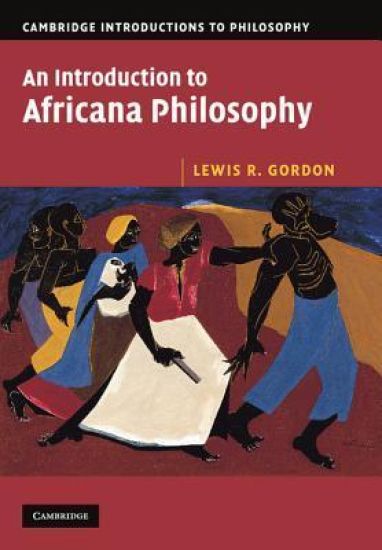
An Introduction to Africana Philosophy

An Introduction to Africana Philosophy

Lewis R. Gordon

Cambridge University Press
2008
sidottu
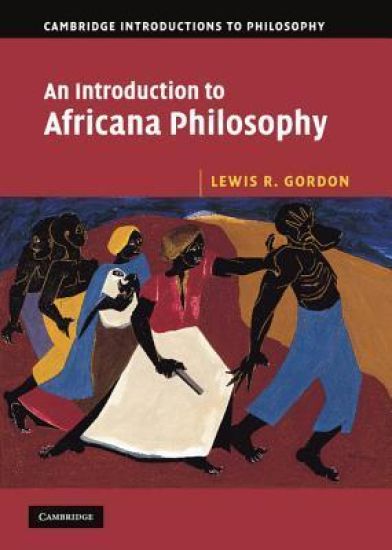
In this undergraduate textbook Lewis R. Gordon offers the first comprehensive treatment of Africana philosophy, beginning with the emergence of an Africana (i.e. African diasporic) consciousness in the Afro-Arabic world of the Middle Ages. He argues that much of modern thought emerged out of early conflicts between Islam and Christianity that culminated in the expulsion of the Moors from the Iberian Peninsula, and from the subsequent expansion of racism, enslavement, and colonialism which in their turn stimulated reflections on reason, liberation, and the meaning of being human. His book takes the student reader on a journey from Africa through Europe, North and South America, the Caribbean, and back to Africa, as he explores the challenges posed to our understanding of knowledge and freedom today, and the response to them which can be found within Africana philosophy.
An Introduction to Africana Philosophy

An Introduction to Africana Philosophy

Lewis R. Gordon

Cambridge University Press
2008
pokkari
In this undergraduate textbook Lewis R. Gordon offers the first comprehensive treatment of Africana philosophy, beginning with the emergence of an Africana (i.e. African diasporic) consciousness in the Afro-Arabic world of the Middle Ages. He argues that much of modern thought emerged out of early conflicts between Islam and Christianity that culminated in the expulsion of the Moors from the Iberian Peninsula, and from the subsequent expansion of racism, enslavement, and colonialism which in their turn stimulated reflections on reason, liberation, and the meaning of being human. His book takes the student reader on a journey from Africa through Europe, North and South America, the Caribbean, and back to Africa, as he explores the challenges posed to our understanding of knowledge and freedom today, and the response to them which can be found within Africana philosophy.
Disciplinary Decadence

Disciplinary Decadence

Lewis R. Gordon

Paradigm
2007
nidottu
In this book, philosopher and social critic Lewis Gordon explores the ossification of disciplines, which he calls disciplinary decadence. In response, he offers a theory of what he calls a teleological suspension of disciplinarity, in which he encourages scholars and lay intellectuals to pay attention to the openness of ideas and purposes on which their disciplines were born. Gordon builds his case through discussions of philosophy of education, problems of secularization in religious thought, obligations across generations, notions of invention in the study of ideas, decadence in development, colonial epistemologies, and the quest for a genuine postcolonial language. These topics are examined with the underlying diagnosis of the present political and academic environment as one in which it is indecent to think.