Kirjojen hintavertailu. Mukana 12 390 323 kirjaa ja 12 kauppaa.
Kirjailija
Lewis V. Baldwin
Kirjat ja teokset yhdessä paikassa: 12 kirjaa, julkaisuja vuosilta 1991-2023, suosituimpien joukossa Between Cross and Crescent. Vertaile teosten hintoja ja tarkista saatavuus suomalaisista kirjakaupoista.
This Bright Light of Ours offers a tightly focused insider’s view of the community-based activism that was the heart of the civil rights movement. A celebration of grassroots heroes, this book details through first-person accounts the contributions of ordinary people who formed the nonviolent army that won the fight for voting rights. Combining memoir and oral history, Maria Gitin fills a vital gap in civil rights history by focusing on the neglected Freedom Summer of 1965 when hundreds of college students joined forces with local black leaders to register thousands of new black voters in the rural South. Gitin was an idealistic nineteen-year-old college freshman from a small farming community north of San Francisco who felt called to action when she saw televised images of brutal attacks on peaceful demonstrators during Bloody Sunday, in Selma, Alabama. Atypical among white civil rights volunteers, Gitin came from a rural low-income family. She raised funds to attend an intensive orientation in Atlanta featuring now-legendary civil rights leaders. Her detailed letters include the first narrative account of this orientation and the only in-depth field report from a teenage Summer Community Organization and Political Education (SCOPE) project participant. Gitin details the dangerous life of civil rights activists in Wilcox County, Alabama, where she was assigned. She tells of threats and arrests, but also of forming deep friendships and of falling in love. More than four decades later, Gitin returned to Wilcox County to revisit the people and places that she could never forget and to discover their views of the “outside agitators” who had come to their community. Through conversational interviews with more than fifty Wilcox County residents and former civil rights workers, she has created a channel for the voices of these unheralded heroes who formed the backbone of the civil rights movement.
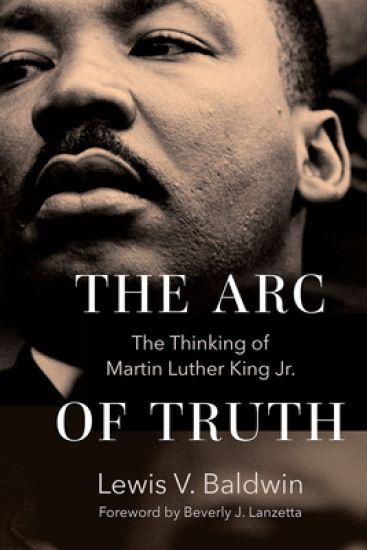
Martin Luther King Jr. said and wrote as much or more about the meaning, nature, and power of truth as any other prominent figure in the 1950s and '60s. King was not only vastly influential as an advocate for and defender of truth; he also did more than anyone in his time to organize truth into a movement for the liberation, uplift, and empowerment of humanity, efforts that ultimately resulted in the loss of his life. Drawing on King's published and unpublished sermons, speeches, and writings, The Arc of Truth explores King's lifelong pilgrimage in pursuit of truth. Lewis Baldwin explores King's quest for truth from his inquisitive childhood to the influence of family and church, to Morehouse College, Crozer Theological Seminary, Boston University, and other academic institutions in the Northeast. Continuing on, the book follows King's sense that he was involved in experiments of truth within the context of the struggle to liberate and empower humanity, to his understanding of the civil rights movement as unfolding truth, to his persistent challenge to America around its need to engage in a serious reckoning with truth regarding its history and heritage. Baldwin investigates King's determination to speak truth to power, and his untiring efforts to actualize what he envisioned as the truthful ends of the beloved community through the truthful means of nonviolent direct action. King believed, taught, and demonstrated by example that truth derives from a revolution in the heart, mind, and soul before it can be translated into institutions and structures that guarantee freedom, justice, human dignity, equality of opportunity, and peace. Ultimately, King's significance for humanity cannot be considered only his contributions as a preacher, pastor, civil rights leader, and world figure--he was and remains equally impactful as a theologian, philosopher, and ethicist whose life and thought evince an enduring search for and commitment to truth.
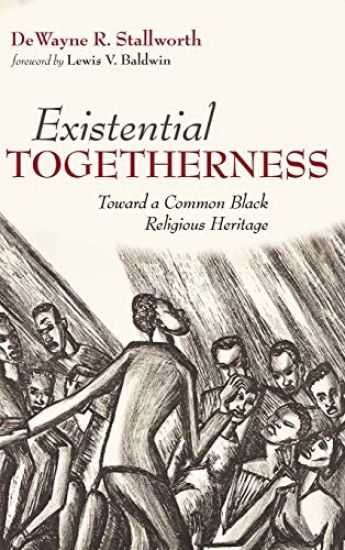
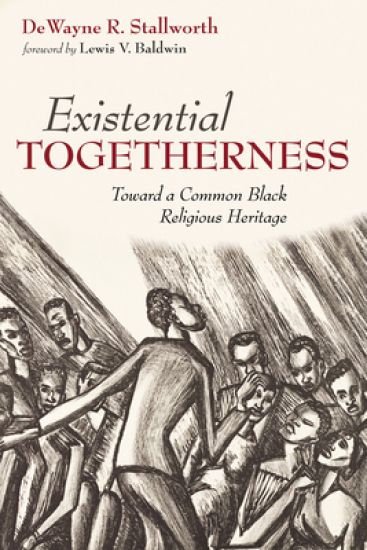
The notion of community entails more than just shared space in the here-and-now moment. For African Americans especially, communal engagement is a sacred experience that stretches from the mundane to the spectacular in a cyclical historical pattern. DeWayne R. Stallworth illumines the broadness of this African American religious experience by looking back to the first shared experience of unbiased community that occurred during slavery. He then explores the difficulties of maintaining such a unity under the threat of supremacy as experienced through systemic structures of both white and black privilege. Most important, Stallworth unpacks how the black religious leader, although caricatured as uncouth and ignorant, remained the moral compass for community progression and uplift until the civil rights era. This provocative book is essential reading for anyone with a desire to obtain a broader and deeper understanding of what it means to be black, religious, and American in the twenty-first-century United States.
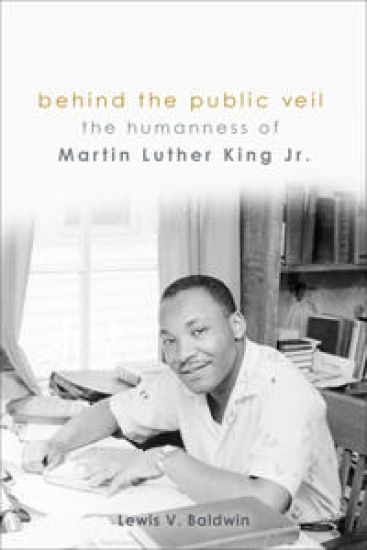
What was Martin Luther King Jr. really like? In this ground breaking volume, Lewis V. Baldwin focuses on the man himself. Drawing on the testimonies of friends, family, and closest associates, this volume adds much-needed biographical background to the discussion, as Baldwin looks beyond all of the mythic, messianic, and iconic images to treat King in terms of his fundamental and vivid humanness. Special attention is devoted to King's personal insecurities and struggles, his humility and affinity to common people, his delight in pleasant and passionate conversation, his insatiable love for the precious but ordinary things of life, his robust appetite for artfully-prepared and delicious soul food, his enduring appreciation for music and dance, his cheerful and playful attitude and spirit, his abiding interest in games and sports,-and his amazing gift of wit, humor, and laughter. King emerges here as an ordinary human being who enjoyed and celebrated life to the fullest, but was never bigger than life. Here we see the personal qualities of King-as a real, fleshly human being-and also as a man shaped by his social and cultural experiences and locations.
Based on years of original research, Never to Leave Us Alone is the first book-length treatment of the prayer life of the famed religious and civil rights leader. Drawing on personal prayers that King recited as a seminarian and graduate student, preacher, pastor, and then civil rights leader, award-winning historian Lewis Baldwin explains how King turned to both private prayer and meditation for his own spiritual fulfillment, and to public prayer as part of his sermonic discourse, as an aspect of his pastoral care, and as a way of moving, inspiring, and reaffirming people in the context of a crusade for equal rights, social justice, and peace. In the end, Baldwin argues, King's prayer life and reflections offer important keys not only to King the man but also to our own cultivation of core human values. The book includes photographs.
A collaborative effort of Christian scholar Lewis Baldwin and Muslim scholar Amiri Al-Hadid, Between Cross and Crescent details the interconnections between Malcolm X and Martin Luther King, Jr.: their faith claims, their perspectives on culture, and their visions of the ideal society and world. The authors reject two common tendencies: to reduce Malcolm and Martin to ""misguided, angry Muslim imam"" and ""gentle, harmless Christian preacher"" and to treat the two men as polar opposites. The result is the most comprehensive and detailed work in print about the two leaders and the first to bring together a Muslim and a Christian scholar in dialogue about their relationship to such significant issues. Particularly original are the insights into how Martin and Malcolm viewed each other, family and children, and women (an entire chapter is devoted to the ""character of womanhood""). Of special importance is the skillful delineation of the historical and cultural forces underpinning the two leaders' religious and cultural perspectives - not the least being their common roots in traditions based in the American South. The authors also turn a careful scholar's eye to their perspectives on religion, interfaith dialogue, and the relationship between the African-American struggle and global liberation movements. There is no more detailed resource about the relationship between Martin King and Malcolm X. The depth of scholarship in this volume extends even to the extraordinary amount of information relegated to footnotes, themselves a gold mine of documentation for all readers interested in the interface between faith claims, politics, and social and cultural transformation.