Kirjojen hintavertailu. Mukana 12 390 323 kirjaa ja 12 kauppaa.

Kirjailija

Libbet Crandon-Malamud

Kirjat ja teokset yhdessä paikassa: 2 kirjaa, julkaisuja vuosilta 1993-2008, suosituimpien joukossa From the Fat of Our Souls. Vertaile teosten hintoja ja tarkista saatavuus suomalaisista kirjakaupoista.

2 kirjaa

Kirjojen julkaisuhaarukka 1993-2008.

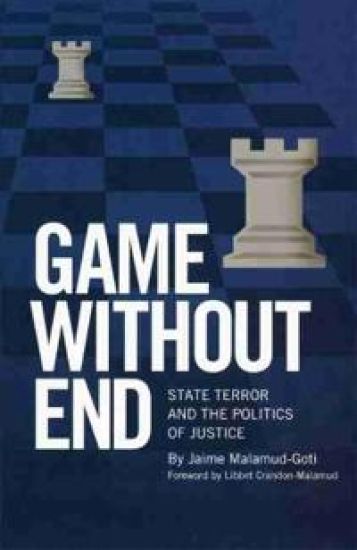
Game Without End

Game Without End

Jaime Malamud-Goti; Libbet Crandon-Malamud

University of Oklahoma Press
2008
nidottu
An insider's honest assessment of Argentina's human rights trialsDuring the ""dirty war"" of the 1970s, the military junta that controlled Argentina was responsible for the kidnapping, torturing, and killing of thousands. In 1985, democratically elected president Raul Alfónsín decreed that former commanders of the dictatorship be tried for human rights abuses. In Game Without End, Jaime Malamud-Goti argues that, by scapegoating a few former leaders and prosecuting only certain violations, the trials helped politicize the national judiciary, whose duty it was to implement democratic principles.As senior adviser to President Alfónsín and as solicitor of the Supreme Court, Malamud-Goti was one of two architects of the 1984 trials of the Argentine generals. In this rare insider's account of a pivotal moment in Argentinian history, he demonstrates that the trials failed to treat all citizens as equal before the law and thus perpetuated the us-versus-them mentality that enabled the junta to establish authoritarian rule in the first place.
From the Fat of Our Souls

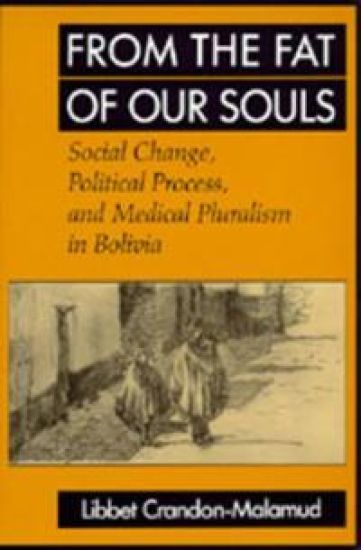
From the Fat of Our Souls

Libbet Crandon-Malamud

University of California Press
1993
pokkari
From the Fat of Our Souls offers a revealing new perspective on medicine, and the reasons for choosing or combining indigenous and cosmopolitan medical systems, in the Andean highlands. Closely observing the dialogue that surrounds medicine and medical care among Indians and Mestizos, Catholics and Protestants, peasants and professionals in the rural town of Kachitu, Libbet Crandon-Malamud finds that medical choice is based not on medical efficacy but on political concerns. Through the primary resource of medicine, people have access to secondary resources, the principal one being social mobility. This investigation of medical pluralism is also a history of class formation and the fluidity of both medical theory and social identity in highland Bolivia, and it is told through the often heartrending, often hilarious stories of the people who live there.