Kirjojen hintavertailu. Mukana 12 595 353 kirjaa ja 12 kauppaa.

Kirjailija

Lillian Faderman

Kirjat ja teokset yhdessä paikassa: 15 kirjaa, julkaisuja vuosilta 1991-2023, suosituimpien joukossa Harvey Milk. Vertaile teosten hintoja ja tarkista saatavuus suomalaisista kirjakaupoista.

15 kirjaa

Kirjojen julkaisuhaarukka 1991-2023.

Woman

Woman

Lillian Faderman

YALE UNIVERSITY PRESS
2023
pokkari
A comprehensive history of the struggle to define womanhood in America, from the seventeenth to the twenty-first century“Exhaustively researched and finely written.”—Alexandra Jacobs, New York Times“An intelligently provocative, vital reading experience. . . . This highly readable, inclusive, and deeply researched book will appeal to scholars of women and gender studies as well as anyone seeking to understand the historical patterns that misogyny has etched across every era of American culture.”—Kirkus Reviews, starred review What does it mean to be a “woman” in America? Award-winning gender and sexuality scholar Lillian Faderman traces the evolution of the meaning from Puritan ideas of God’s plan for women to the sexual revolution of the 1960s and its reversals to the impact of such recent events as #metoo, the appointment of Amy Coney Barrett to the Supreme Court, the election of Kamala Harris as vice president, and the transgender movement. This wide-ranging 400-year history chronicles conflicts, retreats, defeats, and hard-won victories in both the private and the public sectors and shines a light on the often-overlooked battles of enslaved women and women leaders in tribal nations. Noting that every attempt to cement a particular definition of “woman” has been met with resistance, Faderman also shows that successful challenges to the status quo are often short-lived. As she underlines, the idea of womanhood in America continues to be contested.
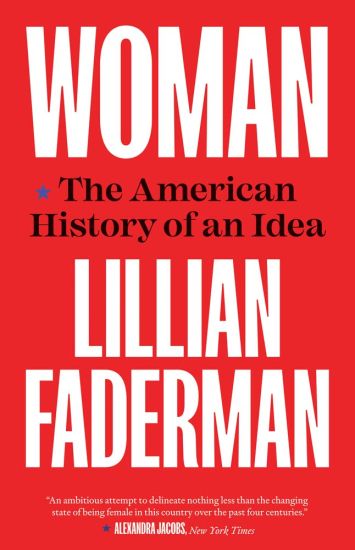
Woman

Woman

Lillian Faderman

YALE UNIVERSITY PRESS
2022
sidottu
A comprehensive history of the struggle to define womanhood in America, from the seventeenth to the twenty-first century “Exhaustively researched and finely written.”—Alexandra Jacobs, New York Times “An intelligently provocative, vital reading experience. . . . This highly readable, inclusive, and deeply researched book will appeal to scholars of women and gender studies as well as anyone seeking to understand the historical patterns that misogyny has etched across every era of American culture.”—Kirkus Reviews, starred review What does it mean to be a “woman” in America? Award-winning gender and sexuality scholar Lillian Faderman traces the evolution of the meaning from Puritan ideas of God’s plan for women to the sexual revolution of the 1960s and its reversals to the impact of such recent events as #metoo, the appointment of Amy Coney Barrett to the Supreme Court, the election of Kamala Harris as vice president, and the transgender movement. This wide-ranging 400-year history chronicles conflicts, retreats, defeats, and hard-won victories in both the private and the public sectors and shines a light on the often-overlooked battles of enslaved women and women leaders in tribal nations. Noting that every attempt to cement a particular definition of “woman” has been met with resistance, Faderman also shows that successful challenges to the status quo are often short-lived. As she underlines, the idea of womanhood in America continues to be contested.
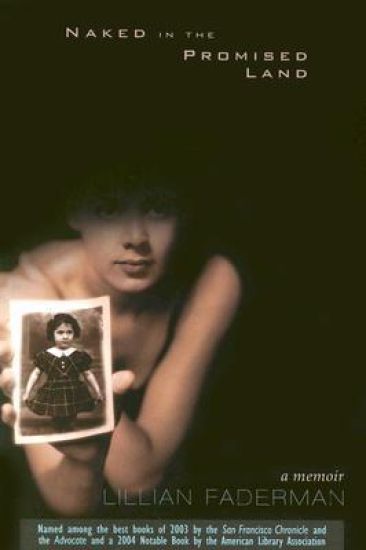
Naked in the Promised Land

Naked in the Promised Land

Lillian Faderman; Carmen Maria Machado

Bloomsbury Reader
2020
nidottu
This modern classic of LGBT writing includes an introduction from Carmen Maria Machado, author of Her Body and Other Parties, and a new afterword from Lillian Faderman. Born in 1940, Lillian Faderman is the only child of an uneducated and unmarried Jewish woman who left Latvia to seek a better life in America. Lillian grew up in poverty, but fantasised about becoming an actress. When her dreams led to the dangerous, seductive world of the sex trade and sham-marriages in Hollywood of the fifties, she realised she was attracted to women, and that show-biz is as cruel as they say.Desperately seeking to make her life meaningful, she studied at Berkeley; paying her way by working as a pin-up model and burlesque dancer, hiding her lesbian affairs from the outside world. At last she became a brilliant student and the woman who becomes a loving partner, a devoted mother, an acclaimed writer and ground-breaking pioneer of gay and lesbian scholarship.Told with wrenching immediacy and great power, Naked in the Promised Land is the story of an exceptional woman and her remarkable, unorthodox life.
Harvey Milk

Harvey Milk

Lillian Faderman

Yale University Press
2019
pokkari
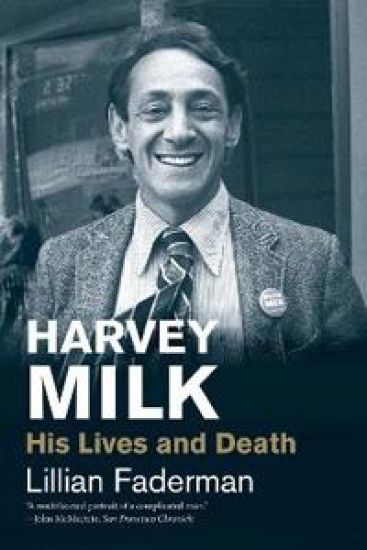
From the prizewinning Jewish Lives series, a lively and engaging biography of the first openly gay man elected to public office in the United States, a man fiercely committed to protecting all minorities“This elegantly written and well-researched book recovers the Jewishness that has too often been erased or glossed over in the mythologizing of a gay icon.”—Helene Meyers, Tablet Harvey Milk—eloquent, charismatic, and a smart-aleck—was elected to the San Francisco Board of Supervisors in 1977, but he had not served even a full year when he was shot by a homophobic fellow supervisor. Milk’s assassination at the age of forty-eight made him the most famous gay man in modern history; twenty years later Time magazine included him on its list of the hundred most influential individuals of the twentieth century. Before finding his calling as a politician, however, Milk variously tried being a schoolteacher, a securities analyst on Wall Street, a supporter of Barry Goldwater, a Broadway theater assistant, a bead-wearing hippie, the operator of a camera store, and an organizer of the local business community in San Francisco. He rejected Judaism as a religion, but he was deeply influenced by the cultural values of his Jewish upbringing and his understanding of anti-Semitism and the Holocaust. His early influences and his many personal and professional experiences finally came together when he decided to run for elective office as the forceful champion of gays, racial minorities, women, working people, the disabled, and senior citizens. In his last five years, he focused all of his tremendous energy on becoming a successful public figure with a distinct political voice.
Harvey Milk

Harvey Milk

Lillian Faderman

Yale University Press
2018
sidottu
From the prizewinning Jewish Lives series, a lively and engaging biography of the first openly gay man elected to public office in the United States, a man fiercely committed to protecting all minorities "This elegantly written and well-researched book recovers the Jewishness that has too often been erased or glossed over in the mythologizing of a gay icon."—Helene Meyers, Tablet Harvey Milk—eloquent, charismatic, and a smart-aleck—was elected to the San Francisco Board of Supervisors in 1977, but he had not even served a full year in office when he was shot by a homophobic fellow supervisor. Milk’s assassination at the age of forty-eight made him the most famous gay man in modern history; twenty years later Time magazine included him on its list of the hundred most influential individuals of the twentieth century. Before finding his calling as a politician, however, Harvey variously tried being a schoolteacher, a securities analyst on Wall Street, a supporter of Barry Goldwater, a Broadway theater assistant, a bead-wearing hippie, the operator of a camera store and organizer of the local business community in San Francisco. He rejected Judaism as a religion, but he was deeply influenced by the cultural values of his Jewish upbringing and his understanding of anti-Semitism and the Holocaust. His early influences and his many personal and professional experiences finally came together when he decided to run for elective office as the forceful champion of gays, racial minorities, women, working people, the disabled, and senior citizens. In his last five years, he focused all of his tremendous energy on becoming a successful public figure with a distinct political voice. About Jewish Lives: Jewish Lives is a prizewinning series of interpretative biography designed to explore the many facets of Jewish identity. Individual volumes illuminate the imprint of Jewish figures upon literature, religion, philosophy, politics, cultural and economic life, and the arts and sciences. Subjects are paired with authors to elicit lively, deeply informed books that explore the range and depth of the Jewish experience from antiquity to the present. In 2014, the Jewish Book Council named Jewish Lives the winner of its Jewish Book of the Year Award, the first series ever to receive this award. More praise for Jewish Lives: "Excellent" –New York Times "Exemplary" –Wall Street Journal "Distinguished" –New Yorker "Superb" –The Guardian
The Gay Revolution

The Gay Revolution

Lillian Faderman

Simon Schuster
2016
pokkari
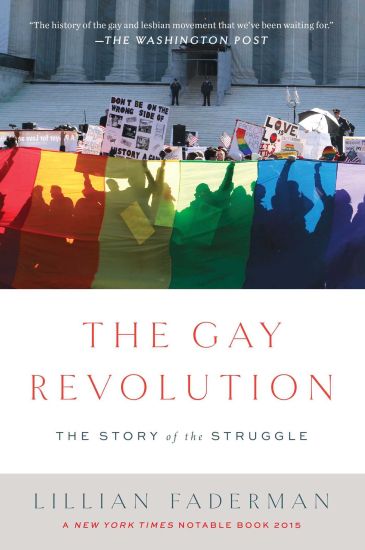
The sweeping story of the struggle for gay and lesbian rights based on amazing interviews with politicians, military figures, and members of the entire LGBT community who face these challenges every day The fight for gay and lesbian civil rights, the years of outrageous injustice, the early battles, the heart-breaking defeats and the victories beyond the dreams of the gay rights pioneers is the most important civil rights issue of the present day. Lillian Faderman tells this unfinished story through the dramatic accounts of passionate struggles with sweep, depth and feeling. Against the dark backdrop of the 1950s, a few brave people began to fight back, paving the way for the revolutionary changes of the 1960s and beyond. Faderman discusses the protests in the 1960s; the counter reaction of the 1970s and early eighties; the decimated but united community during the AIDS epidemic; and the current hurdles for the right to marriage equality. The Gay Revolution paints a nuanced portrait of the LGBT civil rights movement. A defining account, this is the most complete and authoritative book of its kind.
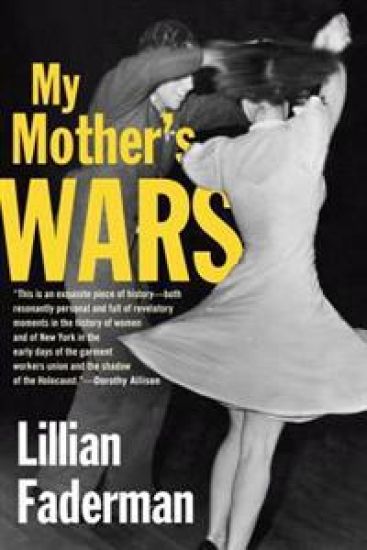
My Mother's Wars

My Mother's Wars

Lillian Faderman

Beacon Press
2015
pokkari
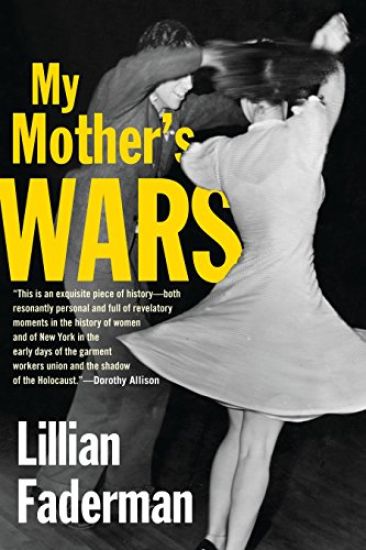
An acclaimed writer on her mother's tumultuous life as a Jewish immigrant in 1930s New York and her life-long guilt when the Holocaust claims the family she left behind in Latvia A story of love, war, and life as a Jewish immigrant in the squalid factories and lively dance halls of New York's Garment District in the 1930s, "My Mother's Wars" is the memoir Lillian Faderman's mother was never able to write. The daughter delves into her mother's past to tell the story of a Latvian girl who left her village for America with dreams of a life on the stage and encountered the realities of her new world: the battles she was forced to fight as a woman, an immigrant worker, and a Jew with family left behind in Hitler's deadly path. The story begins in 1914: Mary, the girl who will become Lillian Faderman's mother, just seventeen and swept up with vague ambitions to be a dancer, travels alone to America, where her half-sister in Brooklyn takes her in. She finds a job in the garment industry and a shop friend who teaches her the thrills of dance halls and the cheap amusements open to working-class girls. This dazzling life leaves Mary distracted and her half-sister and brother-in-law scandalized that she has become a "good-time gal." They kick her out of their home, an event with consequences Mary will regret for the rest of her life. Eighteen years later, still barely scraping by as a garment worker and unmarried at thirty-five, Mary falls madly in love and has a torrid romance with a man who will never marry her, but who will father Lillian Faderman before he disappears from their lives. America is in the midst of the Depression, Hitler is coming to power in Europe, and New York's garment workers are just beginning to unionize. Mary makes tentative steps to join, despite her lover's angry opposition. As National Socialism engulfs Europe, Mary realizes she must find a way to get her family out of Latvia, and she spends frenetic months chasing vague promises and false rumors of hope. Pregnant again, after having submitted to two wrenching back-room abortions, and still unmarried, Mary faces both single motherhood and the devastating possibility of losing her entire Eastern European family. Drawing on family stories and documents, as well as her own tireless research, Lillian Faderman has reconstructed an engrossing and essential chapter in the history of women, of workers, of Jews, and of the Holocaust as immigrants experienced it from American shores.
My Mother's Wars

My Mother's Wars

Lillian Faderman

Beacon Press
2013
sidottu
An acclaimed writer on her mother's tumultuous life as a Jewish immigrant in 1930s New York and her life-long guilt when the Holocaust claims the family she left behind in Latvia A story of love, war, and life as a Jewish immigrant in the squalid factories and lively dance halls of New York's Garment District in the 1930s, "My Mother's Wars" is the memoir Lillian Faderman's mother was never able to write. The daughter delves into her mother's past to tell the story of a Latvian girl who left her village for America with dreams of a life on the stage and encountered the realities of her new world: the battles she was forced to fight as a woman, an immigrant worker, and a Jew with family left behind in Hitler's deadly path. The story begins in 1914: Mary, the girl who will become Lillian Faderman's mother, just seventeen and swept up with vague ambitions to be a dancer, travels alone to America, where her half-sister in Brooklyn takes her in. She finds a job in the garment industry and a shop friend who teaches her the thrills of dance halls and the cheap amusements open to working-class girls. This dazzling life leaves Mary distracted and her half-sister and brother-in-law scandalized that she has become a "good-time gal." They kick her out of their home, an event with consequences Mary will regret for the rest of her life. Eighteen years later, still barely scraping by as a garment worker and unmarried at thirty-five, Mary falls madly in love and has a torrid romance with a man who will never marry her, but who will father Lillian Faderman before he disappears from their lives. America is in the midst of the Depression, Hitler is coming to power in Europe, and New York's garment workers are just beginning to unionize. Mary makes tentative steps to join, despite her lover's angry opposition. As National Socialism engulfs Europe, Mary realizes she must find a way to get her family out of Latvia, and she spends frenetic months chasing vague promises and false rumors of hope. Pregnant again, after having submitted to two wrenching back-room abortions, and still unmarried, Mary faces both single motherhood and the devastating possibility of losing her entire Eastern European family. Drawing on family stories and documents, as well as her own tireless research, Lillian Faderman has reconstructed an engrossing and essential chapter in the history of women, of workers, of Jews, and of the Holocaust as immigrants experienced it from American shores.
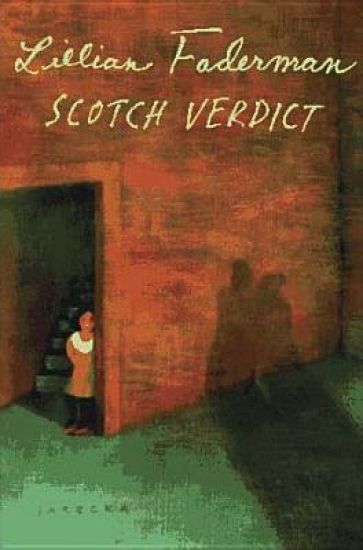
Scotch Verdict

Scotch Verdict

Lillian Faderman; Judith Halberstam

Columbia University Press
2013
pokkari
In 1810, a Scottish student named Jane Cumming accused her school mistresses, Jane Pirie and Marianne Woods, of having an affair in the presence of their students. Dame Helen Cumming Gordon, the wealthy and powerful grandmother of the accusing student, advised her friends to remove their daughters from the Drumsheugh boarding school. Within days, the institution was deserted and the two women were deprived of their livelihoods. Award-winning author Lillian Faderman recreates the events surrounding this notorious case, which became the basis for Lillian Hellman's famous play, The Children's Hour. Reconstructing the libel suit filed by Pirie and Woods-which resulted in a scotch verdict, or a verdict of inconclusive/not proven-Faderman builds a compelling narrative from court transcripts, judges' notes, witnesses' contradictory testimony, and the prejudices of the men presiding over the case. Her fascinating portrait documents the social, economic, and sexual pressures shaping the lives of nineteenth-century women and the issues of class and gender contributing to their marginalization.
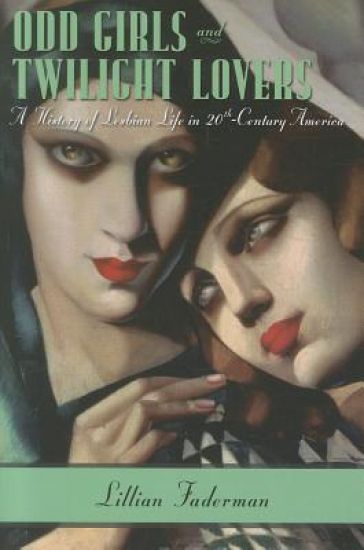
Odd Girls and Twilight Lovers

Odd Girls and Twilight Lovers

Lillian Faderman

Columbia University Press
2012
pokkari
As Lillian Faderman writes, there are "no constants with regard to lesbianism," except that lesbians prefer women. In this groundbreaking book, she reclaims the history of lesbian life in twentieth-century America, tracing the evolution of lesbian identity and subcultures from early networks to more recent diverse lifestyles. She draws from journals, unpublished manuscripts, songs, media accounts, novels, medical literature, pop culture artifacts, and oral histories by lesbians of all ages and backgrounds, uncovering a narrative of uncommon depth and originality.
Gay L.A.

Gay L.A.

Lillian Faderman; Stuart Timmons

University of California Press
2009
pokkari
The exhortation to 'Go West!' has always sparked the American imagination. But for gays, lesbians, and transgendered people, the City of Angels provided a special home and gave rise to one of the most influential gay cultures in the world. Drawing on rare archives and photographs as well as more than three hundred interviews, Lillian Faderman and Stuart Timmons chart L.A.'s unique gay history, from the first missionary encounters with Native American cross-gendered 'two spirits' to cross-dressing frontier women in search of their fortunes; from the bohemian freedom of early Hollywood to the explosion of gay life during World War II to the underground radicalism set off by the 1950s blacklist; and, from the 1960s gay liberation movement to the creation of gay marketing in the 1990s.
Gay L. A.

Gay L. A.

Lillian Faderman; Stuart Timmons

Basic Books
2006
sidottu
The exhortation to "Go West!" has always had a strong hold on the American imagination. But for the gays, lesbians, and transgendered people who have moved to L. A. over the past two centuries, the City of Angels has offered a special home--which, in turn, gave rise to one of the most influential gay cultures in the world. Drawing upon untouched archives of documents and photographs and over 200 new interviews, Lillian Faderman and Stuart Timmons chart L. A. 's unique gay history, from the first missionary encounters with Native American cross-gendered "two spirits" to cross-dressing frontier women in search of their fortunes; from the bohemian freedom of early Hollywood to the explosion of gay life during World War II to the underground radicalism sparked by the 1950s blacklist; from the 1960s gay liberation movement to the creation of gay marketing in the 1990s. Faderman and Timmons show how geography, economic opportunity, and a constant influx of new people created a city that was more compatible to gay life than any other in America. Combining broad historical scope with deftly wrought stories of real people, from the Hollywood sound stage to the barrio, Gay L. A. is American social history at its best.
Naked in the Promised Land

Naked in the Promised Land

Lillian Faderman

University of Wisconsin Press
2004
nidottu
The daughter of an unmarried immigrant Jewish garment worker whose family had perished in the Holocaust, Lillian Faderman dreamed of being an actress. Instead she worked her way through college by posing for nude photographs, and by stripping. She slowly discovered that her deepest erotic and emotional connections were to women. After nearly losing herself in a dangerous underworld of addicts, pimps, and prostitutes, she became a brilliant student, eventually earning a Ph.D. And she became a loving partner, a devoted mother, an influential writer, and a groundbreaking scholar of gay and lesbian studies.
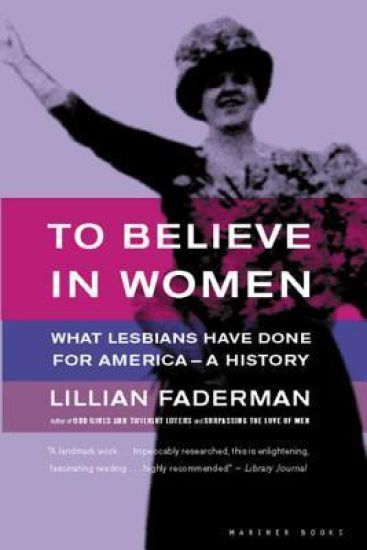
To Believe in Women

To Believe in Women

Lillian Faderman

Houghton Mifflin (Trade)
2000
nidottu
From the author of the acclaimed ODD GIRLS and TWILIGHT LOVERS, a landmark work of lesbian history that both "sets the record straight (or unstraight)" for all Americans and "provides a usable past" for lesbians "This is a book about how millions of American women became what they are now: full citizens, educated, and capable of earning a decent living for themselves. But it departs from other such histories because it focuses on how certain late-nineteenth- and early-twentieth-century women whose lives can be described as 'lesbian' were in the forefront of the battle to procure the rights and privileges that large numbers of Americans enjoy today." A groundbreaking reappraisal of those women known by history but whose histories are incomplete, To Believe in Women examines how their lesbianism may in fact have facilitated their accomplishments. Lillian Faderman, twice winner of the Lambda Award, persuasively argues that even before a "lesbian identity" was defined, many early female leaders had what would now be called lesbian relationships, free from the constraints of traditional heterosexual arrangements that might otherwise have impeded their pursuits in education, politics, and culture. A book of impeccable research and compelling readability, TO BELIEVE IN WOMEN will be a source of enlightenment for all, and for many a singular source of pride.
Odd Girls and Twilight Lovers

Odd Girls and Twilight Lovers

Lillian Faderman

Columbia University Press
1991
sidottu
As Lillian Faderman writes, there are "no constants with regard to lesbianism," except that lesbians prefer women. In this groundbreaking book, she reclaims the history of lesbian life in twentieth-century America, tracing the evolution of lesbian identity and subcultures from early networks to more recent diverse lifestyles. She draws from journals, unpublished manuscripts, songs, media accounts, novels, medical literature, pop culture artifacts, and oral histories by lesbians of all ages and backgrounds, uncovering a narrative of uncommon depth and originality.