Kirjojen hintavertailu. Mukana 12 390 323 kirjaa ja 12 kauppaa.

Kirjailija

Lillian Smith

Kirjat ja teokset yhdessä paikassa: 6 kirjaa, julkaisuja vuosilta 1980-2016, suosituimpien joukossa Killers of the Dream. Vertaile teosten hintoja ja tarkista saatavuus suomalaisista kirjakaupoista.

6 kirjaa

Kirjojen julkaisuhaarukka 1980-2016.

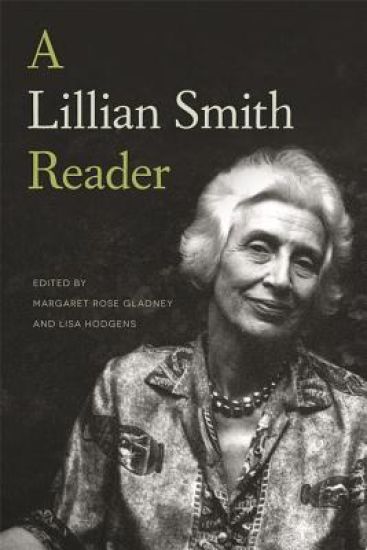
A Lillian Smith Reader

A Lillian Smith Reader

Lillian Smith

University of Georgia Press
2016
pokkari
As a writer and forward-thinking social critic, Lillian Smith (1897–1966) was an astute chronicler of the twentieth-century American South and an early proponent of the civil rights movement. From her home on Old Screamer Mountain overlooking Clayton, Georgia, Smith wrote and spoke openly against racism, segregation, and Jim Crow laws long before the civil rights era.Bringing together short stories, lectures, essays, op-ed pieces, interviews, and excerpts from her longer fiction and nonfiction, A Lillian Smith Reader offers the first comprehensive collection of her work and a compelling introduction to one of the South’s most important writers.A conservatory-trained music teacher who left the profession to assume charge of her family’s girls’ camp in Rabun County, Georgia, Smith began her literary careerwriting for a journal that she coedited with her lifelong companion, Paula Snelling, successively titled Pseudopodia (1936), the North Georgia Review (1937–41), and South Today (1942–45). Known today for her controversial, best-selling novel, Strange Fruit (1944); her collection of autobiographical essays, Killers of the Dream (1949); and her lyrical documentary, Now Is the Time (1955), Smith was acclaimed and derided in equal measures as a southern white liberal who critiqued her culture’s economic, political, and religious institutions as dehumanizing for all: white and black, male and female, rich and poor. She was also a frequent and eloquent contributor to periodicals such as the Saturday Review, LIFE, the New Republic, the Nation, and the New York Times.The influence of Smith’s oeuvre extends far beyond these publications. Her legacy rests on her sense of social justice, her articulation of racial and social inequities, and her challenges to the status quo. In their totality, her works propose a vision of justice and human understanding that we have yet to achieve.
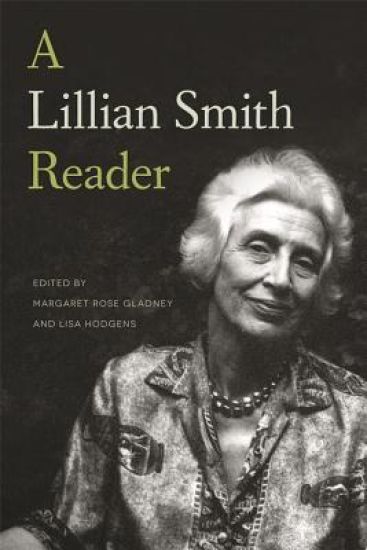
A Lillian Smith Reader

A Lillian Smith Reader

Lillian Smith

University of Georgia Press
2016
sidottu
As a writer and forward-thinking social critic, Lillian Smith (1897–1966) was an astute chronicler of the twentieth-century American South and an early proponent of the civil rights movement. From her home on Old Screamer Mountain overlooking Clayton, Georgia, Smith wrote and spoke openly against racism, segregation, and Jim Crow laws long before the civil rights era.Bringing together short stories, lectures, essays, op-ed pieces, interviews, and excerpts from her longer fiction and nonfiction, A Lillian Smith Reader offers the first comprehensive collection of her work and a compelling introduction to one of the South’s most important writers.A conservatory-trained music teacher who left the profession to assume charge of her family’s girls’ camp in Rabun County, Georgia, Smith began her literary careerwriting for a journal that she coedited with her lifelong companion, Paula Snelling, successively titled Pseudopodia (1936), the North Georgia Review (1937–41), and South Today (1942–45). Known today for her controversial, best-selling novel, Strange Fruit (1944); her collection of autobiographical essays, Killers of the Dream (1949); and her lyrical documentary, Now Is the Time (1955), Smith was acclaimed and derided in equal measures as a southern white liberal who critiqued her culture’s economic, political, and religious institutions as dehumanizing for all: white and black, male and female, rich and poor. She was also a frequent and eloquent contributor to periodicals such as the Saturday Review, LIFE, the New Republic, the Nation, and the New York Times.The influence of Smith’s oeuvre extends far beyond these publications. Her legacy rests on her sense of social justice, her articulation of racial and social inequities, and her challenges to the status quo. In their totality, her works propose a vision of justice and human understanding that we have yet to achieve.
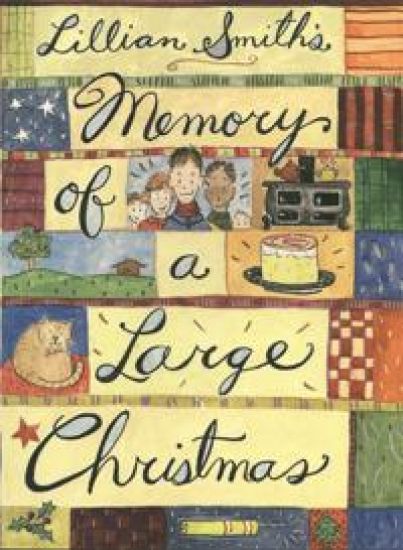
Memory of a Large Christmas

Memory of a Large Christmas

Lillian Smith

University of Georgia Press
1996
sidottu
As a young child in the early 1900s, writer and civil rights crusader Lillian Smith lived an idyllic, small-town life. Of the many customs by which her and her eight brothers' and sisters' days were ordered, none are so fondly remembered by Smith as those of the Christmas season.With a lighthearted touch, she recalls such times as when the family hosted forty-eight chain-gang convicts, along with their guards, to a holiday feast and the time her older brothers almost bought an elegant coffin for their parents' gift. Of far greater meaning to Smith, however, are the remembered rituals, the year-after-year sights, sounds, smells, and tastes: first the hog killings and the shaking of the pecan trees just around the time Big Granny, Little Granny, and a cousin or two began to arrive; then making gifts and hanging stockings; and finally the big day, filled with presents, shooting firecrackers, and too much homemade candy, six-layered coconut cake, and "sweet potato pone, fancied up."These and many more memories are here for our enjoyment. All are related against the joyful noise of children, imaginations unbridled, as they run through a house and yard that never quite ends and always offers new places to hide and new opportunities for adventure and mischief.
Killers of the Dream

Killers of the Dream

Lillian Smith

WW Norton Co
1995
nidottu
Published to wide controversy, it became the source (acknowledged or unacknowledged) of much of our thinking about race relations and was for many a catalyst for the civil rights movement. It remains the most courageous, insightful, and eloquent critique of the pre-1960s South. "I began to see racism and its rituals of segregation as a symptom of a grave illness," Smith wrote. "When people think more of their skin color than of their souls, something has happened to them." Today, readers are rediscovering in Smith's writings a forceful analysis of the dynamics of racism, as well as her prophetic understanding of the connections between racial and sexual oppression.
Strange Fruit

Strange Fruit

Lillian Smith

Harvest Books
1992
nidottu
When it was first published in 1944, this novel sparked immediate controversy and became a huge bestseller. It captured with devastating accuracy the deep-seated racial conflicts of a tightly knit southern town. The book is as engrossing and incendiary now as the day it was written.
Memory of a Large Christmas

Memory of a Large Christmas

Lillian Smith

WW Norton Co
1980
pokkari
There were nine of the Smith children, and the grandmothers and cousins, and there was a big house that never quite ended, and there were the smokehouse and hog-killing and the shaking of the pecan trees, and all the delicious doings that went on in a nineteenth-century kitchen, which lingered into the early decades of the twentieth century. But above all, there was a father who, as impresario and ritual maker, polished family events so that, as the author says, Even today, a half century later, they blind the eyes with their shine. She goes on to day, But perhaps what holds it so fresh in my memory is the fact that along with all our physical play and work we lived a wild life of imagination: it was hard to keep it from spilling over into reality and painful when reality would step up and prune our flowering. That is why in this memory of Christmas in a small southern town there are sudden excursions to Versailles and the Hall of Mirrors and to the small-town Opera House and the jail in search of a Christmas gift for the parents; and it is why an elegant coffin could figure so prominently in the festivities. And why, one year, forty-eight real convicts ate Christmas dinner with us. "