Kirjojen hintavertailu. Mukana 12 595 353 kirjaa ja 12 kauppaa.

Kirjailija

Linda Connor

Kirjat ja teokset yhdessä paikassa: 4 kirjaa, julkaisuja vuosilta 2016-2025, suosituimpien joukossa Beyond the Coal Rush. Vertaile teosten hintoja ja tarkista saatavuus suomalaisista kirjakaupoista.

4 kirjaa

Kirjojen julkaisuhaarukka 2016-2025.

Decarbonising Electricity

Decarbonising Electricity

James Goodman; Gareth Bryant; Linda Connor; Devleena Ghosh; Jonathan Paul Marshall; Tom Morton; Katja Müller; Stuart Rosewarne; Riikka Heikkinen; Lisa Lumsden; Mareike Pampus; Priya Pillai

Cambridge University Press
2025
sidottu
The current shift to renewable energy is dominated by globalised energy companies building large-scale wind and solar plants. This book discusses the consequences and possibilities of this shift in India, Germany, and Australia, focusing on regions which have now largely decarbonised electricity generation. The authors show how centralised models of energy provision are maintained, and chart their impacts in terms of energy geography, social stratification, and socio-ecological appropriation. The chapters emphasise the prominent role played by state regulation, financial incentives, and public infrastructure for corporate renewables, arguing that public provision should be re-purposed for distributed renewables, social equity in affected regions, and for wider social benefit. This interdisciplinary book provides fertile building ground for research in - and application of - future energy transitions. It will appeal to students, researchers, and policy makers from anthropology, sociology, politics and political economy, geography, and environmental and sustainability studies.
Beyond the Coal Rush

Beyond the Coal Rush

James Goodman; Linda Connor; Devleena Ghosh; Kanchi Kohli; Jonathan Paul Marshall; Manju Menon; Katja Mueller; Tom Morton; Rebecca Pearse; Stuart Rosewarne

Cambridge University Press
2020
sidottu
Climate change makes fossil fuels unburnable, yet global coal production has almost doubled over the last 20 years. This book explores how the world can stop mining coal - the most prolific source of greenhouse gas emissions. It documents efforts at halting coal production, focusing specifically on how campaigners are trying to stop coal mining in India, Germany, and Australia. Through in-depth comparative ethnography, it shows how local people are fighting to save their homes, livelihoods, and environments, creating new constituencies and alliances for the transition from fossil fuels. The book relates these struggles to conflicts between global climate policy and the national coal-industrial complex. With coal's meaning transformed from an important asset to a threat, and the coal industry declining, it charts reasons for continuing coal dependence, and how this can be overcome. It will provide a source of inspiration for energy transition for researchers in environment, sustainability, and politics, as well as policymakers.
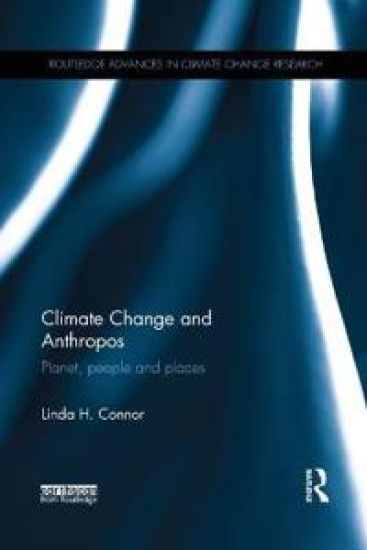
Climate Change and Anthropos

Climate Change and Anthropos

Linda Connor

CRC Press Inc
2017
nidottu
Anthropos, in the sense of species as well as cultures and ethics, locates humans as part of much larger orders of existence – fundamental when thinking about climate change. This book offers a new way of exploring the significance of locality and lives in the epoch of the Anthropocene, a time when humans confront the limits of our control over nature. Many scholars now write about the ethics, policies and politics of climate change, focussing on global processes and effects. The book’s innovative approach to cross-cultural comparison and a regionally based study explores people’s experiences of environmental change and the meaning of climate change for diverse human worlds in a changing biosphere.The main study site is the Hunter Valley in southeast Australia: an ecological region defined by the Hunter River catchment; a dwelling place for many generations of people; and a key location for transnational corporations focussed on the mining, burning and export of black coal. Abundant fossil fuel reserves tie Hunter people and places to the Asia Pacific – the engine room of global economic growth in the twenty-first century and the largest user of the planet’s natural resources. The book analyses the nexus of place and perceptions, political economy and social organisation in situations where environmental changes are radically transforming collective worlds. Based on an anthropological approach informed by other ways of thinking about environment-people relationships, this book analyses the social and cultural dimensions of climate change holistically. Each chapter links the large scales of species and planet with small places, commodity chains, local actions, myths and values, as well as the mingled strands of dystopian imaginings and strivings for recuperative renewal in an era of transition.
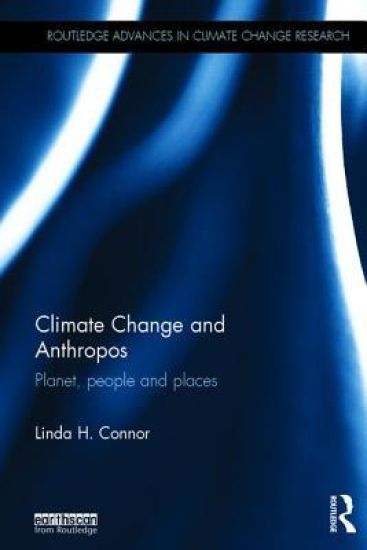
Climate Change and Anthropos

Climate Change and Anthropos

Linda Connor

Routledge
2016
sidottu
Anthropos, in the sense of species as well as cultures and ethics, locates humans as part of much larger orders of existence – fundamental when thinking about climate change. This book offers a new way of exploring the significance of locality and lives in the epoch of the Anthropocene, a time when humans confront the limits of our control over nature. Many scholars now write about the ethics, policies and politics of climate change, focussing on global processes and effects. The book’s innovative approach to cross-cultural comparison and a regionally based study explores people’s experiences of environmental change and the meaning of climate change for diverse human worlds in a changing biosphere.The main study site is the Hunter Valley in southeast Australia: an ecological region defined by the Hunter River catchment; a dwelling place for many generations of people; and a key location for transnational corporations focussed on the mining, burning and export of black coal. Abundant fossil fuel reserves tie Hunter people and places to the Asia Pacific – the engine room of global economic growth in the twenty-first century and the largest user of the planet’s natural resources. The book analyses the nexus of place and perceptions, political economy and social organisation in situations where environmental changes are radically transforming collective worlds. Based on an anthropological approach informed by other ways of thinking about environment-people relationships, this book analyses the social and cultural dimensions of climate change holistically. Each chapter links the large scales of species and planet with small places, commodity chains, local actions, myths and values, as well as the mingled strands of dystopian imaginings and strivings for recuperative renewal in an era of transition.