Kirjojen hintavertailu. Mukana 12 390 323 kirjaa ja 12 kauppaa.

Kirjailija

Linda Gordon

Kirjat ja teokset yhdessä paikassa: 13 kirjaa, julkaisuja vuosilta 2001-2025, suosituimpien joukossa Destroying Democracy. Vertaile teosten hintoja ja tarkista saatavuus suomalaisista kirjakaupoista.

13 kirjaa

Kirjojen julkaisuhaarukka 2001-2025.

Destroying Democracy

Destroying Democracy

Jane Duncan; Linda Gordon; Gunnett Kaaf; Dale T McKinley; Alf Gunvald Nilsen; Devan Pillay; Mandla J Radebe; Alfredo Saad-Filho; Ingar Solty

Wits University Press
2021
pokkari
A history of the erosion of democracy across the globe Democracy is being destroyed. This is a crisis that expresses itself in the rising authoritarianism visible in divisive and exclusionary politics, populist political parties and movements, increased distrust in fact-based information and news, and the withering accountability of state institutions. Over the last four decades, democracy has radically shifted to a market democracy in which all aspects of human, non-human and planetary life are commodified, with corporations becoming more powerful than states and their citizens. This is how neoliberal capitalism functions at a systemic level and if left unchecked, is the greatest threat to democracy and a sustainable planet. Volume six of the Democratic Marxism series focuses on how decades of neoliberal capitalism have eroded the global democratic project and how, in the process, authoritarian politics are gaining ground. Scholars and activists from the political left focus on four country cases – India, Brazil, South Africa and the United States of America – in which the COVID-19 pandemic has fuelled and highlighted the pre-existing crisis. They interrogate issues of politics, ecology, state security, media, access to information and political parties, and affirm the need to reclaim and re-build an expansive and inclusive democracy. Destroying Democracy is an invaluable resource for the general public, activists, scholars and students who are interested in understanding the threats to democracy and the rising tide of authoritarianism in the global south and the global north.

Destroying Democracy

Destroying Democracy

Jane Duncan; Linda Gordon; Gunnett Kaaf; Dale T McKinley; Alf Gunvald Nilsen; Devan Pillay; Mandla J Radebe; Alfredo Saad-Filho; Ingar Solty

WITS UNIVERSITY PRESS
2021
sidottu
A history of the erosion of democracy across the globe Democracy is being destroyed. This is a crisis that expresses itself in the rising authoritarianism visible in divisive and exclusionary politics, populist political parties and movements, increased distrust in fact-based information and news, and the withering accountability of state institutions. Over the last four decades, democracy has radically shifted to a market democracy in which all aspects of human, non-human and planetary life are commodified, with corporations becoming more powerful than states and their citizens. This is how neoliberal capitalism functions at a systemic level and if left unchecked, is the greatest threat to democracy and a sustainable planet. Volume six of the Democratic Marxism series focuses on how decades of neoliberal capitalism have eroded the global democratic project and how, in the process, authoritarian politics are gaining ground. Scholars and activists from the political left focus on four country cases – India, Brazil, South Africa and the United States of America – in which the COVID-19 pandemic has fuelled and highlighted the pre-existing crisis. They interrogate issues of politics, ecology, state security, media, access to information and political parties, and affirm the need to reclaim and re-build an expansive and inclusive democracy. Destroying Democracy is an invaluable resource for the general public, activists, scholars and students who are interested in understanding the threats to democracy and the rising tide of authoritarianism in the global south and the global north.
Seven Social Movements That Changed America
How do social movements arise, wield power and decline? Renowned scholar Linda Gordon investigates these questions in a ground-breaking work, narrating the stories of many of America’s most influential twentieth-century social movements. Beginning with the turn-of-the-century settlement house movement, Gordon then scrutinises the 1920s Ku Klux Klan and its successors, the violent American fascist groups of the 1930s. Profiles of two Depression-era movements follow—the Townsend campaign that brought us Social Security and the creation of unemployment aid. Proceeding then to the 1955 Montgomery bus boycott, which inspired the civil rights movement and launched Martin Luther King Jr.’s career, the narrative barrels into the 1960s–70s with Cesar Chavez’s farmworkers’ union. The concluding chapter illumines the 1970s women’s liberation movement through the dramatic story of the Boston-area organisations Bread and Roses and the Combahee River Collective. Separately and together, these seven chapters animate American history, reminding us of the power of collective activism.
Not to Worry, Lucille and Wilson

Not to Worry, Lucille and Wilson

Linda Gordon

Christian Faith
2022
pokkari
Not to Worry, Lucille is designed to teach young children that humans and all members of the universe rely on God for sustenance and do so on faith. With children increasingly exposed to life's uncertainties and adult concepts of terror, death and fear, it is important to introduce the concept of an all-powerful and benevolent Creator.
The Second Coming of the KKK

The Second Coming of the KKK

Linda Gordon

Liveright Publishing Corporation
2018
nidottu
A new Ku Klux Klan arose in the early 1920s, a less violent but equally virulent descendant of the relatively small, terrorist Klan of the 1870s. Unknown to most Americans today, this "second Klan" largely flourished above the Mason-Dixon Line--its army of four-to-six-million members spanning the continent from New Jersey to Oregon, its ideology of intolerance shaping the course of mainstream national politics throughout the twentieth century.As prize-winning historian Linda Gordon demonstrates, the second Klan's enemies included Catholics and Jews as well as African Americans. Its bigotry differed in intensity but not in kind from that of millions of other WASP Americans. Its membership, limited to white Protestant native-born citizens, was entirely respectable, drawn from small businesspeople, farmers, craftsmen, and professionals, and including about 1.5 million women. For many Klanspeople, membership simultaneously reflected a protest against an increasingly urban society and provided an entree into the new middle class.Never secret, this Klan recruited openly, through newspaper ads, in churches, and through extravagant mass "Americanism" pageants, often held on Independence Day. These "Klonvocations" drew tens of thousands and featured fireworks, airplane stunts, children's games, and women's bake-offs--and, of course, cross-burnings. The Klan even controlled about one hundred and fifty newspapers, as well as the Cavalier Motion Picture Company, dedicated to countering Hollywood's "immoral"--and Jewish--influence. The Klan became a major political force, electing thousands to state offices and over one hundred to national offices, while successfully lobbying for the anti-immigration Reed-Johnson Act of 1924.As Gordon shows, the themes of 1920s Klan ideology were not aberrant, but an indelible part of American history: its "100% Americanism" and fake news, broadcast by charismatic speakers, preachers, and columnists, became part of the national fabric. Its spokespeople vilified big-city liberals, "money-grubbing Jews," "Pope-worshipping Irish," and intellectuals for promoting jazz, drinking, and cars (because they provided the young with sexual privacy).The Klan's collapse in 1926 was no less flamboyant, done in by its leaders' financial and sexual corruption, culminating in the conviction of Grand Dragon David Stephenson for raping and murdering his secretary, and chewing up parts of her body. Yet the Klan's brilliant melding of Christian values with racial bigotry lasted long after the organization's decline, intensifying a fear of diversity that has long been a dominant undercurrent of American history.Documenting what became the largest social movement of the first half of the twentieth century, The Second Coming of the Ku Klux Klan exposes the ancestry and helps explain the dangerous appeal of today's welter of intolerance.
The Second Coming of the KKK: The Ku Klux Klan of the 1920s and the American Political Tradition
Extraordinary national acclaim accompanied the publication of award-winning historian Linda Gordon's disturbing and markedly timely history of the reassembled Ku Klux Klan of the 1920s. Dramatically challenging our preconceptions of the hooded Klansmen responsible for establishing a Jim Crow racial hierarchy in the 1870s South, this "second Klan" spread in states principally above the Mason-Dixon line by courting xenophobic fears surrounding the flood of immigrant "hordes" landing on American shores. "Part cautionary tale, part expose" (Washington Post), The Second Coming of the KKK "illuminates the surprising scope of the movement" (The New Yorker); the Klan attracted four-to-six-million members through secret rituals, manufactured news stories, and mass "Klonvocations" prior to its collapse in 1926?but not before its potent ideology of intolerance became part and parcel of the American tradition. A "must-read" (Salon) for anyone looking to understand the current moment, The Second Coming of the KKK offers "chilling comparisons to the present day" (New York Review of Books). 8 pages of illustrations
Feminism Unfinished

Feminism Unfinished

Dorothy Sue Cobble; Linda Gordon; Astrid Henry

Liveright Publishing Corporation
2017
nidottu
Eschewing the conventional wisdom that places the origins of the American women’s movement in the nostalgic glow of the late 1960s, Feminism Unfinished traces the beginnings of this seminal American social movement to the 1920s, in the process creating an expanded, historical narrative that dramatically rewrites a century of American women’s history. Also challenging the contemporary “lean-in,” trickle-down feminist philosophy and asserting that women’s histories all too often depoliticize politics, labor issues, and divergent economic circumstances, Dorothy Sue Cobble, Linda Gordon, and Astrid Henry demonstrate that the post-Suffrage women’s movement focused on exploitation of women in the workplace as well as on inherent sexual rights. The authors carefully revise our “wave” vision of feminism, which previously suggested that there were clear breaks and sharp divisions within these media-driven “waves.” Showing how history books have obscured the notable activism by working-class and minority women in the past, Feminism Unfinished provides a much-needed corrective.
The Moral Property of Women

The Moral Property of Women

Linda Gordon

University of Illinois Press
2007
nidottu
Choice Magazine's Outstanding Academic Books for 2004The only book to cover the entire history of birth control and the intense controversies about reproduction rights that have raged in the United States for more than 150 years, The Moral Property of Women is a thoroughly updated and revised version of the award-winning historian Linda Gordon's classic history Woman's Body, Woman's Right, originally published in 1976.Arguing that reproduction control has always been central to women's status, The Moral Property of Women shows how opposition to it has long been part of the conservative opposition to gender equality. From its roots in folk medicine and in a campaign so broad it constituted a grassroots social movement at some points in history, to its legitimization through public policy, the widespread acceptance of birth control has involved a major reorientation of sexual values.Gordon puts today's reproduction control controversies--foreign aid for family planning, the abortion debates, teenage pregnancy and childbearing, stem-cell research--into historical perspective and shows how the campaign to legalize abortion is part of a 150-year-old struggle over reproductive rights, a struggle that has followed a circuitous path. Beginning with the "folk medicine" of birth control, Gordon discusses how the backlash against the first women's rights movement of the 1800s prohibited both abortion and contraception about 130 years ago. She traces the campaign for legal reproduction control from the 1870s to the present and argues that attitudes toward birth control have been inseparable from family values, especially standards about sexuality and gender equality.Highlighting both leaders and followers in the struggle, The Moral Property of Women chronicles the contributions of well-known reproduction control pioneers such as Elizabeth Cady Stanton, Margaret Sanger, and Emma Goldman, as well as lesser- known campaigners including the utopian socialist Robert Dale Owen, the three doctors Foote--Edward Bliss Foote, Edward Bond Foote, and Mary Bond Foote--the civil libertarian Mary Ware Dennett, and the daring Jane project of the 1970s, in which Chicago women's liberation activists performed illegal abortions.
Heroes of Their Own Lives

Heroes of Their Own Lives

Linda Gordon

University of Illinois Press
2002
nidottu
In this unflinching history of family violence, Linda Gordon traces policies on child abuse and neglect, wife beating, and incest from 1880 to 1960. Gordon begins with the so-called discovery of family violence in the 1870s, when experts first identified it as a social rather than personal problem. From there, Gordon chronicles the changing visibility of family violence as gender, family, and political ideologies shifted and the women's and civil rights movements gained strength. Throughout, she illustrates how public perceptions of issues like marriage, poverty, alcoholism, mental illness, and responsibility worked for and against the victims of family violence, and looks at the link between family violence and larger social problems. Powerful and moving, Heroes of Their Own Lives offers an honest understanding of a persistent problem and a realistic view of the difficulties in stopping it.
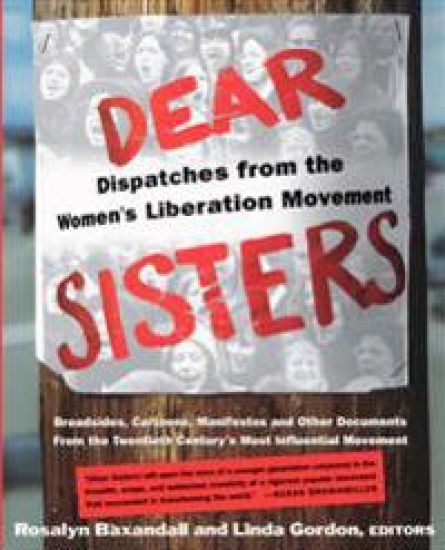
Dear Sisters

Dear Sisters

Linda Gordon; Rosalyn Baxandall

Basic Books
2001
pokkari
Today's women are so comfortable in their authority that they often forget to credit the women's liberation movement of the 1960s and'70s for paving the way,from the kitchen to the boardroom, from sexual harassment to self-defence, from cheerleading on the sidelines to playing centre on the team. Distinguished scholars and active participants in the movement, Linda Gordon and Rosalyn Baxandall have collected a colourful array of documents,songs, leaflets, cartoons, position papers,that illustrate the range of people, places, organizations, and ideas that made up the movement. Dear Sisters chronicles historical change in such broad areas as health, work, and family, and captures the subtle humour, unceasing passion, and overwhelming diversity that defined the women's liberation movement.
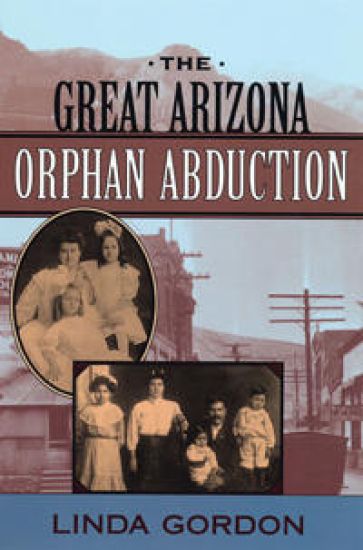
The Great Arizona Orphan Abduction

The Great Arizona Orphan Abduction

Linda Gordon

Harvard University Press
2001
nidottu
In 1904, New York nuns brought forty Irish orphans to a remote Arizona mining camp, to be placed with Catholic families. The Catholic families were Mexican, as was the majority of the population. Soon the town's Anglos, furious at this "interracial" transgression, formed a vigilante squad that kidnapped the children and nearly lynched the nuns and the local priest. The Catholic Church sued to get its wards back, but all the courts, including the U.S. Supreme Court, ruled in favor of the vigilantes. The Great Arizona Orphan Abduction tells this disturbing and dramatic tale to illuminate the creation of racial boundaries along the Mexican border. Clifton/Morenci, Arizona, was a "wild West" boomtown, where the mines and smelters pulled in thousands of Mexican immigrant workers. Racial walls hardened as the mines became big business and whiteness became a marker of superiority. These already volatile race and class relations produced passions that erupted in the "orphan incident." To the Anglos of Clifton/Morenci, placing a white child with a Mexican family was tantamount to child abuse, and they saw their kidnapping as a rescue.Women initiated both sides of this confrontation. Mexican women agreed to take in these orphans, both serving their church and asserting a maternal prerogative; Anglo women believed they had to "save" the orphans, and they organized a vigilante squad to do it. In retelling this nearly forgotten piece of American history, Linda Gordon brilliantly recreates and dissects the tangled intersection of family and racial values, in a gripping story that resonates with today's conflicts over the "best interests of the child."