Kirjailija
Linda Martín Alcoff
Kirjat ja teokset yhdessä paikassa: 16 kirjaa, julkaisuja vuosilta 2002-2025, suosituimpien joukossa Kultureller Rassismus und die Krise der weißen Identität. Vertaile teosten hintoja ja tarkista saatavuus suomalaisista kirjakaupoista.
Mukana myös kirjoitusasut: Linda Martin Alcoff
16 kirjaa
Kirjojen julkaisuhaarukka 2002-2025.
Race and Racism: A Decolonial Approach argues that the topics of race and racism need a decolonial framing if we are to understand their genealogy in the modern world, and explores their current iterations and the path forward. The chapters develop this argument in three ways. Chapter One presents an account of racialized identities that foreground their essentially historical nature as created through the shared experiences and collective actions of both elite and non-elite groups. Overcoming racial oppression cannot, then, occur simply by a change in policies, but only through new collective experiences of peaceful and just forms of collaborative cohabitation. Chapter Two argues for an expanded focus on cultural racism over individual attitudinal forms. Cultural racism focuses on, and ranks, peoples, and uses this to justify global inequalities and injustices. In truth, all modern cultures, including the West, are the product of transculturation at every level, not only affecting their music and language but also their sciences and political institutions. Cultural supremacy is thus a myth, and cultural ranking an impossibility. It remains vital to engage in criticism and debate over specific ideas and practices, but these discussions are often marred and made ineffective by cultural racism. Chapter Three dissects the current crisis of white identity that is energizing the far right on both sides of the Atlantic, with a focus on migrants as the source of nearly every social problem. The move to ethno-nationalism can only be forestalled by directly addressing the Replacement Theory and the difficult implications of colonialism's continuing effects on global relations. White identities have been based in false histories about the modern era, yet the truly varied experiences of whites are not well represented in the myths that grounded racial supremacy. If we face the truth about our histories, and understand them with more accuracy and nuance, we can formulate a way forward in unity.

Kultureller Rassismus und die Krise der weißen Identität
Linda Martín Alcoff
SUHRKAMP VERLAG
2025
sidottu
Das Problem, für andere zu sprechen. [Was bedeutet das alles?]
Linda Martín Alcoff
Reclam Philipp Jun.
2023
pokkari
Critique of Latin American Reason
Santiago Castro-Gómez; Linda Martín Alcoff
Columbia University Press
2021
sidottu
Critique of Latin American Reason is one of the most important philosophical texts to have come out of South America in recent decades. First published in 1996, it offers a sweeping critique of the foundational schools of thought in Latin American philosophy and critical theory.Santiago Castro-Gómez argues that “Latin America” is not so much a geographical entity, a culture, or a place, but rather an object of knowledge produced by a family of discourses in the humanities that are inseparably linked to colonial power relationships. Using the archaeological and genealogical methods of Michel Foucault, he analyzes the political, literary, and philosophical discourses and modes of power that have contributed to the making of “Latin America.” Castro-Gómez examines the views of a wide range of Latin American thinkers on modernity, postmodernity, identity, colonial history, and literature, also considering how these questions have intersected with popular culture. His critique spans Central and South America, and it also implicates broader and protracted global processes.This book presents this groundbreaking work of contemporary critical theory in English translation for the first time. It features a foreword by Linda Martín Alcoff, a new preface by the author, and an introduction by Eduardo Mendieta situating Castro-Gómez’s thought in the context of critical theory in Latin America and the Global South. Two appendixes feature an interview with Castro-Gómez that sheds light on the book’s composition and short provocations responding to each chapter from a multidisciplinary forum of contemporary scholars who resituate the work within a range of perspectives including feminist, Francophone African, and decolonial Black political thought.
Critique of Latin American Reason
Santiago Castro-Gómez; Linda Martín Alcoff
Columbia University Press
2021
pokkari
Critique of Latin American Reason is one of the most important philosophical texts to have come out of South America in recent decades. First published in 1996, it offers a sweeping critique of the foundational schools of thought in Latin American philosophy and critical theory.Santiago Castro-Gómez argues that “Latin America” is not so much a geographical entity, a culture, or a place, but rather an object of knowledge produced by a family of discourses in the humanities that are inseparably linked to colonial power relationships. Using the archaeological and genealogical methods of Michel Foucault, he analyzes the political, literary, and philosophical discourses and modes of power that have contributed to the making of “Latin America.” Castro-Gómez examines the views of a wide range of Latin American thinkers on modernity, postmodernity, identity, colonial history, and literature, also considering how these questions have intersected with popular culture. His critique spans Central and South America, and it also implicates broader and protracted global processes.This book presents this groundbreaking work of contemporary critical theory in English translation for the first time. It features a foreword by Linda Martín Alcoff, a new preface by the author, and an introduction by Eduardo Mendieta situating Castro-Gómez’s thought in the context of critical theory in Latin America and the Global South. Two appendixes feature an interview with Castro-Gómez that sheds light on the book’s composition and short provocations responding to each chapter from a multidisciplinary forum of contemporary scholars who resituate the work within a range of perspectives including feminist, Francophone African, and decolonial Black political thought.
Sexual violence has become a topic of intense media scrutiny, thanks to the bravery of survivors coming forward to tell their stories. But, unfortunately, mainstream public spheres too often echo reports in a way that inhibits proper understanding of its causes, placing too much emphasis on individual responsibility or blaming minority cultures. In this powerful and original book, Linda Martín Alcoff aims to correct the misleading language of public debate about rape and sexual violence by showing how complex our experiences of sexual violation can be. Although it is survivors who have galvanized movements like #MeToo, when their words enter the public arena they can be manipulated or interpreted in a way that damages their effectiveness. Rather than assuming that all experiences of sexual violence are universal, we need to be more sensitive to the local and personal contexts – who is speaking and in what circumstances – that affect how activists’ and survivors’ protests will be received and understood. Alcoff has written a book that will revolutionize the way we think about rape, finally putting the survivor center stage.
Following the deaths of Trayvon Martin and other black youths in recent years, students on campuses across America have joined professors and activists in calling for justice and increased awareness that Black Lives Matter. In this second edition of his trenchant and provocative book, George Yancy offers students the theoretical framework they crave for understanding the violence perpetrated against the Black body. Drawing from the lives of Ossie Davis, Frantz Fanon, Malcolm X, and W. E. B. Du Bois, as well as his own experience, and fully updated to account for what has transpired since the rise of the Black Lives Matter movement, Yancy provides an invaluable resource for students and teachers of courses in African American Studies, African American History, Philosophy of Race, and anyone else who wishes to examine what it means to be Black in America.
White identity is in ferment. White, European Americans living in the United States will soon share an unprecedented experience of slipping below 50% of the population. The impending demographic shifts are already felt in most urban centers and the effect is a national backlash of hyper-mobilized political, and sometimes violent, activism with a stated aim that is simultaneously vague and deadly clear: 'to take our country back.' Meanwhile the spectre of 'minority status' draws closer, and the material advantages of being born white are eroding. This is the political and cultural reality tackled by Linda Martín Alcoff in The Future of Whiteness. She argues that whiteness is here to stay, at least for a while, but that half of whites have given up on ideas of white supremacy, and the shared public, material culture is more integrated than ever. More and more, whites are becoming aware of how they appear to non-whites, both at home and abroad, and this is having profound effects on white identity in North America. The young generation of whites today, as well as all those who follow, will have never known a country in which they could take white identity as the unchallenged default that dominates the political, economic and cultural leadership. Change is on the horizon, and the most important battleground is among white people themselves. The Future of Whiteness makes no predictions but astutely analyzes the present reaction and evaluates the current signs of turmoil. Beautifully written and cogently argued, the book looks set to spark debate in the field and to illuminate an important area of racial politics.
Women's Realities, Women's Choices: An Introduction to Women's and Gender Studies
Sarah Chinn; Linda Martin Alcoff; Jacqueline Nassy Brown
Oxford University Press
2014
nidottu
This landmark text introduces readers to the field of women's studies by analyzing the contradictions between social and cultural "givens" and the realities that women face in society. Written collectively by nine authors from various disciplines, Women's Realities, Women's Choices, Fourth Edition, has been updated to incorporate the latest research and statistics in the field. Covering the most recent developments in politics, labor, family life, religion, and culture, the book also features extensive research on relevant social issues, such as the impact of the post-Soviet world on women's lives, the experience of homosexuality in family life, and the effects of economic globalization on women worldwide. Examining women as individuals, as family members, and as a force in the greater social fabric, Women's Realities, Women's Choices remains the most timely, comprehensive, and compelling introduction to the field of women's studies. New to This Edition * An updated conceptual organization* A focus on transnational feminism and globalization* An entire chapter devoted to intersectionality and differences among women* Updates to every chapter, reflecting changes in the field and in the world
"Real" knowing always involves a political dimension, Linda Martín Alcoff suggests. But this does not mean we need to give up realism or the possibility of truth. Recent work in continental philosophy insists on the influence that power and desire exert on knowing, whereas contemporary analytic philosophy largely ignores these political concerns in its accounts of justification and truth. Alcoff engages these traditionally conflicting approaches in a constructive dialogue, effectively spanning the analytic/continental divide. In provocative readings of major figures in the continental tradition, Alcoff shows that the work of Hans-Georg Gadamer and Michel Foucault can help rectify key problems in coherence epistemology, such as the link between coherence and truth. She also argues that discussions about knowledge among continental philosophers can benefit from the work of analytic philosophers Donald Davidson and Hilary Putnam on meaning and ontology. Alcoff makes a compelling case for the need to address truth as a metaphysical issue, in contrast to minimalist tendencies in Anglo-American philosophy and deconstructionism on the continent. Her work persuasively argues for coherentist epistemology as a more realistic reconfiguration of the ontology of truth.
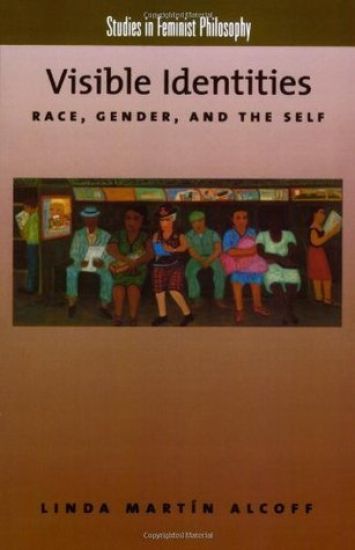
In the heated debates over identity politics, few theorists have looked carefully at the conceptualizations of identity assumed by all sides. Visible Identities fills this gap. Drawing on both philosophical sources as well as theories and empirical studies in the social sciences, Martín Alcoff makes a strong case that identities are not like special interests, nor are they doomed to oppositional politics, nor do they inevitably lead to conformism, essentialism, or reductive approaches to judging others. Identities are historical formations and their political implications are open to interpretation. But identities such as race and gender also have a powerful visual and material aspect that eliminativists and social constructionists often underestimate. Visible Identities offers a careful analysis of the political and philosophical worries about identity and argues that these worries are neither supported by the empirical data nor grounded in realistic understandings of what identities are. Martín Alcoff develops a more realistic characterization of identity in general through combining phenomenological approaches to embodiment with hermeneutic concepts of the interpretive horizon. Besides addressing the general contours of social identity, Martín Alcoff develops an account of the material infrastructure of gendered identity, compares and contrasts gender identities with racialized ones, and explores the experiential aspects of racial subjectivity for both whites and non-whites. In several chapters she looks specifically at Latino identity as well, including its relationship to concepts of race, the specific forms of anti-Latino racism, and the politics of mestizo or hybrid identity.
Latin American Perspectives on Globalization
Linda Martín Alcoff
Rowman Littlefield Publishers
2002
sidottu
From the most prominent thinkers in Latin American philosophy, literature, politics, and social science comes a challenge to conventional theories of globalization. The contributors to this volume imagine a discourse in which revolution is defined not as a temporalized march of progress or takeover of state power, but as a movement for local control that upholds standards of material conditions for human dignity. Essays on identity, equality, and ethics propose models of transcultural and intercultural relations that replace center/periphery or world-systems approaches; they impel us to focus on building dialogic relationships rather than on accommodating universalized paradigms. Ultimately suggesting a reconstruction of the world in terms of the interests of one of the peripheral regions of the world, Latin American Perspectives on Globalization argues with cogency and urgency that no one within contemporary globalization debates can afford to ignore the Latin American philosophical tradition.
Latin American Perspectives on Globalization
Linda Martín Alcoff
Rowman Littlefield Publishers
2002
nidottu
From the most prominent thinkers in Latin American philosophy, literature, politics, and social science comes a challenge to conventional theories of globalization. The contributors to this volume imagine a discourse in which revolution is defined not as a temporalized march of progress or takeover of state power, but as a movement for local control that upholds standards of material conditions for human dignity. Essays on identity, equality, and ethics propose models of transcultural and intercultural relations that replace center/periphery or world-systems approaches; they impel us to focus on building dialogic relationships rather than on accommodating universalized paradigms. Ultimately suggesting a reconstruction of the world in terms of the interests of one of the peripheral regions of the world, Latin American Perspectives on Globalization argues with cogency and urgency that no one within contemporary globalization debates can afford to ignore the Latin American philosophical tradition.