Kirjojen hintavertailu. Mukana 12 390 323 kirjaa ja 12 kauppaa.

Kirjailija

Lindsay M. Montgomery

Kirjat ja teokset yhdessä paikassa: 6 kirjaa, julkaisuja vuosilta 2019-2024, suosituimpien joukossa Archaeological Theory in Dialogue. Vertaile teosten hintoja ja tarkista saatavuus suomalaisista kirjakaupoista.

6 kirjaa

Kirjojen julkaisuhaarukka 2019-2024.

Archaeological Theory in Dialogue

Archaeological Theory in Dialogue

Rachel J. Crellin; Craig N. Cipolla; Lindsay M. Montgomery; Oliver J.T. Harris; Sophie V. Moore

Routledge
2020
nidottu
Archaeological Theory in Dialogue presents an innovative conversation between five scholars from different backgrounds on a range of central issues facing archaeology today.Interspersing detailed investigations of critical theoretical issues with dialogues between the authors, the book interrogates the importance of four themes at the heart of much contemporary theoretical debate: relations, ontology, posthumanism, and Indigenous paradigms. The authors, who work in Europe and North America, explore how these themes are shaping the ways that archaeologists conduct fieldwork, conceptualize the past, and engage with the political and ethical challenges that our discipline faces in the twenty-first century.The unique style of Archaeological Theory in Dialogue, switching between detailed arguments and dialogical exchange, makes it essential reading for both scholars and students of archaeological theory and those with an interest in the politics and ethics of the past.
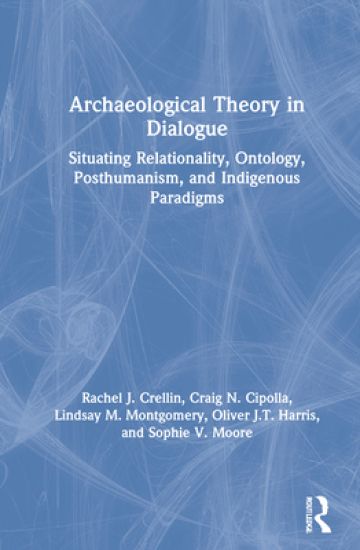
Archaeological Theory in Dialogue

Archaeological Theory in Dialogue

Rachel J. Crellin; Craig N. Cipolla; Lindsay M. Montgomery; Oliver J.T. Harris; Sophie V. Moore

Routledge
2020
sidottu
Archaeological Theory in Dialogue presents an innovative conversation between five scholars from different backgrounds on a range of central issues facing archaeology today.Interspersing detailed investigations of critical theoretical issues with dialogues between the authors, the book interrogates the importance of four themes at the heart of much contemporary theoretical debate: relations, ontology, posthumanism, and Indigenous paradigms. The authors, who work in Europe and North America, explore how these themes are shaping the ways that archaeologists conduct fieldwork, conceptualize the past, and engage with the political and ethical challenges that our discipline faces in the twenty-first century.The unique style of Archaeological Theory in Dialogue, switching between detailed arguments and dialogical exchange, makes it essential reading for both scholars and students of archaeological theory and those with an interest in the politics and ethics of the past.
Indigenous War Painting of the Plains Volume 283

Indigenous War Painting of the Plains Volume 283

Arni Brownstone; Lindsay M. Montgomery

UNIVERSITY OF OKLAHOMA PRESS
2024
sidottu
In the nineteenth and early twentieth centuries, the Indigenous peoples of the Great Plains practiced an archival art—narrating war exploits in large-scale paintings executed on animal hide robes, shirts, tipi covers, and tipi liners. Essentially autobiographical, the paintings were worn and lived in by the men whose war exploits they portrayed, and were made to be “read” by the public at large. Executed in a pictorial narrative style and documenting actual events, these paintings blend visual art and history.Indigenous War Painting of the Plains is the first comprehensive look at this important North American art form, covering the full corpus of war paintings from fourteen tribes across the plains. Two impediments have previously made such a book impractical: photography alone falls short of rendering war paintings for the printed page, and only about half of the surviving works have reliable documentation on their cultural origins. Arni Brownstone surmounts these difficulties by producing precise electronic redrawings and by using well-documented paintings to inform poorly documented examples, bolstered by a careful examination of collection histories. Featuring some 300 photographs and electronic redrawings, the book focuses on 83 paintings organized into four chapters covering the paintings of tribes associated with a specific geographical sphere of artistic influence. Four appendixes feature paintings combined with “translations” by Indigenous collaborators who had intimate knowledge of the depicted events. Offering vivid access to the key works of war painting preserved in 37 museums throughout North America and Europe, Indigenous War Painting of the Plains illuminates distinctions between painting styles of different tribes, reveals how they influenced one another and changed over time, and conveys a deep understanding of how war painting developed in relation to profound social changes in Plains Indian cultures.
A History of Mobility in New Mexico

A History of Mobility in New Mexico

Lindsay M. Montgomery

Routledge
2021
nidottu
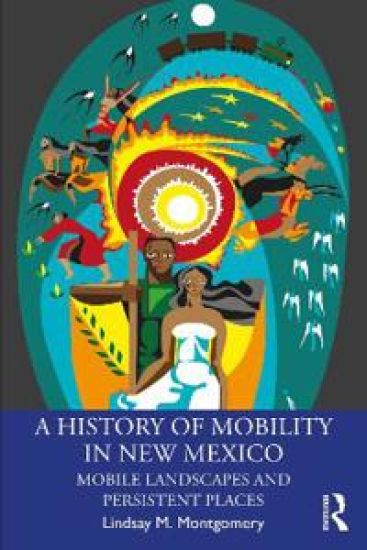
A History of Mobility in New Mexico uses the often-enigmatic chipped stone assemblages of the Taos Plateau to chart patterns of historical mobility in northern New Mexico.Drawing on evidence of spatial patterning and geochemical analyses of stone tools across archaeological landscapes, the book examines the distinctive mobile modalities of different human communities, documenting evolving logics of mobility—residential, logistical, pastoral, and settler colonial. In particular, it focuses on the diversity of ways that Indigenous peoples have used and moved across the Plateau landscape from deep time into the present. The analysis of Indigenous movement patterns is grounded in critical Indigenous philosophy, which applies core principles within Indigenous thought to the archaeological record in order to challenge conventional understandings of occupation, use, and abandonment.Providing an Indigenizing approach to archaeological research and new evidence for the long-term use of specific landscape features, A History of Mobility in New Mexico presents an innovative approach to human-environment interaction for readers and scholars of North American history.
A History of Mobility in New Mexico

A History of Mobility in New Mexico

Lindsay M. Montgomery

Routledge
2021
sidottu
A History of Mobility in New Mexico uses the often-enigmatic chipped stone assemblages of the Taos Plateau to chart patterns of historical mobility in northern New Mexico.Drawing on evidence of spatial patterning and geochemical analyses of stone tools across archaeological landscapes, the book examines the distinctive mobile modalities of different human communities, documenting evolving logics of mobility—residential, logistical, pastoral, and settler colonial. In particular, it focuses on the diversity of ways that Indigenous peoples have used and moved across the Plateau landscape from deep time into the present. The analysis of Indigenous movement patterns is grounded in critical Indigenous philosophy, which applies core principles within Indigenous thought to the archaeological record in order to challenge conventional understandings of occupation, use, and abandonment.Providing an Indigenizing approach to archaeological research and new evidence for the long-term use of specific landscape features, A History of Mobility in New Mexico presents an innovative approach to human-environment interaction for readers and scholars of North American history.
Objects of Survivance

Objects of Survivance

Lindsay M. Montgomery; Chip Colwell

University Press of Colorado
2019
sidottu
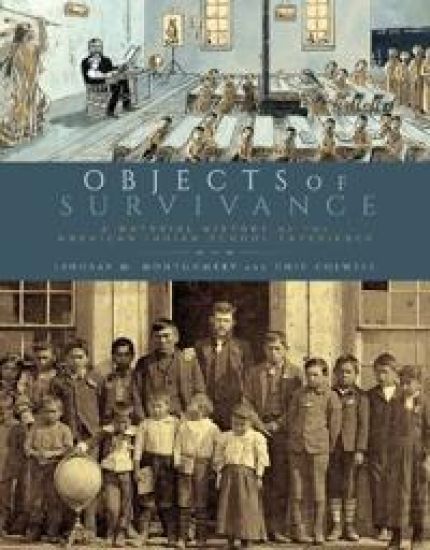
Between 1893 and 1903, Jesse H. Bratley worked in Indian schools across five reservations in the American West. As a teacher Bratley was charged with forcibly assimilating Native Americans through education. Although tasked with eradicating their culture, Bratley became entranced by it—collecting artifacts and taking glass plate photographs to document the Native America he encountered. Today, the Denver Museum of Nature & Science’s Jesse H. Bratley Collection consists of nearly 500 photographs and 1,000 pottery and basketry pieces, beadwork, weapons, toys, musical instruments, and other objects traced to the S’Klallam, Lakota Sioux, Cheyenne, Arapaho, Havasupai, Hopi, and Seminole peoples. This visual and material archive serves as a lens through which to view a key moment in US history—when Native Americans were sequestered onto reservation lands, forced into unfamiliar labor economies, and attacked for their religious practices. Education, the government hoped, would be the final tool to permanently transform Indigenous bodies through moral instruction in Western dress, foodways, and living habits. Yet Lindsay Montgomery and Chip Colwell posit that Bratley’s collection constitutes “objects of survivance”—things and images that testify not to destruction and loss but to resistance and survival. Interwoven with documents and interviews, Objects of Survivance illuminates how the US government sought to control Native Americans and how Indigenous peoples endured in the face of such oppression. Rejecting the narrative that such objects preserve dying Native cultures, Objects of Survivance reframes the Bratley Collection, showing how tribal members have reconnected to these items, embracing them as part of their past and reclaiming them as part of their contemporary identities. This unique visual and material record of the early American Indian school experience and story of tribal perseverance will be of value to anyone interested in US history, Native American studies, and social justice. Co-published with the Denver Museum of Nature & Science