Kirjojen hintavertailu. Mukana 12 152 606 kirjaa ja 12 kauppaa.

Kirjailija

Ling Guan

Kirjat ja teokset yhdessä paikassa: 9 kirjaa, julkaisuja vuosilta 2006-2019, suosituimpien joukossa Optimal Resource Allocation for Distributed Video Communication. Vertaile teosten hintoja ja tarkista saatavuus suomalaisista kirjakaupoista.

9 kirjaa

Kirjojen julkaisuhaarukka 2006-2019.

Optimal Resource Allocation for Distributed Video Communication
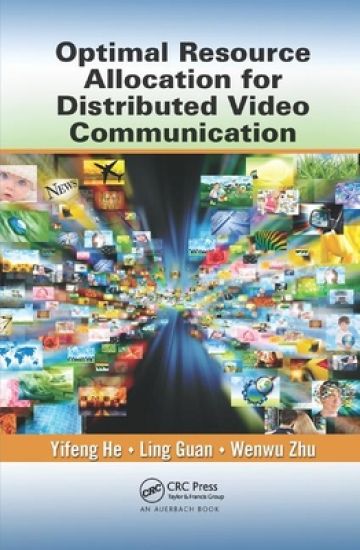
While most books on the subject focus on resource allocation in just one type of network, this book is the first to examine the common characteristics of multiple distributed video communication systems. Comprehensive and systematic, Optimal Resource Allocation for Distributed Video Communication presents a unified optimization framework for resource allocation across these systems. The book examines the techniques required for optimal resource allocation over Internet, wireless cellular networks, wireless ad hoc networks, and wireless sensor networks. It provides you with the required foundation in video communications, including Peer-to-Peer (P2P) networks, wireless networks, and visual sensor networks. Whether you’re in industry or academia, you’ll value how the book outlines current challenges facing the field and outlines a general solution framework for addressing these challenges. From problem formulations and theoretical analysis to practical algorithms, it facilitates the comprehensive understanding required to achieve optimized video and multimedia communications.Presents the resource allocation techniques for scalable video communications over Internet or wireless networksExamines two resource allocation problems—distributed throughput maximization for scalable P2P Video-on-Demand (VoD) systems and streaming capacity for P2P VoD systemsOutlines an optimal prefetching framework for reducing seeking delays in P2P VoD applicationsExamines distributed optimization techniques for unicast and multicast video streaming over wireless ad hoc networksConsiders the network lifetime maximization problem in wireless visual sensor networks Detailing methods that can immediately improve the performance of your video communication systems, this book presents multiple applications of optimal resource allocation. For each of the applications,
Optimal Resource Allocation for Distributed Video Communication

Optimal Resource Allocation for Distributed Video Communication

Yifeng He; Ling Guan; Wenwu Zhu

CRC Press Inc
2013
sidottu
While most books on the subject focus on resource allocation in just one type of network, this book is the first to examine the common characteristics of multiple distributed video communication systems. Comprehensive and systematic, Optimal Resource Allocation for Distributed Video Communication presents a unified optimization framework for resource allocation across these systems. The book examines the techniques required for optimal resource allocation over Internet, wireless cellular networks, wireless ad hoc networks, and wireless sensor networks. It provides you with the required foundation in video communications, including Peer-to-Peer (P2P) networks, wireless networks, and visual sensor networks. Whether you’re in industry or academia, you’ll value how the book outlines current challenges facing the field and outlines a general solution framework for addressing these challenges. From problem formulations and theoretical analysis to practical algorithms, it facilitates the comprehensive understanding required to achieve optimized video and multimedia communications.Presents the resource allocation techniques for scalable video communications over Internet or wireless networksExamines two resource allocation problems—distributed throughput maximization for scalable P2P Video-on-Demand (VoD) systems and streaming capacity for P2P VoD systemsOutlines an optimal prefetching framework for reducing seeking delays in P2P VoD applicationsExamines distributed optimization techniques for unicast and multicast video streaming over wireless ad hoc networksConsiders the network lifetime maximization problem in wireless visual sensor networks Detailing methods that can immediately improve the performance of your video communication systems, this book presents multiple applications of optimal resource allocation. For each of the applications,
Multimedia Database Retrieval

Multimedia Database Retrieval

Paisarn Muneesawang; Ning Zhang; Ling Guan

Springer International Publishing AG
2016
nidottu
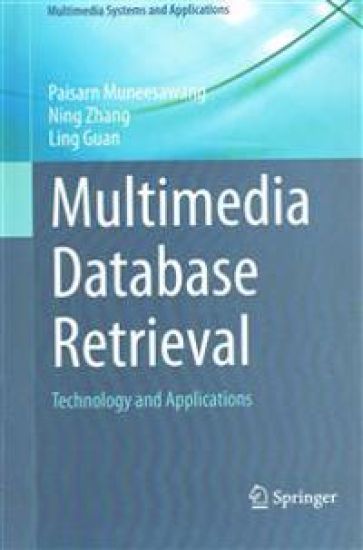
This book explores multimedia applications that emerged from computer vision and machine learning technologies. These state-of-the-art applications include MPEG-7, interactive multimedia retrieval, multimodal fusion, annotation, and database re-ranking. The application-oriented approach maximizes reader understanding of this complex field. Established researchers explain the latest developments in multimedia database technology and offer a glimpse of future technologies. The authors emphasize the crucial role of innovation, inspiring users to develop new applications in multimedia technologies such as mobile media, large scale image and video databases, news video and film, forensic image databases and gesture databases. With a strong focus on industrial applications along with an overview of research topics, Multimedia Database Retrieval: Technology and Applications is an indispensable guide for computer scientists, engineers and practitioners involved in the development and use ofmultimedia systems. It also serves as a secondary text or reference for advanced-level students interested in multimedia technologies.
Multimedia Database Retrieval

Multimedia Database Retrieval

Paisarn Muneesawang; Ning Zhang; Ling Guan

Springer International Publishing AG
2014
sidottu
This book explores multimedia applications that emerged from computer vision and machine learning technologies. These state-of-the-art applications include MPEG-7, interactive multimedia retrieval, multimodal fusion, annotation, and database re-ranking. The application-oriented approach maximizes reader understanding of this complex field. Established researchers explain the latest developments in multimedia database technology and offer a glimpse of future technologies. The authors emphasize the crucial role of innovation, inspiring users to develop new applications in multimedia technologies such as mobile media, large scale image and video databases, news video and film, forensic image databases and gesture databases. With a strong focus on industrial applications along with an overview of research topics, Multimedia Database Retrieval: Technology and Applications is an indispensable guide for computer scientists, engineers and practitioners involved in the development and use ofmultimedia systems. It also serves as a secondary text or reference for advanced-level students interested in multimedia technologies.
Unsupervised Learning

Unsupervised Learning

Matthew Kyan; Paisarn Muneesawang; Kambiz Jarrah; Ling Guan

John Wiley Sons Inc
2014
sidottu
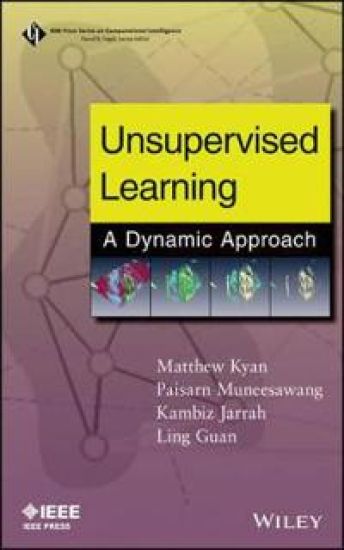
A new approach to unsupervised learning Evolving technologies have brought about an explosion of information in recent years, but the question of how such information might be effectively harvested, archived, and analyzed remains a monumental challenge—for the processing of such information is often fraught with the need for conceptual interpretation: a relatively simple task for humans, yet an arduous one for computers. Inspired by the relative success of existing popular research on self-organizing neural networks for data clustering and feature extraction, Unsupervised Learning: A Dynamic Approach presents information within the family of generative, self-organizing maps, such as the self-organizing tree map (SOTM) and the more advanced self-organizing hierarchical variance map (SOHVM). It covers a series of pertinent, real-world applications with regard to the processing of multimedia data—from its role in generic image processing techniques, such as the automated modeling and removal of impulse noise in digital images, to problems in digital asset management and its various roles in feature extraction, visual enhancement, segmentation, and analysis of microbiological image data. Self-organization concepts and applications discussed include: Distance metrics for unsupervised clusteringSynaptic self-amplification and competitionImage retrievalImpulse noise removalMicrobiological image analysis Unsupervised Learning: A Dynamic Approach introduces a new family of unsupervised algorithms that have a basis in self-organization, making it an invaluable resource for researchers, engineers, and scientists who want to create systems that effectively model oppressive volumes of data with little or no user intervention.
Multimedia Database Retrieval:

Multimedia Database Retrieval:

Paisarn Muneesawang; Ling Guan

Springer-Verlag New York Inc.
2010
nidottu
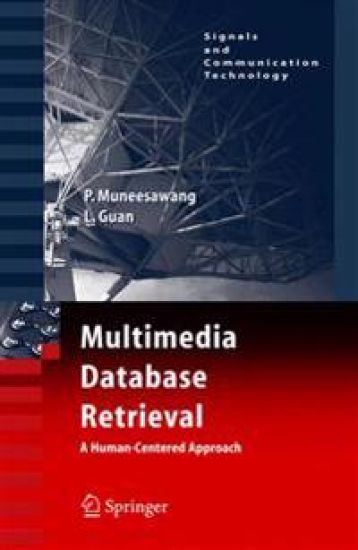
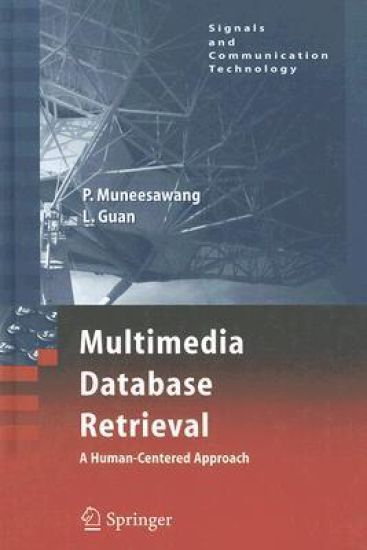
Multimedia Database Retrieval: A Human-Centered Approach presents thelatest development in user-centered methods and the state-of-the-art invisual media retrieval. It includes discussion on perceptually inspirednon-linear paradigm in user-controlled interactive retrieval (UCIR)systems. It also features a coherent approach which focuses on specific topicswithin content/concept-based retrievals via audio-visual information modelingof multimedia. Highlights include: * Exploring an adaptive machine that can learn from itsenvironment * Optimizing the learning system by incorporating self-organizingadaptation into the retrieval process * Demonstrating state-of-the-art applications within small,medium, and large databases The authors also include applications related to Digital AssetManagement (DAM), Computer Aided Referral (CAR) System, GeographicalDatabase Retrieval, retrieval of Art Documents, and Films and VideoRetrieval. Multimedia Database Retrieval: A Human-Centered Approach presents thefundamental and advanced aspects of these topics, as well as thephilosophical directions in the field. The methods detailed in thisbook possess broad applications which will advance the technology inthis fast developing topical area.
Adaptive Image Processing

Adaptive Image Processing

Kim-Hui Yap; Ling Guan; Stuart William Perry; Hau San Wong

CRC Press Inc
2009
sidottu
Illustrating essential aspects of adaptive image processing from a computational intelligence viewpoint, the second edition of Adaptive Image Processing: A Computational Intelligence Perspective provides an authoritative and detailed account of computational intelligence (CI) methods and algorithms for adaptive image processing in regularization, edge detection, and early vision. With three new chapters and updated information throughout, the new edition of this popular reference includes substantial new material that focuses on applications of advanced CI techniques in image processing applications. It introduces new concepts and frameworks that demonstrate how neural networks, support vector machines, fuzzy logic, and evolutionary algorithms can be used to address new challenges in image processing, including low-level image processing, visual content analysis, feature extraction, and pattern recognition.Emphasizing developments in state-of-the-art CI techniques, such as content-based image retrieval, this book continues to provide educators, students, researchers, engineers, and technical managers in visual information processing with the up-to-date understanding required to address contemporary challenges in image content processing and analysis.
Multimedia Database Retrieval:

Multimedia Database Retrieval:

Paisarn Muneesawang; Ling Guan

Springer-Verlag New York Inc.
2006
sidottu
Multimedia Database Retrieval: A Human-Centered Approach presents thelatest development in user-centered methods and the state-of-the-art invisual media retrieval. It includes discussion on perceptually inspirednon-linear paradigm in user-controlled interactive retrieval (UCIR)systems. It also features a coherent approach which focuses on specific topicswithin content/concept-based retrievals via audio-visual information modelingof multimedia. Highlights include: * Exploring an adaptive machine that can learn from itsenvironment * Optimizing the learning system by incorporating self-organizingadaptation into the retrieval process * Demonstrating state-of-the-art applications within small,medium, and large databases The authors also include applications related to Digital AssetManagement (DAM), Computer Aided Referral (CAR) System, GeographicalDatabase Retrieval, retrieval of Art Documents, and Films and VideoRetrieval. Multimedia Database Retrieval: A Human-Centered Approach presents thefundamental and advanced aspects of these topics, as well as thephilosophical directions in the field. The methods detailed in thisbook possess broad applications which will advance the technology inthis fast developing topical area.