Kirjojen hintavertailu. Mukana 12 595 353 kirjaa ja 12 kauppaa.

Kirjailija

Lisa Dellmuth

Kirjat ja teokset yhdessä paikassa: 7 kirjaa, julkaisuja vuosilta 2021-2026, suosituimpien joukossa Internationella relationer. Vertaile teosten hintoja ja tarkista saatavuus suomalaisista kirjakaupoista.

7 kirjaa

Kirjojen julkaisuhaarukka 2021-2026.

Internationella relationer

Internationella relationer

Jakob Gustavsson; Jonas Tallberg; Karin Aggestam; Jan Joel Andersson; Rikard Bengtsson; Ulf Bjereld; Annika Björkdahl; Karin Bäckstrand; Lisa Dellmuth; Marie Demker; Kjell Engelbrekt; Magnus Ericson; Johan Eriksson; Martin Hall; Eva Hansson; Karl Magnus Johansson; Thomas Jonter; Sara Kalm; Catarina Kinnvall; Annica Young Kronsell; Charles Parker; Alexa Robertson; Eric Stern; Fredrik Söderbaum; Anders Uhlin

Studentlitteratur AB
2021
nidottu
I denna heltäckande grundbok ges en introduktion till studiet av internationella relationer. Boken redogör för de dominerande teoretiska perspektiven inom internationella relationer, för de processer som formar den internationella fördelningen av makt och resurser, samt för de mest framträdande politikområdena i världspolitiken idag. Genom sitt breda anslag behandlar boken frågor som: Varför uppstår krig? Vad har globaliseringen för politiska effekter? Vem har makt i internationell politik? Hur kan utvecklingsländerna hävas ur fattigdom? Vilka motiv driver transnationella terroristnätverk? När har normer och internationella institutioner betydelse? Under vilka omständigheter får nationella identiteter genomslag i världspolitiken?I boken medverkar många av de främsta forskarna inom internationell politik i Sverige. Alla är experter inom sina respektive områden, och är väl integrerade i den internationella forskningsmiljön. På ett pedagogiskt sätt introducerar de centrala perspektiv och begrepp och knyter samtidigt an till aktuella exempel och illustrationer. Flera exempel hämtas från en svensk kontext och boken belyser därmed på ett unikt sätt Sveriges relationer med omvärlden. I denna fjärde upplaga har samtliga kapitel uppdaterats. Boken vänder sig i första hand till introduktionskurser i internationell politik eller internationella relationer vid universitet och högskolor.
Legitimacy Politics

Legitimacy Politics

Lisa Dellmuth; Jonas Tallberg

Cambridge University Press
2024
pokkari
Once staunch advocates of international cooperation, political elites are increasingly divided over the merits of global governance. Populist leaders attack international organizations for undermining national democracy, while mainstream politicians defend their importance for solving transboundary problems. Bridging international relations, comparative politics, and cognitive psychology, Lisa Dellmuth and Jonas Tallberg explore whether, when, and why elite communication shapes the popular legitimacy of international organizations. Based on novel theory, experimental methods, and comparative evidence, they show that elites are influential in shaping how citizens perceive global governance and explain why some elites and messages are more effective than others. The book offers fresh insights into major issues of our day, such as the rise of populism, the power of communication, the backlash against global governance, and the relationship between citizens and elites. It will be of interest to scholars and students of international organisations, and experimental and survey research methods.
Legitimacy Politics

Legitimacy Politics

Lisa Dellmuth; Jonas Tallberg

Cambridge University Press
2023
sidottu
Once staunch advocates of international cooperation, political elites are increasingly divided over the merits of global governance. Populist leaders attack international organizations for undermining national democracy, while mainstream politicians defend their importance for solving transboundary problems. Bridging international relations, comparative politics, and cognitive psychology, Lisa Dellmuth and Jonas Tallberg explore whether, when, and why elite communication shapes the popular legitimacy of international organizations. Based on novel theory, experimental methods, and comparative evidence, they show that elites are influential in shaping how citizens perceive global governance and explain why some elites and messages are more effective than others. The book offers fresh insights into major issues of our day, such as the rise of populism, the power of communication, the backlash against global governance, and the relationship between citizens and elites. It will be of interest to scholars and students of international organisations, and experimental and survey research methods.
Citizens, Elites, and the Legitimacy of Global Governance

Citizens, Elites, and the Legitimacy of Global Governance

Lisa Dellmuth; Jan Aart Scholte; Jonas Tallberg; Soetkin Verhaegen

Oxford University Press
2022
sidottu
This is an open access title available under the terms of a CC BY-NC-ND 4.0 International licence. It is free to read at Oxford Scholarship Online and offered as a free PDF download from OUP and selected open access locations. Citizens, Elites, and the Legitimacy of Global Governance offers the first full comparative study of citizen and elite legitimacy beliefs toward global governance. Empirically, it provides a comprehensive analysis of public and elite opinion toward global governance, building on two uniquely coordinated surveys covering multiple countries and international organizations. Theoretically, it develops an individual-level approach, exploring how a person's characteristics in respect of socioeconomic status, political values, geographical identification, and institutional trust shape legitimacy beliefs toward global governance. The book's central findings are three-fold. First, there is a notable and general elite-citizen gap in legitimacy beliefs toward global governance. While elites on average hold moderately high levels of legitimacy toward international organizations, the general public is decidedly more skeptical. Second, individual-level differences in interests, values, identities, and trust dispositions provide significant drivers of citizen and elite legitimacy beliefs toward global governance, as well as the gap between them. Most important on the whole are differences in the extent to which citizens and elites trust domestic political institutions, which systematically shape how they assess the legitimacy of international organizations. Third, both patterns and sources of citizen and elite legitimacy beliefs vary across organizations and countries. These variations suggest that institutional and societal contexts condition attitudes toward global governance. The book's findings shed important light on future opportunities and constraints in international cooperation, suggesting that current levels of legitimacy point neither to a general crisis of global governance nor to a general readiness for its expansion.
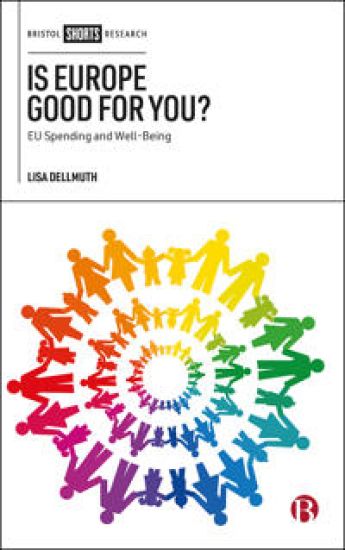
Is Europe Good for You?

Is Europe Good for You?

Lisa Dellmuth

Bristol University Press
2021
sidottu
Throughout the history of European integration, economic wealth has increased to the benefit of citizens in the European Union (EU). However, inequalities in well-being persist within and between Europe’s regions, undermining the legitimacy of the EU in the eyes of citizens. This book investigates how the EU can use its regional funding programmes in ways that increase citizen well-being. The book shows that while EU social investments improve labour market performance in rich regions, they exacerbate income inequality in poor regions. Based on this insight, the book presents a theory on the conditions under which EU funding will enhance well-being. Crucially, it argues the case for enhancing the inclusivity of EU growth, which yields the promise of a more legitimate and stronger union.