

Kirjailija
Lisa Downing
Kirjat ja teokset yhdessä paikassa: 12 kirjaa, julkaisuja vuosilta 2005-2026, suosituimpien joukossa The Subject of Murder – Gender, Exceptionality, and the Modern Killer. Vertaile teosten hintoja ja tarkista saatavuus suomalaisista kirjakaupoista.
12 kirjaa
Kirjojen julkaisuhaarukka 2005-2026.

This book proceeds from a single and very simple observation: throughout history, and up to the present, women have received a clear message that we are not supposed to prioritize ourselves. Indeed, the whole question of "self" is a problem for women – and a problem that issues from a wide range of locations, including, in some cases, feminism itself. When women espouse discourses of self-interest, self-regard, and selfishness, they become illegible. This is complicated by the commodification of the self in the recent Western mode of economic and political organization known as "neoliberalism," which encourages a focus on self-fashioning that may not be identical with self-regard or self-interest. Drawing on figures from French, US, and UK contexts, including Rachilde, Ayn Rand, Margaret Thatcher, and Lionel Shriver, and examining discourses from psychiatry, media, and feminism with the aim of reading against the grain of multiple orthodoxies, this book asks how revisiting the words and works of selfish women of modernity can assist us in understanding our fraught individual and collective identities as women in contemporary culture. And can women with politics that are contrary to the interests of the collective teach us anything about the value of rethinking the role of the individual? This book is an essential read for those with interests in cultural theory, feminist theory, and gender politics.

This book proceeds from a single and very simple observation: throughout history, and up to the present, women have received a clear message that we are not supposed to prioritize ourselves. Indeed, the whole question of "self" is a problem for women – and a problem that issues from a wide range of locations, including, in some cases, feminism itself. When women espouse discourses of self-interest, self-regard, and selfishness, they become illegible. This is complicated by the commodification of the self in the recent Western mode of economic and political organization known as "neoliberalism," which encourages a focus on self-fashioning that may not be identical with self-regard or self-interest. Drawing on figures from French, US, and UK contexts, including Rachilde, Ayn Rand, Margaret Thatcher, and Lionel Shriver, and examining discourses from psychiatry, media, and feminism with the aim of reading against the grain of multiple orthodoxies, this book asks how revisiting the words and works of selfish women of modernity can assist us in understanding our fraught individual and collective identities as women in contemporary culture. And can women with politics that are contrary to the interests of the collective teach us anything about the value of rethinking the role of the individual? This book is an essential read for those with interests in cultural theory, feminist theory, and gender politics.

One of the twentieth century's most controversial sexologists - or "fuckologists," to use his own memorable term - John Money was considered a trailblazing scientist and sexual libertarian by some, but damned by others as a fraud and a pervert. Money invented the concept of gender in the 1950s, yet fought its uptake by feminists. He backed surgical treatments for transsexuality, but argued that gender roles were set by reproductive capacity. He shaped the treatment of intersex, advocating experimental sex changes for children with ambiguous genitalia. He pioneered drug therapy for sex offenders, yet took an ambivalent stance towards pedophilia. In his most publicized case study, Money oversaw the reassignment of David Reimer as female following a circumcision accident in infancy. Heralded by many as proof that gender is pliable, the case was later discredited when Reimer revealed that he had lived as a male since his early teens. In Fuckology, the authors contextualize and interrogate Money's writings and his practices. The book focuses on his three key diagnostic concepts, "hermaphroditism," "transsexualism," and "paraphilia," but also addresses his lesser-known work on topics ranging from animal behavior to the philosophy of science. The result is a comprehensive collection of new insights for researchers and students within cultural, historical, and gender studies, as well as for practitioners and activists in sexology, psychology, and patient rights.

One of the twentieth century's most controversial sexologists - or "fuckologists," to use his own memorable term - John Money was considered a trailblazing scientist and sexual libertarian by some, but damned by others as a fraud and a pervert. Money invented the concept of gender in the 1950s, yet fought its uptake by feminists. He backed surgical treatments for transsexuality, but argued that gender roles were set by reproductive capacity. He shaped the treatment of intersex, advocating experimental sex changes for children with ambiguous genitalia. He pioneered drug therapy for sex offenders, yet took an ambivalent stance towards pedophilia. In his most publicized case study, Money oversaw the reassignment of David Reimer as female following a circumcision accident in infancy. Heralded by many as proof that gender is pliable, the case was later discredited when Reimer revealed that he had lived as a male since his early teens. In Fuckology, the authors contextualize and interrogate Money's writings and his practices. The book focuses on his three key diagnostic concepts, "hermaphroditism," "transsexualism," and "paraphilia," but also addresses his lesser-known work on topics ranging from animal behavior to the philosophy of science. The result is a comprehensive collection of new insights for researchers and students within cultural, historical, and gender studies, as well as for practitioners and activists in sexology, psychology, and patient rights.

The subject of murder has always held a particular fascination for us. But since at least the nineteenth century, we have seen the murderer as different from the ordinary citizen - a special individual who, like an artist or a genius, exists apart from the moral majority, a sovereign self who obeys only the destructive urge, sometimes even commanding cult followings. In contemporary culture, we continue to believe that there is something different and exceptional about killers, but is the murderer such a distinctive type? Are they degenerate beasts or supermen as they have been depicted on the page and the screen? Or are murderers something else entirely? In "The Subject of Murder", Lisa Downing explores the ways in which the figure of the murderer has been made to signify a specific kind of social subject in Western modernity. Drawing on the work of Foucault in her studies of the lives and crimes of killers in Europe and the United States, Downing interrogates the meanings of media and texts produced about and by murderers. Upending the usual treatment of murderers as isolated figures or exceptional individuals, Downing argues that they are ordinary people, reflections of our society at the intersections of gender, agency, desire, and violence.

The Subject of Murder – Gender, Exceptionality, and the Modern Killer
Lisa Downing
University of Chicago Press
2013
nidottu
The subject of murder has always held a particular fascination for us. But since at least the nineteenth century, we have seen the murderer as different from the ordinary citizen - a special individual who, like an artist or a genius, exists apart from the moral majority, a sovereign self who obeys only the destructive urge, sometimes even commanding cult followings. In contemporary culture, we continue to believe that there is something different and exceptional about killers, but is the murderer such a distinctive type? Are they degenerate beasts or supermen as they have been depicted on the page and the screen? Or are murderers something else entirely? In "The Subject of Murder", Lisa Downing explores the ways in which the figure of the murderer has been made to signify a specific kind of social subject in Western modernity. Drawing on the work of Foucault in her studies of the lives and crimes of killers in Europe and the United States, Downing interrogates the meanings of media and texts produced about and by murderers. Upending the usual treatment of murderers as isolated figures or exceptional individuals, Downing argues that they are ordinary people, reflections of our society at the intersections of gender, agency, desire, and violence.

Film & Ethics considers a range of films and texts of film criticism alongside disparate philosophical discourses of ethics by Levinas, Derrida, Foucault, Lacanian psychoanalysts and postmodern theorists.

Film & Ethics considers a range of films and texts of film criticism alongside disparate philosophical discourses of ethics by Levinas, Derrida, Foucault, Lacanian psychoanalysts and postmodern theorists.

French philosopher and historian Michel Foucault is essential reading for students in departments of literature, history, sociology and cultural studies. His work on the institutions of mental health and medicine, the history of systems of knowledge, literature and literary theory, criminality and the prison system, and sexuality, has had a profound and enduring impact across the humanities and social sciences. This introductory book, written for students, offers in-depth critical and contextual perspectives on all of Foucault's major published works. It provides ways in to understanding Foucault's key concepts of subjectivity, discourse, and power and explains the problems of translation encountered in reading Foucault in English. The book also explores the critical reception of Foucault's works and acquaints the reader with the afterlives of some of his theories, particularly his influence on feminist and queer studies. This book offers the ideal introduction to a famously complex, controversial and important thinker.

French philosopher and historian Michel Foucault is essential reading for students in departments of literature, history, sociology and cultural studies. His work on the institutions of mental health and medicine, the history of systems of knowledge, literature and literary theory, criminality and the prison system, and sexuality, has had a profound and enduring impact across the humanities and social sciences. This introductory book, written for students, offers in-depth critical and contextual perspectives on all of Foucault's major published works. It provides ways in to understanding Foucault's key concepts of subjectivity, discourse, and power and explains the problems of translation encountered in reading Foucault in English. The book also explores the critical reception of Foucault's works and acquaints the reader with the afterlives of some of his theories, particularly his influence on feminist and queer studies. This book offers the ideal introduction to a famously complex, controversial and important thinker.
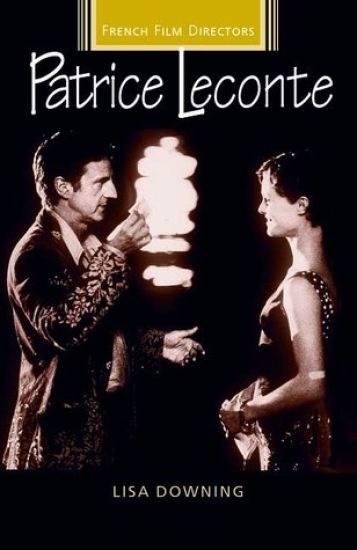
Lisa Downing's comprehensive study of the films of Patrice Leconte traces lines of continuity and revision through a body of apparently disparate films whose "messages" often appear both contradictory and controversial. Pursuing a close reading of the recurrent themes, styles, intertexts and techniques which structure Leconte's filmmaking, Downing re-evaluates Leconte's status as an enigmatic artist offering complex and paradoxical commentary on contemporary questions of sexuality, ethics and identity. This book is the first full-length critical work in English on Leconte's cinema. It provides essential reading for both enthusiasts of French cinema and for those fascinated by the relationship between popular culture and theory.