Kirjojen hintavertailu. Mukana 12 390 323 kirjaa ja 12 kauppaa.

Kirjailija

Lisa Jardine

Kirjat ja teokset yhdessä paikassa: 15 kirjaa, julkaisuja vuosilta 1996-2020, suosituimpien joukossa Reading Shakespeare Historically. Vertaile teosten hintoja ja tarkista saatavuus suomalaisista kirjakaupoista.

15 kirjaa

Kirjojen julkaisuhaarukka 1996-2020.

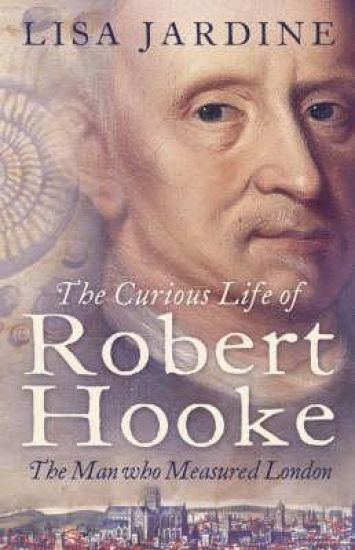
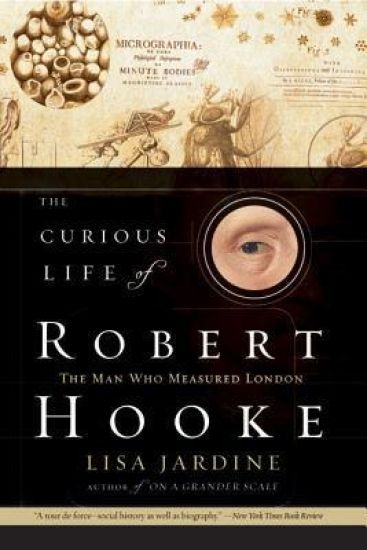
The Curious Life of Robert Hooke

The Curious Life of Robert Hooke

Lisa Jardine

HARPER PERENNIAL
2020
nidottu
"Fascinating. . . . Jardine takes a complex view, according Hooke with the respect and dignity that eluded him for so long. . . and] with this compelling and empathetic portrait, she succeeds in making a convincing case for his place in history. . . as] a founding father in Europe's scientific revolution." -- Los Angeles TimesThe brilliant, largely forgotten maverick Robert Hooke was an engineer, surveyor, architect, and inventor who worked tirelessly with his intimate friend Christopher Wren to rebuild London after the Great Fire of 1666. He was the first Curator of Experiments at the Royal Society, and his engravings of natural phenomena seen under the new microscope appeared in his masterpiece, the acclaimed Micrographia, one of the most influential volumes of the day.But Hooke's irascible temper and his passionate idealism proved fatal for his relationships with important political figures, most notably Sir Isaac Newton: their quarrel is legendary. As a result, historical greatness eluded Robert Hooke. Eminent historian Lisa Jardine does this original thinker of indefatigable curiosity and imagination justice and allows him to take his place as a major figure in the seventeenth century intellectual and scientific revolution.
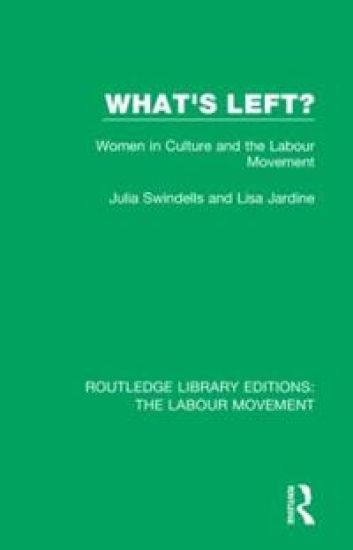
What's Left?

What's Left?

Julia Swindells; Lisa Jardine

Routledge
2020
nidottu
First published in 1990. What had been left out of Left thought? What had allowed the Left to substitute nostalgia for programme and action, and to continue to address itself exclusively to labouring men, despite insistent demands for inclusion from others – notably women – who recognised themselves as belonging to the Left? What’s Left?, a feminist challenge to the male-dominated ideology of the Labour Party, took shape under the pressure of two crucial events: the third successive election defeat of Labour by the Conservative Party, and the death of Raymond Williams. Swindells and Jardine analyse the difficulties the Left had including women in its account of class, to clarify general problems in British Left thought. They conclude that there was a serious and widely-perceived discrepancy between the Labour Party’s model of working-class consciousness and the experiences of the contemporary workforce as a whole. An important exploration of the intellectual history of the Labour Movement, What’s Left? looks critically at the Left from within the Left. It will be fascinating reading for students of cultural studies, history, politics and women’s studies.
What's Left?

What's Left?

Julia Swindells; Lisa Jardine

Routledge
2018
sidottu
First published in 1990. What had been left out of Left thought? What had allowed the Left to substitute nostalgia for programme and action, and to continue to address itself exclusively to labouring men, despite insistent demands for inclusion from others – notably women – who recognised themselves as belonging to the Left? What’s Left?, a feminist challenge to the male-dominated ideology of the Labour Party, took shape under the pressure of two crucial events: the third successive election defeat of Labour by the Conservative Party, and the death of Raymond Williams. Swindells and Jardine analyse the difficulties the Left had including women in its account of class, to clarify general problems in British Left thought. They conclude that there was a serious and widely-perceived discrepancy between the Labour Party’s model of working-class consciousness and the experiences of the contemporary workforce as a whole. An important exploration of the intellectual history of the Labour Movement, What’s Left? looks critically at the Left from within the Left. It will be fascinating reading for students of cultural studies, history, politics and women’s studies.
Erasmus, Man of Letters

Erasmus, Man of Letters

Lisa Jardine

Princeton University Press
2015
pokkari
The name Erasmus of Rotterdam conjures up a golden age of scholarly integrity and the disinterested pursuit of knowledge, when learning could command public admiration without the need for authorial self-promotion. Lisa Jardine, however, shows that Erasmus self-consciously created his own reputation as the central figure of the European intellectual world. Erasmus himself--the historical as opposed to the figural individual--was a brilliant, maverick innovator, who achieved little formal academic recognition in his own lifetime. What Jardine offers here is not only a fascinating study of Erasmus but also a bold account of a key moment in Western history, a time when it first became possible to believe in the existence of something that could be designated "European thought."
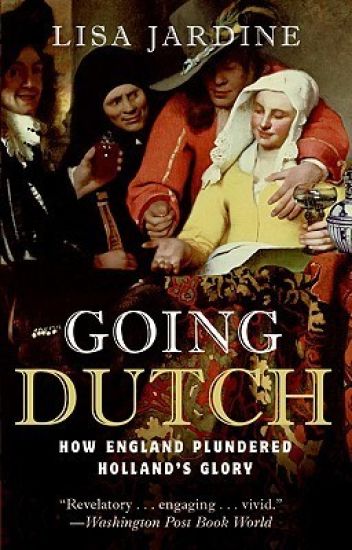
Going Dutch: How England Plundered Holland's Glory
In Going Dutch, renowned writer Lisa Jardine tells the remarkable history of the relationship between England and Holland, two of Europe's most important colonial powers at the dawn of the modern age. Jardine, the author of The Awful End of Prince William the Silent, demonstrates that England's rise did not come at the expense of the Dutch as is commonly thought, but was actually a "handing on" of the baton of cultural and intellectual supremacy to a nation expanding in international power and influence.
Francis Bacon: Discovery and the Art of Discourse

Francis Bacon: Discovery and the Art of Discourse

Lisa Jardine

Cambridge University Press
2009
pokkari
By modern standards Bacon's writings are striking in their range and diversity, and they are too often considered a separate specialist concerns in isolation from each other. Dr Jardine finds a unifying principle in Bacon's preoccupation with 'method', the evaluation and organisation of information as a procedure of investigation or of presentation. She shows how such an interpretation makes consistent (and often surprising) sense of the whole corpus of Bacon's writings: how the familiar but misunderstood inductive method for natural science relations to the more information strategies of argument in his historical, ethical, political and literary work. There is a substantial and valuable study of the intellectual Renaissance background from which Bacon emerged and against which he reacted. Through a series of details comparisons and contrasts we are led to appreciate the true originality and ingenuity of Bacon's own views and also to discount the more superficial resemblances between them and later developments in the philosophy of science.
Another Point of View

Another Point of View

Lisa Jardine

Cornerstone
2009
pokkari
'I want to use the moment as a springboard for some big ideas. I want to use the past and present to stimulate and challenge the listener and seduce them into thinking differently.' Lisa JardineProvocative and inspirational, Lisa Jardine is one of our pre-eminent thinkers. A leading academic, she is a polymath who embraces both the arts and the sciences with equal passion and has that rare gift of being able to make her subject and her thinking accessible to a mainstream audience. Lisa presents 'A Point of View' on Radio 4 on Sunday mornings, replacing Alistair Cooke's 'Letter From America'. Another Point of View is a collection of twenty-two of the hugely popular and critically-acclaimed talks from the programme, on subjects as wide-ranging and topical as commuting, national identity, Christmas, Latin, knife crime, the mortgage crisis and the credit crunch.The book contains drawings by Nick Wadley.
The Awful End of Prince William the Silent: The First Assassination of a Head of State with a Handgun
Provides a compelling account of the 1584 shooting of the Protestant Prince William of Orange by a French Catholic, assessing the impact of the assassination on the history of Europe, the struggle of the Netherlands to overthrow Catholic rule, and its implications for other heads-of-state forced to confront threats against their own lives. Reprint. 15,000 first printing.
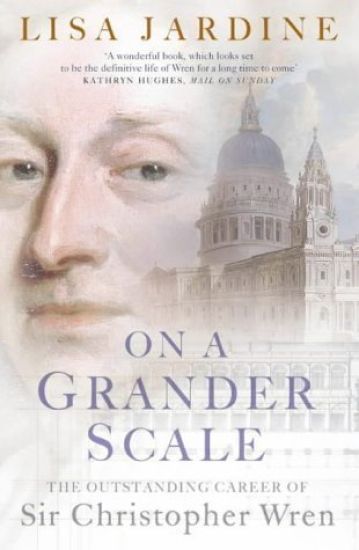
On a Grander Scale

On a Grander Scale

Lisa Jardine

HARPERCOLLINS PUBLISHERS
2003
pokkari
The figure of Sir Christopher Wren looms large in the English national consciousness. In this biography, Lisa Jardine explores the unique, exacting nature of Wren's mind and the emerging new world of late-17th-century science and ideas.
Ingenious Pursuits: Building the Scientific Revolution
In this fascinating look at the European scientific advances of the seventeenth and early eighteenth centuries, historian Lisa Jardine demonstrates that the pursuit of knowledge occurs not in isolation, but rather in the lively interplay and frequently cutthroat competition between creative minds. The great thinkers of that extraordinary age, including Isaac Newton, Johannes Kepler, and Christopher Wren, are shown in the context in which they lived and worked. We learn of the correspondences they kept with their equally passionate colleagues and come to understand the unique collaborative climate that fostered virtuoso discoveries in the areas of medicine, astronomy, mathematics, biology, chemistry, botany, geography, and engineering. Ingenious Pursuits brilliantly chronicles the true intellectual revolution that continues to shape our very understanding of ourselves, and of the world around us.
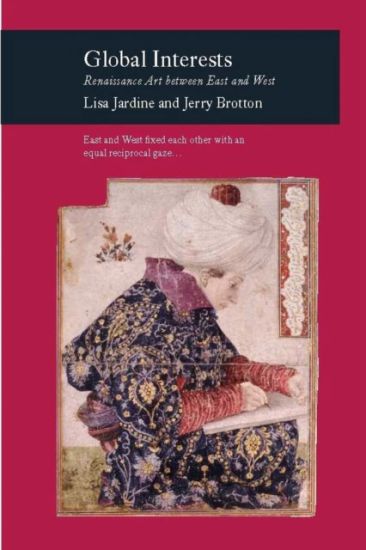
Global Interests

Global Interests

Lisa Jardine; Jerry Brotton

Cornell University Press
2000
sidottu
In this groundbreaking, highly provocative examination of the Renaissance, Jerry Brotton and Lisa Jardine raise questions about the formation of cultural identity in Western Europe. Through an analysis of the circulation of art and luxury objects, the authors challenge the view that Renaissance culture defined itself in large part against an exotic, dangerous, always marginal East. Featuring more than seventy illustrations, including many in color and some published for the first time, their book provides fascinating insights into the works of Pisanello, Leonardo, Dürer, Holbein, and Titian. Global Interests explores the trade in portrait medals, tapestries, and equestrian art, all items that Brotton and Jardine demonstrate were markers of power and influence in both the West and the East. The authors reveal that this trade represented a remarkably equal exchange between Renaissance Europe and the Ottoman East. Their findings lead them to argue that the East, and in particular the Ottoman Empire of Mehmet the Conqueror and Suleiman the Magnificent, was not the antithetical "other" to the emergence of a Western European identity in the sixteenth century. Instead, Paris, Venice, and London were linked with Istanbul and the East through networks of shared political and commercial interests. By showing that the traditional view of Renaissance culture is misleading, the authors offer a more truly global understanding of historical experience.
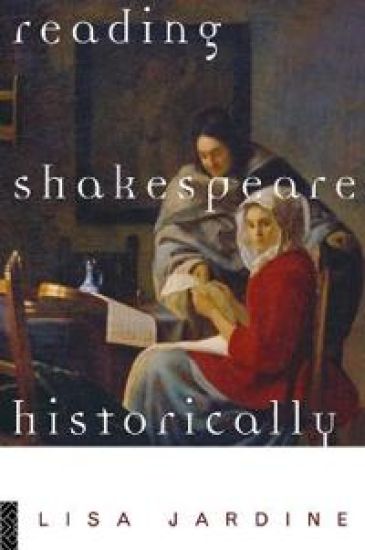
Reading Shakespeare Historically

Reading Shakespeare Historically

Lisa Jardine

Routledge
1996
sidottu
Reading Shakespeare Historically is a passionate, provocative book by one of the most renowned and popular Renaissance scholars writing today. Charting ten years of critical development, these challenging, witty essays shed new light on Renaissance studies. It also raises intriguing questions about how the culture and history of the past illuminates the key social and political issues of today. Lisa Jardine re-reads Renaissance drama in its historical and cultural context, from laws of defamation in Othello to the competing loyalties of companionate marriage and male friendship in The Changeling. In doing so she reveals a wealth of new insights, sometimes surprising but always original and engrossing. At the same time, these essays also provide a fascinating account of the rise of feminist scholarship since the 1980s and the diversifying of `new historicist' approaches over the same period.Reading Shakespeare Historically will fascinate and provoke students of shakespeare and his historical age, and general readers with an urge to understand how the culture and history of our past illuminates the key scoial and political issues of today.
Reading Shakespeare Historically

Reading Shakespeare Historically

Lisa Jardine

Routledge
1996
nidottu
Reading Shakespeare Historically is a passionate, provocative book by one of the most renowned and popular Renaissance scholars writing today. Charting ten years of critical development, these challenging, witty essays shed new light on Renaissance studies. It also raises intriguing questions about how the culture and history of the past illuminates the key social and political issues of today. Lisa Jardine re-reads Renaissance drama in its historical and cultural context, from laws of defamation in Othello to the competing loyalties of companionate marriage and male friendship in The Changeling. In doing so she reveals a wealth of new insights, sometimes surprising but always original and engrossing. At the same time, these essays also provide a fascinating account of the rise of feminist scholarship since the 1980s and the diversifying of `new historicist' approaches over the same period.Reading Shakespeare Historically will fascinate and provoke students of shakespeare and his historical age, and general readers with an urge to understand how the culture and history of our past illuminates the key scoial and political issues of today.