Kirjojen hintavertailu. Mukana 12 390 323 kirjaa ja 12 kauppaa.

Kirjailija

Lisa Parks

Kirjat ja teokset yhdessä paikassa: 5 kirjaa, julkaisuja vuosilta 2005-2018, suosituimpien joukossa Rethinking Global Security. Vertaile teosten hintoja ja tarkista saatavuus suomalaisista kirjakaupoista.

5 kirjaa

Kirjojen julkaisuhaarukka 2005-2018.

Rethinking Global Security

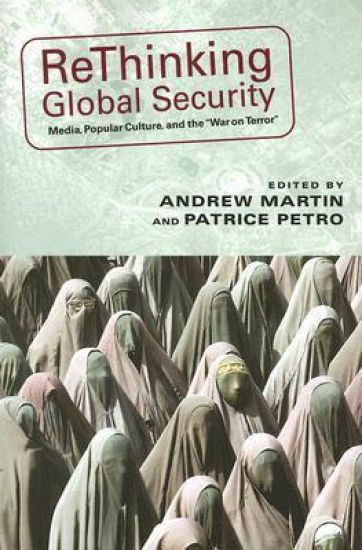
Rethinking Global Security

Wendy Kozol; Marcus Bullock; James Castonguay; Mary Layoun; Rebecca Decola; Patricia Mellencamp; Tony Grajeda; Mike Allen; Robert Ricigliano; Doug Davis; Lisa Parks

Rutgers University Press
2006
nidottu
Analysts today routinely look toward the media and popular culture as a way of understanding global security. Although only a decade ago, such a focus would have seemed out of place, the proliferation of digital technologies in the twenty-first century has transformed our knowledge of near and distant events so that it has become impossible to separate the politics of war, suffering, terrorism, and security from the practices and processes of the media.This book brings together ten path-breaking essays that explore the ways our notions of fear, insecurity, and danger are fostered by intermediary sources such as television, radio, film, satellite imaging, and the Internet. The contributors, from a wide range of disciplines, show how both fictional and fact-based threats to global security have helped to create and sustain a culture that is deeply distrustful. Topics range from the Patriot Act, to the censorship of media personalities, to the role that television programming plays as an interpretative frame for current events.Designed to promote strategic thinking about the relationships between media, popular culture, and global security, this book is essential reading for scholars of international relations, technology, and media studies.
Rethinking Media Coverage

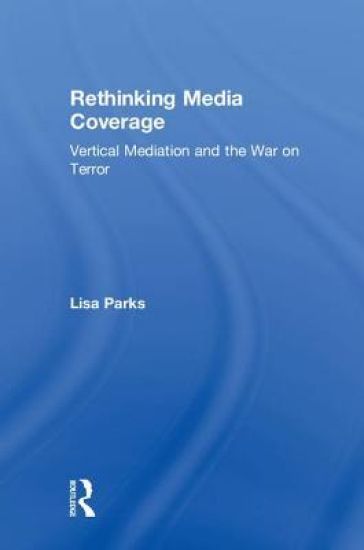
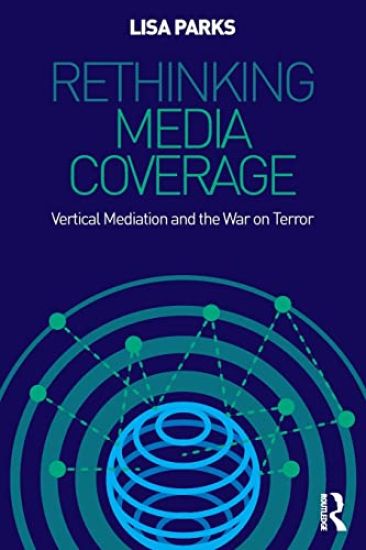
Rethinking Media Coverage

Lisa Parks

Routledge
2018
nidottu
In the post-9/11 era, media technologies have become increasingly intertwined with vertical power as airwaves, airports, air space, and orbit have been commandeered to support national security and defense. In this book, Lisa Parks develops the concept of vertical mediation to explore how audiovisual cultures enact and infer power relations far beyond the screen. Focusing on TV news, airport checkpoints, satellite imagery, and drone media, Parks demonstrates how "coverage" makes vertical space intelligible to global publics in new ways and powerfully reveals what is at stake in controlling it.
Rethinking Media Coverage

Rethinking Media Coverage

Lisa Parks

Routledge
2018
sidottu
In the post-9/11 era, media technologies have become increasingly intertwined with vertical power as airwaves, airports, air space, and orbit have been commandeered to support national security and defense. In this book, Lisa Parks develops the concept of vertical mediation to explore how audiovisual cultures enact and infer power relations far beyond the screen. Focusing on TV news, airport checkpoints, satellite imagery, and drone media, Parks demonstrates how "coverage" makes vertical space intelligible to global publics in new ways and powerfully reveals what is at stake in controlling it.
Cultures in Orbit

Cultures in Orbit

Lisa Parks

Duke University Press
2005
pokkari
In 1957 Sputnik, the world’s first man-made satellite, dazzled people as it zipped around the planet. By the beginning of the twenty-first century, more than eight thousand satellites orbited the Earth, and satellite practices such as live transmission, direct broadcasting, remote sensing, and astronomical observation had altered how we imagined ourselves in relation to others and our planet within the cosmos. In Cultures in Orbit, Lisa Parks analyzes these satellite practices and shows how they have affected meanings of “the global” and “the televisual.” Parks suggests that the convergence of broadcast, satellite, and computer technologies necessitates an expanded definition of “television,” one that encompasses practices of military monitoring and scientific observation as well as commercial entertainment and public broadcasting.Roaming across the disciplines of media studies, geography, and science and technology studies, Parks examines uses of satellites by broadcasters, military officials, archaeologists, and astronomers. She looks at Our World, a live intercontinental television program that reached five hundred million viewers in 1967, and Imparja tv, an Aboriginal satellite tv network in Australia. Turning to satellites’ remote-sensing capabilities, she explores the U.S. military’s production of satellite images of the war in Bosnia as well as archaeologists’ use of satellites in the excavation of Cleopatra’s palace in Alexandria, Egypt. Parks’s reflections on how Western fantasies of control are implicated in the Hubble telescope’s views of outer space point to a broader concern: that while satellite uses promise a “global village,” they also cut and divide the planet in ways that extend the hegemony of the post-industrial West. In focusing on such contradictions, Parks highlights how satellites cross paths with cultural politics and social struggles.
Cultures in Orbit

Cultures in Orbit

Lisa Parks

Duke University Press
2005
sidottu
In 1957 Sputnik, the world’s first man-made satellite, dazzled people as it zipped around the planet. By the beginning of the twenty-first century, more than eight thousand satellites orbited the Earth, and satellite practices such as live transmission, direct broadcasting, remote sensing, and astronomical observation had altered how we imagined ourselves in relation to others and our planet within the cosmos. In Cultures in Orbit, Lisa Parks analyzes these satellite practices and shows how they have affected meanings of “the global” and “the televisual.” Parks suggests that the convergence of broadcast, satellite, and computer technologies necessitates an expanded definition of “television,” one that encompasses practices of military monitoring and scientific observation as well as commercial entertainment and public broadcasting.Roaming across the disciplines of media studies, geography, and science and technology studies, Parks examines uses of satellites by broadcasters, military officials, archaeologists, and astronomers. She looks at Our World, a live intercontinental television program that reached five hundred million viewers in 1967, and Imparja tv, an Aboriginal satellite tv network in Australia. Turning to satellites’ remote-sensing capabilities, she explores the U.S. military’s production of satellite images of the war in Bosnia as well as archaeologists’ use of satellites in the excavation of Cleopatra’s palace in Alexandria, Egypt. Parks’s reflections on how Western fantasies of control are implicated in the Hubble telescope’s views of outer space point to a broader concern: that while satellite uses promise a “global village,” they also cut and divide the planet in ways that extend the hegemony of the post-industrial West. In focusing on such contradictions, Parks highlights how satellites cross paths with cultural politics and social struggles.