
Kirjailija
Lisa Williams
Kirjat ja teokset yhdessä paikassa: 42 kirjaa, julkaisuja vuosilta 1992-2026, suosituimpien joukossa I Love My Kids: Don't Mistake A Blessings For Burdens. Vertaile teosten hintoja ja tarkista saatavuus suomalaisista kirjakaupoista.
42 kirjaa
Kirjojen julkaisuhaarukka 1992-2026.
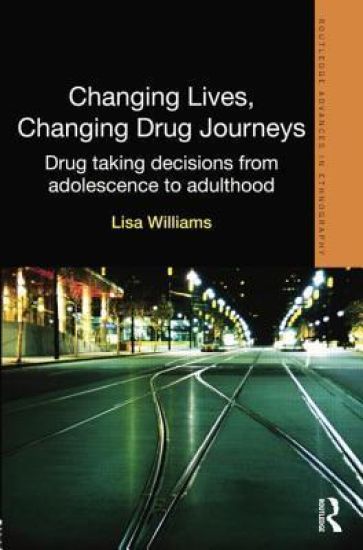
This book describes how a group of young people make decisions about drug taking. It charts the decision making process of recreational drug takers and non-drug takers as they mature from adolescence into young adulthood. With a focus upon their perceptions of different drugs, it situates their decision making within the context of their everyday lives.Changing lives, changing drug journeys presents qualitative longitudinal data collected from interviewees at age 17, 22 and 28 and tracks the onset of drug journeys, their persistence, change and desistance. The drug journeys and the decision making process which underpins them are analysed by drawing upon contemporary discourses of risk and life course criminology. In doing so, a new theoretical framework is developed to help us understand drug taking decision making in contemporary society. This framework highlights the pleasures and risks that interviewees perceive when making decisions whether or not to take drugs. The ways in which their drug journeys and life journeys intersect and how social relationships and transitions to adulthood facilitate or constrain the decision making process are also explored.Qualitative longitudinal research of this kind is uncommon yet it provides an invaluable insight into the decision making process of individuals during the life course. The book will, therefore, be of interest to researchers and students from a variety of disciplines including qualitative research methods as well as sociology, criminology, cultural and health studies. It will also be an important resource for professionals working in health promotion, drugs education, harm reduction and treatment.

Poetry. "Lisa Williams's new collection, GAZELLE IN THE HOUSE, is truly a book of stanzas: poetic rooms in which to dwell. Some of these dwellings have the uncanny familiarity of ordinary domestic space and others are as mysterious and disorienting as the depths of the sea. Painting with colors at times opaque, at times transparent, moving between shallows, tide-pools, and the abysses of dreams, Williams's voice is solitary, meditative, intimate and in the end a means of revelation." Susan Stewart"

This book describes how a group of young people make decisions about drug taking. It charts the decision making process of recreational drug takers and non-drug takers as they mature from adolescence into young adulthood. With a focus upon their perceptions of different drugs, it situates their decision making within the context of their everyday lives.Changing lives, changing drug journeys presents qualitative longitudinal data collected from interviewees at age 17, 22 and 28 and tracks the onset of drug journeys, their persistence, change and desistance. The drug journeys and the decision making process which underpins them are analysed by drawing upon contemporary discourses of risk and life course criminology. In doing so, a new theoretical framework is developed to help us understand drug taking decision making in contemporary society. This framework highlights the pleasures and risks that interviewees perceive when making decisions whether or not to take drugs. The ways in which their drug journeys and life journeys intersect and how social relationships and transitions to adulthood facilitate or constrain the decision making process are also explored.Qualitative longitudinal research of this kind is uncommon yet it provides an invaluable insight into the decision making process of individuals during the life course. The book will, therefore, be of interest to researchers and students from a variety of disciplines including qualitative research methods as well as sociology, criminology, cultural and health studies. It will also be an important resource for professionals working in health promotion, drugs education, harm reduction and treatment.

In recent years, British drug policy has undergone a transformation: tackling 'drug-driven' crime through criminal justice interventions has arguably become the central priority and focus. The 'criminal justice turn', as the authors refer to current UK drugs policy, is based on three simple and linked assumptions: drug-driven property crime is a major driver of local area crime rates, especially in deprived neighbourhoods; the criminal justice system can be used to target these drug-motivated offenders and direct them into treatment; and treatment can lead to significant reductions in their offending. Tough Choices: Risk, Security and the Criminalization of Drug Policy explores a series of questions about the 'criminal justice' turn in British drugs policy, from why it happened at all to what led policy to unfold in the way that it did, by analyzing policy documents and over 200 interviews conducted with key players in the policy development and implementation process. At the practice level, the authors explore how the strategic vision of the drug-crime 'problem' has shaped the ways in which drug-using offenders are identified, targeted and managed - in other words, why the implementation of the Drug Interventions Programme on the ground has taken the forms that it has. This is addressed through a detailed examination of practice in three local areas. Both the emergence of this new policy direction and its implementation in practice can best be understood as part of a wider transformation in governance in which risk-based thinking has become central to the ways in which we seek to address our contemporary insecurities. The book is based on a 30-month ESRC-funded research project on the Drug Interventions Programme and draws on the extensive empirical data generated during the project.

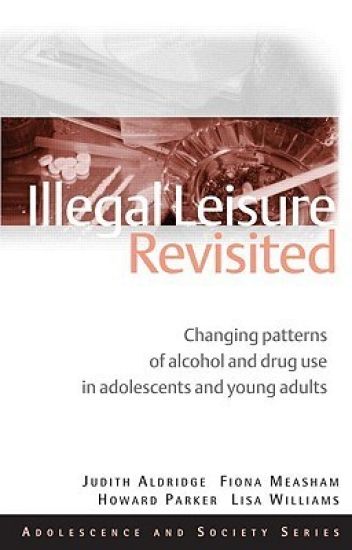
This book updates the progress into adulthood of the cohort of fourteen-year-olds who were recruited and tracked until they were eighteen years old. Illegal Leisure (1998) described their adolescent journeys and lifestyles, focusing on their early regular drinking and extensive ‘recreational’ drug use.This new edition revisits these original chapters, providing commentaries around them to discuss current implications of the original publication, plus documenting and discussing the group at twenty-two and twenty-seven years of age. Illegal Leisure Revisited positions the journeys of these twenty-somethings against the ever-changing backdrop of a consumption-oriented leisure society, the rapid expansion of the British night-time economy and the place of substance use in contemporary social worlds. It presents to the reader the ways in which these young people have moved into the world of work, long-term relationships and parenthood, and the resulting changes in the function and frequency of their drinking and drug-use patterns. Amid dire public health warnings about their favourite intoxicants, and with the growing criminalisation of a widening array of recreational drugs, the book revisits these young people as they continue as archetypal citizens in a risk society.The book is ideal reading for researchers and undergraduate students from a variety of fields, such as developmental and social psychology, sociology, criminology, cultural and health studies. Professionals working in criminal justice, health promotion, drugs education, harm reduction and treatment will also find this book an invaluable resource.

This book updates the progress into adulthood of the cohort of fourteen-year-olds who were recruited and tracked until they were eighteen years old. Illegal Leisure (1998) described their adolescent journeys and lifestyles, focusing on their early regular drinking and extensive ‘recreational’ drug use.This new edition revisits these original chapters, providing commentaries around them to discuss current implications of the original publication, plus documenting and discussing the group at twenty-two and twenty-seven years of age. Illegal Leisure Revisited positions the journeys of these twenty-somethings against the ever-changing backdrop of a consumption-oriented leisure society, the rapid expansion of the British night-time economy and the place of substance use in contemporary social worlds. It presents to the reader the ways in which these young people have moved into the world of work, long-term relationships and parenthood, and the resulting changes in the function and frequency of their drinking and drug-use patterns. Amid dire public health warnings about their favourite intoxicants, and with the growing criminalisation of a widening array of recreational drugs, the book revisits these young people as they continue as archetypal citizens in a risk society.The book is ideal reading for researchers and undergraduate students from a variety of fields, such as developmental and social psychology, sociology, criminology, cultural and health studies. Professionals working in criminal justice, health promotion, drugs education, harm reduction and treatment will also find this book an invaluable resource.
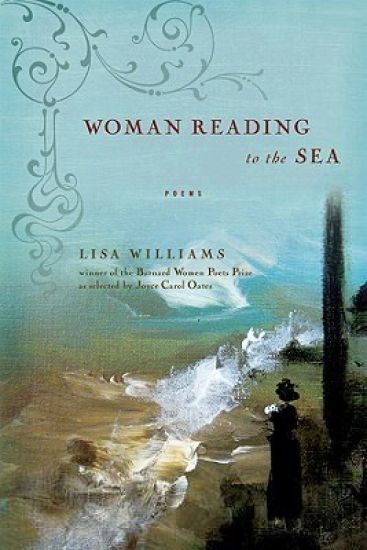
"Poems of arresting intelligence, precision, and beauty. . . . Lisa Williams takes us into eerily imagined worlds—the interior of a jellyfish, and the interior of a glacier. . . . This slender volume constitutes a journey.”—Joyce Carol Oates, Barnard Women Poets Prize citation
Lisa Williams is one of the world's most accurate mediums. Taught by her grandmother both on this plane and in the afterlife, her extraordinary gift for communicating with Spirit and those that have passed on has led her from humble origins to become one of America's most beloved TV stars as the host of "Life Among the Dead".
The highly anticipated memoir from the star of the hit series Lisa Williams: Life Among the Dead When Lisa Williams was four years old, she told her parents about the spirits in her bedroom. Since those first sightings, Lisa has seen and communicated with thousands of people who have passed over, listening to their stories and delivering messages of comfort to the loved ones they left behind. In Life Among the Dead, Lisa invites readers into her extraordinary life, from her childhood in Birmingham, England, where her grandmother -- also a renowned psychic -- encouraged her to respect and nurture her talent, to her decision to move to Los Angeles, where her smash-hit Lifetime television show quickly made her one of the world's most beloved mediums. Lisa shares memories of her earliest psychic experiences and her gradual acceptance of her gift, and recalls many of the amazingly accurate communications she has shared with believers and skeptics alike. In her compassionate, down-to-earth style, she reveals exactly what it's like to live surrounded by spirits every day, and she recounts the joy she feels in bringing solace to those who have lost someone dear and the insights she has gleaned about spiritual phenomena, hauntings, psychic healing, and the afterlife. Warm, witty, and surprising, Life Among the Dead is a wonderfully intimate account of Lisa's life as a medium, healer, wife, mom, and TV star who has already won the hearts of millions, a woman with an astonishing gift for seeing beyond the ordinary and into a mysterious and fascinating realm.
"Poems of arresting intelligence, precision, and beauty. In wonderfully crafted language, with the startling subtlety of certain of Emily Dickinson's poems, Lisa Williams takes us into eerily imagined worlds—the interior of a jellyfish, and the interior of a glacier; she beguiles us with the most seductive of poetic possibilities....This slender volume constitutes a journey of sorts, a pilgrimage 'out' that returns the questing poet, imagined as a companion 'you,' to her own life."—Joyce Carol Oates, prize citation

Letters to Virginia Woolf is both a lyrical memoir and meditation on Woolf's life and writing. Starting with the events of 9/11, Williams examines Woolf's anti-war views and their relevance to our present time. In her pacifist manifesto, Three Guineas, Woolf wrote, "A common interest unites us; it is one world, one life." This book explores the events of 9/11 within the context of Woolf's passionate cry for a world without war. In six concise parts, Lisa Williams writes letters to Virginia Woolf that reflect on Woolf's ideas about war, memory, and childhood as well as her own experiences with these very issues.
The Artist as Outsider in the Novels of Toni Morrison and Virginia Woolf
Lisa Williams
Praeger Publishers Inc
2000
sidottu
On first consideration, Nobel prize winning African-American author Toni Morrison would seem to have little in common with Virginia Woolf, the British writer who challenged Victorian concepts of womanhood. But Woolf's achievement and influence have been enduring, so much so that Morrison wrote her masters thesis on Woolf and William Faulkner. In that thesis, Morrison gives special attention to issues of isolation, and she notes that for Woolf, isolation brought a sense of freedom that the attached could never comprehend. This book examines the literary relationship between Woolf and Morrison. In her own novels, Morrison redefined Woolf's concept of isolation in terms of American racism. While Morrison's female characters are clearly outsiders, they can nevertheless experience a sense of community that Woolf's characters cannot. Woolf's female characters, on the other hand, are often alienated because of their repressed erotic longing for women. Both Morrison and Woolf consider the severe obstacles the female artist must encounter and overcome before she can create art. This volume looks at the similarities that link Morrison and Woolf together despite their racial, ethnic, national, and historical differences, and it examines how differing structures of domination define their art.

Author: Brad E Hainsworth and Lisa Williams Description: Product Details: Format: Paperback Print: Black & White Size: 5x6 Page Count: 149 ISBN: 9781555171629 Imprint: CFI Books Office Use: 2P23D