

Kirjailija
Liz Garnett
Kirjat ja teokset yhdessä paikassa: 13 kirjaa, julkaisuja vuosilta 2005-2022, suosituimpien joukossa Wheat and Dairy Free French Holiday Cookery. Vertaile teosten hintoja ja tarkista saatavuus suomalaisista kirjakaupoista.
13 kirjaa
Kirjojen julkaisuhaarukka 2005-2022.

A time travelling self-guided pilgrimage in Kent taking in the ruins of Saint Martin le Grand in Dover and Saint Martin's church in Canterbury. The 21 mile slow pilgrimage route follows in the footsteps of medieval pilgrims who travelled from the Continent to visit the shrines of Saints Thomas Becket Edmund of Abingdon and Richard of Chichester. The route follows the history and landscape of the area. From the Bronze Age boat at Dover, through Roman and medieval times to the industrial age. The landscape takes in chalk streams and dry valleys as well as the Kent Downs recognised as an Area of Outstanding Natural Beauty. The pilgrimage is split into six short linear walks with public transport connections.
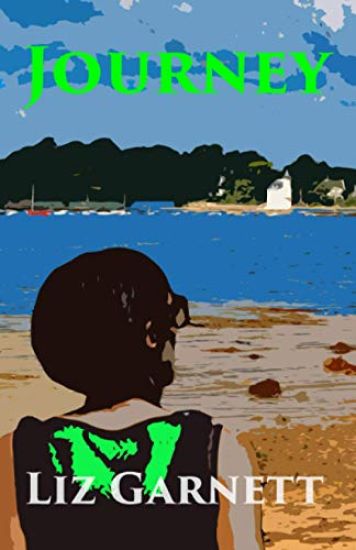
Artist Aggie is running out of money and ideas for a new style of art. There is only one solution. Aggie and her 16-year-old son, Miles head off to France on a road trip. For Aggie, it is a chance to reinvent herself and her work as well as spend some quality time with Miles. The trip takes in the Tro Breiz pilgrimage route around Brittany. Comedy moments abound as their journey takes in the highs and lows of camping and travelling around Brittany. Along the way, Aggie meets colourful characters and begins to start believing in herself again.
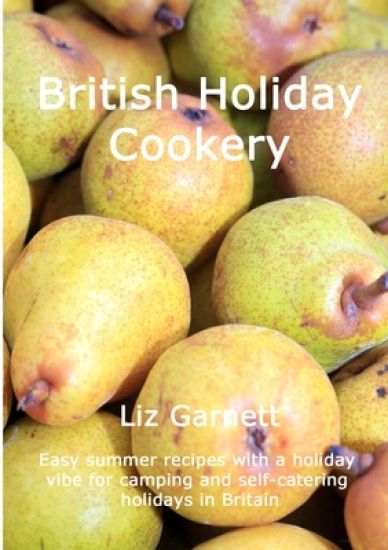
An essential book for anyone camping or on a self-catering holiday in the United Kingdom. This book is packed with simple recipes, ideas and inspiration for meals. It combines basic store cupboard essentials with fresh food bought from the local market or farm shop. Recipes require no more than two rings to create delicious meals using ingredients readily available in Britain.
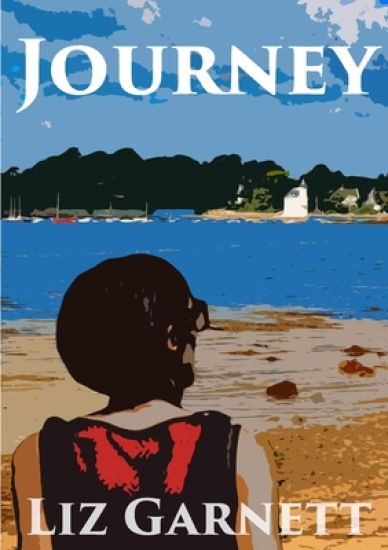
Artist Aggie is running out of money and ideas for a new style of art. There is only one solution. Aggie and her 16-year-old son, Miles head off to France on a road trip. For Aggie, it is a chance to reinvent herself and her work as well as spend some quality time with Miles. The trip takes in the Tro Breiz pilgrimage route around Brittany. Comedy moments abound as their journey takes in the highs and lows of camping and travelling around Brittany. Along the way, Aggie meets colourful characters and begins to start believing in herself again.
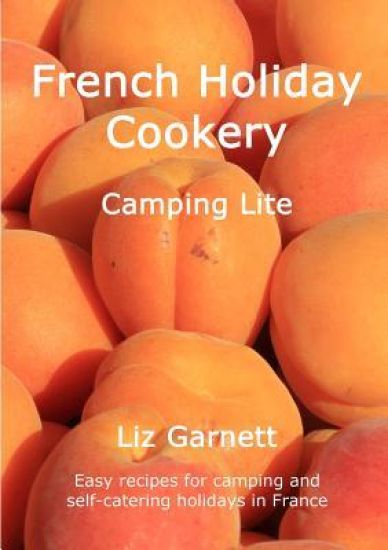
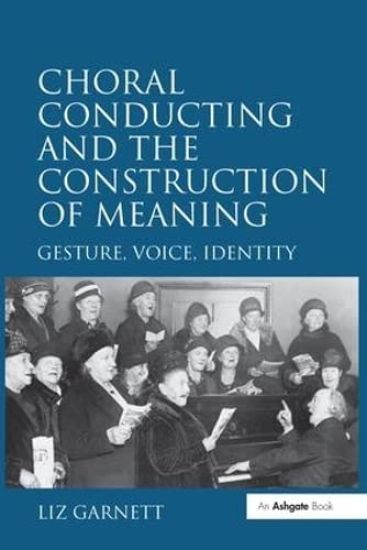
It is a truism in teaching choral conducting that the director should look like s/he wishes the choir to sound. The conductor's physical demeanour has a direct effect on how the choir sings, at a level that is largely unconscious and involuntary. It is also a matter of simple observation that different choral traditions exhibit not only different styles of vocal production and delivery, but also different gestural vocabularies which are shared not only between conductors within that tradition, but also with the singers. It is as possible to distinguish a gospel choir from a barbershop chorus or a cathedral choir by visual cues alone as it is simply by listening. But how can these forms of physical communication be explained? Do they belong to a pre-cultural realm of primate social bonding, or do they rely on the context and conventions of a particular choral culture? Is body language an inherent part of musical performance styles, or does it come afterwards, in response to music? At a practical level, to what extent can a practitioner from one tradition mandate an approach as 'good practice', and to what extent can another refuse it on the grounds that 'we don't do it that way'? This book explores these questions at both theoretical and practical levels. It examines textual and ethnographic sources, and draws on theories from critical musicology and nonverbal communication studies to analyse them. By comparing a variety of choral traditions, it investigates the extent to which the connections between conductor demeanour and choral sound operate at a general level, and in what ways they are constructed within a specific idiom. Its findings will be of interest both to those engaged in the study of music as a cultural practice, and to practitioners involved in a choral conducting context that increasingly demands fluency in a variety of styles.

Barbershop singing is a distinctive and under-documented facet of Britain's musical landscape. Imported from the USA in the 1960s, it has developed into an active and highly organized musical community characterized by strong social support structures and a proselytizing passion for its particular style. This style is defined, within the community, in largely music-theoretical terms and is both highly prescriptive and continually contested, but there is also a host of performance traditions that articulate barbershop's identity as a distinct and specific genre. Liz Garnett documents and analyses the social and musical practices of this specialized community of music-makers, and extends this analysis to theorize the relationship between music and self-identity. The book engages with a range of sociological and musicological theoretical frameworks in order to explore the role of harmony, ritual, sexual politics, performance styles and 'tag-singing' in barbershop. This analysis shows how musical style and cultural discourses can be seen to interact in the formation of identity. Garnett provides the first in-depth scholarly insight into the British barbershop community, and contributes to ongoing debates in the semiotics and the sociology of music.
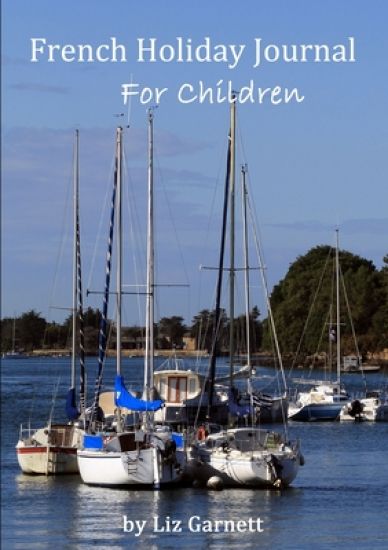
This book is for children travelling to France on holiday. The book is a fun approach to learning about France by encouraging children to start speaking French; gain an understanding of the area they are visiting; and discover new food. A French phrase book and children's French dictionary will also help to boost a child's enjoyment of a trip to France.This book as been developed especially for children who don't like writing. There is guidance on what to include and there are plenty of opportunities to add photos, drawings, tickets, maps, food labels and postcards.
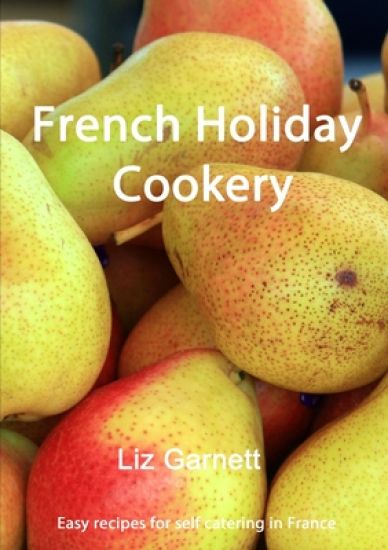
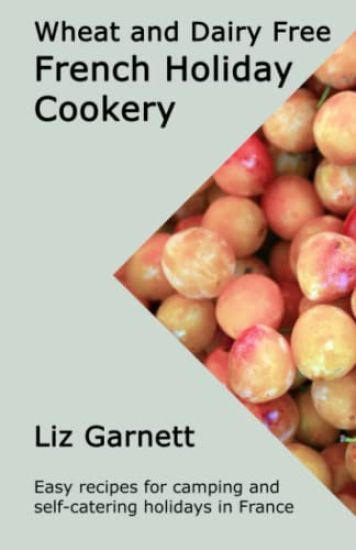
Revised Edition with more comprehensive information in the fish and shellfish section. Over 60 simple recipes for a self catering holiday to France.Recipes require no more than two rings to create delicious meals using ingredients readily available in France. All ingredients are translated into French and there is a glossary of produce to make negotiating the markets and supermarkets easy. Liz Garnett is a travel photographer specialising in France. Since 1994 she has been regularly visiting France including living in Northern France for two years. Her photographs have been published in books and magazines internationally. Full colour cover, black and white inside.

Choral Conducting and the Construction of Meaning
Liz Garnett
Ashgate Publishing Limited
2009
sidottu
It is a truism in teaching choral conducting that the director should look like s/he wishes the choir to sound. The conductor's physical demeanour has a direct effect on how the choir sings, at a level that is largely unconscious and involuntary. It is also a matter of simple observation that different choral traditions exhibit not only different styles of vocal production and delivery, but also different gestural vocabularies which are shared not only between conductors within that tradition, but also with the singers. It is as possible to distinguish a gospel choir from a barbershop chorus or a cathedral choir by visual cues alone as it is simply by listening. But how can these forms of physical communication be explained? Do they belong to a pre-cultural realm of primate social bonding, or do they rely on the context and conventions of a particular choral culture? Is body language an inherent part of musical performance styles, or does it come afterwards, in response to music? At a practical level, to what extent can a practitioner from one tradition mandate an approach as 'good practice', and to what extent can another refuse it on the grounds that 'we don't do it that way'? This book explores these questions at both theoretical and practical levels. It examines textual and ethnographic sources, and draws on theories from critical musicology and nonverbal communication studies to analyse them. By comparing a variety of choral traditions, it investigates the extent to which the connections between conductor demeanour and choral sound operate at a general level, and in what ways they are constructed within a specific idiom. Its findings will be of interest both to those engaged in the study of music as a cultural practice, and to practitioners involved in a choral conducting context that increasingly demands fluency in a variety of styles.
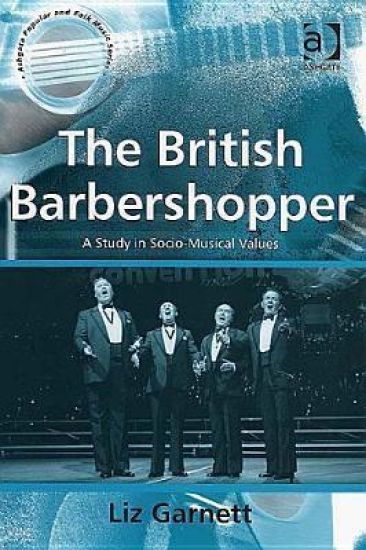
Barbershop singing is a distinctive and under-documented facet of Britain's musical landscape. Imported from the USA in the 1960s, it has developed into an active and highly organized musical community characterized by strong social support structures and a proselytizing passion for its particular style. This style is defined, within the community, in largely music-theoretical terms and is both highly prescriptive and continually contested, but there is also a host of performance traditions that articulate barbershop's identity as a distinct and specific genre. Liz Garnett documents and analyses the social and musical practices of this specialized community of music-makers, and extends this analysis to theorize the relationship between music and self-identity. The book engages with a range of sociological and musicological theoretical frameworks in order to explore the role of harmony, ritual, sexual politics, performance styles and 'tag-singing' in barbershop. This analysis shows how musical style and cultural discourses can be seen to interact in the formation of identity. Garnett provides the first in-depth scholarly insight into the British barbershop community, and contributes to ongoing debates in the semiotics and the sociology of music.