Kirjojen hintavertailu. Mukana 12 390 323 kirjaa ja 12 kauppaa.

Kirjailija

Liza Grandia

Kirjat ja teokset yhdessä paikassa: 5 kirjaa, julkaisuja vuosilta 2012-2024, suosituimpien joukossa Kernels of Resistance. Vertaile teosten hintoja ja tarkista saatavuus suomalaisista kirjakaupoista.

5 kirjaa

Kirjojen julkaisuhaarukka 2012-2024.

Kernels of Resistance

Kernels of Resistance

Liza Grandia

UNIVERSITY OF WASHINGTON PRESS
2024
sidottu
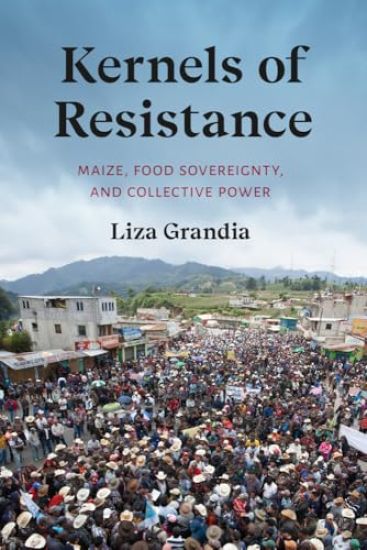
The story of how Mesoamerican food activists faced down Monsanto . . . and wonRight before the 2014 World Cup, US trade interests pressured Guatemala's legislature into lifting its national ban on genetically modified (GM) crops and criminalizing traditional seed saving practices. Maya elders responded with a campaign of mass civil disobedience, blocking highways until the Guatemalan Congress repealed this "Monsanto Law." Uniting rural and urban Guatemalans, this uprising spotlighted the existential threat of GM corn to the livelihood, dignity, and cultural heritage of maize-producing milperos (small farmers) throughout Mesoamerica. Ten years later, Mexico is also facing down US trade aggression to defend a 2020 presidential ban on the import of GM corn for human consumption. Liza Grandia chronicles how diverse coalitions in Mexico and Guatemala have defended their sacred maize against corporate threats to privatize it. Rather than just "voting with their forks" like the consumer-driven US food movement, Mesoamerican farmers and their allies have voted with their feet through direct action. In a world of interconnected trade, their victories chart a path that other food movements might follow. They also show how everyday people can demand better regulatory protections for environmental health and forge more climate-resilient agricultural systems with native seed saving.Dramatic and timely, Kernels of Resistance celebrates this Indigenous triumph over corporate greed.This book is freely available in an open access edition thanks to the generous support of the UC Davis Library at the University of California, Davis.DOI: 10.6069/9780295753317
Kernels of Resistance

Kernels of Resistance

Liza Grandia

UNIVERSITY OF WASHINGTON PRESS
2024
pokkari
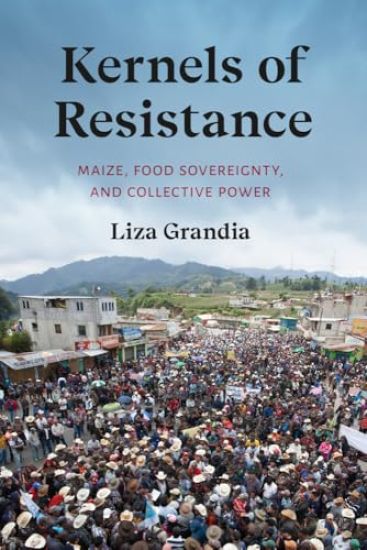
The story of how Mesoamerican food activists faced down Monsanto . . . and wonRight before the 2014 World Cup, US trade interests pressured Guatemala's legislature into lifting its national ban on genetically modified (GM) crops and criminalizing traditional seed saving practices. Maya elders responded with a campaign of mass civil disobedience, blocking highways until the Guatemalan Congress repealed this "Monsanto Law." Uniting rural and urban Guatemalans, this uprising spotlighted the existential threat of GM corn to the livelihood, dignity, and cultural heritage of maize-producing milperos (small farmers) throughout Mesoamerica. Ten years later, Mexico is also facing down US trade aggression to defend a 2020 presidential ban on the import of GM corn for human consumption. Liza Grandia chronicles how diverse coalitions in Mexico and Guatemala have defended their sacred maize against corporate threats to privatize it. Rather than just "voting with their forks" like the consumer-driven US food movement, Mesoamerican farmers and their allies have voted with their feet through direct action. In a world of interconnected trade, their victories chart a path that other food movements might follow. They also show how everyday people can demand better regulatory protections for environmental health and forge more climate-resilient agricultural systems with native seed saving.Dramatic and timely, Kernels of Resistance celebrates this Indigenous triumph over corporate greed.This book is freely available in an open access edition thanks to the generous support of the UC Davis Library at the University of California, Davis.DOI: 10.6069/9780295753317

Enclosed

Enclosed

Liza Grandia; K. Sivaramakrishnan

University of Washington Press
2012
sidottu
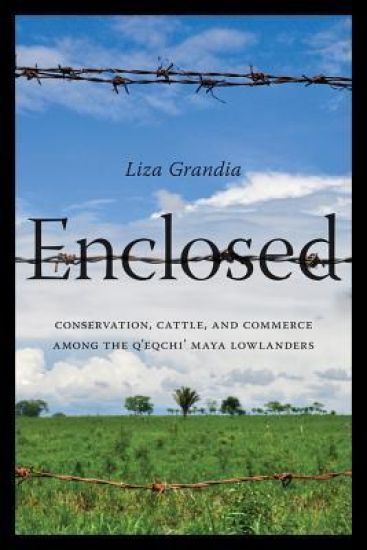
This impassioned and rigorous analysis of the territorial plight of the Q'eqchi Maya of Guatemala highlights an urgent problem for indigenous communities around the world - repeated displacement from their lands. Liza Grandia uses the tools of ethnography, history, cartography, and ecology to explore the recurring enclosures of Guatemala's second largest indigenous group, who number a million strong. Having lost most of their highland territory to foreign coffee planters at the end of the 19th century, Q'eqchi' people began migrating into the lowland forests of northern Guatemala and southern Belize. Then, pushed deeper into the frontier by cattle ranchers, lowland Q'eqchi' found themselves in conflict with biodiversity conservationists who established protected areas across this region during the 1990s.The lowland, maize-growing Q'eqchi' of the 21st century face even more problems as they are swept into global markets through the Dominican Republic-Central America Free Trade Agreement (DR-CAFTA) and the Puebla to Panama Plan (PPP). The waves of dispossession imposed upon them, driven by encroaching coffee plantations, cattle ranches, and protected areas, have unsettled these agrarian people. Enclosed describes how they have faced and survived their challenges and, in doing so, helps to explain what is happening in other contemporary enclosures of public "common" space.A Capell Family BookWatch the book trailer: https://www.youtube.com/watch?v=pTLvmg3mHE8
Enclosed

Enclosed

Liza Grandia; K. Sivaramakrishnan

University of Washington Press
2012
pokkari
This impassioned and rigorous analysis of the territorial plight of the Q'eqchi Maya of Guatemala highlights an urgent problem for indigenous communities around the world - repeated displacement from their lands. Liza Grandia uses the tools of ethnography, history, cartography, and ecology to explore the recurring enclosures of Guatemala's second largest indigenous group, who number a million strong. Having lost most of their highland territory to foreign coffee planters at the end of the 19th century, Q'eqchi' people began migrating into the lowland forests of northern Guatemala and southern Belize. Then, pushed deeper into the frontier by cattle ranchers, lowland Q'eqchi' found themselves in conflict with biodiversity conservationists who established protected areas across this region during the 1990s.The lowland, maize-growing Q'eqchi' of the 21st century face even more problems as they are swept into global markets through the Dominican Republic-Central America Free Trade Agreement (DR-CAFTA) and the Puebla to Panama Plan (PPP). The waves of dispossession imposed upon them, driven by encroaching coffee plantations, cattle ranches, and protected areas, have unsettled these agrarian people. Enclosed describes how they have faced and survived their challenges and, in doing so, helps to explain what is happening in other contemporary enclosures of public "common" space.A Capell Family BookWatch the book trailer: https://www.youtube.com/watch?v=pTLvmg3mHE8