Kirjojen hintavertailu. Mukana 12 381 577 kirjaa ja 12 kauppaa.

Kirjailija

Lochlainn Seabrook

Kirjat ja teokset yhdessä paikassa: 215 kirjaa, julkaisuja vuosilta 2009-2026, suosituimpien joukossa Forrest!. Vertaile teosten hintoja ja tarkista saatavuus suomalaisista kirjakaupoista.

215 kirjaa

Kirjojen julkaisuhaarukka 2009-2026.

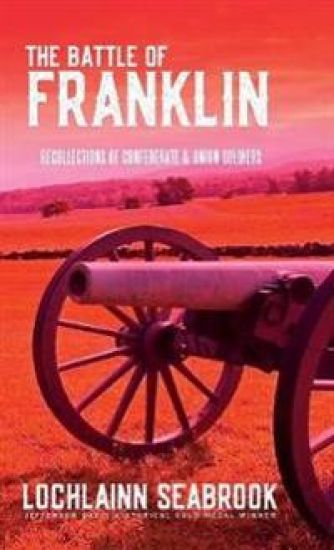
The Battle of Franklin

The Battle of Franklin

Lochlainn Seabrook

Sea Raven Press
2018
sidottu
Yankees claimed they won the Battle of Franklin; the Confederates believed they were the victors. Each side displayed courage (and in some cases cowardice) amid appalling slaughter, while employing outstanding tactical maneuvers and committing elementary strategical errors. These facts raise important questions.Why, for example, did Union Gen. Wagner disobey orders at a crucial point in the battle, and why did Confederate Gen. Hood place his most brilliant fighter, Nathan Bedford Forrest, on the far right where he knew he would have almost no impact? Why did Union Gen. Schofield callously leave his dead and wounded on the battlefield the following day, and why, strangely, did Gen. Hood attempt to renew the battle on the morning of December 1? Why did Federal soldiers wantonly shoot down and kill Confederate Gen. John Adams when they could have easily captured him instead, and why at Franklin was the casualty rate for Confederate officers and infantrymen the highest of any known modern battle? These and a thousand other questions have long perplexed those with a sincere interest in both this particular battle and American Civil War history.What then is the full and true story of the sanguinary conflict that took place in Middle Tennessee on November 30, 1864, the day after the mysterious Battle of Spring Hill and two weeks before the one-sided Battle of Nashville? What really happened during this violent engagement on the Plain of Franklin, rightly called by soldiers the "Valley of Death," where the earth was so "red with blood" that it poured over the fields in "rivulets," where in some places the bodies lay three layers deep, and where one could walk across the entire battlefield upon corpses without ever touching the ground?Award-winning author and historian Colonel Lochlainn Seabrook addresses these questions in his captivating book The Battle of Franklin: Recollections of Confederate and Union Soldiers, a chronicle of nearly 30 eyewitness accounts by military men who were on the battlefield that brisk Autumn day. Col. Seabrook also furnishes narratives by civilians, clergy, women, and even children who lived through the conflict, providing additional context to a battle which, like Nashville, neither side had intended to fight.The author-editor includes nearly 200 rare illustrations and photos to accompany the footnoted text, along with an introduction, battle statistics, 19th-Century maps, appendices, and a bibliography. The Battle of Franklin is part of Col. Seabrook's trilogy, "Hood's Tennessee Campaign" series, which includes his companion books The Battle of Spring Hill and The Battle of Nashville. All are available in paperback and hardcover. (Note: Sea Raven Press books are never out of stock.)Col. Seabrook's other titles include: Abraham Lincoln Was a Liberal, Jefferson Davis Was a Conservative; Everything You Were Taught About the Civil War is Wrong, Ask a Southerner ; Lincoln's War: The Real Cause, the Real Winner, the Real Loser; Confederate Monuments: Why Every American Should Honor Confederate Soldiers and Their Memorials; All We Ask is to be Let Alone: The Southern Secession Fact Book; The Great Yankee Coverup: What the North Doesn't Want You to Know About Lincoln's War; A Rebel Born: A Defense of Nathan Bedford Forrest; Confederacy 101: Amazing Facts You Never Knew About America's Oldest Political Tradition; Confederate Flag Facts: What Every American Should Know About Dixie's Southern Cross; Women in Gray: A Tribute to the Ladies Who Supported the Southern Confederacy; Everything You Were Taught About American Slavery is Wrong, Ask a Southerner
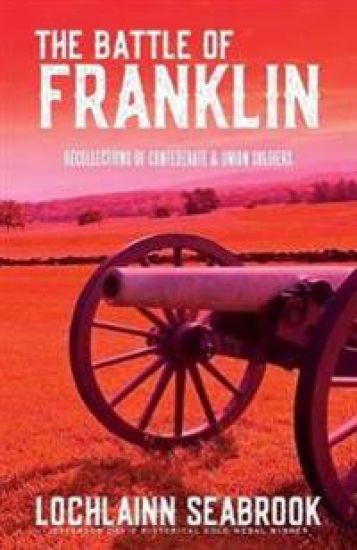
The Battle of Franklin

The Battle of Franklin

Lochlainn Seabrook

Sea Raven Press
2018
pokkari
Yankees claimed they won the Battle of Franklin; the Confederates believed they were the victors. Each side displayed courage (and in some cases cowardice) amid appalling slaughter, while employing outstanding tactical maneuvers and committing elementary strategical errors. These facts raise important questions.Why, for example, did Union Gen. Wagner disobey orders at a crucial point in the battle, and why did Confederate Gen. Hood place his most brilliant fighter, Nathan Bedford Forrest, on the far right where he knew he would have almost no impact? Why did Union Gen. Schofield callously leave his dead and wounded on the battlefield the following day, and why, strangely, did Gen. Hood attempt to renew the battle on the morning of December 1? Why did Federal soldiers wantonly shoot down and kill Confederate Gen. John Adams when they could have easily captured him instead, and why at Franklin was the casualty rate for Confederate officers and infantrymen the highest of any known modern battle? These and a thousand other questions have long perplexed those with a sincere interest in both this particular battle and American Civil War history.What then is the full and true story of the sanguinary conflict that took place in Middle Tennessee on November 30, 1864, the day after the mysterious Battle of Spring Hill and two weeks before the one-sided Battle of Nashville? What really happened during this violent engagement on the Plain of Franklin, rightly called by soldiers the "Valley of Death," where the earth was so "red with blood" that it poured over the fields in "rivulets," where in some places the bodies lay three layers deep, and where one could walk across the entire battlefield upon corpses without ever touching the ground?Award-winning author and historian Colonel Lochlainn Seabrook addresses these questions in his captivating book The Battle of Franklin: Recollections of Confederate and Union Soldiers, a chronicle of nearly 30 eyewitness accounts by military men who were on the battlefield that brisk Autumn day. Col. Seabrook also furnishes narratives by civilians, clergy, women, and even children who lived through the conflict, providing additional context to a battle which, like Nashville, neither side had intended to fight.The author-editor includes nearly 200 rare illustrations and photos to accompany the footnoted text, along with an introduction, battle statistics, 19th-Century maps, appendices, and a bibliography. The Battle of Franklin is part of Col. Seabrook's trilogy, "Hood's Tennessee Campaign" series, which includes his companion books The Battle of Spring Hill and The Battle of Nashville. All are available in paperback and hardcover. (Note: Sea Raven Press books are never out of stock.)Col. Seabrook's other titles include: Abraham Lincoln Was a Liberal, Jefferson Davis Was a Conservative; Everything You Were Taught About the Civil War is Wrong, Ask a Southerner ; Lincoln's War: The Real Cause, the Real Winner, the Real Loser; Confederate Monuments: Why Every American Should Honor Confederate Soldiers and Their Memorials; All We Ask is to be Let Alone: The Southern Secession Fact Book; The Great Yankee Coverup: What the North Doesn't Want You to Know About Lincoln's War; A Rebel Born: A Defense of Nathan Bedford Forrest; Confederacy 101: Amazing Facts You Never Knew About America's Oldest Political Tradition; Confederate Flag Facts: What Every American Should Know About Dixie's Southern Cross; Women in Gray: A Tribute to the Ladies Who Supported the Southern Confederacy; Everything You Were Taught About American Slavery is Wrong, Ask a Southerner
The Battle of Nashville

The Battle of Nashville

Lochlainn Seabrook

Sea Raven Press
2018
pokkari
The consequences of the Battle of Nashville, which took place December 15-16, 1864, are still being debated, but one thing is certain: the Union victory there marked a major turning point in the War of 1861. After losing three battles in a row, including Spring Hill (November 29) and Franklin (November 30), Confederate General John Bell Hood and his troops were forced to flee southward, leaving the all-important region of Middle Tennessee largely under Union control. Confederate power in the Western Theater had been vanquished, for as Yankees loudly and proudly proclaimed, they had "crushed the backbone of the rebellion," a victory that helped lead to Lee's surrender at Appomattox just a few months later. There are serious problems with this simplistic view, however. The Union win at Nashville was not "a remarkable display of Northern military skill," nor was the Confederate defeat "an illustration of the inferiority of Southern generals," as we have been taught. For one thing, the North had 82,000 soldiers at Nashville, the South a mere 20,000. In addition to a four-to-one numerical advantage, the North had unlimited funds, weaponry, ammunition, clothing, and food, while many of Hood's men were starving, coatless, and barefoot. As for the so-called "Rebellion," the Conservative South idolized the Union and therefore would not have "rebelled" against it. What she was actually rebelling against was the Liberal takeover of Washington, which began with the election of Left-wing Abraham Lincoln (the two parties were reversed in the 1860s), who publicly promised to overthrow the Constitution in order to implement his progressive policies. Furthermore, the Confederate Cause was not slavery, racism, or treason, as our history books falsely preach. It was, and still is, conservatism, a principle that is stronger and more alive today than ever before. Clearly "the backbone of the rebellion" was not "crushed" at Nashville So what are the facts about this famous conflict? In his book The Battle of Nashville: Recollections of Confederate and Union Soldiers, award-winning author and historian Colonel Lochlainn Seabrook allows those who were there to answer this question. After reading the 30 eyewitness accounts he provides, the reader will have a much better understanding of the conflict, of the battles that led up to Nashville (which was never meant to be fought), and even of the War itself. Illustrated with rare images and generously footnoted, Col. Seabrook also includes a thought-provoking introduction, battle statistics, 19th-Century maps, a pertinent appendix, and a comprehensive bibliography. A companion to his classic books The Battle of Spring Hill and The Battle of Franklin, The Battle of Nashville is available in paperback and hardcover. Col. Seabrook's other titles include: Abraham Lincoln Was a Liberal, Jefferson Davis Was a Conservative; Everything You Were Taught About the Civil War is Wrong, Ask a Southerner ; Lincoln's War: The Real Cause, the Real Winner, the Real Loser; Confederate Monuments: Why Every American Should Honor Confederate Soldiers and Their Memorials.
The Battle of Nashville

The Battle of Nashville

Lochlainn Seabrook

Sea Raven Press
2018
sidottu
The consequences of the Battle of Nashville, which took place December 15-16, 1864, are still being debated, but one thing is certain: the Union victory there marked a major turning point in the War of 1861. After losing three battles in a row, including Spring Hill (November 29) and Franklin (November 30), Confederate General John Bell Hood and his troops were forced to flee southward, leaving the all-important region of Middle Tennessee largely under Union control. Confederate power in the Western Theater had been vanquished, for as Yankees loudly and proudly proclaimed, they had "crushed the backbone of the rebellion," a victory that helped lead to Lee's surrender at Appomattox just a few months later. There are serious problems with this simplistic view, however. The Union win at Nashville was not "a remarkable display of Northern military skill," nor was the Confederate defeat "an illustration of the inferiority of Southern generals," as we have been taught. For one thing, the North had 82,000 soldiers at Nashville, the South a mere 20,000. In addition to a four-to-one numerical advantage, the North had unlimited funds, weaponry, ammunition, clothing, and food, while many of Hood's men were starving, coatless, and barefoot. As for the so-called "Rebellion," the Conservative South idolized the Union and therefore would not have "rebelled" against it. What she was actually rebelling against was the Liberal takeover of Washington, which began with the election of Left-wing Abraham Lincoln (the two parties were reversed in the 1860s), who publicly promised to overthrow the Constitution in order to implement his progressive policies. Furthermore, the Confederate Cause was not slavery, racism, or treason, as our history books falsely preach. It was, and still is, conservatism, a principle that is stronger and more alive today than ever before. Clearly "the backbone of the rebellion" was not "crushed" at Nashville So what are the facts about this famous conflict? In his book The Battle of Nashville: Recollections of Confederate and Union Soldiers, award-winning author and historian Colonel Lochlainn Seabrook allows those who were there to answer this question. After reading the 30 eyewitness accounts he provides, the reader will have a much better understanding of the conflict, of the battles that led up to Nashville (which was never meant to be fought), and even of the War itself. Illustrated with rare images and generously footnoted, Col. Seabrook also includes a thought-provoking introduction, battle statistics, 19th-Century maps, a pertinent appendix, and a comprehensive bibliography. A companion to his classic books The Battle of Spring Hill and The Battle of Franklin, The Battle of Nashville is available in paperback and hardcover. Col. Seabrook's other titles include: Abraham Lincoln Was a Liberal, Jefferson Davis Was a Conservative; Everything You Were Taught About the Civil War is Wrong, Ask a Southerner ; Lincoln's War: The Real Cause, the Real Winner, the Real Loser; Confederate Monuments: Why Every American Should Honor Confederate Soldiers and Their Memorials.
I Rode With Forrest!

I Rode With Forrest!

Lochlainn Seabrook

Sea Raven Press
2018
sidottu
Traditional Southerners and educated American patriots have long been aware of the greatness of the Confederate general fondly known here in Dixie as the "immortal Forrest." What is far less well known are the identities and personal stories of the men who fought with and under him. Years in the making, award-winning Southern historian and Forrest scholar Colonel Lochlainn Seabrook, who holds the world record for writing the most books on Forrest, has compiled an informative yet riveting work that solves this dilemma. Entitled, I Rode With Forrest Confederate Soldiers Who Served With the World's Greatest Cavalry Leader, this well-researched, heavily illustrated reference provides entries on nearly 500 (of the 50,000) military personnel who at one time or another fell under the auspices of the "Wizard of the Saddle." This distinct body of boys and men, who varied widely in age, background, ethnicity, nationality, religion, and education, referred to themselves as "soldiers on the horse," a title they were proud to own, as those who were granted the privilege to ride with Forrest (even for one day) were envied above nearly all others. Though diverse, all shared two common interests: an undying affection for the U.S. Constitution and an unshakeable faith in their larger-than-life commander Nathan Bedford Forrest, "the thunderbolt of war" As Col. Seabrook's A to Z book demonstrates, Forrest's army was not made up merely of white Southerners, as our Left-wing biased history books disingenuously claim. Among his soldiers there were also blacks (a number who served as the General's personal armed guards), Yankees (from as far North as Massachusetts and New Jersey), foreigners (representing much of Europe), and Indians (including one Native-American who became a Confederate officer and lived to be 107). This, however, is not just a roster of names and dates. Both historians and genealogists, for example, will find this book invaluable as many entries include not only little known military facts, but birth and death dates, names of ancestors, wives, children, and various relations and descendants (some quite famous). The book serves another vital function as well: with their impeccable reputations, sterling characters, high morals, and strong work ethics, Forrest's men are ideal role models for adults and youth alike. In describing his subjects, the author utilizes biographical sketches, obituaries, stories, and reminiscences as told primarily by fellow Confederate veterans, but also by close friends and family members (all who wrote during the late Victorian Era and early 20th Century). Other biographies he has created from a host of disparate sources, weaving them into his own unique narratives. We are treated thus to a cornucopia of rare historical data that is seldom found between the covers of a single volume. I Rode With Forrest is, in fact, the chronicle of an important but lost chapter in American history: the legacy of the rough and ready Conservatives who served under the veritable "God of War," the same Southern officer U.S. President Theodore Roosevelt called "the most remarkable man produced in either the Union or Confederate armies." Along with their individual histories (some recorded in great detail), the reader is treated to various adventures of Forrest's men as well as the many highs and lows that came with being a Confederate soldier. In essence Col. Seabrook's encyclopedia tells the story of, as one Confederate veteran put it, "the patriotic and chivalrous spirits who made the name of Forrest so famous in American history." Includes endnotes, a bibliography, and an index.
I Rode With Forrest!

I Rode With Forrest!

Lochlainn Seabrook

Sea Raven Press
2018
pokkari
Traditional Southerners and educated American patriots have long been aware of the greatness of the Confederate general fondly known here in Dixie as the "immortal Forrest." What is far less well known are the identities and personal stories of the men who fought with and under him. Years in the making, award-winning Southern historian and Forrest scholar Colonel Lochlainn Seabrook, who holds the world record for writing the most books on Forrest, has compiled an informative yet riveting work that solves this dilemma. Entitled, I Rode With Forrest Confederate Soldiers Who Served With the World's Greatest Cavalry Leader, this well-researched, heavily illustrated reference provides entries on nearly 500 (of the 50,000) military personnel who at one time or another fell under the auspices of the "Wizard of the Saddle." This distinct body of boys and men, who varied widely in age, background, ethnicity, nationality, religion, and education, referred to themselves as "soldiers on the horse," a title they were proud to own, as those who were granted the privilege to ride with Forrest (even for one day) were envied above nearly all others. Though diverse, all shared two common interests: an undying affection for the U.S. Constitution and an unshakeable faith in their larger-than-life commander Nathan Bedford Forrest, "the thunderbolt of war" As Col. Seabrook's A to Z book demonstrates, Forrest's army was not made up merely of white Southerners, as our Left-wing biased history books disingenuously claim. Among his soldiers there were also blacks (a number who served as the General's personal armed guards), Yankees (from as far North as Massachusetts and New Jersey), foreigners (representing much of Europe), and Indians (including one Native-American who became a Confederate officer and lived to be 107). This, however, is not just a roster of names and dates. Both historians and genealogists, for example, will find this book invaluable as many entries include not only little known military facts, but birth and death dates, names of ancestors, wives, children, and various relations and descendants (some quite famous). The book serves another vital function as well: with their impeccable reputations, sterling characters, high morals, and strong work ethics, Forrest's men are ideal role models for adults and youth alike. In describing his subjects, the author utilizes biographical sketches, obituaries, stories, and reminiscences as told primarily by fellow Confederate veterans, but also by close friends and family members (all who wrote during the late Victorian Era and early 20th Century). Other biographies he has created from a host of disparate sources, weaving them into his own unique narratives. We are treated thus to a cornucopia of rare historical data that is seldom found between the covers of a single volume. I Rode With Forrest is, in fact, the chronicle of an important but lost chapter in American history: the legacy of the rough and ready Conservatives who served under the veritable "God of War," the same Southern officer U.S. President Theodore Roosevelt called "the most remarkable man produced in either the Union or Confederate armies." Along with their individual histories (some recorded in great detail), the reader is treated to various adventures of Forrest's men as well as the many highs and lows that came with being a Confederate soldier. In essence Col. Seabrook's encyclopedia tells the story of, as one Confederate veteran put it, "the patriotic and chivalrous spirits who made the name of Forrest so famous in American history." Includes endnotes, a bibliography, and an index.
The Battle of Spring Hill

The Battle of Spring Hill

Lochlainn Seabrook

Sea Raven Press
2018
sidottu
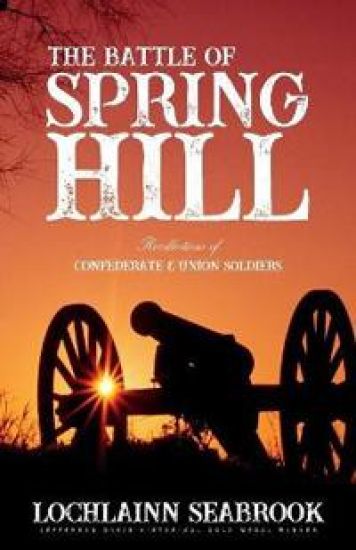
Why are the military movements of the Battle of Spring Hill, November 29, 1864, the most discussed of any conflict in the American Civil War? Discover the astounding answer from those who were there in The Battle of Spring Hill: Recollections of Confederate and Union Soldiers, the brief but powerful book by award-winning author, historian, and Civil War scholar Lochlainn Seabrook.Though this is not meant to be a detailed history, the events leading up to and resulting from the battle are discussed, as are the many odd blunders committed by the Union and Confederate armies. In particular Col. Seabrook focuses in on the South's "lost opportunity," also known as the Spring Hill Affair. In doing so he and his Victorian contributors address two important questions: Why did Confederate General John Bell Hood and his subordinate officers squander their best chance of destroying Union power in the Western Theater, and why did Yankee Major General John M. Schofield unnecessarily risk his troops by marching them through the midst of one of the largest Confederate encampments of the War?Mainstream writers like to downplay the Battle of Spring Hill as "one of the most controversial non-fighting events of the entire war," but this is wrong. There was plenty of fighting and bloodshed, with hundreds of men on both sides injured, killed, or missing. For what? Why did the Confederate soldiers draw arms at Spring Hill that November day? As Col. Seabrook explains, it was not to "preserve slavery" or to "destroy the Union," as we have been falsely taught. If you are not familiar with authentic Southern history, the answer will surprise you Col. Seabrook's thirty-two eyewitness accounts relay the amazing story of the Battle of Spring Hill (and the subsequent Confederate disasters at Franklin and Nashville) in a gripping you-are-there manner, while its many photos (most taken by the author) help convey the incredible drama which transpired. His Introduction and Summary round out the work, providing background and context for the modern reader. The book includes notes, a bibliography, maps, and a list of notable Confederate and Union officers who were present. Available in paperback and hardcover.Col. Seabrook's other titles include: Abraham Lincoln Was a Liberal, Jefferson Davis Was a Conservative; Lincoln's War: The Real Cause, the Real Winner, the Real Loser; Confederate Monuments: Why Every American Should Honor Confederate Soldiers and Their Memorials; The Unholy Crusade: Lincoln's Legacy of Destruction in the American South; The Great Yankee Coverup: What the North Doesn't Want You to Know About Lincoln's War; Abraham Lincoln: The Southern View; Victorian Confederate Poetry: The Southern Cause in Verse, 1861-1901; Confederacy 101: Amazing Facts You Never Knew About America's Oldest Political Tradition; Confederate Flag Facts: What Every American Should Know About Dixie's Southern Cross; Women in Gray: A Tribute to the Ladies Who Supported the Southern Confederacy; Everything You Were Taught About American Slavery is Wrong, Ask a Southerner ; The God of War: Nathan Bedford Forrest As He Was Seen By His Contemporaries; Honest Jeff and Dishonest Abe: A Southern Children's Guide to the Civil War; The Constitution of the Confederate States of America Explained; A Rebel Born: A Defense of Nathan Bedford Forrest; The Ultimate Civil War Quiz Book.
The Battle of Spring Hill

The Battle of Spring Hill

Lochlainn Seabrook

Sea Raven Press
2018
pokkari
Why are the military movements of the Battle of Spring Hill, November 29, 1864, the most discussed of any conflict in the American Civil War? Discover the astounding answer from those who were there in The Battle of Spring Hill: Recollections of Confederate and Union Soldiers, the brief but powerful book by award-winning author, historian, and Civil War scholar Lochlainn Seabrook.Though this is not meant to be a detailed history, the events leading up to and resulting from the battle are discussed, as are the many odd blunders committed by the Union and Confederate armies. In particular Col. Seabrook focuses in on the South's "lost opportunity," also known as the Spring Hill Affair. In doing so he and his Victorian contributors address two important questions: Why did Confederate General John Bell Hood and his subordinate officers squander their best chance of destroying Union power in the Western Theater, and why did Yankee Major General John M. Schofield unnecessarily risk his troops by marching them through the midst of one of the largest Confederate encampments of the War?Mainstream writers like to downplay the Battle of Spring Hill as "one of the most controversial non-fighting events of the entire war," but this is wrong. There was plenty of fighting and bloodshed, with hundreds of men on both sides injured, killed, or missing. For what? Why did the Confederate soldiers draw arms at Spring Hill that November day? As Col. Seabrook explains, it was not to "preserve slavery" or to "destroy the Union," as we have been falsely taught. If you are not familiar with authentic Southern history, the answer will surprise you Col. Seabrook's thirty-two eyewitness accounts relay the amazing story of the Battle of Spring Hill (and the subsequent Confederate disasters at Franklin and Nashville) in a gripping you-are-there manner, while its many photos (most taken by the author) help convey the incredible drama which transpired. His Introduction and Summary round out the work, providing background and context for the modern reader. The book includes notes, a bibliography, maps, and a list of notable Confederate and Union officers who were present. Available in paperback and hardcover.Col. Seabrook's other titles include: Abraham Lincoln Was a Liberal, Jefferson Davis Was a Conservative; Lincoln's War: The Real Cause, the Real Winner, the Real Loser; Confederate Monuments: Why Every American Should Honor Confederate Soldiers and Their Memorials; The Unholy Crusade: Lincoln's Legacy of Destruction in the American South; The Great Yankee Coverup: What the North Doesn't Want You to Know About Lincoln's War; Abraham Lincoln: The Southern View; Victorian Confederate Poetry: The Southern Cause in Verse, 1861-1901; Confederacy 101: Amazing Facts You Never Knew About America's Oldest Political Tradition; Confederate Flag Facts: What Every American Should Know About Dixie's Southern Cross; Women in Gray: A Tribute to the Ladies Who Supported the Southern Confederacy; Everything You Were Taught About American Slavery is Wrong, Ask a Southerner ; The God of War: Nathan Bedford Forrest As He Was Seen By His Contemporaries; Honest Jeff and Dishonest Abe: A Southern Children's Guide to the Civil War; The Constitution of the Confederate States of America Explained; A Rebel Born: A Defense of Nathan Bedford Forrest; The Ultimate Civil War Quiz Book.
The Great Impersonator!

The Great Impersonator!

Lochlainn Seabrook

Sea Raven Press
2018
sidottu
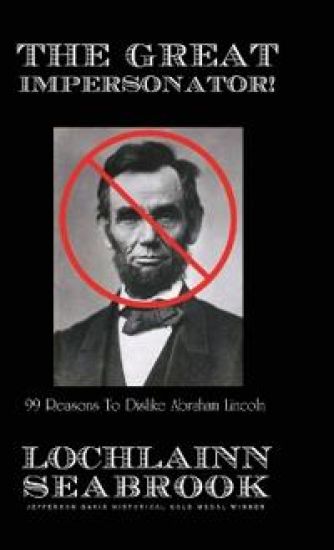
If you think Abraham Lincoln was our greatest president, think again The truth is that unless you're a dictator, a socialist, a racist, a warmonger, an outlaw, a sexist, or a left-wing progressive, you won't find much about him that's admirable. Our 19th-Century American ancestors would certainly have agreed with this assessment. This is why, after all, they voted him the worst U.S. president up until that time, and it's why even his own party members and military officers called him a "tyrant," "swindler," "monster," "buffoon," "butcher," "fiend," the "original gorilla," "filthy story-teller," "robber," "braggart," "liar," "usurper," "ignoramus," "scoundrel," "well-meaning baboon," and "that damned idiot in the White House "Naturally, the Lincoln-loving, Liberal controlled media and educational system would rather you not know any of this. But for those who are interested in the truth, award-winning Southern author, historian, and Lincoln scholar Colonel Lochlainn Seabrook has written The Great Impersonator 99 Reasons to Dislike Abraham Lincoln. Here, among Seabrook's 99 well researched footnoted entries, you will find stunning little known facts about our sixteenth chief executive, facts that have been buried for 150 years beneath a mountain of Northern mythology.Why were they concealed? Because exposing the real man exposes the truth that his Liberal devotees are still trying so hard to suppress: President Lincoln waged an illegal war on the Constitution and states' rights; invaded a legally formed foreign country (the Confederacy) that only wished to be left alone; committed countless brutal crimes against both unarmed American citizens and his own soldiers; and campaigned his entire life to have all American blacks "sent back to Africa, to their own native land," as he so inelegantly put it. Not familiar with any of this? Now you know why Colonel Seabrook rightly calls him, not the Great Emancipator, but the Great Impersonator Get the inside scoop on the authentic Abraham Lincoln in this brief but important work on the big government Liberal who intentionally surrounded himself with socialists, Marxists, communists, gangsters, anti-abolitionists, and fellow white supremacists and separatists. Discover the real reason he was called "Honest Abe," why he referred to all non-whites as "inferior races," and why when it came to blacks, former Northern slave Frederick Douglass said that Lincoln was missing "the genuine spark of humanity."An attractive, unique, affordable, and tourist-friendly work that will appeal to both Civil War buffs and historical educators alike, The Great Impersonator 99 Reasons to Dislike Abraham Lincoln is the perfect addition to any retail outlet, including not only bookstores, but Civil War sites, historic houses, and museum gift stores. Available in paperback and hardcover.Seabrook's other popular titles include: Everything You Were Taught About the Civil War is Wrong, Ask a Southerner ; Confederate Monuments: Why Every American Should Honor Confederate Soldiers and Their Memorials; The Ultimate Civil War Quiz Book; The Great Yankee Coverup: What the North Doesn't Want You to Know About Lincoln's War; Lincoln's War: The Real Cause, the Real Winner, the Real Loser; Confederate Flag Facts: What Every American Should Know About Dixie's Southern Cross; Women in Gray: A Tribute to the Ladies Who Supported the Southern Confederacy; Victorian Confederate Poetry.
The God of War

The God of War

Lochlainn Seabrook

Sea Raven Press
2018
sidottu
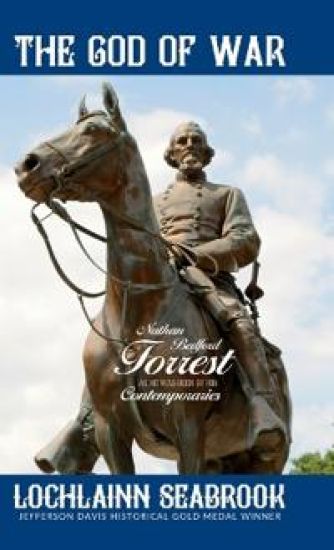
If you are interested in learning about the real Nathan Bedford Forrest as opposed to the one-dimensional cardboard villain fabricated by Liberals, then you will want to read The God of War: Nathan Bedford Forrest As He Was Seen By His Contemporaries, by award-winning Southern historian and Forrest scholar Colonel Lochlainn Seabrook. Here you will discover the authentic Forrest in the words of those who actually knew him: Confederate soldiers, Union soldiers, military educators, foreigners, writers, politicians, neighbors, even children - all without the bigoted intrusions of Yankee editorializing, South-hating mythology, and absurd Left-wing lies. Find out for yourself why Forrest was idolized around the world during the Victorian period, why he is classed with celebrated military commanders like Michel Ney and Joachim Murat, why he is more popular today than ever before, why new Forrest monuments are going up, and why he will always be admired by educated people of all races In this generously illustrated work, Col. Seabrook records the memories, anecdotes, stories, and reminiscences of some 200 individuals who knew Forrest, worked with him, served in the Confederate army with him, or faced him on the battlefield. Thrill to the vivid descriptions of the General's wartime exploits as he tricks, overruns, crushes, and captures one Yankee command after another; of his poverty-stricken childhood on America's early Western frontier, where he learned self-reliance and grew into a rugged individualist, a political Conservative, and a well-respected multimillionaire; of his charitable work caring for veterans, widows, and orphans after Lincoln's War, and his bold leadership in seeking to protect and repair the prostrate South during so-called "Reconstruction."In the process you will learn that Forrest was not a "devil," as the vengeful and uneducated Left still likes to portray him, but a sensitive and devout Christian who donated nearly his entire estate to the poor; not a war criminal, but a compassionate Confederate officer who avoided bloodshed whenever possible and used his own doctors to save wounded Yanks; not an illiterate savage on the battlefield, but an ingenious military strategist and tactician who is widely regarded as the greatest cavalry leader in world history; not a drinking and gambling adulterer, but a teetotaling, straitlaced, faithful husband; not a racist snob, but a fair and egalitarian general who treated everyone equally and who personally enlisted 65 blacks in his cavalry.Among the myriad of recollections (which cover the years 1863 to 1932) there are exciting moment-by-moment accounts of some of the General's more notable battles: Sacramento, Ft. Donelson, Sulphur Branch Trestle, Chickamauga, Franklin, Parker's Crossroads, Johnsonville, Shiloh, Thompson's Station, Fort Pillow, Okalona, Selma, and arguably Forrest's greatest victory, the Battle of Brice's Crossroads. Col. Seabrook has also included a chapter of poems honoring Forrest, as well as a fascinating appendices section with articles on the General's wife Mary Ann, his grandson Nathan Bedford Forrest II, and a complimentary eulogy on the South by U.S. President Theodore Roosevelt, who called Forrest "the most remarkable man produced in either the Union or Confederate armies." Rounding out the ten-chapter book there is a comprehensive bibliography and over 200 endnotes. The God of War, a wonderful companion to the Colonel's many other titles on Forrest, is an important work that not only debunks the fake Civil War history churned out by progressives, but which helps preserve authentic Confederate literature and Southern history for this and future generations. Available in paperback and hardcover.
The God of War

The God of War

Lochlainn Seabrook

Sea Raven Press
2018
pokkari
If you are interested in learning about the real Nathan Bedford Forrest as opposed to the one-dimensional cardboard villain fabricated by Liberals, then you will want to read The God of War: Nathan Bedford Forrest As He Was Seen By His Contemporaries, by award-winning Southern historian and Forrest scholar Colonel Lochlainn Seabrook. Here you will discover the authentic Forrest in the words of those who actually knew him: Confederate soldiers, Union soldiers, military educators, foreigners, writers, politicians, neighbors, even children - all without the bigoted intrusions of Yankee editorializing, South-hating mythology, and absurd Left-wing lies. Find out for yourself why Forrest was idolized around the world during the Victorian period, why he is classed with celebrated military commanders like Michel Ney and Joachim Murat, why he is more popular today than ever before, why new Forrest monuments are going up, and why he will always be admired by educated people of all races In this generously illustrated work, Col. Seabrook records the memories, anecdotes, stories, and reminiscences of some 200 individuals who knew Forrest, worked with him, served in the Confederate army with him, or faced him on the battlefield. Thrill to the vivid descriptions of the General's wartime exploits as he tricks, overruns, crushes, and captures one Yankee command after another; of his poverty-stricken childhood on America's early Western frontier, where he learned self-reliance and grew into a rugged individualist, a political Conservative, and a well-respected multimillionaire; of his charitable work caring for veterans, widows, and orphans after Lincoln's War, and his bold leadership in seeking to protect and repair the prostrate South during so-called "Reconstruction."In the process you will learn that Forrest was not a "devil," as the vengeful and uneducated Left still likes to portray him, but a sensitive and devout Christian who donated nearly his entire estate to the poor; not a war criminal, but a compassionate Confederate officer who avoided bloodshed whenever possible and used his own doctors to save wounded Yanks; not an illiterate savage on the battlefield, but an ingenious military strategist and tactician who is widely regarded as the greatest cavalry leader in world history; not a drinking and gambling adulterer, but a teetotaling, straitlaced, faithful husband; not a racist snob, but a fair and egalitarian general who treated everyone equally and who personally enlisted 65 blacks in his cavalry.Among the myriad of recollections (which cover the years 1863 to 1932) there are exciting moment-by-moment accounts of some of the General's more notable battles: Sacramento, Ft. Donelson, Sulphur Branch Trestle, Chickamauga, Franklin, Parker's Crossroads, Johnsonville, Shiloh, Thompson's Station, Fort Pillow, Okalona, Selma, and arguably Forrest's greatest victory, the Battle of Brice's Crossroads. Col. Seabrook has also included a chapter of poems honoring Forrest, as well as a fascinating appendices section with articles on the General's wife Mary Ann, his grandson Nathan Bedford Forrest II, and a complimentary eulogy on the South by U.S. President Theodore Roosevelt, who called Forrest "the most remarkable man produced in either the Union or Confederate armies." Rounding out the ten-chapter book there is a comprehensive bibliography and over 200 endnotes. The God of War, a wonderful companion to the Colonel's many other titles on Forrest, is an important work that not only debunks the fake Civil War history churned out by progressives, but which helps preserve authentic Confederate literature and Southern history for this and future generations. Available in paperback and hardcover.
The Alexander H. Stephens Reader

The Alexander H. Stephens Reader

Lochlainn Seabrook

Sea Raven Press
2018
sidottu
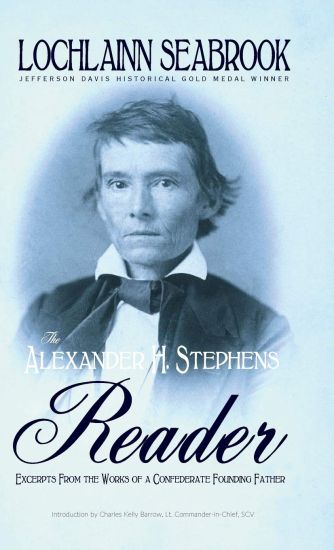
In his ongoing efforts to resuscitate and preserve authentic Southern history, popular award-winning author Colonel Lochlainn Seabrook has written The Alexander H. Stephens Reader, a one-of-a-kind, 1,050 page volume providing topical Excerpts From the Works of a Confederate Founding Father.Conveniently divided into two sections, Colonel Seabrook devotes thirty heavily footnoted chapters to selections from the Conservative Vice President's enormous output of personal and public letters, speeches, official testimony, recollections, responses to critics, and literary works. The period covered is from 1836 to 1881, with the last half of the book dedicated to excerpts from Stephens' deservedly renowned two-volume tome, A Constitutional View of the Late War Between the States, published in 1868 and 1870.Colonel Seabrook's unique work provides us with something of inestimable value: the Truth about Lincoln's War on the South and the Constitution. From Stephens' own pen and lips we get not only a rare look at the Southern perspective of the War, but also the governmental history of the formation of our great "Confederated Republic," as George Washington called the U.S.A. We also learn of the Founding Fathers' struggle to forge a workable constitution, the early battle between Southern conservatives and Northern liberals over the ideas of limited and big government, and the honest facts about slavery, the Confederate and Union Causes, and the American "Civil War," our country's second Revolutionary War of Secession.At the end of Chapter Thirty, the reader is left with only one conclusion; the very one that strict constitutionalist Stephens, a brilliant lawyer, writer, and orator, spent the entire last half of his life evangelizing: because secession literally gave birth to the U.S.A. in 1776 and is tacitly guaranteed in the Constitution, it is still legal to this day. Thus, the "Civil War" was an illicit and unwarranted conflict and Abraham Lincoln was a war criminal.The Alexander H. Stephens Reader, already becoming a classic in its field, will forever change the way you look at American history, the Confederacy, the Union, the War, the U.S. Constitution, and Confederate Vice President Stephens himself. The Introduction is by Charles Kelly Barrow, Commander-in-Chief of the Sons of Confederate Veterans. Available in paperback and hardcover.Neo-Victorian Civil War scholar Lochlainn Seabrook, a descendant of the families of Alexander H. Stephens, John S. Mosby, Edmund W. Rucker, and William Giles Harding, is the most prolific and popular pro-South writer in the world today. Known by critics as the "new Shelby Foote" and by his fans as the "Voice of the Traditional South," he is a recipient of the prestigious Jefferson Davis Historical Gold Medal and the author of over 50 books that have introduced hundreds of thousands to the truth about the War for Southern Independence. A 7th generation Kentuckian of Appalachian heritage and the 6th great-grandson of the Earl of Oxford, Colonel Seabrook has a 40-year background in American and Southern history, and is the author of the international blockbuster Everything You Were Taught About the Civil War is Wrong, Ask a Southerner His other titles include: The Quotable Alexander H. Stephens; Confederate Monuments: Why Every American Should Honor Confederate Soldiers and Their Memorials; The Great Yankee Coverup; Confederacy 101; Slavery 101; Confederate Flag Facts; Lincoln's War; Women in Gray: A Tribute to the Ladies Who Supported the Southern Confederacy; Everything You Were Taught About American Slavery is Wrong, Ask a Southerner
The Quotable Alexander H. Stephens

The Quotable Alexander H. Stephens

Lochlainn Seabrook

Sea Raven Press
2018
sidottu
Was Confederate Vice President Alexander H. Stephens really a "racist" Dixiecrat who believed that slavery was the "cornerstone" of the Confederacy, as pro-North writers assert? Was he actually guilty of "treason" against the U.S., an "anarchist" who should have been hanged for leading the secession of the Southern states? Of course not. And The Quotable Alexander H. Stephens: Selections from the Writings and Speeches of the Confederacy's First Vice President, by award-winning Southern historian Colonel Lochlainn Seabrook, proves it This well-researched work, a companion to Colonel Seabrook's The Alexander H. Stephens Reader, provides nearly 700 footnoted entries that reveal the authentic man, one completely opposite of the negative image of Stephens fabricated by enemies of the South. Known as one of America's most kindly and charitable individuals, he was a true friend of the black man, as well as a pro-Unionist who at first campaigned against Southern secession. Also a brilliant thinker, spell-binding orator, and prodigious author, he was, in fact, one of history's most extraordinary, interesting, honorable, and noble figures. Follow Stephens in his own words, as he takes us through the development of the U.S. after the American Revolution, and into the growing bitter sectionalism between the South and the North in the 1840s and 1850s. Get a you-are-there view of the entire "Civil War," from the disastrous election of big government Liberal Abraham Lincoln in November 1860, to the tragic fall of the Confederacy and Stephens' illegal imprisonment in the Spring of 1865. Follow the frail but feisty Conservative Georgia governor - who turned down offers to run for both U.S. president and C.S. president - from so-called "Reconstruction" and the rebuilding of the South (which he helped direct), through the postwar administrations of Andrew Johnson, Ulysses S. Grant, Rutherford B. Hayes, James A. Garfield, and Chester A. Arthur. Along the way, not only do we learn the true cause behind Lincoln's War, but Stephens also lays out the facts concerning Southern slavery and his "Cornerstone" speech, while forcefully defending the constitutional right of secession. Follow the lifelong bachelor-politician (who served in the U.S. government, in one capacity or another, from President Andrew Jackson to President Chester A. Arthur, a span of forty-seven years) as he discloses his everyday thoughts and personal opinions on everything from the weather and dogs to self-government and states' rights, in this profusely illustrated one-of-a-kind book that is already becoming a standard in Southern literature. With the publication of The Quotable Alexander H. Stephens, the anti-South movement's vicious slander against "little Aleck," as he was lovingly known to his relatives, friends and constituents, is now powerless. Thanks to Colonel Seabrook, the reputation, honor, and memory of Confederate Vice President Alexander Hamilton Stephens has finally been fully redeemed. Available in paperback and hardcover. Colonel Seabrook's other works include: Abraham Lincoln Was a Liberal, Jefferson Davis Was a Conservative; Lincoln's War: The Real Cause, the Real Winner, the Real Loser; All We Ask is to be Let Alone: The Southern Secession Fact Book; Confederate Monuments: Why Every American Should Honor Confederate Soldiers and Their Memorials; The Unholy Crusade: Lincoln's Legacy of Destruction in the American South; The Great Yankee Coverup: What the North Doesn't Want You to Know About Lincoln's War; Confederacy 101: Amazing Facts You Never Knew About America's Oldest Political Tradition.
Confederate Monuments

Confederate Monuments

Lochlainn Seabrook

Sea Raven Press
2018
sidottu
Why is the Left targeting Confederate monuments for removal and destruction? Ignorance, social spite, and political expediency But the Liberal's sinister efforts to eradicate American history do more than just offend the living. They are an insult to the honor and memory of one of the most courageous and patriotic serviceman the world has ever known: the Confederate soldier.If you are a truth-seeker and want to know why Confederate monuments should be treated as national treasures, you owe it to yourself to read the deeply researched works of world acclaimed Southern historian Colonel Lochlainn Seabrook, starting with his highly topical book, Confederate Monuments: Why Every American Should Honor Confederate Soldiers and Their Memorials.Conveniently divided into three sections, the first debunks the fake history fabricated by the Left to conceal the facts about Lincoln's War and turn America against the South. Here we learn about the true history of the conflict, the early tradition of nationwide U.S. support for Confederate soldiers, the unique origins of Southern patriotism, the legal rights of the Confederate dead, and the many stringent preservation laws surrounding their memorials. The second section provides a massive pictorial sampling of the thousands of Confederate monuments that dot the American landscape, arranged alphabetically by state and city. The book ends with a fascinating appendices section comprising 19th-Century speeches, addresses, articles, and lists related to the Confederacy and her awe-inspiring granite landmarks.Throughout this densely illustrated work, the award-winning author sprinkles scores of additional Confederate images from the Victorian Era, along with dozens of poems, quotes, and genuine inscriptions from Confederate statues, all which add further educational value to this already powerful and informative pictorial primer. This is the only book of its kind, and the only one you will ever need to combat the Yankee myths and Liberal lies surrounding the phony "controversial" issue of Confederate soldiers and their precious stone memorials.Colonel Seabrook confidently predicts that thousands of new Confederate monuments will go up in the future. Because once the historical truths revealed in his book are more widely known, President McKinley's charge that all Americans should share in honoring the Confederate dead will be taken seriously, and patriots everywhere will be clamoring to help fund, build, and raise as many memorials as possible to our country's heroic men in gray Available in paperback and hardcover.Lochlainn Seabrook's other titles include: Abraham Lincoln Was a Liberal, Jefferson Davis Was a Conservative: The Missing Key to Understanding the American Civil War; Lincoln's War: The Real Cause, the Real Winner, the Real Loser; The Unholy Crusade: Lincoln's Legacy of Destruction in the American South; The Great Yankee Coverup: What the North Doesn't Want You to Know About Lincoln's War; Victorian Confederate Poetry; Confederacy 101: Amazing Facts You Never Knew About America's Oldest Political Tradition; Confederate Flag Facts: What Every American Should Know About Dixie's Southern Cross; Women in Gray: A Tribute to the Ladies Who Supported the Southern Confederacy; Everything You Were Taught About American Slavery is Wrong, Ask a Southerner ; Honest Jeff and Dishonest Abe: A Southern Children's Guide to the Civil War; The Constitution of the Confederate States of America Explained; and A Rebel Born: A Defense of Nathan Bedford Forrest.
Confederate Monuments

Confederate Monuments

Lochlainn Seabrook

Sea Raven Press
2018
pokkari
Why is the Left targeting Confederate monuments for removal and destruction? Ignorance, social spite, and political expediency But the Liberal's sinister efforts to eradicate American history do more than just offend the living. They are an insult to the honor and memory of one of the most courageous and patriotic serviceman the world has ever known: the Confederate soldier.If you are a truth-seeker and want to know why Confederate monuments should be treated as national treasures, you owe it to yourself to read the deeply researched works of world acclaimed Southern historian Colonel Lochlainn Seabrook, starting with his highly topical book, Confederate Monuments: Why Every American Should Honor Confederate Soldiers and Their Memorials.Conveniently divided into three sections, the first debunks the fake history fabricated by the Left to conceal the facts about Lincoln's War and turn America against the South. Here we learn about the true history of the conflict, the early tradition of nationwide U.S. support for Confederate soldiers, the unique origins of Southern patriotism, the legal rights of the Confederate dead, and the many stringent preservation laws surrounding their memorials. The second section provides a massive pictorial sampling of the thousands of Confederate monuments that dot the American landscape, arranged alphabetically by state and city. The book ends with a fascinating appendices section comprising 19th-Century speeches, addresses, articles, and lists related to the Confederacy and her awe-inspiring granite landmarks.Throughout this densely illustrated work, the award-winning author sprinkles scores of additional Confederate images from the Victorian Era, along with dozens of poems, quotes, and genuine inscriptions from Confederate statues, all which add further educational value to this already powerful and informative pictorial primer. This is the only book of its kind, and the only one you will ever need to combat the Yankee myths and Liberal lies surrounding the phony "controversial" issue of Confederate soldiers and their precious stone memorials.Colonel Seabrook confidently predicts that thousands of new Confederate monuments will go up in the future. Because once the historical truths revealed in his book are more widely known, President McKinley's charge that all Americans should share in honoring the Confederate dead will be taken seriously, and patriots everywhere will be clamoring to help fund, build, and raise as many memorials as possible to our country's heroic men in gray Available in paperback and hardcover.Lochlainn Seabrook's other titles include: Abraham Lincoln Was a Liberal, Jefferson Davis Was a Conservative: The Missing Key to Understanding the American Civil War; Lincoln's War: The Real Cause, the Real Winner, the Real Loser; The Unholy Crusade: Lincoln's Legacy of Destruction in the American South; The Great Yankee Coverup: What the North Doesn't Want You to Know About Lincoln's War; Victorian Confederate Poetry; Confederacy 101: Amazing Facts You Never Knew About America's Oldest Political Tradition; Confederate Flag Facts: What Every American Should Know About Dixie's Southern Cross; Women in Gray: A Tribute to the Ladies Who Supported the Southern Confederacy; Everything You Were Taught About American Slavery is Wrong, Ask a Southerner ; Honest Jeff and Dishonest Abe: A Southern Children's Guide to the Civil War; The Constitution of the Confederate States of America Explained; and A Rebel Born: A Defense of Nathan Bedford Forrest.
Christmas Before Christianity

Christmas Before Christianity

Lochlainn Seabrook

Sea Raven Press
2018
sidottu
No one knows what day Jesus was born, his birthday was not celebrated in the First Century, Christmas is not mentioned in the Bible, and the holiday was banned by English and American Christians in the 1600s. Why then do we observe His birthday on December 25? A clue comes from the early Church Fathers, who declared that "Christianity has always existed and was practiced by Pagans long prior to the birth of Jesus." Thus, according to the highest Church authorities, Christianity, and in turn Christmas, predated Christ. How is this possible?Award-winning Christian author, Bible scholar, and Southern historian Colonel Lochlainn Seabrook provides the answer in his fascinating and exhaustively researched book Christmas Before Christianity. The spiritual truths which form the basis of Christianity were already well known to prehistoric peoples, who held a special reverence for our neighborhood star, the Sun, which they variously called Krs, Crs, Hrs, Krst, Karas, Karast, Kris, Krish, Krist, and Chris. During the Graeco-Roman period, these words, along with the many religious beliefs and myths that accompanied them, were absorbed as Chrestos or Christos, which became "Christ" in modern English, assimilating the prehistoric Sun-God into the ancient Son-God.Ten years in the making, Christmas Before Christianity, a fast-reading but in-depth 300-page work based on comparative religion and comparative mythology (as well as archaeology, social anthropology, and etymology), explores the vast pre-Christian foundations of humanity's most popular holiday, including the many Pagan gods, goddesses, myths, rituals, legends, ceremonies, customs, and beliefs that contributed to its creation and development. Every facet of Christmas is examined, from the religious views of prehistoric vegetation cults with their emphasis on astrology and a female supreme being, to the astronomical origins of the Nativity story and Santa Claus; from the practice of decorating Christmas trees, hanging stockings, lighting candles, burning the Yule log, singing carols, and exchanging gifts, to the traditions of displaying holly, wreaths, and mistletoe, eating plum pudding, candies, turkey, and mince pie, drinking cider and eggnog, performing pantomime, and giving out Christmas cards. Though Colonel Seabrook examines the origins of Christmas traditions of countries and societies all over the world, special emphasis is placed on ancient Egypt, where a majority of our modern "Christmas traditions" can be traced.Christmas Before Christianity: How the Birthday of the "Sun" Became the Birthday of the "Son" is a sensational work that will not only provoke discussion, but will also inspire a renewed appreciation for both the religion of our Lord and for the sacred annual celebration of His birth. Available in paperback and hardcover. "Southern Conservatives, U.S. President Thomas Jefferson and Confederate General Albert Pike, both who were appalled by the Paganization of the historical Jesus, would have heartily endorsed this book." - THE PUBLISHERColonel Seabrook's other titles include: Seabrook's Bible Dictionary of Traditional and Mystical Christian Doctrines; Jesus and the Law of Attraction; Jesus and the Gospel of Q; The Bible and the Law of Attraction; Christ Is All and In All: Rediscovering Your Divine Nature and the Kingdom Within; Britannia Rules: Goddess-Worship in Ancient Anglo-Celtic Society; The Book of Kelle: An Introduction to Goddess-Worship and the Great Celtic Mother-Goddess Kelle; The Goddess Dictionary of Words and Phrases.
Victorian Confederate Poetry

Victorian Confederate Poetry

Lochlainn Seabrook

Sea Raven Press
2018
sidottu
When the winners of the American Civil War, Liberal Yankees, discarded the facts and completely rewrote its narrative in order to conceal the constitutionality of secession, one of the most crucial features of the Confederacy was lost to history: the record of the national spirit of the Southern people shortly before, during, and after the conflict. This sentiment, which described the emotional impetus behind Dixie's war efforts, was vigorously chronicled by Southern poets, who penned a massive corpus of poignant Confederate verse that, tragically, seemed to vanish after the turn of the Twentieth Century. We have been much poorer for its disappearance. In his one-of-a-kind 600 page work Victorian Confederate Poetry: The Southern Cause in Verse, 1861-1901, award-winning Southern historian and internationally acclaimed Civil War scholar Colonel Lochlainn Seabrook brings these suppressed and forgotten Southern compositions back to life. The nearly 400 poems he has carefully selected embody a wide spectrum of writing, thought, and emotion, covering the universal themes of war, patriotism, courage, honor, duty, heritage, family, faith, loss, and death. Among his poets are numerous Confederate soldiers and officers, hundreds of Southern civilians, several South-loving foreigners, and even a handful of respectful Yankees. Both men and women, children and seniors, are represented. For aficionados of Victorian, Southern, and Confederate verse, Colonel Seabrook has included the South's most important and favorite poets, among them: William Gilmore Simms, Sidney Lanier, Catherine Anne Warfield, Thomas Nelson Page, Olive Tully Thomas, James Ryder Randall, John Reuben Thompson, Ella Wheeler Wilcox, Henry Timrod, Jane T. H. Cross, Abram Joseph Ryan, Annie Chambers Ketchum, Francis Orray Ticknor, John Esten Cooke, and, of course, "the poet laureate of the South," Paul Hamilton Hayne. The moving heartfelt words of these celebrated bards, as well as many other lesser known poets, expose and utterly demolish the countless Yankee myths, Liberal lies, and Northern fictions that were invented to shame the South, silence critics, and bury the facts surrounding the world's most misunderstood war. Read this book and discover the Truth for yourself. Find out why the South seceded, why she fought, why she was ready to sacrifice everything for the principle of constitutional conservatism - in the actual words of those who lived through it. Heavily illustrated with authentic 19th-Century images, along with detailed notes and a comprehensive bibliography, Victorian Confederate Poetry is a significant contribution to Southern and Confederate literature, one that is destined to become an American classic. Available in paperback and hardcover. Colonel Seabrook's other works include: Abraham Lincoln Was a Liberal, Jefferson Davis Was a Conservative; Lincoln's War: The Real Cause, the Real Winner, the Real Loser; All We Ask is to be Let Alone: The Southern Secession Fact Book; The Unholy Crusade: Lincoln's Legacy of Destruction in the American South; The Great Yankee Coverup: What the North Doesn't Want You to Know About Lincoln's War; Confederacy 101: Amazing Facts You Never Knew About America's Oldest Political Tradition; Confederate Flag Facts: What Every American Should Know About Dixie's Southern Cross; Women in Gray: A Tribute to the Ladies Who Supported the Southern Confederacy; Everything You Were Taught About American Slavery is Wrong, Ask a Southerner ; Abraham Lincoln: The Southern View; The Constitution of the Confederate States of America Explained; Rise Up and Call Them Blessed: Victorian Tributes to the Confederate Soldier, 1861-1901.
Victorian Confederate Poetry

Victorian Confederate Poetry

Lochlainn Seabrook

Sea Raven Press
2018
pokkari
When the winners of the American Civil War, Liberal Yankees, discarded the facts and completely rewrote its narrative in order to conceal the constitutionality of secession, one of the most crucial features of the Confederacy was lost to history: the record of the national spirit of the Southern people shortly before, during, and after the conflict. This sentiment, which described the emotional impetus behind Dixie's war efforts, was vigorously chronicled by Southern poets, who penned a massive corpus of poignant Confederate verse that, tragically, seemed to vanish after the turn of the Twentieth Century. We have been much poorer for its disappearance. In his one-of-a-kind 600 page work Victorian Confederate Poetry: The Southern Cause in Verse, 1861-1901, award-winning Southern historian and internationally acclaimed Civil War scholar Colonel Lochlainn Seabrook brings these suppressed and forgotten Southern compositions back to life. The nearly 400 poems he has carefully selected embody a wide spectrum of writing, thought, and emotion, covering the universal themes of war, patriotism, courage, honor, duty, heritage, family, faith, loss, and death. Among his poets are numerous Confederate soldiers and officers, hundreds of Southern civilians, several South-loving foreigners, and even a handful of respectful Yankees. Both men and women, children and seniors, are represented. For aficionados of Victorian, Southern, and Confederate verse, Colonel Seabrook has included the South's most important and favorite poets, among them: William Gilmore Simms, Sidney Lanier, Catherine Anne Warfield, Thomas Nelson Page, Olive Tully Thomas, James Ryder Randall, John Reuben Thompson, Ella Wheeler Wilcox, Henry Timrod, Jane T. H. Cross, Abram Joseph Ryan, Annie Chambers Ketchum, Francis Orray Ticknor, John Esten Cooke, and, of course, "the poet laureate of the South," Paul Hamilton Hayne. The moving heartfelt words of these celebrated bards, as well as many other lesser known poets, expose and utterly demolish the countless Yankee myths, Liberal lies, and Northern fictions that were invented to shame the South, silence critics, and bury the facts surrounding the world's most misunderstood war. Read this book and discover the Truth for yourself. Find out why the South seceded, why she fought, why she was ready to sacrifice everything for the principle of constitutional conservatism - in the actual words of those who lived through it. Heavily illustrated with authentic 19th-Century images, along with detailed notes and a comprehensive bibliography, Victorian Confederate Poetry is a significant contribution to Southern and Confederate literature, one that is destined to become an American classic. Available in paperback and hardcover. Colonel Seabrook's other works include: Abraham Lincoln Was a Liberal, Jefferson Davis Was a Conservative; Lincoln's War: The Real Cause, the Real Winner, the Real Loser; All We Ask is to be Let Alone: The Southern Secession Fact Book; The Unholy Crusade: Lincoln's Legacy of Destruction in the American South; The Great Yankee Coverup: What the North Doesn't Want You to Know About Lincoln's War; Confederacy 101: Amazing Facts You Never Knew About America's Oldest Political Tradition; Confederate Flag Facts: What Every American Should Know About Dixie's Southern Cross; Women in Gray: A Tribute to the Ladies Who Supported the Southern Confederacy; Everything You Were Taught About American Slavery is Wrong, Ask a Southerner ; Abraham Lincoln: The Southern View; The Constitution of the Confederate States of America Explained; Rise Up and Call Them Blessed: Victorian Tributes to the Confederate Soldier, 1861-1901.
Rise Up and Call Them Blessed

Rise Up and Call Them Blessed

Lochlainn Seabrook

Sea Raven Press
2017
sidottu
Ever since Lincoln's War the North has referred to Southerners as "traitors" and "rebels," while claiming that the conflict itself was fought "over slavery." After the War Confederate veterans were often ridiculed, slandered, and disgraced, prohibited from wearing their uniforms, establishing Confederate cemeteries, or erecting Confederate monuments. Southern women were even prevented from decorating the graves of their husbands, sons, brothers, and sweethearts. This anti-South sentiment has been vigorously carried into the present day: the Confederate Flag is being banned, Confederate graves are regularly defaced, Confederate monuments are being torn down across the country, and once again the old charges of "treason" and "racism" are being hurled at the South.Is any of this credible? Of course not And award-winning historian Lochlainn Seabrook proves it in his unprecedented work "Rise Up and Call Them Blessed: Victorian Tributes to the Confederate Soldier, 1861-1901." Here, those who lived during the War, and more particularly those who fought in it, are given voice to describe, explain, and vindicate the actions of the South, from secession to so-called "Reconstruction," in an open, truthful, and objective forum--without the intrusion of editorializing pro-Union partisans. Thanks to Colonel Seabrook we are no longer dependent on the biased and willfully uninformed opinions of South-loathing historians to learn the truth about the War. We can finally view and understand the conflict as it was actually experienced by the Conservative people of Dixie, rather than by those using presentism, South-shaming, revisionism, and other Leftist tactics to conceal the crimes and illegalities of the Liberal North.Covering the mid to late Victorian period, Colonel Seabrook, a leading authority on Confederate culture, has carefully selected excerpts from some 300 letters, speeches, reminiscences, personal observations, anecdotes, stories, and official reports (military and civilian), that fill in the many blank spaces left by Yankee historians. His entries are made all the more enlightening and historically accurate by his inclusion of the words of both men and women, European-Americans and African-Americans, slaves and free blacks, Southerners and Northerners, Confederate soldiers and Union soldiers, privates and generals, surgeons and prisoners, upper class and lower class, educated and unschooled, Conservatives and Liberals, sectionalists and nationalists; nearly the entire spectrum of Victorian American society.Generously illustrated and comprehensively researched, "Rise Up and Call Them Blessed" reveals what Northern histories of the War have been studiously avoiding for the past 150 years: The South was not treasonous in leaving the Union; at that time secession was a legal act of true conservatism and patriotism. The South did not take up arms over slavery; she fought to preserve the original government of the Founding Fathers. The South did not detest the black man; instead he was welcomed into the Confederate armies with the promise of emancipation at war's end. The Confederate soldier was not hated by Union officers; Federal heroes such as Grant, Sherman, and Sheridan, in fact, were in awe of them.These and a thousand other suppressed facts are fully revealed here in the words of Southerners themselves, first-hand accounts offering complete justification for the South's behavior before, during, and after Lincoln's War. Available in paperback and hardcover.
Rise Up and Call Them Blessed

Rise Up and Call Them Blessed

Lochlainn Seabrook

Sea Raven Press
2017
pokkari
Ever since Lincoln's War the North has referred to Southerners as "traitors" and "rebels," while claiming that the conflict itself was fought "over slavery." After the War Confederate veterans were often ridiculed, slandered, and disgraced, prohibited from wearing their uniforms, establishing Confederate cemeteries, or erecting Confederate monuments. Southern women were even prevented from decorating the graves of their husbands, sons, brothers, and sweethearts. This anti-South sentiment has been vigorously carried into the present day: the Confederate Flag is being banned, Confederate graves are regularly defaced, Confederate monuments are being torn down across the country, and once again the old charges of "treason" and "racism" are being hurled at the South.Is any of this credible? Of course not And award-winning historian Lochlainn Seabrook proves it in his unprecedented work Rise Up and Call Them Blessed: Victorian Tributes to the Confederate Soldier, 1861-1901. Here, those who lived during the War, and more particularly those who fought in it, are given voice to describe, explain, and vindicate the actions of the South, from secession to so-called "Reconstruction," in an open, truthful, and objective forum--without the intrusion of editorializing pro-Union partisans. Thanks to Colonel Seabrook we are no longer dependent on the biased and willfully uninformed opinions of South-loathing historians to learn the truth about the War. We can finally view and understand the conflict as it was actually experienced by the Conservative people of Dixie, rather than by those using presentism, South-shaming, revisionism, and other Leftist tactics to conceal the crimes and illegalities of the Liberal North.Covering the mid to late Victorian period, Colonel Seabrook, a leading authority on Confederate culture, has carefully selected excerpts from some 300 letters, speeches, reminiscences, personal observations, anecdotes, stories, and official reports (military and civilian), that fill in the many blank spaces left by Yankee historians. His entries are made all the more enlightening and historically accurate by his inclusion of the words of both men and women, European-Americans and African-Americans, slaves and free blacks, Southerners and Northerners, Confederate soldiers and Union soldiers, privates and generals, surgeons and prisoners, upper class and lower class, educated and unschooled, Conservatives and Liberals, sectionalists and nationalists; nearly the entire spectrum of Victorian American society.Generously illustrated and comprehensively researched, Rise Up and Call Them Blessed reveals what Northern histories of the War have been studiously avoiding for the past 150 years: The South was not treasonous in leaving the Union; at that time secession was a legal act of true conservatism and patriotism. The South did not take up arms over slavery; she fought to preserve the original government of the Founding Fathers. The South did not detest the black man; instead he was welcomed into the Confederate armies with the promise of emancipation at war's end. The Confederate soldier was not hated by Union officers; Federal heroes such as Grant, Sherman, and Sheridan, in fact, were in awe of them.These and a thousand other suppressed facts are fully revealed here in the words of Southerners themselves, first-hand accounts offering complete justification for the South's behavior before, during, and after Lincoln's War. Available in paperback and hardcover.