Kirjojen hintavertailu. Mukana 12 595 353 kirjaa ja 12 kauppaa.

Kirjailija

Loic Marechal

Kirjat ja teokset yhdessä paikassa: 2 kirjaa, julkaisuja vuosilta 2019-2020, suosituimpien joukossa Meshing, Geometric Modeling and Numerical Simulation, Volume 2. Vertaile teosten hintoja ja tarkista saatavuus suomalaisista kirjakaupoista.

Mukana myös kirjoitusasut: Loïc Maréchal

2 kirjaa

Kirjojen julkaisuhaarukka 2019-2020.

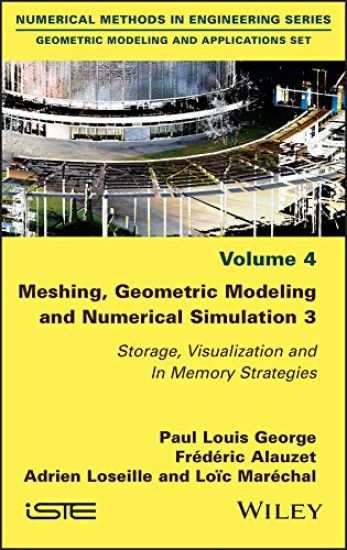
Meshing, Geometric Modeling and Numerical Simulation 3

Meshing, Geometric Modeling and Numerical Simulation 3

Paul Louis George; Frédéric Alauzet; Adrien Loseille; Loïc Maréchal

ISTE Ltd
2020
sidottu
Triangulations, and more precisely meshes, are at the heart of many problems relating to a wide variety of scientific disciplines, and in particular numerical simulations of all kinds of physical phenomena. In Volume 1, the theoretical foundations relating to triangulations, finite element shape functions and their interpretations as geometric patches were explored. This has made it possible to build tools that make the geometric modeling of any object possible. These elements are used in Volume 2 to treat meshing problems in their different implementations. Meshing, Geometric Modeling and Numerical Simulation 3 offers technical additions to the methods seen in the first two volumes and a significant portion of this book is dedicated to mesh visualization problems and solutions, especially those with a high degree of complexity.
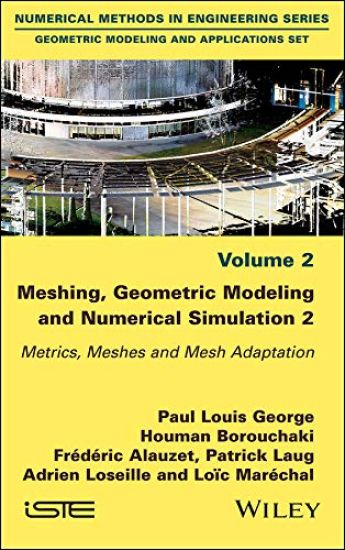
Meshing, Geometric Modeling and Numerical Simulation, Volume 2

Meshing, Geometric Modeling and Numerical Simulation, Volume 2

Paul Louis George; Houman Borouchaki; Frederic Alauzet; Patrick Laug; Adrien Loseille; Loic Marechal

ISTE Ltd
2019
sidottu
Triangulations, and more precisely meshes, are at the heart of many problems relating to a wide variety of scientific disciplines, and in particular numerical simulations of all kinds of physical phenomena. In numerical simulations, the functional spaces of approximation used to search for solutions are defined from meshes, and in this sense these meshes play a fundamental role. This strong link between meshes and functional spaces leads us to consider advanced simulation methods in which the meshes are adapted to the behaviors of the underlying physical phenomena. This book presents the basic elements of this vision of meshing. These mesh adaptations are generally governed by a posteriori error estimators representing an increase of the error with respect to a size or metric. Independently of this metric of calculation, compliance with a geometry can also be calculated using a so-called geometric metric. The notion of mesh thus finds its meaning in the metric of its elements.