Kirjojen hintavertailu. Mukana 12 266 248 kirjaa ja 12 kauppaa.

Kirjailija

Loren Kruger

Kirjat ja teokset yhdessä paikassa: 9 kirjaa, julkaisuja vuosilta 1992-2022, suosituimpien joukossa A Century of South African Theatre. Vertaile teosten hintoja ja tarkista saatavuus suomalaisista kirjakaupoista.

9 kirjaa

Kirjojen julkaisuhaarukka 1992-2022.

Six Plays

Six Plays

Mickle Maher; Loren Kruger

SURREY BOOKS,U.S.
2022
pokkari
This anthology features six plays by celebrated Chicago playwright Mickle Maher, who has been described by the Houston Chronicle as “one of the most original voices in American theater today,” and by the Chicago Reader as “a master at creating complex, paradoxical works that encompass their own contradictions.” Maher’s plays engage classic literature as a jumping off point for seriously unusual comedic dramas, often dealing with the absurdity, difficulties, and rewards of artistic endeavor. His work has been influenced by or compared to Eugène Ionesco, Maria Irene Fornes, Kenneth Koch, and Edward Albee, among others. This edition is designed to be useful for schools and other organizations that wish to mount productions of Maher’s plays, which generally feature small casts and simple scenery and stagings, and thus can be easy to produce. Production rights for any of these six plays can be requested from the publisher. The anthology includes: An Apology for the Course and Outcome of Certain Events Delivered by Doctor John Faustus on This His Final Evening On the night Faustus concludes his bargain with Mephistopheles, he apologizes to a group of random people for his failure to keep a diary of his fabulous life. The Hunchback Variations Ludwig von Beethoven and Quasimodo present a panel discussion on their failure to create an impossible sound called for in a stage direction in Chekhov’s The Cherry Orchard. Spirits to Enforce Twelve telefundraisers with secret identities work to raise money for a superheroic production of The Tempest in a bid to save Fathomtown from Professor Cannibal and his band of evil doers. There Is a Happiness That Morning Is Having engaged the evening before in a highly inappropriate display of public affection on the main lawn of their rural New England campus, two lecturers on the poems of William Blake must now, in class, either apologize for their behavior or effectively justify it to keep their jobs. Song About Himself In a dystopian future, a woman made extraordinary by her ability to speak relatively clearly tries to connect with others on a mysterious social media site created by a rogue artificial intelligence. It Is Magic Deb and Sandy are auditioning Tim for the role of the Wolf in a production of The Three Little Pigs, but there’s a mysterious haze in the basement of the Mortier Civic Playhouse and that, in addition to interruptions from the director of the Scottish play that’s going on upstairs, is making things difficult. Then, Liz shows up and throws the whole room into (further) chaos. It Is Magic reveals the deep, ancient evil at the heart of the community theater audition process.
A Century of South African Theatre

A Century of South African Theatre

Loren Kruger

Methuen Drama
2019
nidottu
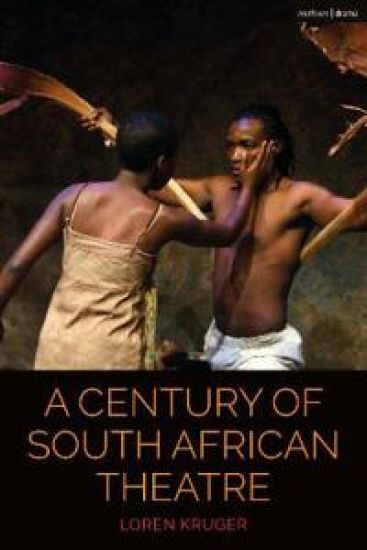
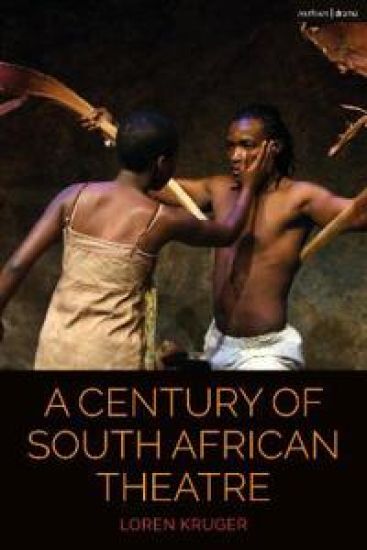
“Theatre is not part of our vocabulary”: Sipho Sepamla’s provocation in 1981, the year of famous anti-apartheid play Woza Albert!, prompts the response, yes indeed, it is. A Century of South African Theatre demonstrates the impact of theatre and other performances—pageants, concerts, sketches, workshops, and performance art—over the last hundred years. Its coverage includes African responses to pro-British pageants celebrating white Union in 1910, such as the Emancipation Centenary of the abolition of British colonial slavery in 1934 organized by Griffiths Motsieloa and HIE Dhlomo, through anti-apartheid testimonial theatre by Athol Fugard, Maishe Maponya, Gcina Mhlophe, and many others, right up to the present dramatization of state capture, inequality and state violence in today’s unevenly democratic society, where government has promised much but delivered little. Building on Loren Kruger’s personal observations of forty years as well as her published research, A Century of South African Theatre provides theoretical coordinates from institution to public sphere to syncretism in performance in order to highlight South Africa’s changing engagement with the world from the days of Empire, through the apartheid era to the multi-lateral and multi-lingual networks of the 21st century. The final chapters use the Constitution’s injunction to improve wellbeing as a prompt to examine the dramaturgy of new problems, especially AIDS and domestic violence, as well as the better known performances in and around the Truth and Reconciliation Commission. Kruger critically evaluates internationally known theatre makers, including the signature collaborations between animator/designer William Kentridge, and Handspring Puppet Company, and highlights the local and transnational impact of major post-apartheid companies such as Magnet Theatre.
A Century of South African Theatre

A Century of South African Theatre

Loren Kruger

Methuen Drama
2019
sidottu
“Theatre is not part of our vocabulary”: Sipho Sepamla’s provocation in 1981, the year of famous anti-apartheid play Woza Albert!, prompts the response, yes indeed, it is. A Century of South African Theatre demonstrates the impact of theatre and other performances—pageants, concerts, sketches, workshops, and performance art—over the last hundred years. Its coverage includes African responses to pro-British pageants celebrating white Union in 1910, such as the Emancipation Centenary of the abolition of British colonial slavery in 1934 organized by Griffiths Motsieloa and HIE Dhlomo, through anti-apartheid testimonial theatre by Athol Fugard, Maishe Maponya, Gcina Mhlophe, and many others, right up to the present dramatization of state capture, inequality and state violence in today’s unevenly democratic society, where government has promised much but delivered little. Building on Loren Kruger’s personal observations of forty years as well as her published research, A Century of South African Theatre provides theoretical coordinates from institution to public sphere to syncretism in performance in order to highlight South Africa’s changing engagement with the world from the days of Empire, through the apartheid era to the multi-lateral and multi-lingual networks of the 21st century. The final chapters use the Constitution’s injunction to improve wellbeing as a prompt to examine the dramaturgy of new problems, especially AIDS and domestic violence, as well as the better known performances in and around the Truth and Reconciliation Commission. Kruger critically evaluates internationally known theatre makers, including the signature collaborations between animator/designer William Kentridge, and Handspring Puppet Company, and highlights the local and transnational impact of major post-apartheid companies such as Magnet Theatre.
Imagining the Edgy City

Imagining the Edgy City

Loren Kruger

Oxford University Press Inc
2013
sidottu
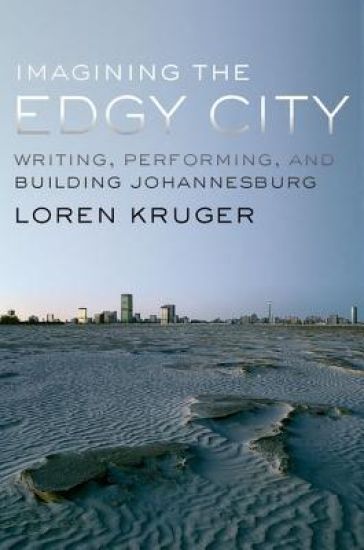
All roads lead to Johannesburg, remarks the narrator of Alan Paton's novel Cry, The Beloved Country. Taking this quote as her impetus, Loren Kruger guides readers into the heart of South Africa's largest city. Exploring a wide range of fiction, film, architecture, performance, and urban practices from trading to parades, Imagining the Edgy City traverses Johannesburg's rich cultural terrain over the last century. The "edgy city" in Kruger's exploration refers not only to persistent boundaries between the haves and have-nots but also to the cosmopolitan diversity and innovation that has emerged from Johannesburg. The book begins with the building boom, performances and uneven but noteworthy inter-racial exchange that marked the city's fiftieth-anniversary celebration at the Empire Exhibition in 1936. This celebration rapidly gave way to the political repression and civil unrest that characterized South Africa from 1950 to 1990. Yet poetry, drama, fiction, and photography continued to thrive, bearing witness not only against apartheid but to alternatives beyond it. In the late twentieth century, the not quite post-apartheid condition fired the artistic imaginations of film makers as well as novelists. Urban neglect, rising crime, and the influx of migrants inspired noir cinema-like Michael Hammon's Wheels and Deals-and fiction about migration from Achmat Dangor to Phaswane Mpe, and in the twenty-first, urban renewal has produced public art that incorporates the desire lines of newcomers as well as natives. Alongside well-known artists such as Nadine Gordimer, William Kentridge, and David Goldblatt, the book introduces many artists, architects, writers, and other chroniclers who have hitherto received little attention abroad. Ultimately, Johannesburg emerges as a city whose negotiation of the tensions between incivility and innovation invites comparisons with modern conurbations across the world, not only African cities such as Dakar, or other cities of the "south" such as Bogotá, but also with major metropolises in North America and Europe from Chicago to Paris. A multi-faceted work that speaks to scholars in urban studies, literature, and history, Imagining the Edgy City is a rich example of interdisciplinary scholarship at its best.
Post-Imperial Brecht

Post-Imperial Brecht

Loren Kruger

Cambridge University Press
2004
sidottu
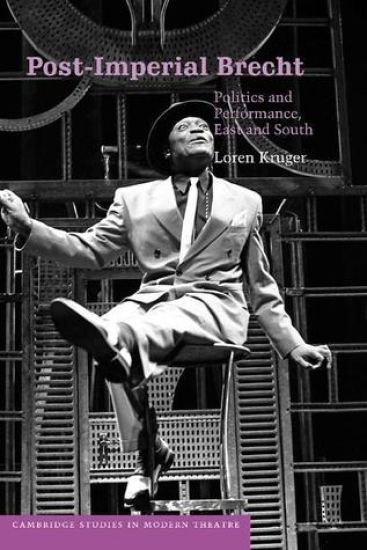
Post-Imperial Brecht challenges prevailing views of Brecht's theatre and politics. Most political theatre critics place Brecht between West and East in the Cold War, and a few have recently explored Brecht's impact as a Northern writer on the global South. Loren Kruger is the first to argue that Brecht's impact as a political dramatist, director and theoretical writer makes full sense only when seen in a post-imperial framework that links the East/West axis between US capitalism and Soviet communism with the North/South axis of postcolonial resistance to imperialism. This framework highlights Brecht's arguments with theorists like Benjamin, Bloch, and Lukacs. It also shows surprising connections between socialist East Germany, where Brecht's 1950s projects impressed the emerging Heiner Müller, and apartheid-era South Africa, where his work appeared on the apartheid as well as anti-apartheid stage.
The Drama of South Africa

The Drama of South Africa

Loren Kruger

Routledge
1999
nidottu
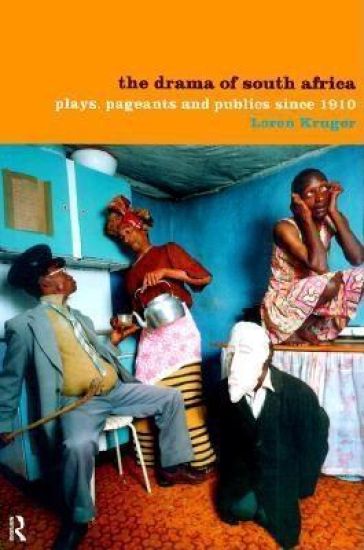
The Drama of South Africa comprehensively chronicles the development of dramatic writing and performance from 1910, when the country came into official existence, to the advent of post-apartheid. Eminent theatre historian Loren Kruger discusses well-known figures, as well as lesser-known performers and directors who have enriched the theatre of South Africa. She also highlights the contribution of women and other minorities, concluding with a discussion of the post-apartheid character of South Africa at the end of the twentieth century.
The Drama of South Africa

The Drama of South Africa

Loren Kruger

Routledge
1999
sidottu
The Drama of South Africa comprehensively chronicles the development of dramatic writing and performance from 1910, when the country came into official existence, to the advent of post-apartheid. Eminent theatre historian Loren Kruger discusses well-known figures, as well as lesser-known performers and directors who have enriched the theatre of South Africa. She also highlights the contribution of women and other minorities, concluding with a discussion of the post-apartheid character of South Africa at the end of the twentieth century.
The National Stage

The National Stage

Loren Kruger

University of Chicago Press
1992
nidottu
The idea of staging a nation dates from the Enlightenment, but the full force of the idea emerges only with the rise of mass politics. Comparing English, French, and American attempts to establish national theatres at moments of political crisis—from the challenge of socialism in late nineteenth-century Europe to the struggle to "salvage democracy" in Depression America—Kruger poses a fundamental question: in the formation of nationhood, is the citizen-audience spectator or participant? The National Stage answers this question by tracing the relation between theatre institution and public sphere in the discourses of national identity in Britain, France, and the United States. Exploring the boundaries between history and theory, text and performance, this book speaks to theatre and social historians as well as those interested in the theoretical range of cultural studies.
The National Stage

The National Stage

Loren Kruger

University of Chicago Press
1992
sidottu
The idea of staging a nation dates from the Enlightenment, but the full force of the idea emerges only with the rise of mass politics. Comparing English, French, and American attempts to establish national theatres at moments of political crisis—from the challenge of socialism in late nineteenth-century Europe to the struggle to "salvage democracy" in Depression America—Kruger poses a fundamental question: in the formation of nationhood, is the citizen-audience spectator or participant? The National Stage answers this question by tracing the relation between theatre institution and public sphere in the discourses of national identity in Britain, France, and the United States. Exploring the boundaries between history and theory, text and performance, this book speaks to theatre and social historians as well as those interested in the theoretical range of cultural studies.