Kirjojen hintavertailu. Mukana 12 390 323 kirjaa ja 12 kauppaa.

Kirjailija

Lori Emerson

Kirjat ja teokset yhdessä paikassa: 6 kirjaa, julkaisuja vuosilta 2014-2025, suosituimpien joukossa Floppy Disk Fever. Vertaile teosten hintoja ja tarkista saatavuus suomalaisista kirjakaupoista.

6 kirjaa

Kirjojen julkaisuhaarukka 2014-2025.

Other Networks

Other Networks

Lori Emerson

Anthology Editions
2025
sidottu
Other Networks is writer and researcher Lori Emerson’s index of telecommunications networks that existed before and outside of the internet.The internet as we know it is not a foregone conclusion. Indeed, the present corporatized, monolithic, surveilled state of our networked communications is just one possibility out of many, and there is radical promise in uncovering hidden alternatives: from pirate radio to barbed wire telegraph, from synthesizers transmitted over the telephone to encoded messages bounced off the surface of the moon. Other Networks is writer and researcher Lori Emerson’s speculative index of communications networks that existed before or outside of the internet: digital as well as analog, IRL as well as imagined, state-sponsored systems of control as well as homebrew communities in the footnotes of hacker culture. Featuring explanatory descriptions of each network, archival images, and original artwork and design by Robert Beatty, Other Networks documents historically alternative networks with a particular eye towards their experimental usage by artists and writers. The result is a boldly creative taxonomy of our networked world, a liberatory sourcebook for readers eager to escape the hegemony of technological history, and a lovingly designed guide to the freedoms and communal possibilities that have been lost along the way.
Floppy Disk Fever

Floppy Disk Fever

Lori Emerson

Onomatopee
2022
nidottu
Floppy Disk Fever explores the curious afterlives of the floppy disk in the twenty-first century by interviewing those involved with the medium today. The book reflects on notions of obsolescence, media preservation and nostalgia, and challenges these by showing the endurance and versatility of this familiar piece of technology. From floppy filmmakers to floppy painters and beyond; what drives people to continue working with the medium that is typically deemed obsolete? What challenges and affordances does it provide? And what does the future hold in store for the familiar black square? By looking at the current presence of past technology we can assess our present-day situation and speculate on the future developments of our media minded landscape. After all, the technology of the past is also part of our future! Includes a preface by Lori Emerson (Media Archeology Lab) and interviews with Jason Scott (archive. org), Tom Persky (floppydisk. com), Florian Cramer, Jason Curtis (Museum of Obsolete Media), Adam Frankiewicz (Pionierska Records), Foone Turing, Clint Basinger (Lazy Game Reviews), Nick Gentry, Joerg Droege and AJ Heller (Scene World) and Bart van den Akker (HelmondComputerMuseum). Editors Niek Hilkmann (NL) is a Rotterdam based artist, musician, and researcher with a background in Art History, Media Design and Visual Culture. He has a particular interest in the abstruse technological condition we are currently living in and the insufficient intellectual methodologies that seek to justify, or explain it. Besides being resposible for various floppy-centered events under the moniker of Floppy Totaal, he is also a member of Varia, the center of everyday technology. Thomas Walskaar (NO) is a graphic designer and researcher. He has a Masters in Media Design and Communication from The PietZwart Institute in Rotterdam and a BA (Hons) in Graphic Design from Ravensbourne in London. His personal interests revolve around frailty of storage technology and the importance of the individual to store with caution. One of his better known projects is “My Hard-Drive Died Along With My Heart”. Contributors Lori Emerson (CA/US) is an Associate Professor in the Department of English and the Intermedia Arts, Writing and Performance Program at the University of Colorado, Boulder. She is also the Founding Director of the Media Archaeology Lab. Emerson writes about media poetics and the history of computing, media archaeology, media theory, and digital humanities. Jason Scott (US) is a free-spirited archivist, filmmaker, performer, and historian of technology. He is known under the online pseudonyms Sketch, SketchCow, and the Slipped Disk, and has been called a ‘figurehead of the digital archiving world’. He works for Internet Archive and has given numerous presentations at technology related conferences on the topics of digital history, software, and website preservation. Tom Persky (US) is the ‘last man standing in the floppy disk business’. He is the founder of floppydisk. com, a US-based company, dedicated to the selling and recycling of floppy disks. Other services the company provides include disk transfers, a recycling program, and selling used and/or broken floppy disks to artists worldwide. All this makes floppydisk. com a key player in the contemporary floppy scene. Florian Cramer (NL) is a practice-oriented research professor in 21st Century Visual Culture at the Willem de Kooning Academy in Rotterdam, the Netherlands. Since 2009, he has developed a habit for creating and distributing films using floppy disks and has conducted multiple workshops on the subject. By employing extreme measures of compression he is able to squeeze entire movies onto the 1. 44 MB provided by the medium. The floppy disk also stood at the center of several of his collaborative film projects as a vehicle for collective constraint. Jason Curtis (UK) is a writer, librarian, and collector from Shropshire, England. In 2006 he founded the Museum of Obsolete Media, a formidable collection of media formats consisting of over 700 audio, video, data, and film objects. The collection includes many examples of unconventional and obsolete formats, which are carefully investigated and then documented on the museum’s website. Among these, several unusual versions of the floppy disk can be found, providing insight into the alternative history of the medium. Adam Frankiewicz (PL) is an eclectic theatre director and a contemporary electronic composer. These activities led to the founding of his independent record label Pionierska Records in 2014, which has been publishing music exclusively on floppy disk since 2018. At the time of writing, the Pionierska Records library consists of over 35 releases by almost as many artists. Adam also spreads his enthusiasm for floppy disk culture through his online floppy disk news channel Floppy (Not) News and by conducting floppy based workshops throughout Europe. Foone Turing (US) is a media collector, hardware hacker, and Twitter personality. They curated an award-winning exhibit on floppy disks at the Computer History Museum in Mountain View, built a series of impractical keyboards, and crafted the (formerly Sierra) Death Generator, a tool for making fake video game dialogue screenshots. Clint Basinger (US) is the driving force behind the Lazy Game Reviews (LGR) YouTube channel, providing weekly coverage of retro tech, classic computer gaming, oddware, thrifting tech tales, and more. Besides regularly creating videos on obscure and redundant forms of disk-based media, Basinger is also a collector of big box floppy disk games. Nick Gentry (UK) is a London based artist who repurposes obsolete media as the raw material for his artwork. Besides computer punch cards and VHS tapes, he makes use of floppy diskettes, donated to him by people from all over the world. The disks function as the canvas for his oil paintings, which are influenced by the development of consumerism, technology, identity, and cyberculture in society. Joerg Droege (DE) and A J Heller (US) are part of Scene World, an eclectic NTSC & PAL diskmag that started out in 2001 and is still running today. It is kept active by an international group of enthusiasts, hailing from Peru, Germany, China, the USA, and the UK. New issues of the magazine are published regularly through their website, as executable files for Commodore 64 (C64) and Amiga. Bart Van Den Akker (NL) is the founder of the Helmond based Home Computer Museum, a 1 000+ square meter interactive experience that covers the history of the home computer, from the very first to modern variants in the late 90s and beyond. Besides being part of the digital heritage network of the Netherlands, where old media such as floppy disks can be read and their data converted to a modern format, the Museum has acquired a following within the online retro computer scene and assembled a loyal community that works in the Museum on a daily basis.
The Lab Book

The Lab Book

Darren Wershler; Lori Emerson; Jussi Parikka

University of Minnesota Press
2022
nidottu
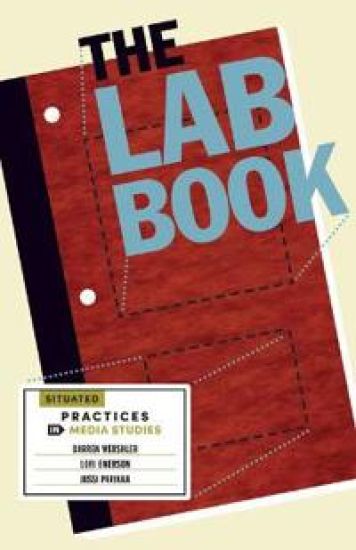
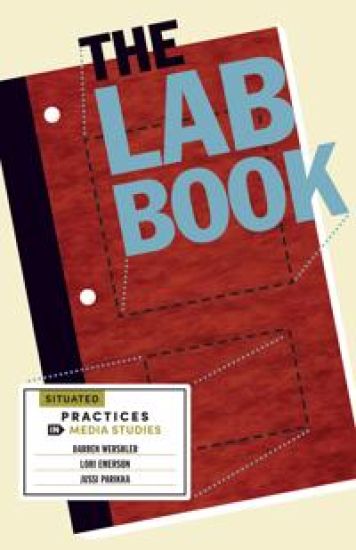
An important new approach to the study of laboratories, presenting a practical method for understanding labs in all walks of life From the “Big Science” of Bell Laboratories to the esoteric world of sÉance chambers to university media labs to neighborhood makerspaces, places we call “labs” are everywhere-but how exactly do we account for the wide variety of ways that they produce knowledge? More than imitations of science and engineering labs, many contemporary labs are hybrid forms that require a new methodological and theoretical toolkit to describe. The Lab Book investigates these vital, creative spaces, presenting readers with the concept of the “hybrid lab” and offering an extended-and rare-critical investigation of how labs have proliferated throughout culture.Organized by interpretive categories such as space, infrastructure, and imaginaries, The Lab Book uses both historical and contemporary examples to show how laboratories have become fundamentally connected to changes in the contemporary university. Its wide reach includes institutions like the MIT Media Lab, the Tuskegee Institute’s Jesup Wagon, ACTLab, and the Media Archaeological Fundus. The authors cover topics such as the evolution and delineation of lab-based communities, how labs’ tools and technologies contribute to defining their space, and a glossary of key hybrid lab techniques.Providing rich historical breadth and depth, The Lab Book brings into focus a critical, but often misunderstood, aspect of the contemporary arts and humanities.
The Lab Book

The Lab Book

Darren Wershler; Lori Emerson; Jussi Parikka

University of Minnesota Press
2022
sidottu
An important new approach to the study of laboratories, presenting a practical method for understanding labs in all walks of life From the “Big Science” of Bell Laboratories to the esoteric world of sÉance chambers to university media labs to neighborhood makerspaces, places we call “labs” are everywhere-but how exactly do we account for the wide variety of ways that they produce knowledge? More than imitations of science and engineering labs, many contemporary labs are hybrid forms that require a new methodological and theoretical toolkit to describe. The Lab Book investigates these vital, creative spaces, presenting readers with the concept of the “hybrid lab” and offering an extended-and rare-critical investigation of how labs have proliferated throughout culture.Organized by interpretive categories such as space, infrastructure, and imaginaries, The Lab Book uses both historical and contemporary examples to show how laboratories have become fundamentally connected to changes in the contemporary university. Its wide reach includes institutions like the MIT Media Lab, the Tuskegee Institute’s Jesup Wagon, ACTLab, and the Media Archaeological Fundus. The authors cover topics such as the evolution and delineation of lab-based communities, how labs’ tools and technologies contribute to defining their space, and a glossary of key hybrid lab techniques.Providing rich historical breadth and depth, The Lab Book brings into focus a critical, but often misunderstood, aspect of the contemporary arts and humanities.
Inscription

Inscription

Akram Zaatari; Amalia Ulman; Anne de Vries; Cecilia Grönberg; D-M Wither; Hannah Quinlan; Jenna Sutela; Karl-Magnus Johansson; Lori Emerson; Martin Kohout; Martine Syms; Monira al Qadiri; Rosie Hastings; Yuk Hui

Landsarkivet i Göteborg
2018
sidottu
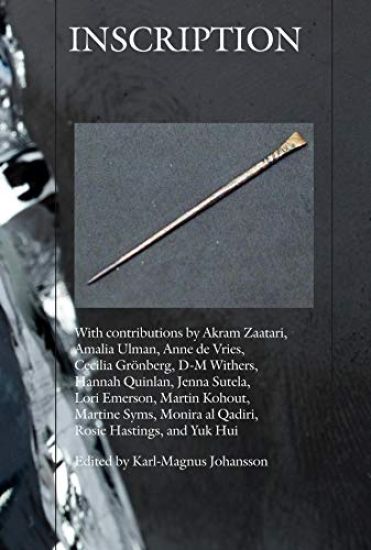
What conditions inscription? Why are certain statements allowed to emerge in archival substrates? These questions are asked in this publication as it explores the concept of inscription—the archival moment that is constituted by the materialization of statements. It does so by including approaches from a variety of academic fields such as media theory, philosophy and critical theory, as well as works by practitioners of contemporary art. The publication includes contributions by Akram Zaatari, Amalia Ulman, Anne de Vries, Cecilia Grönberg, D-M Withers, Hannah Quinlan, Jenna Sutela, Karl-Magnus Johansson, Lori Emerson, Martin Kohout, Martine Syms, Monira al Qadiri, Rosie Hastings, and Yuk Hui.
Reading Writing Interfaces

Reading Writing Interfaces

Lori Emerson

University of Minnesota Press
2014
nidottu
Lori Emerson examines how interfaces-from today’s multitouch devices to yesterday’s desktops, from typewriters to Emily Dickinson’s self-bound fascicle volumes-mediate between writer and text as well as between writer and reader. Following the threads of experimental writing from the present into the past, she shows how writers have long tested and transgressed technological boundaries. Reading the means of production as well as the creative works they produce, Emerson demonstrates that technologies are more than mere tools and that the interface is not a neutral border between writer and machine but is in fact a collaborative creative space. Reading Writing Interfaces begins with digital literature’s defiance of the alleged invisibility of ubiquitous computing and multitouch in the early twenty-first century and then looks back at the ideology of the user-friendly graphical user interface that emerged along with the Apple Macintosh computer of the 1980s. She considers poetic experiments with and against the strictures of the typewriter in the 1960s and 1970s and takes a fresh look at Emily Dickinson’s self-printing projects as a challenge to the coherence of the book. Through archival research, Emerson offers examples of how literary engagements with screen-based and print-based technologies have transformed reading and writing. She reveals the ways in which writers-from Emily Dickinson to Jason Nelson and Judd Morrissey-work with and against media interfaces to undermine the assumed transparency of conventional literary practice.