Kirjojen hintavertailu. Mukana 12 207 324 kirjaa ja 12 kauppaa.

Kirjailija

Lorna Smith Benjamin

Kirjat ja teokset yhdessä paikassa: 9 kirjaa, julkaisuja vuosilta 2003-2024, suosituimpien joukossa SCID-5-PD Handbok. Vertaile teosten hintoja ja tarkista saatavuus suomalaisista kirjakaupoista.

9 kirjaa

Kirjojen julkaisuhaarukka 2003-2024.

SCID-5-PD Handbok

SCID-5-PD Handbok

Michael B. First; Janet B.W. Williams; Lorna Smith Benjamin; Robert L. Spitzer

Liber
2023
nidottu
Presenterar principerna för SCID-5-PD; en semistrukturerad intervju för psykiatrisk diagnostik av personlighetssyndrom enligt DSM-5. Här ges detaljerade, praktiska anvisningar för hur intervjun ska genomföras och anvisningar för självskattningsformuläret Structured Clinical Interview for DSM-5 Screening Personality Questionnaire (SCID-5-SPQ). I handboken finns också vägledning i hur patienternas svar på intervjufrågor ska bedömas med utgångspunkt i kriterierna för DSM-5. Ett korrekt användande av SCID-5-PD ökar reliabiliteten vid diagnostik av personlighetssyndrom.Handboken kan dels användas av sjukvårdspersonal i det kliniska arbetet med psykiatrisk diagnostik, dels i utbildning av studenter på universitetsutbildningar och vid vidareutbildning av professionella inom vården.I SCID-5-PD Handbok anges DSM-5-kriterierna ordagrant så som de översatts i MINI-D 5 (utgiven av Pilgrim Press). ICD-koder har översatts till dess svenska motsvarighet ICD-10-SE, enligt Socialstyrelsens riktlinjer och i enlighet med översättningen i MINI-D 5.Om författarnaMichael B. First, M.D. Janet B.W. Williams, Ph.D. Lorna Smith Benjamin, Ph.D. Robert L. Spitzer, M.D.Faktagranskning och textbearbetningJohanna Motilla Hoppe; leg. psykolog, filosofie doktor,Mia Ramklint; leg. läkare, specialist i psykiatri, professor och Linda Bylin; leg. psykolog, specialist i klinisk psykologi, leg. psykoterapeut, psykoterapihandledare.RättigheterFörst publicerad i USA av American Psychiatric Association (APA), Washington DC. Copyright 2016 (SCID-5-PD). Alla rättigheter reserverade. Först publicerad i Sverige av Liber AB på svenska. Liber AB har exklusiv förlagsrätt till SCID-5-PD Intervju samt SCID-5-PD Handbok första utgåvan (copyright 2016) författad av Michael B. First, M.D., Janet B. W. Williams, Ph.D., Lorna Smith Benjamin, Ph.D. och Robert L. Spitzer, M.D. på svenska för distribution över hela världen.Skriftligt tillstånd från Liber AB krävs för återgivning i någon form av material från det översatta verket. APA har inte på något sätt bidragit till översättningen av det här verket från engelska till svenska och ansvarar inte för eventuella felaktigheter, utelämnanden eller andra möjliga brister i översättningen av verket.
SCID-5-PD Intervju

SCID-5-PD Intervju

Robert L. Spitzer; Michael B. First; Janet B.W. Williams; Lorna Smith Benjamin

Liber
2023
kierre
SCID-5-PD Intervju är en semistrukturerad diagnostisk intervju som kan användas av personer som är utbildade i psykiatrisk diagnostik för att diagnostisera personlighetssyndrom enligt DSM-5.SCID-5-PD Intervju inleds med en översiktsintervju med öppna frågor, där patienten får möjlighet att beskriva sina besvär med egna ord. Därefter följer intervjufrågor för bedömning av de generella diagnostiska kriterierna för personlighetssyndrom samt frågor för att värdera de diagnostiska kriterierna för vart och ett av de specifika personlighetssyndromen i DSM-5.Resultaten dokumenteras i SCID-5-PD Sammanställningsprotokoll som finns i intervjuprotokollets början. SCID-5-PD är en del i en diagnostisk process som möjliggör en reliabel och valid diagnostik av personlighetssyndrom.I SCID-5-PD Intervju ingår SPQ som är ett självskattningsformulär utformat för att användas som screening av personlighetssyndrom inför intervjun.Intervjun kan dels användas av sjukvårdspersonal i det kliniska arbetet med psykiatrisk diagnostik, dels i utbildning av studenter på universitetsutbildningar och vid vidareutbildning av professionella inom vården.I SCID-5-PD Intervju anges DSM-5-kriterierna ordagrant så som de översatts i MINI-D 5 (utgiven av Pilgrim Press). ICD-koder har översatts till dess svenska motsvarighet ICD-10-SE, enligt Socialstyrelsens riktlinjer och i enlighet med översättningen i MINI-D5.Om författarnaMichael B. First, M.D. Janet B.W. Williams, Ph.D. Lorna Smith Benjamin, Ph.D. Robert L. Spitzer, M.D.Faktagranskning och textbearbetningJohanna Motilla Hoppe; leg. psykolog, filosofie doktor,Mia Ramklint; leg. läkare, specialist i psykiatri, professor ochLinda Bylin; leg. psykolog, specialist i klinisk psykologi, leg. psykoterapeut, psykoterapihandledare.RättigheterFörst publicerad i USA av American Psychiatric Association (APA), Washington DC. Copyright 2016 (SCID-5-PD). Alla rättigheter reserverade. Först publicerad i Sverige av Liber AB på svenska. Liber AB har exklusiv förlagsrätt till SCID-5-PD Intervju första utgåvan (copyright 2016) författad av Michael B. First, M.D., Janet B. W. Williams, Ph.D., Lorna Smith Benjamin, Ph.D. och Robert L. Spitzer, M.D. på svenska för distribution över hela världen.Skriftligt tillstånd från Liber AB krävs för återgivning i någon form av material från det översatta verket. APA har inte på något sätt bidragit till översättningen av det här verket från engelska till svenska och ansvarar inte för eventuella felaktigheter, utelämnanden eller andra möjliga brister i översättningen av verket.
Structured Clinical Interview for DSM-5® Personality Disorders (SCID-5-PD)

Structured Clinical Interview for DSM-5® Personality Disorders (SCID-5-PD)

Michael B. First; Janet B. W. Williams; Lorna Smith Benjamin; Robert L. Spitzer

American Psychiatric Association Publishing
2015
pokkari
The Structured Clinical Interview for DSM-5 Personality Disorders (SCID-5-PD) is a semistructured diagnostic interview for clinicians and researchers to assess the 10 DSM-5 Personality Disorders across Clusters A, B, and C as well as Other Specified Personality Disorder. Designed to build rapport, the SCID-5-PD can be used to make personality disorder diagnoses, either categorically (present or absent) or dimensionally. The SCID-5-PD includes interview and the handy self-report screening questionnaire for patients or subjects, the Structured Clinical Interview for DSM-5 Screening Personality Questionnaire (SCID-5-SPQ). The SCID-5-PD is the updated version of the former Structured Clinical Interview for DSM-IV Axis II Personality Disorders (SCID-II). The SCID-5-PD name reflects the elimination of the multiaxial system in DSM-5. Although the DSM-IV Personality Disorder criteria are unchanged in DSM-5, the SCID-5-PD interview questions have been thoroughly reviewed and revised to optimally capture the construct embodied in the diagnostic criteria. In addition, a dimensional scoring component has been added to the SCID-5-PD. The basic structure of the SCID-5-PD is similar to the other SCID-5 interviews (such as the Research Version, SCID-5-RV; and the Clinician Version, SCID-5-CV) that cover non–personality DSM-5 disorders. Features include the following: • Questions assessing the DSM-5 criteria for each of the 10 personality disorders: Avoidant Personality Disorder, Dependent Personality Disorder, Obsessive-Compulsive Personality Disorder, Paranoid Personality Disorder, Schizotypal Personality Disorder, Schizoid Personality Disorder, Histrionic Personality Disorder, Narcissistic Personality Disorder, Borderline Personality Disorder, and Antisocial Personality Disorder.• An optional SCID-5-SPQ that serves as a brief, 20-minute self-report screening tool to reduce the time of the SCID-5-PD clinical interview. The SCID-5-SPQ requires an eighth grade or higher reading level (as determined by the Flesch-Kincaid formula). Its 106 questions correspond directly to each first question in the full SCID-5-PD. The SCID-5-PD can be used in various types of research studies, just as the SCID-II. It has been used to investigate patterns of Personality Disorders co-occurring with other mental disorders or medical conditions; select a group of study subjects with a particular Personality Disorder; investigate the underlying structure of personality pathology; and compare with other assessment methods for Personality Disorders. The SCID-5-PD will serve as a valuable resource to help clinicians and researchers more accurately diagnose Personality Disorders.
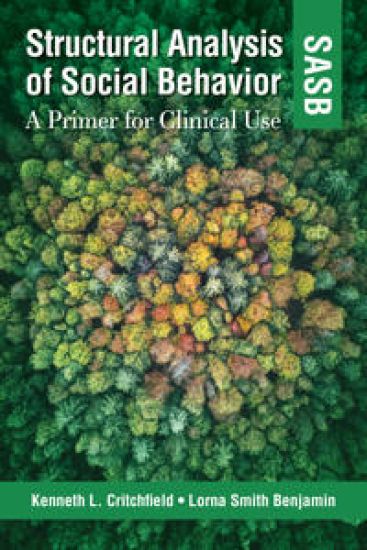
Structural Analysis of Social Behavior (SASB)

Structural Analysis of Social Behavior (SASB)

Kenneth L. Critchfield; Lorna Smith Benjamin

AMERICAN PSYCHOLOGICAL ASSOCIATION
2024
pokkari
Structural Analysis of Social Behavior (SASB) helps clinicians and researchers make objective assessments of relationship patterns, and enables clients to improve their social interactions. SASB can help identify connections between clients' current symptoms, and their current and historical relationship patterns. The SASB coding system serves as the basis for case formulation, which in turn informs the choice of interventions used in a variety of therapeutic approaches. SASB can also be used to evaluate the effectiveness of interventions, thus keeping therapy on track. This book summarizes over 5 years of research and clinical practice with SASB, and demonstrates how it can be used with any therapeutic approach. It has been traditionally used with patients who are comorbid, often rehospitalized, dysfunctional, and suicidal, although it can be used with any clinical population. SASB offers providers a therapy compass that helps clarify where the client is now, and pointing in the direction they need to go in order to reach their therapy goals.
Interpersonal Reconstructive Therapy for Anger, Anxiety, and Depression

Interpersonal Reconstructive Therapy for Anger, Anxiety, and Depression

Lorna Smith Benjamin

American Psychological Association
2018
sidottu
This book shows clinicians how to use Interpersonal Reconstructive Therapy (IRT) to change maladaptive patterns regarding safety and threat in treatment-resistant patients. According to IRT theory, patients who suffer from maladaptive anger, anxiety, or depression are reenacting dysfunctional lessons in affect management modeled by parents and other early attachment figures. For example, a depressed woman who is afraid to assert herself can be described as reliving a childhood during which speaking up was dangerous, leading to rejection, even abandonment. IRT gives sufferers the tools to revise or replace internalized versions of attachment figures (the amp ldquo family in the head amp rdquo ) to create a more secure internal base. IRT is integrative, drawing on any intervention relevant to the case formulation, and it is compatible with medications as needed for stress management. Evidence of effectiveness is provided for a treatment-resistant population. In this warm and engaging book, author Lorna Smith Benjamin shows how patients can more effectively cope with threat and find safety in their everyday lives.
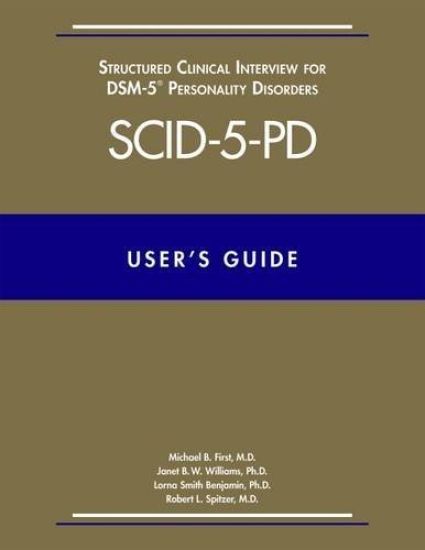
User’s Guide for the Structured Clinical Interview for DSM-5 Personality Disorders (SCID-5-PD)

User’s Guide for the Structured Clinical Interview for DSM-5 Personality Disorders (SCID-5-PD)

Michael B. First; Janet B. W. Williams; Lorna Smith Benjamin; Robert L. Spitzer

American Psychiatric Association Publishing
2015
pokkari
The Structured Clinical Interview for DSM-5 Personality Disorders (SCID-5-PD) is a semistructured diagnostic interview for clinicians and researchers to assess the 10 DSM-5 Personality Disorders across Clusters A, B, and C as well as Other Specified Personality Disorder. Designed to build rapport, the SCID-5-PD can be used to make personality disorder diagnoses, either categorically (present or absent) or dimensionally. The SCID-5-PD includes the indispensable User's Guide for the SCID-5-PD, as well as a handy self-report screening questionnaire for patients or subjects, the Structured Clinical Interview for DSM-5 Screening Personality Questionnaire (SCID-5-SPQ). The SCID-5-PD is the updated version of the former Structured Clinical Interview for DSM-IV Axis II Personality Disorders (SCID-II). The SCID-5-PD name reflects the elimination of the multiaxial system in DSM-5. Although the DSM-IV Personality Disorder criteria are unchanged in DSM-5, the SCID-5-PD interview questions have been thoroughly reviewed and revised to optimally capture the construct embodied in the diagnostic criteria. In addition, a dimensional scoring component has been added to the SCID-5-PD. The basic structure of the SCID-5-PD is similar to the other SCID-5 interviews (such as the Research Version, SCID-5-RV; and the Clinician Version, SCID-5-CV) that cover non–personality DSM-5 disorders. Features include the following: • Questions assessing the DSM-5 criteria for each of the 10 personality disorders: Avoidant Personality Disorder, Dependent Personality Disorder, Obsessive-Compulsive Personality Disorder, Paranoid Personality Disorder, Schizotypal Personality Disorder, Schizoid Personality Disorder, Histrionic Personality Disorder, Narcissistic Personality Disorder, Borderline Personality Disorder, and Antisocial Personality Disorder.• A User's Guide for the SCID-5-PD containing essential guidance for use of the SCID-5-PD, including an appendix of a completed SCID-5-PD and SCID-5-SPQ for a sample patient.• An optional SCID-5-SPQ that serves as a brief, 20-minute self-report screening tool to reduce the time of the SCID-5-PD clinical interview. The SCID-5-SPQ requires an eighth grade or higher reading level (as determined by the Flesch-Kincaid formula). Its 106 questions correspond directly to each first question in the full SCID-5-PD. The SCID-5-PD can be used in various types of research studies, just as the SCID-II. It has been used to investigate patterns of Personality Disorders co-occurring with other mental disorders or medical conditions; select a group of study subjects with a particular Personality Disorder; investigate the underlying structure of personality pathology; and compare with other assessment methods for Personality Disorders. The SCID-5-PD will serve as a valuable resource to help clinicians and researchers more accurately diagnose Personality Disorders.
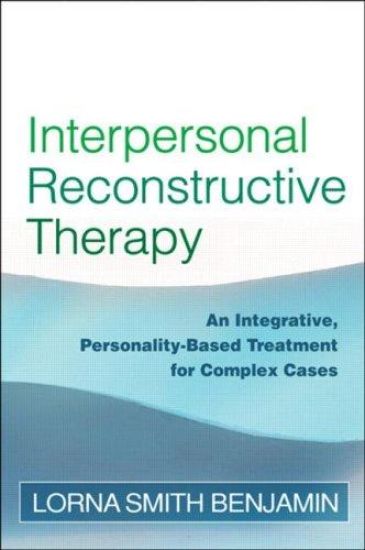
Interpersonal Reconstructive Therapy

Interpersonal Reconstructive Therapy

Lorna Smith Benjamin

Guilford Publications
2006
nidottu
For individuals with chronic, complex problems that include multiple Axis I disorders comorbid with personality disorders, the barriers to change are significant. This book presents a powerful therapeutic approach that integrates psychodynamic, cognitive-behavioral, client-centered, and other techniques to empower patients to overcome these barriers by fostering change in personality. Interpersonal Reconstructive Therapy (IRT) is grounded in an innovative case formulation method that systematically links symptoms to maladaptive patterns in attachment relationships. IRT offers a step-by-step framework for structuring interventions to promote learning of new, healthier patterns, while blocking problem behaviors and building a strong therapeutic alliance. A new preface in the paperback edition addresses current developments in IRT research and practice.
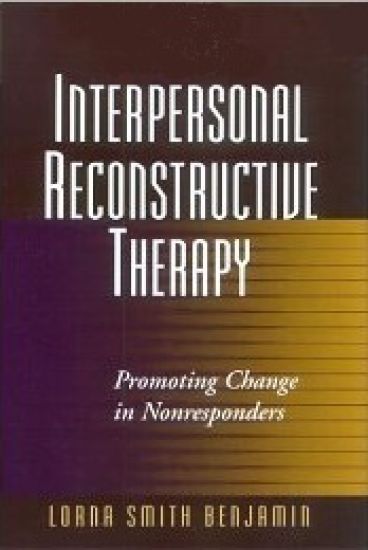
Interpersonal Reconstructive Therapy

Interpersonal Reconstructive Therapy

Lorna Smith Benjamin

Guilford Publications
2003
sidottu
For individuals with chronic, complex problems that include multiple Axis I disorders comorbid with personality disorders, the barriers to change are significant. This book presents a powerful therapeutic approach that integrates psychodynamic, cognitive-behavioral, client-centered, and other techniques to empower patients to overcome these barriers by fostering change in personality. Interpersonal Reconstructive Therapy (IRT) is grounded in an innovative case formulation method that systematically links symptoms to maladaptive patterns in attachment relationships. IRT offers a step-by-step framework for structuring interventions to promote learning of new, healthier patterns, while blocking problem behaviors and building a strong therapeutic alliance. A new preface in the paperback edition addresses current developments in IRT research and practice.