Kirjojen hintavertailu. Mukana 12 390 323 kirjaa ja 12 kauppaa.
Kirjailija
Lorraine Daston
Kirjat ja teokset yhdessä paikassa: 15 kirjaa, julkaisuja vuosilta 1990-2026, suosituimpien joukossa Imod naturen. Vertaile teosten hintoja ja tarkista saatavuus suomalaisista kirjakaupoista.
"Gennem årtusinder er naturens autoritet blevet hidkaldt for at tjene mange formål: for at retfærdiggøre og fordømme slaveri, for at hylde amning og udskælde onani, for at ophøje det sublimes æstetik over det smukke og for at underbygge etiske fordringer med henvisning til instinkt eller evolution (...) Spørgsmålet, jeg gerne vil adressere, kan stilles enkelt op: Hvorfor betragter mennesker, i mange forskellige kulturer og epoker, så vedholdende naturen som kilde til normer for menneskelig adfærd? Hvorfor skulle naturen tjene som et gigantisk ekkokammer for de moralske ordener, som mennesker skaber?"
Pravila vporjadkovujut majzhe kozhen aspekt nashogo zhittja. Voni viznachajut nash robochij chas, diktujut, jak mi vodimo mashinu i nakrivajemo na stil, organizovujut nashe zhittja vid narodzhennja do smerti. Mi mozhemo pogodzhuvatisja z pravilami, borotisja proti nikh chi uzgodzhuvati schos absoljutno nove, ale zhodna kultura ne mozhe obijtisja bez nikh.U knizi "Korotka istorija pravil. Chomu mi robimo tak, a ne inakshe" istorikinja Lorejn Daston opisuje rozvitok ta evoljutsiju pravil vid davnini do suchasnosti. Vona jaskravo iljustruje, jak pravila mozhut zminjuvatisja - jak gnuchki pravila stajut zhorstkishimi, abo navpaki i jak kolis nadokuchlivi pripisi stajut povsjakdennimi normami. Vona doslidzhuje, koli pravila pratsjujut, a koli ni i chomu dejaki filosofski problemi pov'jazani z pravilami taki zh davni, jak i sama filosofija, a inshi - taki zh suchasni, jak komp'juteri.PerekladachJaroslav Lebedenko
A panoramic history of rules in the Western worldRules order almost every aspect of our lives. They set our work hours, dictate how we drive and set the table, tell us whether to offer an extended hand or cheek in greeting, and organize the rites of life, from birth through death. We may chafe under the rules we have, and yearn for ones we don’t, yet no culture could do without them. In Rules, historian Lorraine Daston traces their development in the Western tradition and shows how rules have evolved from ancient to modern times. Drawing on a rich trove of examples, including legal treatises, cookbooks, military manuals, traffic regulations, and game handbooks, Daston demonstrates that while the content of rules is dazzlingly diverse, the forms that they take are surprisingly few and long-lived.Daston uncovers three enduring kinds of rules: the algorithms that calculate and measure, the laws that govern, and the models that teach. She vividly illustrates how rules can change—how supple rules stiffen, or vice versa, and how once bothersome regulations become everyday norms. Rules have been devised for almost every imaginable activity and range from meticulous regulations to the laws of nature. Daston probes beneath this variety to investigate when rules work and when they don’t, and why some philosophical problems about rules are as ancient as philosophy itself while others are as modern as calculating machines.Rules offers a wide-angle view on the history of the constraints that guide us—whether we know it or not.
An award-winning history of the Enlightenment quest to devise a mathematical model of rationalityWhat did it mean to be reasonable in the Age of Reason? Enlightenment mathematicians such as Blaise Pascal, Jakob Bernoulli, and Pierre Simon Laplace sought to answer this question, laboring over a theory of rational decision, action, and belief under conditions of uncertainty. Lorraine Daston brings to life their debates and philosophical arguments, charting the development and application of probability theory by some of the greatest thinkers of the age. Now with an incisive new preface, Classical Probability in the Enlightenment traces the emergence of new kind of mathematics designed to turn good sense into a reasonable calculus.
A panoramic history of rules in the Western worldRules order almost every aspect of our lives. They set our work hours, dictate how we drive and set the table, tell us whether to offer an extended hand or cheek in greeting, and organize the rites of life, from birth through death. We may chafe under the rules we have, and yearn for ones we don’t, yet no culture could do without them. In Rules, historian Lorraine Daston traces their development in the Western tradition and shows how rules have evolved from ancient to modern times. Drawing on a rich trove of examples, including legal treatises, cookbooks, military manuals, traffic regulations, and game handbooks, Daston demonstrates that while the content of rules is dazzlingly diverse, the forms that they take are surprisingly few and long-lived.Daston uncovers three enduring kinds of rules: the algorithms that calculate and measure, the laws that govern, and the models that teach. She vividly illustrates how rules can change—how supple rules stiffen, or vice versa, and how once bothersome regulations become everyday norms. Rules have been devised for almost every imaginable activity and range from meticulous regulations to the laws of nature. Daston probes beneath this variety to investigate when rules work and when they don’t, and why some philosophical problems about rules are as ancient as philosophy itself while others are as modern as calculating machines.Rules offers a wide-angle view on the history of the constraints that guide us—whether we know it or not.
A pithy work of philosophical anthropology that explores why humans find moral orders in natural orders.Why have human beings, in many different cultures and epochs, looked to nature as a source of norms for human behavior? From ancient India and ancient Greece, medieval France and Enlightenment America, up to the latest controversies over gay marriage and cloning, natural orders have been enlisted to illustrate and buttress moral orders. Revolutionaries and reactionaries alike have appealed to nature to shore up their causes. No amount of philosophical argument or political critique deters the persistent and pervasive temptation to conflate the “is” of natural orders with the “ought” of moral orders.In this short, pithy work of philosophical anthropology, Lorraine Daston asks why we continually seek moral orders in natural orders, despite so much good counsel to the contrary. She outlines three specific forms of natural order in the Western philosophical tradition—specific natures, local natures, and universal natural laws—and describes how each of these three natural orders has been used to define and oppose a distinctive form of the unnatural. She argues that each of these forms of the unnatural triggers equally distinctive emotions: horror, terror, and wonder. Daston proposes that human reason practiced in human bodies should command the attention of philosophers, who have traditionally yearned for a transcendent reason, valid for all species, all epochs, even all planets.
In the United States at the height of the Cold War, roughly between the end of World War II and the early 1980s, a new project of redefining rationality commanded the attention of sharp minds, powerful politicians, wealthy foundations, and top military brass. Its home was the human sciences—psychology, sociology, political science, and economics, among others—and its participants enlisted in an intellectual campaign to figure out what rationality should mean and how it could be deployed. How Reason Almost Lost Its Mind brings to life the people—Herbert Simon, Oskar Morgenstern, Herman Kahn, Anatol Rapoport, Thomas Schelling, and many others—and places, including the RAND Corporation, the Center for Advanced Study in the Behavioral Sciences, the Cowles Commission for Research and Economics, and the Council on Foreign Relations, that played a key role in putting forth a \u201cCold War rationality.\u201d Decision makers harnessed this picture of rationality—optimizing, formal, algorithmic, and mechanical—in their quest to understand phenomena as diverse as economic transactions, biological evolution, political elections, international relations, and military strategy. The authors chronicle and illuminate what it meant to be rational in the age of nuclear brinkmanship.
In the United States at the height of the Cold War, roughly between the end of World War II and the early 1980s, a new project of redefining rationality commanded the attention of sharp minds, powerful politicians, wealthy foundations, and top military brass. Its home was the human sciences - psychology, sociology, political science, and economics, among others - and its participants enlisted in an intellectual campaign to figure out what rationality should mean and how it could be deployed. How Reason Almost Lost Its Mind brings to life the people - Herbert Simon, Oskar Morgenstern, Herman Kahn, Anatol Rapoport, Thomas Schelling, and many others - and places, including the RAND Corporation, the Center for Advanced Study in the Behavioral Sciences, the Cowles Commission for Research and Economics, and the Council on Foreign Relations, that played a key role in putting forth a "Cold War rationality." Decision makers harnessed this picture of rationality - optimizing, formal, algorithmic, and mechanical - in their quest to understand phenomena as diverse as economic transactions, biological evolution, political elections, international relations, and military strategy. The authors chronicle and illuminate what it meant to be rational in the age of nuclear brinkmanship.
The emergence of objectivity in the mid-nineteenth-century sciences, as revealed through images in scientific atlases-a story of how lofty epistemic ideals fuse with workaday practices.Objectivity has a history, and it is full of surprises. In Objectivity, Lorraine Daston and Peter Galison chart the emergence of objectivity in the mid-nineteenth-century sciences-and show how the concept differs from its alternatives, truth-to-nature and trained judgment. This is a story of lofty epistemic ideals fused with workaday practices in the making of scientific images.From the eighteenth through the early twenty-first centuries, the images that reveal the deepest commitments of the empirical sciences-from anatomy to crystallography-are those featured in scientific atlases, the compendia that teach practitioners what is worth looking at and how to look at it. Galison and Daston use atlas images to uncover a hidden history of scientific objectivity and its rivals. Whether an atlas maker idealizes an image to capture the essentials in the name of truth-to-nature or refuses to erase even the most incidental detail in the name of objectivity or highlights patterns in the name of trained judgment is a decision enforced by an ethos as well as by an epistemology.As Daston and Galison argue, atlases shape the subjects as well as the objects of science. To pursue objectivity-or truth-to-nature or trained judgment-is simultaneously to cultivate a distinctive scientific self wherein knowing and knower converge. Moreover, the very point at which they visibly converge is in the very act of seeing not as a separate individual but as a member of a particular scientific community. Embedded in the atlas image, therefore, are the traces of consequential choices about knowledge, persona, and collective sight. Objectivity is a book addressed to anyone interested in the elusive and crucial notion of objectivity-and in what it means to peer into the world scientifically.
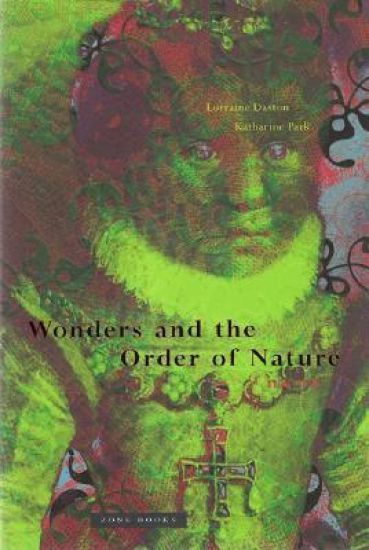
A rich exploration of how European naturalists used wonder and wonders (oddities and marvels) to envision and explain the natural world.Winner of the History of Science Society's Pfizer Prize"This book is about setting the limits of the natural and the limits of the known, wonders and wonder, from the High Middle Ages through the Enlightenment. A history of wonders as objects of natural inquiry is simultaneously an intellectual history of the orders of nature. A history of wonder as a passion of natural inquiry is simultaneously a history of the evolving collective sensibility of naturalists. Pursued in tandem, these interwoven histories show how the two sides of knowledge, objective order and subjective sensibility, were obverse and reverse of the same coin rather than opposed to one another."-From the IntroductionWonders and the Order of Nature, 1150-1750 is about the ways in which European naturalists from the High Middle Ages through the Enlightenment used wonder and wonders, the passion and its objects, to envision themselves and the natural world. Monsters, gems that shone in the dark, petrifying springs, celestial apparitions-these were the marvels that adorned romances, puzzled philosophers, lured collectors, and frightened the devout. Drawing on the histories of art, science, philosophy, and literature, Lorraine Daston and Katharine Park explore and explain how wonder and wonders fortified princely power, rewove the texture of scientific experience, and shaped the sensibility of intellectuals. This is a history of the passions of inquiry, of how wonder sometimes inflamed, sometimes dampened curiosity about nature's best-kept secrets. Refracted through the prism of wonders, the order of nature splinters into a spectrum of orders, a tour of possible worlds.
What did it mean to be reasonable in the Age of Reason? Classical probabilists from Jakob Bernouli through Pierre Simon Laplace intended their theory as an answer to this question--as "nothing more at bottom than good sense reduced to a calculus," in Laplace's words. In terms that can be easily grasped by nonmathematicians, Lorraine Daston demonstrates how this view profoundly shaped the internal development of probability theory and defined its applications.
The Empire of Chance tells how quantitative ideas of chance transformed the natural and social sciences, as well as daily life over the last three centuries. A continuous narrative connects the earliest application of probability and statistics in gambling and insurance to the most recent forays into law, medicine, polling and baseball. Separate chapters explore the theoretical and methodological impact in biology, physics and psychology. Themes recur - determinism, inference, causality, free will, evidence, the shifting meaning of probability - but in dramatically different disciplinary and historical contexts. In contrast to the literature on the mathematical development of probability and statistics, this book centres on how these technical innovations remade our conceptions of nature, mind and society. Written by an interdisciplinary team of historians and philosophers, this readable, lucid account keeps technical material to an absolute minimum. It is aimed not only at specialists in the history and philosophy of science, but also at the general reader and scholars in other disciplines.