Kirjojen hintavertailu. Mukana 12 243 001 kirjaa ja 12 kauppaa.

Kirjailija

Lorraine Foreman-Peck

Kirjat ja teokset yhdessä paikassa: 7 kirjaa, julkaisuja vuosilta 1994-2017, suosituimpien joukossa Using Educational Research to Inform Practice. Vertaile teosten hintoja ja tarkista saatavuus suomalaisista kirjakaupoista.

7 kirjaa

Kirjojen julkaisuhaarukka 1994-2017.

Researching into Teaching Methods

Researching into Teaching Methods

Clinton Bennett; Lorraine Foreman-Peck; Chris (All Senior Lecturers Higgins

Routledge
2017
sidottu
This is one of a series of short, practical guides aimed at lecturers and tutors in colleges and universities, to help them get started on research. It covers all aspects of teaching methods, strategies for interactive teaching methods, small and large group teaching and student learning.
Using Educational Research to Inform Practice

Using Educational Research to Inform Practice

Lorraine Foreman-Peck; Christopher Winch

Routledge
2010
sidottu
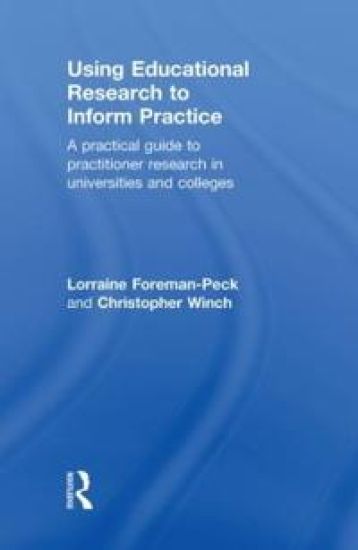
This book gives practical guidance on how educational research can inform professional practice. Written in a clear and accessible style, it details the way in which evidence based knowledge can be used to develop teaching and learning, bringing together a range of resources for all levels of reader but specifically designed to aid the progressive practitioner researcher. The authors draw on their experience of empirical work in education to provide thoroughly up-to-date reference material, including illustrative case studies, practical guidelines and exercises, and definitions of educational and research terms. The case studies and critical literature surveys have been chosen to demonstrate the use (and mis-use) of research evidence in thinking about a range of important topics in further and higher education, such as, learning styles, deep and surface learning, dyslexia in higher education, the assessment of group work, teaching critical thinking, problem based learning, and dissertation marking. Drawing on their philosophical backgrounds, the authors also address the much conceptual confusions which have led to scepticism regarding the wisdom or even the possibility of using research evidence to inform teaching. Other guidance includes: relating practitioner knowledge to educational research ethical and practical issues on research within the institution evaluating the strengths and limitations of research evidence researching ideas through the examination of case studies practitioner research and contributions to the knowledge baseUsing Educational Research to Inform Practice provides the necessary understanding for conducting research, thinking about its value and applying research evidence to practice in universities and colleges and therefore will be essential reading for those resource managers who are responsible for providing courses and support in higher education institutions. In addition, this book is particularly aimed at further and higher lecturers undertaking professional development courses and experienced and senior staff who wish to use research to improve management practices.
Using Educational Research to Inform Practice

Using Educational Research to Inform Practice

Lorraine Foreman-Peck; Christopher Winch

Routledge
2010
nidottu
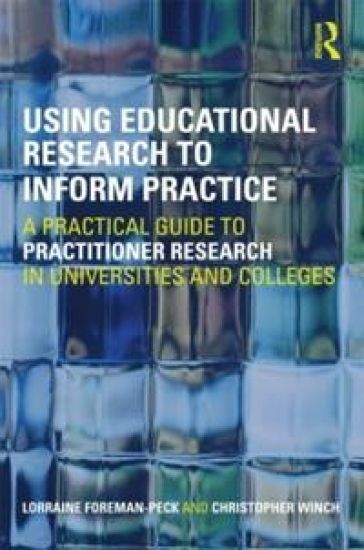
This book gives practical guidance on how educational research can inform professional practice. Written in a clear and accessible style, it details the way in which evidence based knowledge can be used to develop teaching and learning, bringing together a range of resources for all levels of reader but specifically designed to aid the progressive practitioner researcher. The authors draw on their experience of empirical work in education to provide thoroughly up-to-date reference material, including illustrative case studies, practical guidelines and exercises, and definitions of educational and research terms. The case studies and critical literature surveys have been chosen to demonstrate the use (and mis-use) of research evidence in thinking about a range of important topics in further and higher education, such as, learning styles, deep and surface learning, dyslexia in higher education, the assessment of group work, teaching critical thinking, problem based learning, and dissertation marking. Drawing on their philosophical backgrounds, the authors also address the much conceptual confusions which have led to scepticism regarding the wisdom or even the possibility of using research evidence to inform teaching. Other guidance includes: relating practitioner knowledge to educational research ethical and practical issues on research within the institution evaluating the strengths and limitations of research evidence researching ideas through the examination of case studies practitioner research and contributions to the knowledge baseUsing Educational Research to Inform Practice provides the necessary understanding for conducting research, thinking about its value and applying research evidence to practice in universities and colleges and therefore will be essential reading for those resource managers who are responsible for providing courses and support in higher education institutions. In addition, this book is particularly aimed at further and higher lecturers undertaking professional development courses and experienced and senior staff who wish to use research to improve management practices.
Researching into Teaching Methods

Researching into Teaching Methods

Clinton Bennett; Lorraine Foreman-Peck; Chris (All Senior Lecturers Higgins

Routledge Falmer
1996
nidottu
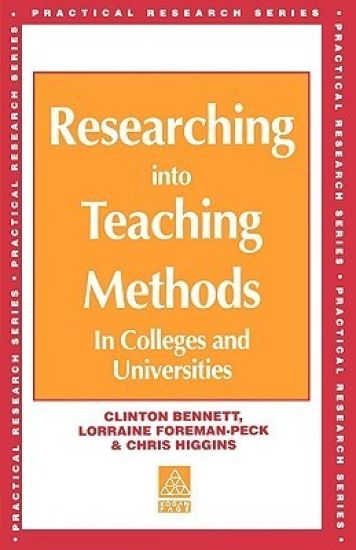
This is one of a series of short, practical guides aimed at lecturers and tutors in colleges and universities, to help them get started on research. It covers all aspects of teaching methods, strategies for interactive teaching methods, small and large group teaching and student learning.
The Lecturer's Guide to Quality and Standards in Colleges and Universities

The Lecturer's Guide to Quality and Standards in Colleges and Universities

Professor Kate Ashcroft; Kate Ashcroft; Lorraine Foreman-Peck

Routledge Falmer
1995
nidottu
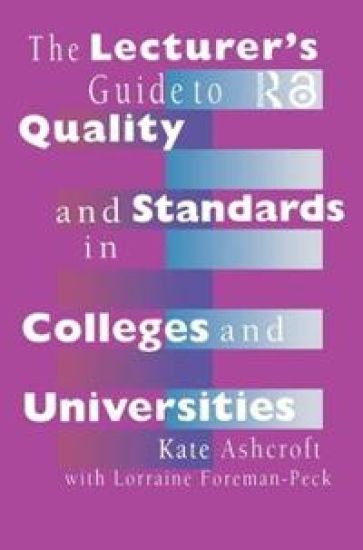
A follow-up volume to "Managing Teaching and Learning in Further Education and Higher Education", this text provides a guide to managing quality and standards from the lecturer's point of view. It covers key issues such as teaching, learning, student support, assessment, evaluation, course design, bidding for and managing resources, marketing and research.; Based on the model of lecturer as reflective practitioner, this book is intended to help enable the lecturer to make sense of the changing climate of quality control and academic standards. Its interactive design introduces stimulating ideas and suggestions for further reading and provides guidelines on issues of relevance to individual readers.
Managing Teaching and Learning in Further and Higher Education

Managing Teaching and Learning in Further and Higher Education

Kate Ashcroft; Lorraine Foreman-Peck

Routledge Falmer
1994
sidottu
The role of the teacher/lecturer is to manage and facilitate the process of teaching and learning in a two-way interaction between teacher self and taught other. This handbook covers ways of managing the teaching, learning and assessment process to improve students' learning. It guides readers through paths of enquiry and reflection to create a learning programme designed to meet students' specific needs. The focus includes student learning and tutors' teaching and how these are effected by institutional arrangements; the interpersonal skills of tutors; and course design and teaching methods.; The text includes enquiry tasks which invite the reader to explore issues introduced in each chapter in the context of their own institution. An annotated reading list at the end of each chapter enables the reader to take their particular interests further.
Managing Teaching and Learning in Further and Higher Education

Managing Teaching and Learning in Further and Higher Education

Kate Ashcroft; Lorraine Foreman-Peck

Routledge Falmer
1994
nidottu
The role of the teacher/lecturer is to manage and facilitate the process of teaching and learning in a two-way interaction between teacher self and taught other. This handbook covers ways of managing the teaching, learning and assessment process to improve students' learning. It guides readers through paths of enquiry and reflection to create a learning programme designed to meet students' specific needs. The focus includes student learning and tutors' teaching and how these are effected by institutional arrangements; the interpersonal skills of tutors; and course design and teaching methods.; The text includes enquiry tasks which invite the reader to explore issues introduced in each chapter in the context of their own institution. An annotated reading list at the end of each chapter enables the reader to take their particular interests further.