Kirjojen hintavertailu. Mukana 12 595 353 kirjaa ja 12 kauppaa.

Kirjailija

Lorrie Goldensohn

Kirjat ja teokset yhdessä paikassa: 4 kirjaa, julkaisuja vuosilta 1993-2024, suosituimpien joukossa Dismantling Glory. Vertaile teosten hintoja ja tarkista saatavuus suomalaisista kirjakaupoista.

4 kirjaa

Kirjojen julkaisuhaarukka 1993-2024.

Little Fish

Little Fish

Lorrie Goldensohn

Fomite
2024
pokkari
Lorrie Goldensohn's work should long ago have been better known and widely celebrated. Open to every kind of experience, her taste for language "luscious" and "apoplexing," and yet scouring and declarative. "I have finished knitting a perfectly brilliant sock," she declares in one poem, as if amused by the very notion of anything-poem or sock or sentiment-"perfectly brilliant" or indisputable. By the alternation of tenderness and a bristling dissatisfaction with lies or bullshit. Goldensohn moves with a confident embrace of sheer abundant presentness and what she calls "a fear of the death of joy." The long elegiac sequence on the death of her husband Barry Goldensohn that ends this book comes as a gut punch and a culmination.-Robert Boyers
Dismantling Glory

Dismantling Glory

Lorrie Goldensohn

Columbia University Press
2006
pokkari
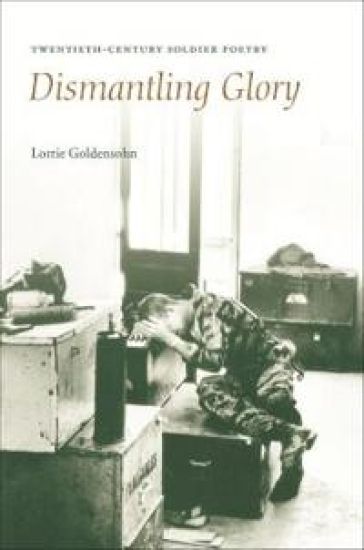
Dismantling Glory presents the most personal and powerful words ever written about the horrors of battle, by the very soldiers who put their lives on the line. Focusing on American and English poetry from World War I, World War II, and the Vietnam War, Lorrie Goldensohn, a poet and pacifist, affirms that by and large, twentieth-century war poetry is fundamentally antiwar. She examines the changing nature of the war lyric and takes on the literary thinking of two countries separated by their common language. World War I poets such as Wilfred Owen emphasized the role of soldier as victim. By World War II, however, English and American poets, influenced by the leftist politics of W. H. Auden, tended to indict the whole of society, not just its leaders, for militarism. During the Vietnam War, soldier poets accepted themselves as both victims and perpetrators of war's misdeeds, writing a nontraditional, more personally candid war poetry. The book not only discusses the poetry of trench warfare but also shows how the lives of civilians-women and children in particular-entered a global war poetry dominated by air power, invasion, and occupation. Goldensohn argues that World War II blurred the boundaries between battleground and home front, thus bringing women and civilians into war discourse as never before. She discusses the interplay of fascination and disapproval in the texts of twentieth-century war and notes the way in which homage to war hero and victim contends with revulsion at war's horror and waste. In addition to placing the war lyric in literary and historical context, the book discusses in detail individual poets such as Wilfred Owen, W. H. Auden, Keith Douglas, Randall Jarrell, and a group of poets from the Vietnam War, including W. D. Ehrhart, Bruce Weigl, Yusef Komunyakaa, David Huddle, and Doug Anderson. Dismantling Glory is an original and compelling look at the way twentieth-century war poetry posited new relations between masculinity and war, changed and complicated the representation of war, and expanded the scope of antiwar thinking.
Dismantling Glory

Dismantling Glory

Lorrie Goldensohn

Columbia University Press
2003
sidottu
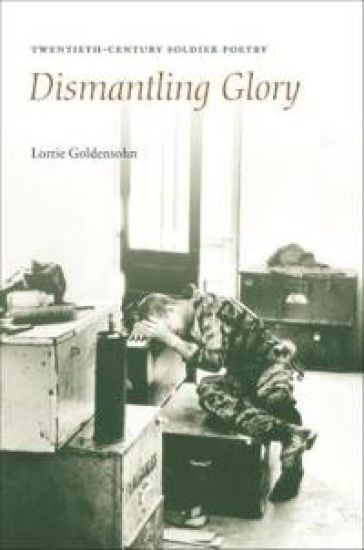
Dismantling Glory presents the most personal and powerful words ever written about the horrors of battle, by the very soldiers who put their lives on the line. Focusing on American and English poetry from World War I, World War II, and the Vietnam War, Lorrie Goldensohn, a poet and pacifist, affirms that by and large, twentieth-century war poetry is fundamentally antiwar. She examines the changing nature of the war lyric and takes on the literary thinking of two countries separated by their common language. World War I poets such as Wilfred Owen emphasized the role of soldier as victim. By World War II, however, English and American poets, influenced by the leftist politics of W. H. Auden, tended to indict the whole of society, not just its leaders, for militarism. During the Vietnam War, soldier poets accepted themselves as both victims and perpetrators of war's misdeeds, writing a nontraditional, more personally candid war poetry. The book not only discusses the poetry of trench warfare but also shows how the lives of civilians-women and children in particular-entered a global war poetry dominated by air power, invasion, and occupation. Goldensohn argues that World War II blurred the boundaries between battleground and home front, thus bringing women and civilians into war discourse as never before. She discusses the interplay of fascination and disapproval in the texts of twentieth-century war and notes the way in which homage to war hero and victim contends with revulsion at war's horror and waste. In addition to placing the war lyric in literary and historical context, the book discusses in detail individual poets such as Wilfred Owen, W. H. Auden, Keith Douglas, Randall Jarrell, and a group of poets from the Vietnam War, including W. D. Ehrhart, Bruce Weigl, Yusef Komunyakaa, David Huddle, and Doug Anderson. Dismantling Glory is an original and compelling look at the way twentieth-century war poetry posited new relations between masculinity and war, changed and complicated the representation of war, and expanded the scope of antiwar thinking.
Elizabeth Bishop

Elizabeth Bishop

Lorrie Goldensohn

Columbia University Press
1993
pokkari
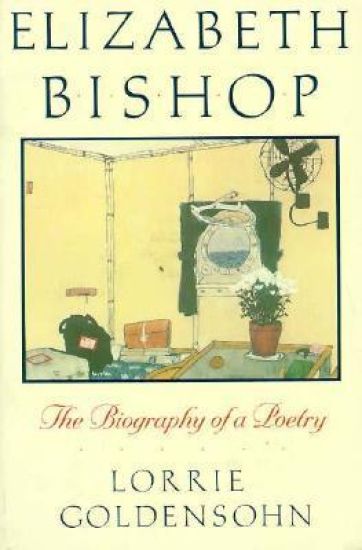
This study charts the evolution of Bishop's poetry, aided by newly discovered diaries, previously unpublished work and early drafts. It focuses on the poet's 20-year residence in Brazil, and attempts to provide a new understanding of Bishop's treatment of love, sex and gender.