Kirjojen hintavertailu. Mukana 12 390 323 kirjaa ja 12 kauppaa.

Kirjailija

Lothar Gaul

Kirjat ja teokset yhdessä paikassa: 3 kirjaa, julkaisuja vuosilta 2003-2013, suosituimpien joukossa Boundary Element Methods for Engineers and Scientists. Vertaile teosten hintoja ja tarkista saatavuus suomalaisista kirjakaupoista.

3 kirjaa

Kirjojen julkaisuhaarukka 2003-2013.

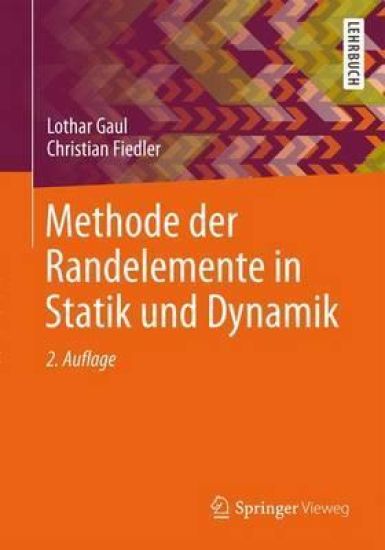
Methode der Randelemente in Statik und Dynamik

Methode der Randelemente in Statik und Dynamik

Lothar Gaul; Christian Fiedler

Springer Vieweg
2013
sidottu
Die gut eingeführte Methode der Randelemente baut auf den Grundlagen der Kontinuumsmechnik auf. In diesem Buch wird sie für die Elastodynamik schwingender Strukturen und für die Elastostatik formuliert. Die mathematischen und ingenieurwissenschaftlichen Grundlagen werden bereitgestellt; einfache Beispiele erleichtern das Verständnis.Das Buch liegt nun in einer 2. korrigierten Auflage vor. Es richtet sich an Studierende, Ingenieure und Naturwissenschaftler, die sich Kenntnisse der Randelementmethode erarbeiten wollen.
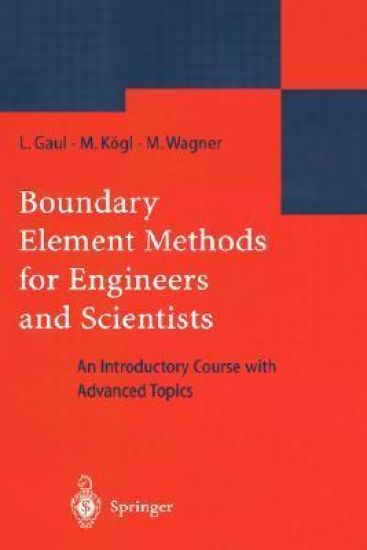
Boundary Element Methods for Engineers and Scientists

Boundary Element Methods for Engineers and Scientists

Lothar Gaul; Martin Kögl; Marcus Wagner

Springer-Verlag Berlin and Heidelberg GmbH Co. K
2012
nidottu
Over the past decades, the Boundary Element Method has emerged as a ver­ satile and powerful tool for the solution of engineering problems, presenting in many cases an alternative to the more widely used Finite Element Method. As with any numerical method, the engineer or scientist who applies it to a practical problem needs to be acquainted with, and understand, its basic principles to be able to apply it correctly and be aware of its limitations. It is with this intention that we have endeavoured to write this book: to give the student or practitioner an easy-to-understand introductory course to the method so as to enable him or her to apply it judiciously. As the title suggests, this book not only serves as an introductory course, but also cov­ ers some advanced topics that we consider important for the researcher who needs to be up-to-date with new developments. This book is the result of our teaching experiences with the Boundary Element Method, along with research and consulting activities carried out in the field. Its roots lie in a graduate course on the Boundary Element Method given by the authors at the university of Stuttgart. The experiences gained from teaching and the remarks and questions of the students have contributed to shaping the 'Introductory course' (Chapters 1-8) to the needs of the stu­ dents without assuming a background in numerical methods in general or the Boundary Element Method in particular.
Boundary Element Methods for Engineers and Scientists

Boundary Element Methods for Engineers and Scientists

Lothar Gaul; Martin Kögl; Marcus Wagner

Springer-Verlag Berlin and Heidelberg GmbH Co. K
2003
sidottu
Over the past decades, the Boundary Element Method has emerged as a ver­ satile and powerful tool for the solution of engineering problems, presenting in many cases an alternative to the more widely used Finite Element Method. As with any numerical method, the engineer or scientist who applies it to a practical problem needs to be acquainted with, and understand, its basic principles to be able to apply it correctly and be aware of its limitations. It is with this intention that we have endeavoured to write this book: to give the student or practitioner an easy-to-understand introductory course to the method so as to enable him or her to apply it judiciously. As the title suggests, this book not only serves as an introductory course, but also cov­ ers some advanced topics that we consider important for the researcher who needs to be up-to-date with new developments. This book is the result of our teaching experiences with the Boundary Element Method, along with research and consulting activities carried out in the field. Its roots lie in a graduate course on the Boundary Element Method given by the authors at the university of Stuttgart. The experiences gained from teaching and the remarks and questions of the students have contributed to shaping the 'Introductory course' (Chapters 1-8) to the needs of the stu­ dents without assuming a background in numerical methods in general or the Boundary Element Method in particular.