Kirjojen hintavertailu. Mukana 12 595 353 kirjaa ja 12 kauppaa.

Kirjailija

Louis Moore

Kirjat ja teokset yhdessä paikassa: 8 kirjaa, julkaisuja vuosilta 2017-2024, suosituimpien joukossa We Will Win the Day. Vertaile teosten hintoja ja tarkista saatavuus suomalaisista kirjakaupoista.

8 kirjaa

Kirjojen julkaisuhaarukka 2017-2024.

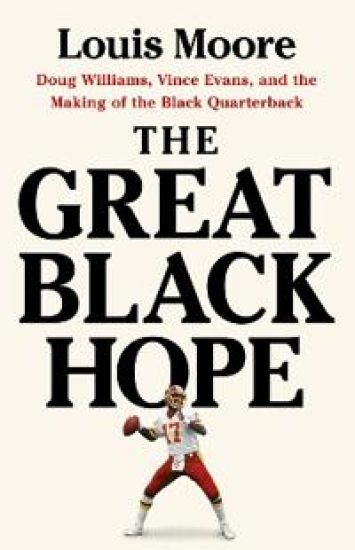
The Great Black Hope

The Great Black Hope

Louis Moore

PUBLICAFFAIRS,U.S.
2024
sidottu
From a leading scholar of sports and race, a story of two pioneering Black quarterbacks--one who became the first to win a Super Bowl, and one who couldn't make it in the racist world of the NFL.There is no position in pro sports more recognizable, lucrative, and important than NFL quarterback. But while the league itself has always been integrated, quarterbacking was the exclusive domain of white players for many years. When Doug Williams and Vince Evans arrived in the league in the late 1970s, Black players were often dismissed as lacking the intelligence and leadership skills of a QB. They got death threats, faced racist questions, and knew that a single mistake could end their careers at any moment.In this book, Grand Valley State professor Louis Moore tells the twin stories of Vince Evans--the electrifying player who should have succeeded, but could not overcome his numerous obstacles--and of Doug Williams--the star of the Washington Redskins, and the first Black quarterback to become a champion. He shows how easily Williams' triumphant story could have gone wrong, becoming another tale of supreme talent that the world only got to glimpse, and how his success changed the game and the country.A skillful blend of game-time drama and social commentary, this book captures one of the unheralded heroes of the NFL, and all that he meant, both on the field and off.
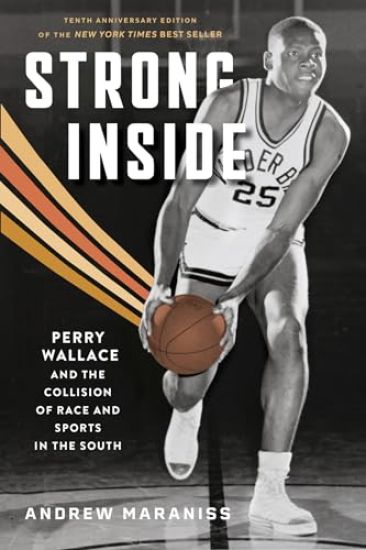
Strong Inside

Strong Inside

Andrew Maraniss; Derrick E. White; Louis Moore

VANDERBILT UNIVERSITY PRESS
2024
sidottu
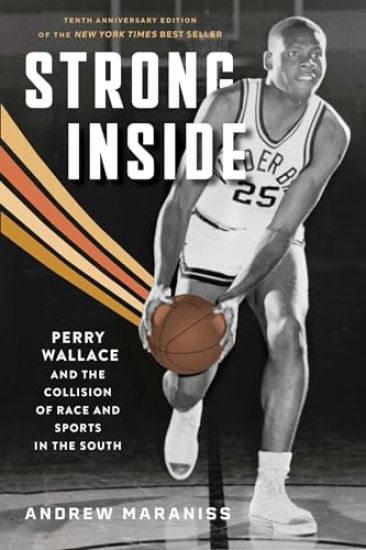
New York Times Best Seller2015 RFK Book Awards Special Recognition2015 Lillian Smith Book Award2015 AAUP Books Committee "Outstanding" TitleWhen Strong Inside was first published ten years ago, no one could have predicted the impact the book would have on Vanderbilt University, Nashville, and the nation. What started out as a biography of Perry Wallace, the first African American basketball player in the SEC, became a catalyst for meaningful change and reconciliation between Wallace and the city that had rejected him. In this new edition, scholars of race and sports, Louis Moore and Derrick E. White provide a new foreword that places the story in the context of the study of sports and society and Maraniss provides a new concluding chapter filling readers in on how events unfolded between Strong Inside's publication in 2014 and Perry Wallace's death in 2017. Wallace entered kindergarten the year that Brown v. Board of Education upended "separate but equal." As a 12-year-old, he sneaked downtown to watch the sit-ins at Nashville's lunch counters. A week after Martin Luther King Jr.'s "I Have a Dream" speech, Wallace entered high school, and later saw the passage of the Civil Rights and Voting Rights acts. On March 16, 1966, his Pearl High School basketball team won Tennessee's first integrated state tournament--the same day Adolph Rupp's all-white Kentucky Wildcats lost to the all-black Texas Western Miners in an iconic NCAA title game. The world seemed to be opening up at just the right time, and when Vanderbilt recruited him, Wallace courageously accepted the assignment to desegregate the SEC. His experiences on campus and in the hostile gymnasiums of the Deep South turned out to be nothing like he ever imagined.
Strong Inside

Strong Inside

Andrew Maraniss; Derrick E. White; Louis Moore

VANDERBILT UNIVERSITY PRESS
2024
nidottu
New York Times Best Seller2015 RFK Book Awards Special Recognition2015 Lillian Smith Book Award2015 AAUP Books Committee "Outstanding" TitleWhen Strong Inside was first published ten years ago, no one could have predicted the impact the book would have on Vanderbilt University, Nashville, and the nation. What started out as a biography of Perry Wallace, the first African American basketball player in the SEC, became a catalyst for meaningful change and reconciliation between Wallace and the city that had rejected him. In this new edition, scholars of race and sports, Louis Moore and Derrick E. White provide a new foreword that places the story in the context of the study of sports and society and Maraniss provides a new concluding chapter filling readers in on how events unfolded between Strong Inside's publication in 2014 and Perry Wallace's death in 2017. Wallace entered kindergarten the year that Brown v. Board of Education upended "separate but equal." As a 12-year-old, he sneaked downtown to watch the sit-ins at Nashville's lunch counters. A week after Martin Luther King Jr.'s "I Have a Dream" speech, Wallace entered high school, and later saw the passage of the Civil Rights and Voting Rights acts. On March 16, 1966, his Pearl High School basketball team won Tennessee's first integrated state tournament--the same day Adolph Rupp's all-white Kentucky Wildcats lost to the all-black Texas Western Miners in an iconic NCAA title game. The world seemed to be opening up at just the right time, and when Vanderbilt recruited him, Wallace courageously accepted the assignment to desegregate the SEC. His experiences on campus and in the hostile gymnasiums of the Deep South turned out to be nothing like he ever imagined.
We Will Win The Day

We Will Win The Day

Louis Moore

The University Press of Kentucky
2021
nidottu
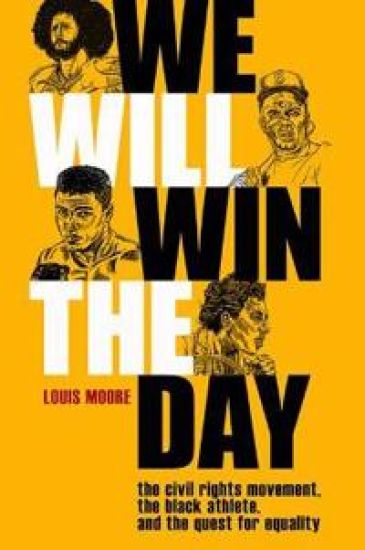
This exceedingly timely book looks at the history of black activist athletes and the important role of the black community in making sure fair play existed, not only in sports, but across U.S. society.Most books that focus on ties between sports, black athletes, and the Civil Rights Movement focus on specific issues or people. They discuss, for example, how baseball was integrated or tell the stories of individuals like Jackie Robinson or Muhammad Ali. This book approaches the topic differently. By examining the connection between sports, black athletes and the Civil Rights Movement overall, it puts the athletes and their stories into the proper context. Rather than romanticizing the stories and the men and women who lived them, it uses the roles these individuals played - or chose not to play - to illuminate the complexities and nuances in the relationship between black athletes and the fight for racial equality.Arranged thematically, the book starts with Jackie Robinson's entry into baseball when he signed with the Dodgers in 1945 and ends with the revolt of black athletes in the late 1960s, symbolized by Tommie Smith and John Carlos famously raising their clenched fists during a medal ceremony at the 1968 Olympics. Accounts from the black press and the athletes themselves help illustrate the role black athletes played in the Civil Rights Movement. At the same time, the book also examines how the black public viewed sports and the contributions of black athletes during these tumultuous decades, showing how the black communities' belief in merit and democracy - combined with black athletic success - influenced the push for civil rights.?
Eternal Love

Eternal Love

Louis Moore

Louis Moore
2020
sidottu
Eternal Love is the memoir of Nellie and Lou Moore - a uniquely American love story that stood the test of time in a racially torn world.In 1946, Lou was a third-generation Chinese-American soldier just out the US Army after World War II. An honorably discharged staff sergeant, Lou learned to fight racial prejudices while bravely serving the United States in the European Theater of Operations. When the young veteran returned home to America, he met the love of his life.Nellie was a Japanese-American dancer, the third one from the right in the chorus line at the famed China Doll Night Club in Manhattan. Like other United States citizens with Japanese heritage, Nellie endured tremendous losses when she and her family were unjustly locked away in a harsh American internment camp until history's biggest war ended.Destiny brought these two individuals together so that an unforgettable love story could begin. It was a completely chance encounter, one returning G.I., one beautiful, young woman rebuilding her life far from her California home. For Lou, it truly was love at first sight, and Nellie joined in that nearly immediately, returning that love in kind. Once they met to talk, they never stopped talking and spent every day together until their wedding day, a little over a week after they met in 1946. It is a love story and life together that went on for 74 year. Their whirlwind 10-day romance turned into a marriage of devotion, faithfulness, thoughtfulness, tenderness, tolerance, understanding, caring, compassion, mindfulness, patience, and togetherness.
We Will Win the Day

We Will Win the Day

Louis Moore

Praeger Publishers Inc
2017
sidottu
This exceedingly timely book looks at the history of black activist athletes and the important role of the black community in making sure fair play existed, not only in sports, but across U.S. society.Most books that focus on ties between sports, black athletes, and the Civil Rights Movement focus on specific issues or people. They discuss, for example, how baseball was integrated or tell the stories of individuals like Jackie Robinson or Muhammad Ali. This book approaches the topic differently. By examining the connection between sports, black athletes and the Civil Rights Movement overall, it puts the athletes and their stories into the proper context. Rather than romanticizing the stories and the men and women who lived them, it uses the roles these individuals played—or chose not to play—to illuminate the complexities and nuances in the relationship between black athletes and the fight for racial equality.Arranged thematically, the book starts with Jackie Robinson's entry into baseball when he signed with the Dodgers in 1945 and ends with the revolt of black athletes in the late 1960s, symbolized by Tommie Smith and John Carlos famously raising their clenched fists during a medal ceremony at the 1968 Olympics. Accounts from the black press and the athletes themselves help illustrate the role black athletes played in the Civil Rights Movement. At the same time, the book also examines how the black public viewed sports and the contributions of black athletes during these tumultuous decades, showing how the black communities' belief in merit and democracy—combined with black athletic success—influenced the push for civil rights.
I Fight for a Living

I Fight for a Living

Louis Moore

University of Illinois Press
2017
sidottu
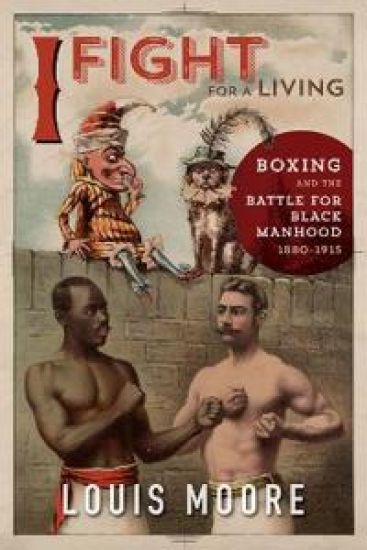
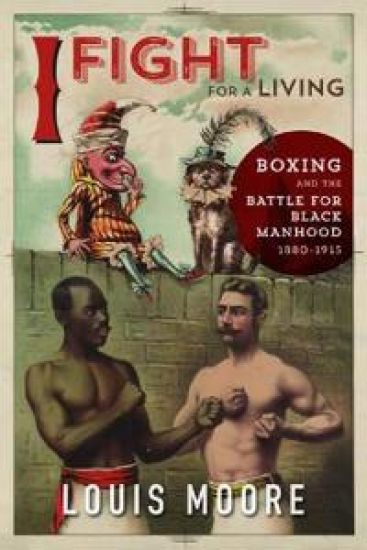
The black prizefighter labored in one of the few trades where an African American man could win renown: boxing. His prowess in the ring asserted an independence and powerful masculinity rare for black men in a white-dominated society, allowing him to be a man--and thus truly free. Louis Moore draws on the life stories of African American fighters active from 1880 to 1915 to explore working-class black manhood. As he details, boxers bought into American ideas about masculinity and free enterprise to prove their equality while using their bodies to become self-made men. The African American middle class, meanwhile, grappled with an expression of public black maleness they saw related to disreputable leisure rather than respectable labor. Moore shows how each fighter conformed to middle-class ideas of masculinity based on his own judgment of what culture would accept. Finally, he argues that African American success in the ring shattered the myth of black inferiority despite media and government efforts to defend white privilege.
I Fight for a Living

I Fight for a Living

Louis Moore

University of Illinois Press
2017
nidottu
The black prizefighter labored in one of the few trades where an African American man could win renown: boxing. His prowess in the ring asserted an independence and powerful masculinity rare for black men in a white-dominated society, allowing him to be a man--and thus truly free. Louis Moore draws on the life stories of African American fighters active from 1880 to 1915 to explore working-class black manhood. As he details, boxers bought into American ideas about masculinity and free enterprise to prove their equality while using their bodies to become self-made men. The African American middle class, meanwhile, grappled with an expression of public black maleness they saw related to disreputable leisure rather than respectable labor. Moore shows how each fighter conformed to middle-class ideas of masculinity based on his own judgment of what culture would accept. Finally, he argues that African American success in the ring shattered the myth of black inferiority despite media and government efforts to defend white privilege.