Kirjojen hintavertailu. Mukana 12 317 441 kirjaa ja 12 kauppaa.

Kirjailija

Louis R. Caplan

Kirjat ja teokset yhdessä paikassa: 6 kirjaa, julkaisuja vuosilta 2006-2022, suosituimpien joukossa C. Miller Fisher. Vertaile teosten hintoja ja tarkista saatavuus suomalaisista kirjakaupoista.

6 kirjaa

Kirjojen julkaisuhaarukka 2006-2022.

Stories of Stroke

Stories of Stroke

Louis R. Caplan; Aishwarya Aggarwal

Cambridge University Press
2022
sidottu
Stroke is one of the most important and most feared conditions known to man. The threat of stroke is important to all people. What could be more devastating than to lose the ability to speak, move a limb, stand, talk, see, read, feel write or even think? This book brings together ideas, events and advances – the stories – before and during the 20th Century through the accounts of global experts in the field, many of them having been first-hand witnesses to progress. Focusing on selected stories of stroke, this book offers a readable summary of the most dramatic and extensive changes in knowledge about stroke and in caring for stroke patients. Of interest to anyone interested in neurosciences and for physicians caring for stroke patients, this book informs on moving forward, by looking to how we got to where we are.
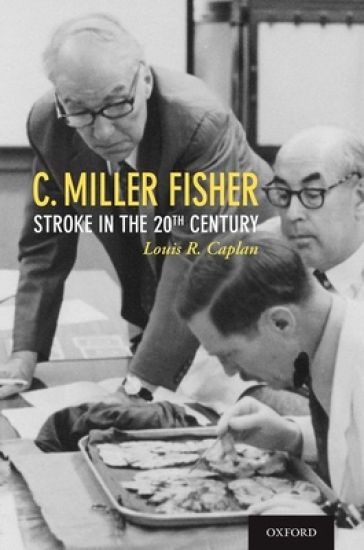
C. Miller Fisher

C. Miller Fisher

Louis R. Caplan

Oxford University Press Inc
2020
sidottu
When Charles Miller Fisher was born in 1913 there was very little scientific knowledge about stroke. But thanks to him, our understanding of stroke and of other brain disorders are now well established in every neurology training program around the world. C. Miller Fisher is his story: his life, his method of study and of research, and his contributions. This work, reinforced with unequalled access to the CMF archives overseen by the Fisher estate and told in his own words (italicized in the text) from his memoirs, will shed light on one of the most important clinicians in North America and the world. He devoted his career and the great majority of every waking day to the study of stroke, both in the pathology laboratory and in people. Fisher's discoveries and contributions and those of the individuals that he trained changed the knowledge basis of stroke and vascular disease for everyone.
Stroke

Stroke

Louis R. Caplan; Vasileios-Arsenios Lioutas

Oxford University Press Inc
2016
nidottu
Part of the "What Do I Do Now?" series, Stroke uses a case-based approach to cover common and important topics in the diagnosis and treatment of stroke. Each chapter provides an overview of the approach to the problem in question followed by a discussion of the diagnosis, key points to remember, and selected references for further reading. For this edition, all cases have been carefully revised, and new information and references have been added. Stroke is an engaging collection of thought-provoking cases which clinicians can utilize when they encounter difficult patients on the ward or in the clinic. The volume is also a self-assessment tool that tests the reader's ability to answer the question, "What do I do now?"
Vertebrobasilar Ischemia and Hemorrhage

Vertebrobasilar Ischemia and Hemorrhage

Louis R. Caplan

Cambridge University Press
2015
sidottu
This comprehensive review of vascular disease in the vertebrobasilar circulation is based on Dr Louis R. Caplan's extensive experience and observation of patients from the New England Medical Center posterior circulation stroke registry. It benefits from an organized, uniform, and coherent analysis of all types of vascular disease involving the posterior circulation, presented by a single author who is one of the world's leading authorities on this topic. This new edition is fully updated throughout, including a review of all the literature published on this topic since the previous edition in 1996. There are major rewrites for the chapters on diagnosis and therapy, inclusion of modern imaging techniques, and extensive illustrations. Essential reading for stroke physicians and neurologists, the book will also be an important source of reference for neurosurgeons, vascular surgeons and endovascular radiologists.
Navigating the Complexities of Stroke

Navigating the Complexities of Stroke

Louis R. Caplan

Oxford University Press Inc
2013
nidottu
Strokes afflict thousands of people every year. Yet, for every fatal case, many more victims survive, often going on to live long, productive lives. Of course, none of it is simple-not preventing a "brain attack," nor survival, rehabilitation, or living with cerebrovascular disease. The key is education, for both the moment of crisis and the long term. Navigating the Complexities of Stroke provides a practical guide for the lay public and medical professionals. Dr. Louis R. Caplan, one of the world's leading experts, guides readers through the subject in a straightforward and accessible manner. He examines the anatomy of the brain, explaining the specialized functions of different regions, and describes the flow of blood from the heart. He turns to the mechanics of the stroke itself, clearly discussing the complexities of the two major kinds-the ischemic and hemorrhagic-and the resulting damage. Most helpfully, Caplan offers information and advice that readers will find immediately useful: the medical conditions and other factors that create risk, stroke symptoms, abnormalities that doctors look for, tests available to evaluate strokes, complications and disabilities that can result, and the paths of treatment and rehabilitation. He offers real-life cases of victims and their families that demonstrate successful recovery, but also reveal the sometimes troubling impact of strokes on survivors and their families, who can suffer frustration and demoralization that the medical profession often overlooks in its biological focus. Caplan also examines strokes in children and young adults, who are often neglected in literature that is largely aimed at seniors. Navigating the Complexities of Stroke empowers victims, families, and general medical providers. It puts in readers' hands the knowledge necessary to avoid strokes, address them quickly, and effectively recover, so they won't lose heart when it is needed most.
Case Studies in Stroke

Case Studies in Stroke

Michael G. Hennerici; Michael Daffertshofer; Louis R. Caplan; Kristina Szabo

Cambridge University Press
2006
pokkari
Neurologists learn from their patients, and this selection of 60 stroke cases will inform and challenge clinicians at all stages in their careers. Including both common and unusual cases, the aim is to reinforce diagnostic skills through careful analysis of individual presenting patterns, and to guide treatment decisions. Each case consists of a clinical history, examination findings and special investigations, usually involving imaging before a diagnosis is given. There then follows for each case a discussion of the clinical issues raised by the case, in which the main teaching points are emphasized. Selected references, frequently including the first description, are provided at the conclusion of each case. Drawing on the expertise of leading teachers and practitioners, and liberally illustrated, these case studies and the discussions that accompany them are an essential guide to learning the complexity of stroke diagnosis.