Kirjojen hintavertailu. Mukana 12 290 491 kirjaa ja 12 kauppaa.

Kirjailija

Louis Theodore

Kirjat ja teokset yhdessä paikassa: 41 kirjaa, julkaisuja vuosilta 1991-2027, suosituimpien joukossa Water Resource Management Issues. Vertaile teosten hintoja ja tarkista saatavuus suomalaisista kirjakaupoista.

41 kirjaa

Kirjojen julkaisuhaarukka 1991-2027.

Open-Ended Problems

Open-Ended Problems

James Patrick Abulencia; Louis Theodore

John Wiley Sons Inc
2015
sidottu
This is a unique book with nearly 1000 problems and 50 case studies on open-ended problems in every key topic in chemical engineering that helps to better prepare chemical engineers for the future. The term "open-ended problem" basically describes an approach to the solution of a problem and/or situation for which there is not a unique solution. The Introduction to the general subject of open-ended problems is followed by 22 chapters, each of which addresses a traditional chemical engineering or chemical engineering-related topic. Each of these chapters contain a brief overview of the subject matter of concern, e.g., thermodynamics, which is followed by sample open-ended problems that have been solved (by the authors) employing one of the many possible approaches to the solutions. This is then followed by approximately 40-45 open-ended problems with no solutions (although many of the authors' solutions are available for those who adopt the book for classroom or training purposes). A reference section is included with the chapter's contents. Term projects, comprised of 12 additional chapter topics, complement the presentation. This book provides academic, industrial, and research personnel with the material that covers the principles and applications of open-ended chemical engineering problems in a thorough and clear manner. Upon completion of the text, the reader should have acquired not only a working knowledge of the principles of chemical engineering, but also (and more importantly) experience in solving open-ended problems. What many educators have learned is that the applications and implications of open-ended problems are not only changing professions, but also are moving so fast that many have not yet grasped their tremendous impact. The book drives home that the open-ended approach will revolutionize the way chemical engineers will need to operate in the future.
Energy Resources

Energy Resources

Kenneth J. Skipka; Louis Theodore

CRC Press Inc
2014
sidottu
The Energy Problem Energy Resources: Availability, Management, and Environmental Impacts identifies historical increases in demand and a continuing lack of viable management policies for regional and global energy problems. Considering the state and consumption of energy resources on a worldwide level, the authors outline and address three primary issues that they view as growing concerns: the exploitation of current forms of energy, the environmental consequences, and the social and economic ramifications involved.The initial chapters offer an overview of energy management, providing an introduction to energy, energy-related engineering principles, regulations, energy conservation, and sustainability. The book discusses all energy resource forms from fossil fuels to renewable resources. The authors introduce an energy matrix providing an analytical structure that quantitatively can be used to evaluate resource options and their impacts. The concluding chapters provide insight into the driving forces that have shaped energy policy to date and the uncertainties that face future policymakers. The book analyzes various aspects of energy management. It poses concerns and offers solutions, including a proposed approach for developing, organizing, and implementing a national energy plan for the U.S.A Template for Developing an Energy Policy Examines the issues involved with energy management Explores the best options for achieving energy independence Provides quantitative approaches to energy policy development Discusses specific structural and analytical approaches to solving energy management problemsThe book considers conservation and the development of new, less expensive energy forms, and the impact these can make in slowing growth in demand while fueling efficiency. It analyzes the availability of traditional energy resources and a method of quantifying their energy, economic, and environmental impacts to provide adequate, inexpensive, long-term energy supplies. It also examines the feasibility of solar power, wind, tidal, geothermal, nuclear, and other less traditional sources of energy.
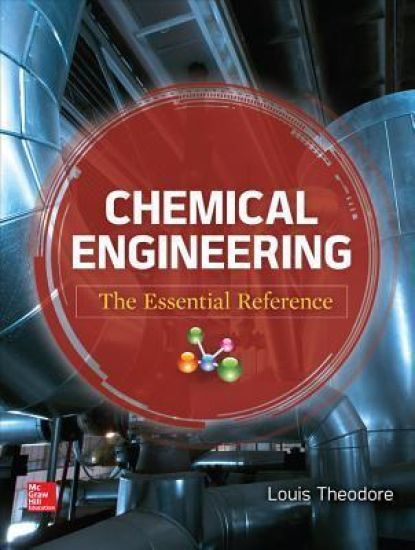
Chemical Engineering

Chemical Engineering

Louis Theodore

McGraw-Hill Professional
2013
sidottu
Publisher's Note: Products purchased from Third Party sellers are not guaranteed by the publisher for quality, authenticity, or access to any online entitlements included with the product.A practical, concise guide to chemical engineering principles and applicationsChemical Engineering: The Essential Reference is the condensed but authoritative chemical engineering reference, boiled down to principles and hands-on skills needed to solve real-world problems. Emphasizing a pragmatic approach, the book delivers critical content in a convenient format and presents on-the-job topics of importance to the chemical engineer of tomorrow—OM&I (operation, maintenance, and inspection) procedures, nanotechnology, how to purchase equipment, legal considerations, the need for a second language and for oral and written communication skills, and ABET (Accreditation Board for Engineering and Technology) topics for practicing engineers. This is an indispensable resource for anyone working as a chemical engineer or planning to enter the field. Praise for Chemical Engineering: The Essential Reference:“Current and relevant...over a dozen topics not normally addressed...invaluable to my work as a consultant and educator.” —Kumar Ganesan, Professor and Department Head, Department of Environmental Engineering,Montana Tech of the University of Montana“A much-needed and unique book, tough not to like...loaded with numerous illustrative examples...a book that looks to the future and, for that reason alone, will be of great interest to practicing engineers.” —Anthony Buonicore, Principal, Buonicore PartnersCoverage includes: Basic calculations and key tablesProcess variablesNumerical methods and optimizationOral and written communicationSecond language(s)Chemical engineering processesStoichiometryThermodynamicsFluid flowHeat transferMass transfer operationsMembrane technologyChemical reactorsProcess controlProcess designBiochemical technologyMedical applicationsLegal considerationsPurchasing equipmentOperation, maintenance, and inspection (OM&I) proceduresEnergy managementWater managementNanotechnologyProject managementEnvironment managementHealth, safety, and accident managementProbability and statisticsEconomics and financeEthicsOpen-ended problems
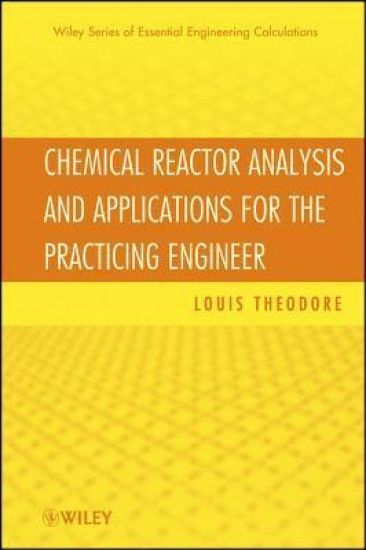
Chemical Reactor Analysis and Applications for the Practicing Engineer
This books format follows an applications-oriented text and serves as a training tool for individuals in education and industry involved directly, or indirectly, with chemical reactors. It addresses both technical and calculational problems in this field. While this text can be complimented with texts on chemical kinetics and/or reactor design, it also stands alone as a self-teaching aid. The first part serves as an introduction to the subject title and contains chapters dealing with history, process variables, basic operations, kinetic principles, and conversion variables. The second part of the book addresses traditional reactor analysis; chapter topics include batch, CSTRs, tubular flow reactors, plus a comparison of these classes of reactors. Part 3 keys on reactor applications that include non-ideal reactors: thermal effects, interpretation of kinetic data, and reactor design. The book concludes with other reactor topics; chapter titles include catalysis, catalytic reactors, other reactions and reactors, and ABET-related topics. An extensive Appendix is also included
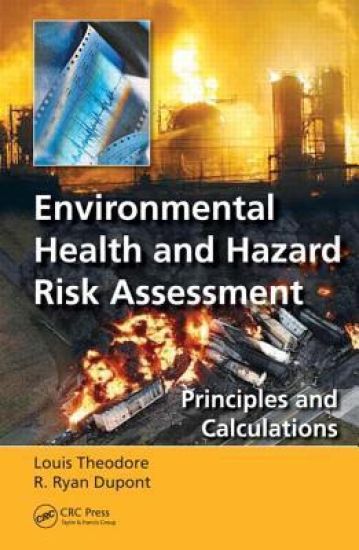
Environmental Health and Hazard Risk Assessment

Environmental Health and Hazard Risk Assessment

Louis Theodore; R. Ryan Dupont

CRC Press Inc
2012
sidottu
Environmental Health and Hazard Risk Assessment: Principles and Calculations explains how to evaluate and apply environmental health and hazard risk assessment calculations in a variety of real-life settings. Using a wealth of examples and case studies, the book helps readers develop both a theoretical understanding and a working knowledge of the principles of health, safety, and accident management. Learn the Fundamentals of Health, Safety, and Accident ManagementThe book takes a pragmatic approach to risk assessment, identifying problems and outlining solutions. Organized into four parts, the text:Presents an overview of the history of environmental health and hazard problems, legal considerations, and emergency planning and responseTackles the broad subject of health risk assessment, discussing toxicology, exposure, and health risk characterizationExamines hazard risk assessment in significant detail—from problem identification, probability, consequence, and characterization of hazards/accidents to the fundamentals of applicable statistics theoryUses case studies to demonstrate the applications and calculations of risk analysis for real systems Incorporate Health and Safety in Process DesignThe book assumes only a basic background in physics, chemistry, and mathematics, making it suitable for students and those new to the field. It is also a valuable reference for practicing engineers, scientists, technicians, technical managers, and others tasked with ensuring that plant and equipment operations meet applicable standards and regulations. A clear and comprehensive resource, this book offers guidance for those who want to reduce or eliminate the environmental health effects and accidents that can result in loss of life, materials, and property.
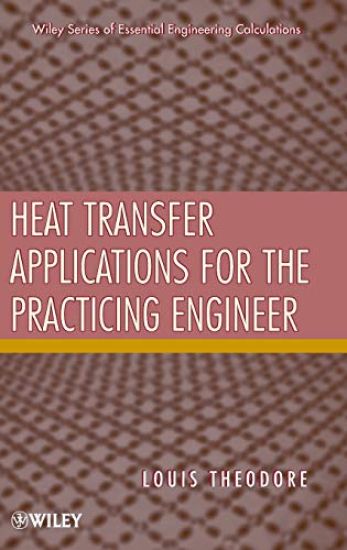
Heat Transfer Applications for the Practicing Engineer
This book serves as a training tool for individuals in industry and academia involved with heat transfer applications. Although the literature is inundated with texts emphasizing theory and theoretical derivations, the goal of this book is to present the subject of heat transfer from a strictly pragmatic point of view. The book is divided into four Parts: Introduction, Principles, Equipment Design Procedures and Applications, and ABET-related Topics. The first Part provides a series of chapters concerned with introductory topics that are required when solving most engineering problems, including those in heat transfer. The second Part of the book is concerned with heat transfer principles. Topics that receive treatment include Steady-state Heat Conduction, Unsteady-state Heat Conduction, Forced Convection, Free Convection, Radiation, Boiling and Condensation, and Cryogenics. Part three (considered the heart of the book) addresses heat transfer equipment design procedures and applications. In addition to providing a detailed treatment of the various types of heat exchangers, this part also examines the impact of entropy calculations on exchanger design, and operation, maintenance and inspection (OM&I), plus refractory and insulation effects. The concluding Part of the text examines ABET (Accreditation Board for Engineering and Technology) related topics of concern, including economies and finance, numerical methods, open-ended problems, ethics, environmental management, and safety and accident management.
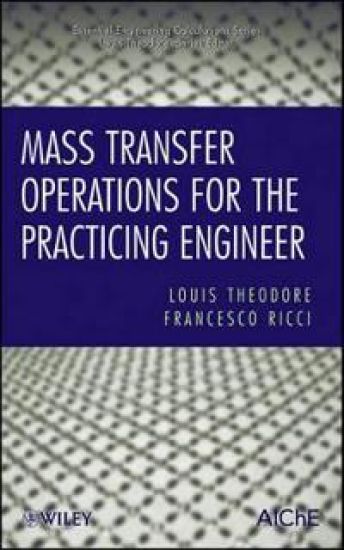
Mass Transfer Operations for the Practicing Engineer

Mass Transfer Operations for the Practicing Engineer

Louis Theodore; Francesco Ricci

John Wiley Sons Inc
2010
sidottu
An invaluable guide for problem solving in mass transfer operations This book takes a highly pragmatic approach to providing the principles and applications of mass transfer operations by offering a valuable, easily accessible guide to solving engineering problems. Both traditional and novel mass transfer processes receive treatment. As with all of the books in this series, emphasis is placed on an example-based approach to illustrating key engineering concepts. The book is divided into two major parts. It starts with the principles underlying engineering problems?showing readers how to apply general engineering principles to the topic of mass transfer operations. It then goes on to provide step-by-step guidance for traditional mass transfer operations, including distillation, absorption and stripping, and adsorption, plus novel mass transfer processes. Essential topics for professional engineering exams are also covered. Geared towards chemical, environmental, civil, and mechanical engineers working on real-world industrial applications, Mass Transfer Operations for the Practicing Engineer features: Numerous sample problems and solutions with real-world applications Clear, precise explanations on how to carry out the basic calculations associated with mass transfer operations Coverage of topics from the ground up for readers without prior knowledge of the subject Overview of topics relevant to the ABET (Accreditation Board for Engineering and Technology) for those taking the Professional Engineering (PE) exams Appendix containing relevant mass transfer operation charts and tables
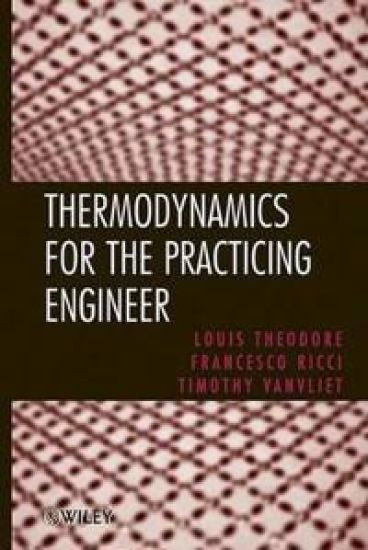
Thermodynamics for the Practicing Engineer

Thermodynamics for the Practicing Engineer

Louis Theodore; Francesco Ricci; Timothy Vanvliet

John Wiley Sons Inc
2009
sidottu
Enables you to easily advance from thermodynamics principles to applications Thermodynamics for the Practicing Engineer, as the title suggests, is written for all practicing engineers and anyone studying to become one. Its focus therefore is on applications of thermodynamics, addressing both technical and pragmatic problems in the field. Readers are provided a solid base in thermodynamics theory; however, the text is mostly dedicated to demonstrating how theory is applied to solve real-world problems. This text's four parts enable readers to easily gain a foundation in basic principles and then learn how to apply them in practice: Part One: Introduction. Sets forth the basic principles of thermodynamics, reviewing such topics as units and dimensions, conservation laws, gas laws, and the second law of thermodynamics. Part Two: Enthalpy Effects. Examines sensible, latent, chemical reaction, and mixing enthalpy effects. Part Three: Equilibrium Thermodynamics. Addresses both principles and calculations for phase, vapor-liquid, and chemical reaction equilibrium. Part Four: Other Topics. Reviews such important issues as economics, numerical methods, open-ended problems, environmental concerns, health and safety management, ethics, and exergy. Throughout the text, detailed illustrative examples demonstrate how all the principles, procedures, and equations are put into practice. Additional practice problems enable readers to solve real-world problems similar to the ones that they will encounter on the job. Readers will gain a solid working knowledge of thermodynamics principles and applications upon successful completion of this text. Moreover, they will be better prepared when approaching/addressing advanced material and more complex problems.
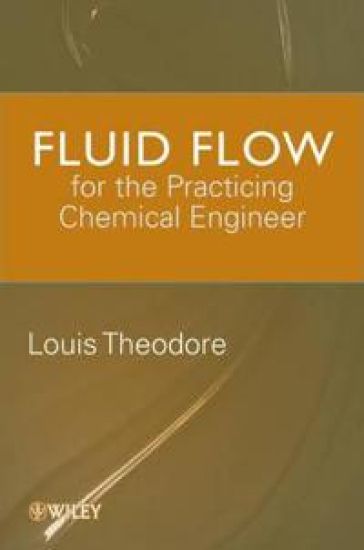
Fluid Flow for the Practicing Chemical Engineer

Fluid Flow for the Practicing Chemical Engineer

James Patrick Abulencia; Louis Theodore

John Wiley Sons Inc
2009
sidottu
This book teaches the fundamentals of fluid flow by including both theory and the applications of fluid flow in chemical engineering. It puts fluid flow in the context of other transport phenomena such as mass transfer and heat transfer, while covering the basics, from elementary flow mechanics to the law of conservation. The book then examines the applications of fluid flow, from laminar flow to filtration and ventilization. It closes with a discussion of special topics related to fluid flow, including environmental concerns and the economic reality of fluid flow applications.
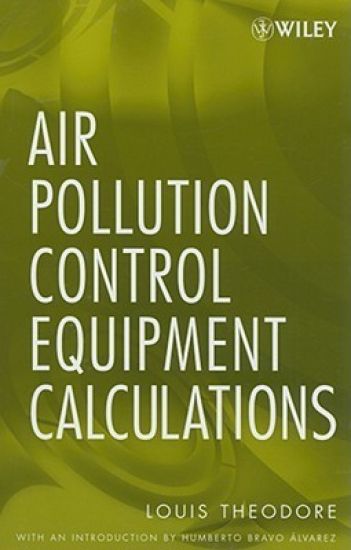
Air Pollution Control Equipment Calculations

Air Pollution Control Equipment Calculations

Louis Theodore

John Wiley Sons Inc
2008
sidottu
Unique problem-and-solution approach for quickly mastering a broad range of calculations This book's problem-and-solution approach enables readers to quickly grasp the fundamentals of air pollution control equipment and essential applications. Moreover, the author sets forth solid principles for the design and selection of air pollution control equipment as well as for its efficient operation and maintenance. Readers gain a deep understanding of both the equipment itself and the many factors affecting performance. Following two introductory chapters, the book dedicates four chapters to examining control equipment for gaseous pollutants, including adsorption, absorption, and incineration equipment. The remaining six chapters deal with equipment for managing airborne particulate pollutants, including gravity settlers, cyclones, electrostatic precipitators, scrubbers, and baghouses. The appendix contains discussions of hybrid systems, the SI system (including conversion constants), and a cost-equipment model. Each chapter offers a short introduction to the control device discussed. Next, progressively more difficult problems with accompanying solutions enable readers to build their knowledge as they advance through the chapter. Problems reflect the most recent developments in pollution control and include a variety of performance equations and operation and maintenance calculations. Each problem includes a statement of the problem, the data used to solve the problem, and a detailed solution. Readers may further hone their skills by visiting the text's Web site for additional problems and solutions. This publication serves both as a textbook for engineering students and as a reference for engineers and technicians who need to ensure that air pollution control equipment operates efficiently and enables their facility to meet all air pollution control standards and regulations.
Environmental Regulatory Calculations Handbook

Environmental Regulatory Calculations Handbook

Leo Stander; Louis Theodore

John Wiley Sons Inc
2008
sidottu
Regulatory Calculations Handbook addresses the environmental concerns of individuals by presenting the basic fundamentals of many environmental regulatory topics. Featuring an overview of the history of environmental problems, the current regulatory framework, and problems/solutions of practical problems in the field, this handbook comprehensively brings the potential calculations and information on regulations into one single-source reference. Provides 500 solved problems, which detail how to calculate the amount of pollutant that a facility is letting go into the environmentIncludes problems and solutions that can stand alone, offering material that develops the reader's understanding of regulatory mattersCombines information that is otherwise spread-out and difficult to consolidate quickly
Probability and Statistics Applications for Environmental Science

Probability and Statistics Applications for Environmental Science

Stacey J Shaefer; Louis Theodore

CRC Press Inc
2007
sidottu
Simple, clear, and to the point, Probability and Statistics Applications for Environmental Science delineates the fundamentals of statistics, imparting a basic understanding of the theory and mechanics of the calculations. User-friendliness, uncomplicated explanations, and coverage of example applications in the environmental field set this book apart from other textbooks on the same subject.Striking a balance between theory and applied mathematics, the material is divided into three parts. Part I sets the stage with coverage of principles and fundamentals, such as set notation, probability distributions, and the estimation of the mean and variance. Part II discusses traditional statistics applications, centering around the uses of probability distributions, including how they relate to reliability and failure theory. The authors elucidate many of the important distributions, Monte Carlo methods, and fault and event trees. Part III delves into what some have come to define as contemporary statistics. It covers hypothesis testing, Student's t and chi-square tests, regression analysis, analysis of variance (ANOVA), and nonparametric tests. The book's coverage is thorough, its presentation logical and geared to student's needs. It includes problems and solutions within the text and tables, a glossary of terms, and an introduction to design of experiments in the appendices. The authors, known for their meticulously accurate, articulate, and practical writing style, master the difficult task of explaining very complicated subject matter in a way that is easily understood. The book features a clear, concise presentation that makes both teaching and learning easier.
Nanotechnology

Nanotechnology

Louis Theodore

John Wiley Sons Inc
2006
sidottu
A practical workbook that bridges the gap between theory and practice in the nanotechnology field Because nanosized particles possess unique properties, nanotechnology is rapidly becoming a major interest in engineering and science. Nanotechnology: Basic Calculations for Engineers and Scientists-a logical follow-up to the author's previous text, Nanotechnology: Environmental Implications and Solutions-presents a practical overview of nanotechnology in a unique workbook format. The author has developed nearly 300 problems that provide a clear understanding of this growing field in four distinct areas of study: * Chemistry fundamentals and principles * Particle technology * Applications * Environmental concerns These problems have been carefully chosen to address the most important basic concepts, issues, and applications within each area, including such topics as patent evaluation, toxicology, particle dynamics, ventilation, risk assessment, and manufacturing. An introduction to quantum mechanics is also included in the Appendix. These stand-alone problems follow an orderly and logical progression designed to develop the reader's technical understanding. "This is certain to become the pacesetter in the field, a text to benefit both students of all technical disciplines and practicing engineers and researchers." -Dr. Howard Beim, Professor of Chemistry, U.S. Merchant Marine Academy "Dr. Theodore has covered most of the important nanotechnology subject matter in this ...work through simple, easy-to-follow problems." -John McKenna, President and CEO, ETS, Inc.
Nanotechnology

Nanotechnology

Louis Theodore; Robert G. Kunz

John Wiley Sons Inc
2005
sidottu
An authoritative, in-depth exploration of the environmental consequences of nanotechnology Nanotechnology is revolutionizing the chemical, telecom, biotech, pharmaceutical, health care, aerospace, and computer industries, among others, and many exciting new nanotech applications are envisioned for the near future. While the rapid pace of innovation has been truly inspiring, much remains to be learned about the potential environmental and health risks posed by this nascent technology and its byproducts. So important is this issue that the ultimate success or failure of nanotechnology may well depend on how effectively science and industry address these concerns in the years ahead. Written by two highly accomplished environmental professionals, Nanotechnology: Environmental Implications and Solutions brings scientists, engineers, and policymakers up to speed on the current state of knowledge in this vitally important area. Professor Theodore and Dr. Kunz provide a concise review of nano-fundamentals and explore background issues surrounding nanotechnology and its environmental impact. They then follow up with in-depth discussions of: * The control, monitoring, and reduction of nanotech byproducts and their impact on the air, water, and land * Health risks associated with nanotechnology, and methods to assess and control them * Nanotech hazard risk assessment-including emergency response planning and personnel training * Multimedia approaches that are available for the analysis of the impact of nanotechnology in the chemical, manufacturing, and waste disposal industries * The future of nanotechnology and the "Industrial Revolution II" * The legal implications of nanotechnology * Societal and ethical implications of nanotechnology-based materials and processing method Assuming only a basic knowledge of physics, chemistry, and mathematics on behalf of its readers, Nanotechnology: Environmental Implications and Solutions makes fascinating and useful reading for engineers, scientists, administrators, environmental regulatory officials, and public policy makers, as well as students in a range of science and engineering disciplines.
Handbook of Environmental Management and Technology

Handbook of Environmental Management and Technology

Gwendolyn Burke; Ben Ramnarine Singh; Louis Theodore

John Wiley Sons Inc
2005
nidottu
Learn how to respond to the complex problems encountered in environmental management Highlighting all aspects of the spectrum of environmental control, this text provides a historical perspective on pollution problems and solutions, and offers an introduction to the specialized literature in this and related areas. It includes: Introduction to the issuesAir pollution management issuesWater pollution management issuesSolid and radioactive waste management issuesHazardous waste management issuesPollution preventionAdditional environmental concerns and management considerationsNew technologies and approachesRisk-related topicsRecent developmentsAppendices
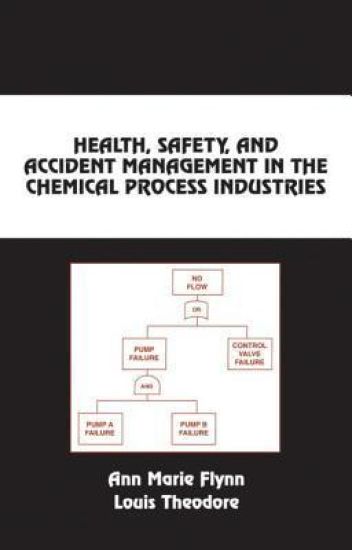
Health, Safety, and Accident Management in the Chemical Process Industries
"Analyzes health and hazard risk assessment in commercial, industrial, and refining industries. Emphasizes legal requirements, emergency planning and response, safety equipment, process implementation, and occupational and environmental protection exposure guidelines. Presents applicatoins and calculations for risk analysis of real systems, as well as numerous end-of-chapter examples and references."
Introduction to Hazardous Waste Incineration

Introduction to Hazardous Waste Incineration

Joseph J. Santoleri; Joseph Reynolds; Louis Theodore

John Wiley Sons Inc
2000
sidottu
Introduction to Hazardous Waste Incineration, Second Edition The control of hazardous wastes is one of today’s most critical environmental issues. Increasing numbers of engineers, technicians, and maintenance personnel are being confronted with problems in this important area. Incineration has become an available and vital option to meet the new challenge of containing hazardous wastes. Introduction to Hazardous Waste Incineration, Second Edition provides a reference work that examines the basic concepts, principles, equipment, and applications pertaining to hazardous waste incineration. Uniquely serving as both an essential guidebook for practicing engineers and a text for engineering students, this new edition contains updated information in the area of standards and regulations, equipment, materials handling equipment, instrumentation, control performance testing, final permit, and facility design. The authors’ aim is to offer the reader the fundamentals of incineration with appropriate practical application to the incineration of wastes, in addition to providing an introduction to the specialized literature in this and related areas. Complete with illustrative examples, this informative Second Edition highlights: *Recent history of standards and regulations, including the recently enacted MACT Standards for hazardous waste combustion *Incineration principles, including stoichiometric calculations, and thermochemical considerations *Equipment that may be found in a waste incineration facility (i.e., incinerator, waste heat boiler, quench systems, and air pollution control equipment) *Design principles and their application to a hazardous waste incineration facility *Practice problems at the end of each technical chapter Introduction to Hazardous Waste Incineration, Second Edition offers chemical and environmental engineers working in the hazardous waste control area, as well as technicians and maintenance professionals, the necessary literature to cope with some of the complex problems encountered in waste incineration today.
Environmental Management

Environmental Management

Louis Theodore; R. Ryan Dupont; Terry E. Baxter

CRC Press Inc
1998
sidottu
There is a growing need to support undergraduate educators in the development of environmental management educational materials. Recognizing this need, the National Science Foundation funded a College Faculty Workshop on Environmental Management, that was conducted at Utah State University in July and August 1996. The principle objectives of the seminar were (1) to provide a meaningful course which would generate new ideas and innovative educational approaches in the emerging field of environmental management, and (2) to develop an applications-oriented problem workbook which would support undergraduate faculty involvement in the production of course materials. The result of this effort is Environmental Management: Problems and Solutions, an informative text on the essentials of environmental management. More than 200 structured problems presented in the book are meant to elicit a sound understanding of the basics of environmental monitoring, assessment and control. Detailed solutions to each problem, provided with each chapter, will prove useful to both the student and the instructor. This innovative text is a valuable resource for anyone involved in training of engineers and scientists in the field of environmental engineering.
Rapid Guide to Hazardous Air Pollutants

Rapid Guide to Hazardous Air Pollutants

Howard J. Beim; Jennifer Spero; Louis Theodore

John Wiley Sons Inc
1997
nidottu
Rapid Guide to Hazardous Air Pollutants Howard J. Beim, Jennifer Spero, and Louis Theodore Concise and easy to use, Rapid Guide to Hazardous Air Pollutants brings together a wealth of hard-to-gather information in one compact pocket guide. The Rapid Guide offers—in alphabetical order—detailed profiles of all 189 elements and compounds determined to be hazardous air pollutants by the 1990 Amendments to the Clean Air Act. The profile for each pollutant includes:*fundamental identification data (CAS number, molecular formula, formula weight, synonyms)*uses (primarily in the manufacture of chemicals and as a component in the manufacturing process)*physical properties (such as boiling point, density, vapor pressures, color)*chemical properties (such as air/water reactivity, reactivity with skin or metal, flash point, heat of combustion)*health risks, including toxic exposure guidelines, toxicity data, and acute and chronic risks*hazard risks—the substance’s potential for accidents, fires, explosions, corrosion, and chemical incompatibility*exposure routes tracking the activities, environment, sources, and occupations that tend to lead to exposure*regulatory status, listing the primary laws and citations of regulated chemicals*important additional information on symptoms, first aid, firefighting methods, protective equipment, and safe storageBased on the latest available data, Rapid Guide to Hazardous Air Pollutants is a valuable resource for industrial hygienists, emergency response personnel, health and safety managers, environmental and chemical engineers, scientists, chemical manufacturers, and students in environmental programs. Whatever the questions are regarding the handling, storage, transportation, or regulation of substances that endanger air quality, this Rapid Guide is the first place to turn for answers.
Pollution Prevention

Pollution Prevention

Louis Theodore

Taylor Francis Ltd
1994
nidottu
Engineering and science professionals have studied the management of hazardous and toxic wastes extensively, and it is clear that the principal option of the future will be waste minimization, or pollution prevention. At present, however, few practicing professionals have a working understanding of this approach, educators are just starting to teach course material in this field, and students are only beginning to receive the training necessary to implement pollution prevention in their future work environment. An applications-oriented workbook of more than 100 exercises, Pollution Prevention: Problems and Solutions covers a variety of topics closely relevant to this field. The workbook is the result of a National Science Foundation College Faculty Workshop designed to generate new ideas and innovative educative approaches in the emerging, interdisciplinary field of pollution prevention. Contents include a pollution prevention overview in addition to problems and solutions organized into the categories of basic concepts, pollution prevention principles, regulations, source reduction, recycling, treatment, chemical plant/domestic applications, case studies, and ethics. Readership: Academics and students of undergraduate or graduate courses on waste management, as well as decision makers and practising professionals in the pollution prevention industry.