Kirjojen hintavertailu. Mukana 12 390 323 kirjaa ja 12 kauppaa.

Kirjailija

Loveday Alexander

Kirjat ja teokset yhdessä paikassa: 6 kirjaa, julkaisuja vuosilta 1993-2023, suosituimpien joukossa The People's Bible Commentary: Matthew, Mark, Luke, John, Acts. Vertaile teosten hintoja ja tarkista saatavuus suomalaisista kirjakaupoista.

6 kirjaa

Kirjojen julkaisuhaarukka 1993-2023.

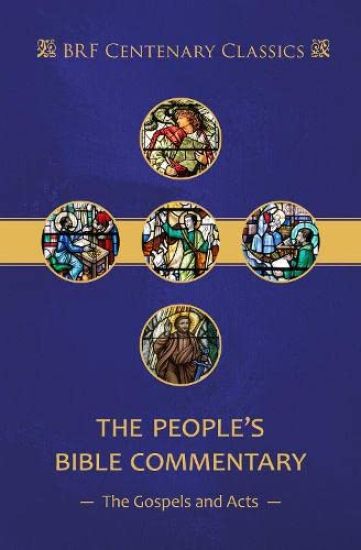
The People's Bible Commentary: Matthew, Mark, Luke, John, Acts

The People's Bible Commentary: Matthew, Mark, Luke, John, Acts

John Proctor; Dick France; Henry Wansbrough; Richard Burridge; Loveday Alexander

BRF (The Bible Reading Fellowship)
2022
tuotepaketti
The People’s Bible Commentary series presents scholarly insights in straightforward terms, aiming to instruct the head but also to warm the heart, and pointing to how the truths received can be applied personally. A special boxed set edition brings together five best-loved titles in the series to mark BRF’s centenary. Matthew's gospel is clear, organised and practical, giving prominence to Jesus' teaching about lifestyle and relationships. Mark’s gospel is the shortest of the four first-century books which share the story of Jesus of Nazareth, and the most vividly told. Luke's gospel stresses how acceptance of Jesus’ message means a complete reversal of worldly standards of success. John's gospel is a sublime masterpiece that has fascinated theologians and mystics for centuries. Acts is the story of the birth of the church and the beginnings of its journey around the world.
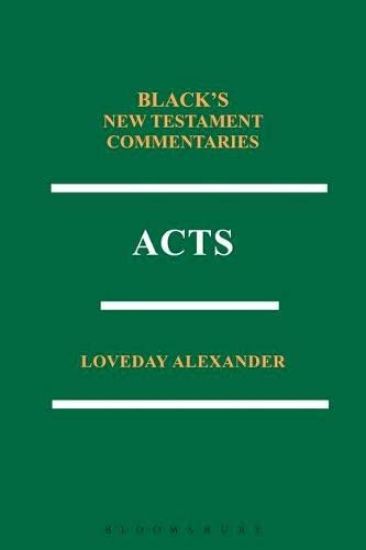
Acts: Black's New Testament Commentaries Series

Acts: Black's New Testament Commentaries Series

Loveday Alexander

Continuum International Publishing Group Ltd.
2023
nidottu
Here at last is the keenly awaited new Commentary on Luke-Acts by Loveday Alexander. In her extended introduction Professor Alexander tackles the key issues head on: who wrote the book of Acts? For whom was it written? When was it written? Where was it written? And, essentially, what is the Book of Acts? Acts is the second part of a two volume work which describes the events after the Ascension of Jesus into heaven. Professor Alexander examines both internal and external evidence for this selective history of the Early Church told from a Christian perspective, while emphasizing that this is the book of Acts of The Holy Spirit and an account of the appearance of God`s salvation in human history. In the course of her detailed and most illuminating commentary, Alexander shows her complete familiarity with contemporary scholarship but also regards this as a commentary to be used not just by ivory-tower scholars but by those whose mission is to teach and preach the Gospel.
Acts: Black's New Testament Commentaries Series

Acts: Black's New Testament Commentaries Series

Loveday Alexander

Bloomsbury Continuum
2023
sidottu
Here at last is the keenly awaited new Commentary on Luke-Acts by Loveday Alexander. In her extended introduction Professor Alexander tackles the key issues head on: who wrote the book of Acts? For whom was it written? When was it written? Where was it written? And, essentially, what is the Book of Acts? Acts is the second part of a two volume work which describes the events after the Ascension of Jesus into heaven. Professor Alexander examines both internal and external evidence for this selective history of the Early Church told from a Christian perspective, while emphasizing that this is the book of Acts of The Holy Spirit and an account of the appearance of God`s salvation in human history. In the course of her detailed and most illuminating commentary, Alexander shows her complete familiarity with contemporary scholarship but also regards this as a commentary to be used not just by ivory-tower scholars but by those whose mission is to teach and preach the Gospel.
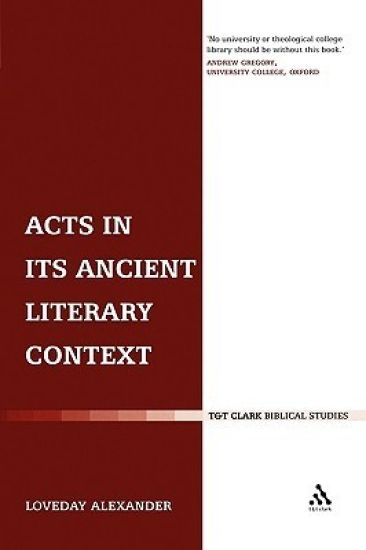
Acts in its Ancient Literary Context

Acts in its Ancient Literary Context

Loveday Alexander

T. T.Clark Ltd
2007
nidottu
Here, gathered for the first time, is a collection of Loveday Alexander's critically acclaimed essays on the "Acts of the Apostles". In this collection of essays, Alexander addresses the central question 'What kind of book is "Acts"?' She approaches the text of "Acts" with a finely-tuned sense of the complexities of the conventional codes that governed reading and writing in the classical world, and argues that the differences between New Testament texts and contemporary writings in the Graeco-Roman world can be as revealing as the similarities. The collection begins with Alexander's classic analysis of the literary codes governing the preface to Luke's two-volume work, in which she challenges the dominant consensus that the language and structure of the preface evoke the generic conventions of Greek historiography. That insight opens up the possibility of reading "Acts" alongside other ancient literary genres: the lives of the Greek philosophers, the Greek novels of Chariton and Xenophon of Ephesus, Roman itineraries, Greek and Jewish apologetic, and Latin epic. The process, like the narrative of "Acts" itself, becomes a rich and evocative voyage of exploration, shedding light both on the varied social worlds of the author and his first readers, and on the complex communication problems underlying the creation of early Christian discourse.
The Preface to Luke's Gospel

The Preface to Luke's Gospel

Loveday Alexander

Cambridge University Press
2005
pokkari
Luke's two-volume work begins with a formal preface unlike anything else in the New Testament, and it has long been academic orthodoxy that Luke's choice of style, vocabulary, and content in this short passage reveal a desire to present his work to contemporary readers as 'History' in the great tradition of Thucydides and Polybius. This study challenges that assumption: far from aping the classical historians, Dr Alexander argues, Luke was simply introducing his book in a style that would have been familiar to readers of the scientific and technical manuals which proliferated in the hellenistic world. The book contains a detailed study of these Greek 'scientific' prefaces as well as a word-by-word commentary on the Lucan texts. In her concluding chapters, Alexander seeks to explore the consequences of this alignment both for the literary genre of Luke-Acts (is it meant to be read as 'history'?) and for the social background of the author and the book's first readers.