
Kirjailija
Lu Hsun
Kirjat ja teokset yhdessä paikassa: 9 kirjaa, julkaisuja vuosilta 1970-2025, suosituimpien joukossa Chosen Pages from Lu Hsun: The Literary Mentor of the Chinese Revolution. Vertaile teosten hintoja ja tarkista saatavuus suomalaisista kirjakaupoista.
Mukana myös kirjoitusasut: Lu Hsün
9 kirjaa
Kirjojen julkaisuhaarukka 1970-2025.
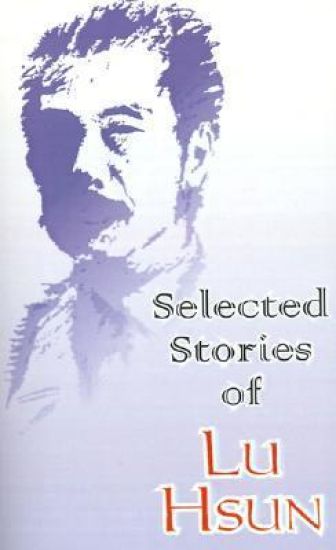
The eighteen stories collected in this volume showcase the simple eloquence of a spectacular literary talent. Lu Hsun practically invented modern Chinese literature when he exploded on the literary scene in 1918 with the now famous short story "A Madman's Diary" which he wrote in the vernacular-an astonishingly bold choice at the time. Originally intent on studying medicine, he turned to literature as a way of healing what he perceived as China's spiritual ills. While his stories are concerned with social and political matters of his day, his insights into human nature and society are timeless, as is the charismatic appeal of his direct, clear writing style, wry humor, and courage. "The True Story of Ah Q," the longest tale in this collection, is considered a masterpiece of Chinese literature and a towering feat of sardonic wit and biting parody. This Warbler Classics edition relies upon the faithful English translation by Yang Hsien-yi and Gladys Yang and includes a richly researched biographical essay on the life and work of Lu Hsun.

Chosen Pages from Lu Hsun: The Literary Mentor of the Chinese Revolution
Lu Hsun
Literary Licensing, LLC
2013
nidottu
A collection of English translations of major stories of the Chinese author Lu Xun.When I was young I, too, had many dreams. Most of them came to be forgotten, but I see nothing in this to regret. For although recalling the past may make you happy, it may sometimes also make you lonely, and there is no point in clinging in spirit to lonely bygone days. However, my trouble is that I cannot forget completely, and these stories have resulted from what I have been unable to erase from my memory.
"When I was young I, too, had many dreams. Most of them came to be forgotten, but I see nothing in this to regret. For although recalling the past may make you happy, it may sometimes also make you lonely, and there is no point in clinging in spirit to lonely bygone days. However, my trouble is that I cannot forget completely, and these stories have resulted from what I have been unable to erase from memory."—Lu Hsun Living during a time of dramatic change in China, Lu Hsun had a career that was as varied as his writing. As a young man he studied medicine in Japan but left it for the life of an activist intellectual, eventually returning to China to teach. Though he supported the aims of the Communist revolution, he did not become a member of the party nor did he live to see the Communists take control of China. Ambitious to reach a large Chinese audience, Lu Hsun wrote his first published story, "A Madman's Diary," in the vernacular, a pioneering move in Chinese literature at the time. "The True Story of Ah Q," a biting portrait of feudal China, gained him popularity in the West. This collection of eighteen stories shows the variety of his style and subjects throughout his career. In a new introduction, Ha Jin, the author of Waiting (National Book Award winner), The Bridegroom, and other works, places Lu Hsun's life and work in the context of Chinese history and literature.
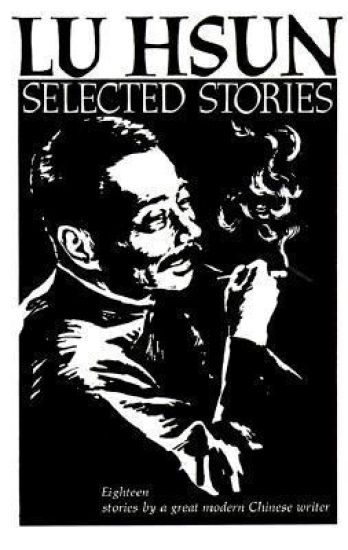
Lu Hsun (1881-1936), chief commander of China's modern cultural revolution, was not only a great thinker and political commentator but the founder of modern Chinese literature. As early as in the May 1918 issue of the magazine New Youth, Lu Hsun published one of his best stories, A Madman's Diary. This was his "declaration of war" against China's feudal society, and the first short story in the history of modern Chinese literature. Thereafter he followed up with a succession of stories such as The True Story of Ah Q and The New Year's Sacrifice, which cut through and sharply attacked stark reality in the dark old society. These stories were later included in the three volumes Call to Arms, Wandering and Old Tales Retold, and have become treasures in the Chinese people's literary heritage. In his early life Lu Hsun was a revolutionary democrat, who later matured into a communist. His earlier works were mainly stories, 18 of the more important of which, plus the preface to Call to Arms, his first short story collection, have been selected for this book. The stories show clearly his method in this period of creative writing, thoroughgoing critical realism, a method closely related to the outright anti-imperialist and anti-feudal views which he formed in his early days. In his preface to Call to Arms, the author tells his motive in choosing literature as a weapon of struggle. This will give readers a deeper understanding of Lu Hsun's stories.
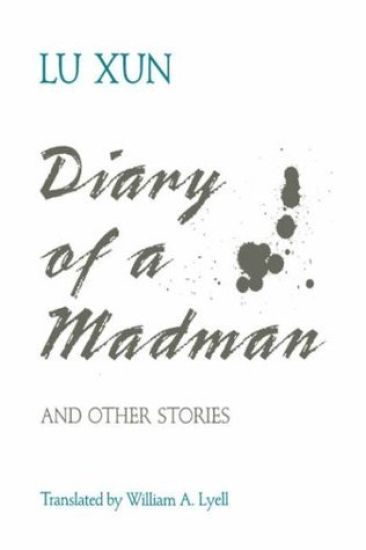
Here at last is an accurate and enjoyable rendering of Lu Xun's fiction in an American English idiom that masterfully captures the sardonic wit, melancholy pathos, and ironic vision of China's first truly modern writer. -Michael S. Duke, University of British Columbia The inventor of the modern Chinese short story, Lu Xun is universally regarded as twentieth century China's greatest writer. This long awaited volume presents new translations of all Lu Xun's stories, including his first, "Remembrances of the Past," written in classical Chinese. These new renderings faithfully convey both the brilliant style and the pungent expression for which Lu Xun is famous. Also included are a substantial introduction by the translator and sufficient annotation to make the stories fully accessible, enabling readers approaching Lu Xun for the first time to appreciate why these stories occupy a permanent place not only in Chinese literature but in world literature as well.
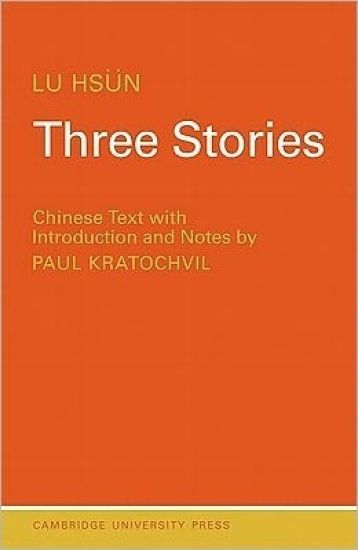
An advanced reader in modern Chinese, giving a text in a modern written Chinese, reproduced photographically from an original Chinese edition, together with an introduction, bibliography and notes on difficult points of language and allusions to the cultural and historical context. Lu Hsün (1881–1936) was important both politically and from the literary standpoint. He crystallized in his writings the vague aspirations of the generation of progressive young Chinese in the first cultural revolution of the 1920s; and he was a pioneers in the formulation of a new literary style which broke away from the sacrosanct formulae of classical Chinese. This reader gives three of his short stories. Mr Kratochvil's English introduction comments generally on the difficulties facing Chinese writers who wished to find a style related more closely to spoken Chinese, and then considers the three stories here reproduced.