
![Luxun Essay Collection (Vol. 2 of 3): Hot Wind [Classic New Edition]](/covers/9789863529781.jpg)
Kirjailija
Lu Xun
Kirjat ja teokset yhdessä paikassa: 17 kirjaa, julkaisuja vuosilta 1987-2024, suosituimpien joukossa Lu Xun Kong Yiji und Das Neujahrsopfer ??«???-??». Vertaile teosten hintoja ja tarkista saatavuus suomalaisista kirjakaupoista.
17 kirjaa
Kirjojen julkaisuhaarukka 1987-2024.

In the prose Mr. Fujino, the great Chinese writer Lu Xun recalls his Japanese teacher Genkuro Fujino. When the author came to Japan in 1902, China was still an empire (Qing dynasty), and Japan was considered to be progressive for many young Chinese. His medical studies coincide with the Russo-Japanese war (1904/1905). Japan's victory encouraged the rise of nationalism, and in 1937 Japan entered another war with China and then continued into the Second World War. It was in this politically heated situation that the student Lu Xun and his teacher met. Two decades later, with this prose, the pupil created a literary monument to the esteemed teacher. * * * * *The books in the collection Read Chinese with Ms. Su« are aimed at advanced Chinese learners who are in the process of reading longer texts on their own.The text Mr. Fujino (Series I) has approx. 3000 characters, which are initially reproduced in the book in large font size and with pinyin. The word boundaries, which are normally omitted in a Chinese text, are indicated. Below the text line you will find explanations on word meaning, grammar, etc.; at the right margin of the page you will find a summary of the paragraph. On the left pages of the book, the same text is printed in traditional Chinese characters, so that those who have learned simplified Chinese will quickly be able to understand the traditional characters with a little practice and vice versa. At the end of the book, the texts are reproduced in normal print, i. e. in smaller font size, without any other information, as they would be found in a book from mainland China or Taiwan.
The books in the collection Read Chinese with Ms. Su« are aimed at advanced Chinese learners who are in the process of reading longer texts on their own.In the autobiographical narrative Hometown, the great Chinese writer Lu Xun created two literary figures, namely the farmer's son Runtu and the "Tofu Beauty" Madame Yang, which belong to the Chinese cultural memory.The first-person narrator visits his hometown to dissolve the household of his now impoverished family. He was in a sad mood, partly because the homeland he had left more than twenty years ago was no longer that of his childhood. His friend Runtu, the radiant hero of his childhood, who now addressed him with "my master," suffered from hunger and the turmoil of war. Nevertheless, there should be hope. At least that is what the first-person narrator wishes for at the end of his journey.Hometown is a particularly lovingly told story of Lu Xun. The style is unusually gentle for this sharp-tongued critic, and the construction of the sentences more simple und fluid. This is typical of Lu Xun when he writes about the landscape and the people of his homeland. ***************************The text Hometown has approx. 5000 characters, which are initially reproduced in the book in large font size and with pinyin. The word boundaries, which are normally omitted in a Chinese text, are indicated. Below the text line you will find explanations on word meaning, grammar, etc.; at the right margin of the page you will find a summary of the paragraph. On the left pages of the book, the same text is printed in traditional Chinese characters, so that those who have learned simplified Chinese will quickly be able to understand the traditional characters with a little practice and vice versa. At the end of the book, the texts are reproduced in normal print, i. e. in smaller font size, without any other information, as they would be found in a book from mainland China or Taiwan.
Lu Xun Kong Yiji und Das Neujahrsopfer ??«???-??»
Lu Xun; Xiaoqin Dr Su
Rudi Publishing House
2018
pokkari
Der gro e chinesische Schriftsteller Lu Xun (1881-1936) erinnert sich in der Prosa Herr Fujino, der erstmals 1926 ver ffentlicht wurde, an seinen japanischen Lehrer Genkuro Fujino, bei dem der Autor ein Jahr Medizin studiert hatte. Sein Studium der Medizin f llt zeitlich mit dem russisch-japanischen Krieg (Februar 1904 bis Herbst 1905) zusammen. Der Sieg Japans feuerte den aufkommenden Nationalismus an, dass Japan schlie lich in den Krieg mit China and dann in den Zweiten Weltkrieg eintrat. In dieser politischen aufgeheizten Situation begegneten sich der Student Lu Xun und sein Lehrer. Zwei Jahrzehnte sp ter setzt der Sch ler mit dieser Prosa dem gesch tzten Lehrer ein literarisches Denkmal. Als der Autor starb, ver ffentlicht der Lehrer wenige Monate vor dem Ausbruch des zweiten sino-japanischen Kriegs einen Nachruf, der nicht weniger interessant ist. Er wirft ein menschlich-sympathisches Licht auf diesen Schriftsteller, der sp ter von der Volksrepublik China auf den Thron eines Ideologie-Vork mpfers« gesetzt wurde. Lu Xun galt als ein Linker, ist aber nicht in die Kommunistische Partei eingetreten. Der Nachruf des Lehrers ist ebenfalls im Buch abgedruckt. Je besser man eine Fremdsprache beherrscht, desto schwieriger wird es, entsprechende Lehrb cher zu bekommen. Gerade bei Chinesisch rei t die Versorgung bei Stufe B2 ab. F r fortgeschrittene Lerner, die selbst ndig Texte erarbeiten wollen und eine geeignete Hilfestellung suchen, gibt es die Sammlung Chinesisch Lesen mit Frau Dr. Su. Hier finden alle, die die Stufe B2/C1 oder HSK 6 erreicht haben, die M glichkeit, allein oder in der Gruppe Texte zu erarbeiten und sich selbst ndig in chinesischen Texten zu bewegen. Eine rein chinesisches W rterbuch ist dabei hilfreich. Die Sammlung ist in drei Reihen gegliedert. Lu Xuns Prosa Herr Fujino ist in der ersten Reihe aufgenommen, in der der Text zun chst in gro er Schriftgr e und mit Pinyin wiedergegeben werden. Die in einem chinesischen Text sonst fehlenden Wortgrenzen werden angedeutet. Unterhalb der Textzeile stehen Erl uterungen zu Wortbedeutung, Grammatik etc., am rechten Rand der Seite u.a. eine Inhaltsangabe des Absatzes. Auf den linken Seiten des Buches wird der Text in traditioneller Schriftzeichen gedruckt. Am Ende des Buchs werden die Texte dann in Normaldruck in kleinerer Schriftgr e und ohne sonstige Angaben abgebildet. Der Text Herr Fujino hat ber 3.000 Schriftzeichen.

Der gro e chinesische Schriftsteller Lu Xun (1881-1936) schuf in der autobiografischen Erz hlung Die Heimat zwei literarische Figuren - der Jugendfreund des Ich-Erz hlers Runtu und die "Tofu-Sch nheit" Madame Yang, die zum kulturellen Ged chtnis der Chinesen geh ren. Es sind Menschen aus dem einfachen Volk, genauer, aus dem Kulturkreis S dost-Chinas, aus dem der Autor stammt. In Die Heimat besucht der Ich-Erz hler seine Heimat, um den Haushalt seiner inzwischen verarmten Familie aufzul sen. Er war in trauriger Stimmung, auch weil die Heimat, die er vor ber zwanzig Jahren verlassen hatte, nicht mehr die seiner Kindheit war. Auch sein Jugendfreund Runtu, ein Bauernsohn, der strahlende Held seiner Kindheit, der den Ich-Erz hler nun mit "mein Herr" anredete, litt unter Hunger und Kriegswirren. Dennoch sollte es Hoffnung geben. Zumindest w nscht sich das der Ich-Erz hler am Ende seiner Reise. Die Heimat ist eine besonders liebevoll erz hlte Geschichte Lu Xuns. Das ist typisch f r ihn, wenn er ber die Landschaft und die Menschen seiner Heimat schreibt. Je besser man eine Fremdsprache beherrscht, desto schwieriger wird es, entsprechende Lehrb cher zu bekommen. Gerade bei Chinesisch rei t die Versorgung bei Stufe B2 ab. F r fortgeschrittene Lerner, die selbst ndig Texte erarbeiten wollen und eine geeignete Hilfestellung suchen, gibt es die Sammlung Chinesisch Lesen mit Frau Dr. Su. Hier finden alle, die die Stufe B2/C1 oder HSK 6 erreicht haben, die M glichkeit, allein oder in der Gruppe Texte zu erarbeiten und sich selbst ndig in chinesischen Texten zu bewegen. Eine rein chinesisches W rterbuch ist dabei hilfreich. Die Sammlung ist in drei Reihen gegliedert. Lu Xuns Die Heimat ist in der ersten Reihe aufgenommen, in der der Text zun chst in gro er Schriftgr e und mit Pinyin wiedergegeben werden. Die in einem chinesischen Text sonst fehlenden Wortgrenzen werden angedeutet. Unterhalb der Textzeile stehen Erl uterungen zu Wortbedeutung, Grammatik etc., am rechten Rand der Seite u.a. eine Inhaltsangabe des Absatzes. Auf den linken Seiten des Buches wird der Text in traditioneller Schriftzeichen gedruckt. Am Ende des Buchs werden die Texte dann in Normaldruck in kleinerer Schriftgr e und ohne sonstige Angaben abgebildet. Der Text Die Heimat hat ca. 5.000 Schriftzeichen.
The revolutionary writer and literary critic Lu Xun (Zhou Shuren, 1881–1936) is celebrated at home and abroad as one of the most groundbreaking and influential writers of modern China. A first-hand witness to China's social and political upheaval in the first half of the 20th century, he is remembered not only for his astute polemical essays and political articles but also for the short stories which explore the effects of contemporary social and cultural issues on the Chinese psyche.The stories in this collection are based on the 1955 compilation Lu Xun Xiao Shuo Ji, originally published in two collections, Call to Arms (1923) and At the Crossroads (1926). The ten stories included are: "Kuang ren riji" (A Madman's Diary), "Kong Yi Ji" (Kong Yiji), "Yao" (Medicine), "Mingtian" (Tomorrow), "Yi jian xiao shi" (An Incident), "Toufa de gushi" (A Story of Hair), "Fengbo" (Storm in a Teacup), "Guxiang" (My Old Home), "Zhufu" (New Year Sacrifice), and "Zai jiulou shang" (In the Restaurant).Targeted specifically for students of Chinese, the book is conveniently organized with the original Chinese text on the left-hand page and supplementary English explanations and Romanized spelling (pinyin) of difficult vocabulary, idiomatic expressions, and other phrases on the right (with more than 2,500 total). While literary and cultural treasures in themselves, Lu Xun's works have been largely inaccessible to students of Chinese, who often find themselves forced to constantly consult a dictionary while frequently missing important nuances in the text. This edition aims to eliminate such tedious and inefficient approaches to Lu Xun, while allowing students to appreciate these wonderful stories in the original Chinese.

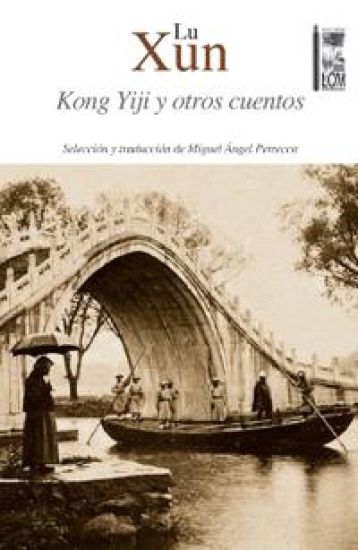

A Madman's Diary: Bilingual Edition, English and Chinese
Lu Xun
Createspace Independent Publishing Platform
2016
nidottu

A Madman's Diary: English and Chinese Bilingual Edition
Lu Xun
Createspace Independent Publishing Platform
2014
nidottu
This English and Chinese bilingual edition of a "A Madman's Diary" was first published in 1918 by Lu Xun, one of the greatest writers in 20th-century Chinese literature. This short story is one of the first and most influential modern works written in vernacular Chinese and would become a cornerstone of the New Culture Movement. The story was often referred to as "China's first modern short story". This book is selected as one of The 100 Best Books of All Time. The diary form was inspired by Nikolai Gogol's short story "Diary of a Madman, " as was the idea of the madman who sees reality more clearly than those around him. The "madman" sees "cannibalism" both in his family and the village around him, and he then finds cannibalism in the Confucian classics which had long been credited with a humanistic concern for the mutual obligations of society, and thus for the superiority of Confucian civilization. The story was read as an ironic attack on traditional Chinese culture and a call for a New Culture.

Capturing Chinese Stories: Prose and Poems by Revolutionary Chinese Authors
Lu Xun
Capturing Chinese Publications LLC
2011
nidottu

Lu Xun, the father of modern Chinese literature, is an essential read for the intermediate and advanced student of Chinese. A New Year's Sacrifice is one of Lu Xun's best works from his second collection of short stories, Wondering.Due to its complex writing system, Chinese is one of the most difficult languages in the world. Full literacy of Chinese requires a working knowledge of three to four thousand Chinese characters and breaking into reading Chinese literature is a daunting task. Capturing Chinese: Lu Xun's A New Year's Sacrifice presents one of the best works of modern Chinese literature as a comprehensive tool to help students of Chinese read Chinese literature in its original form.Footnotes highlight the more difficult vocabulary and pinyin is provided for the entire text. There is no need to constantly consult a dictionary or to look up difficult characters by radical. Historical events, people, and places are explained throughout and illustrations recreate the scenes. The text used in this book is in simplified characters. An English translation of the story is included and helps readers gain a full understanding of the story. * Full story unabridged in simplified Chinese * Pinyin for the entire text * Definitions for difficult vocabulary * Historical explanations and summaries * English translation * Illustrations throughout * Free MP3s read by two native speakersFree audio files of Lu Xun's A New Year's Sacrifice are also included with the purchase of this book and are available for download from the publisher's website, www.CapturingChinese.com. The audio files include both a woman and male speaker.

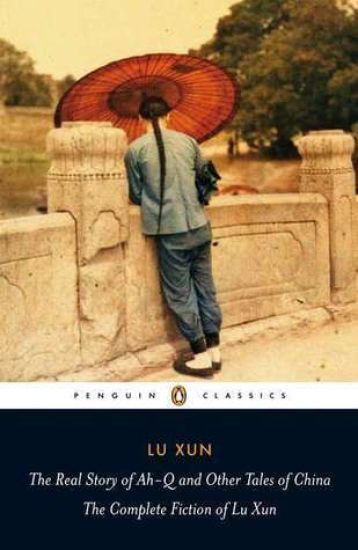
Lu Xun (Lu Hsun) is arguably the greatest writer of modern China, and is considered by many to be the founder of modern Chinese literature. Lu Xun's stories both indict outdated Chinese traditions and embrace China's cultural richness and individuality. This volume presents brand-new translations by Julia Lovell of all of Lu Xun's stories, including 'The Real Story of Ah-Q', 'Diary of a Madman', 'A Comedy of Ducks', 'The Divorce' and 'A Public Example', among others. With an afterword by Yiyun Li.
