Kirjojen hintavertailu. Mukana 12 595 353 kirjaa ja 12 kauppaa.

Kirjailija

Luca Anceschi

Kirjat ja teokset yhdessä paikassa: 5 kirjaa, julkaisuja vuosilta 2008-2026, suosituimpien joukossa Pandemic Politics in Central Asia. Vertaile teosten hintoja ja tarkista saatavuus suomalaisista kirjakaupoista.

5 kirjaa

Kirjojen julkaisuhaarukka 2008-2026.

Pandemic Politics in Central Asia

Pandemic Politics in Central Asia

Luca Anceschi

Pallas Publications
2026
sidottu
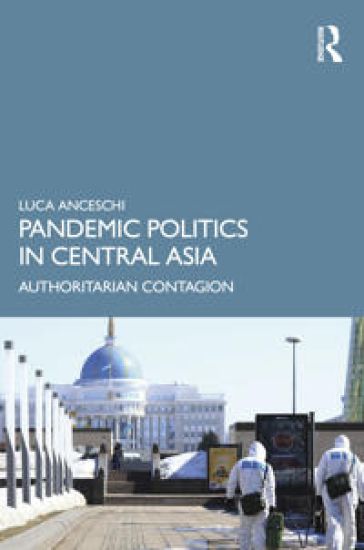
This book examines how the authoritarian regimes of Kazakhstan, Turkmenistan, and Uzbekistan exploited the Covid-19 pandemic to consolidate their political control over Central Asia. Through restrictive policies and strategic manipulation, these governments reshaped the region’s politics and societies during 2020–2022. This volume offers readers an insight into three key areas where Central Asia’s pandemic power grab was most visible: mobility control, whereby restrictive legislation limited freedom of movement and suppressed dissent; authoritarian information flows, whereby Covid-related measures aligned media and digital information to government messaging, further curtailing freedom of expression; and the international politics of the pandemic, whereby the regimes capitalized on global instability to strengthen their kleptocratic hold over Central Asia’s politics and society. This book provides a detailed analysis of these strategies, offering a compelling exploration of how crises can be used to entrench authoritarianism. It is ideal for scholars, students, and professionals in political science, international relations, and Central Asian Studies. The book is also valuable to readers interested in understanding the intersection between public health crises and authoritarian governance.
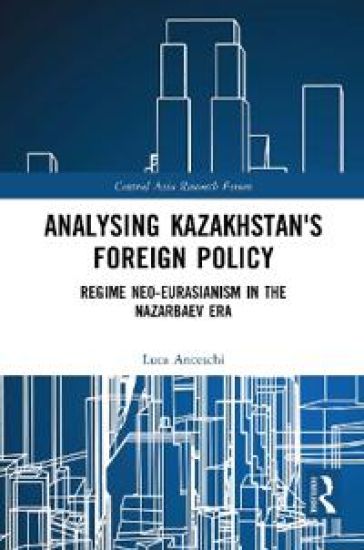
Analysing Kazakhstan's Foreign Policy

Analysing Kazakhstan's Foreign Policy

Luca Anceschi

TAYLOR FRANCIS LTD
2022
nidottu
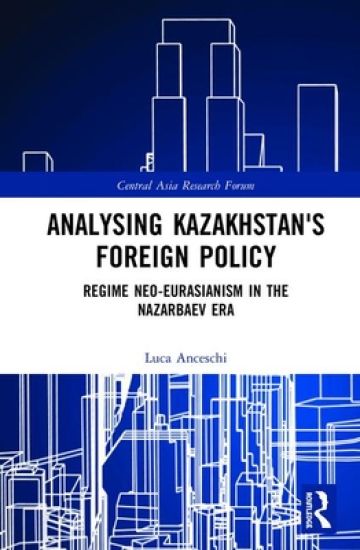
This book investigates the roles that ideas and constructs associated with Eurasia have played in the making of Kazakhstan’s foreign policy during the Nazarbaev era. This book delves into the specific Eurasia-centric narratives through which the regime, headed by Nursultan Nazarbaev, imagined the role of post-Soviet Kazakhstan in the wider Eurasian geopolitical space. Based on substantive fieldwork and sustained engagement with primary sources, the book unveils the power implications of Kazakhstani neo-Eurasianism, arguing that the strengthening of the regime’s domestic power ranked highly in the list of objectives pursued by Kazakhstani foreign policy between the collapse of the Soviet Union and Nazarbaev’s apparent withdrawal from the Kazakhstani political scene (19 March 2019). This book, ultimately, is a study of inter-state integration, which makes use of a rigorous methodological approach to assess different incarnations of post-Soviet multilateralism, from the Commonwealth of Independent States to the more recent, and highly controversial, Eurasian Economic Union.This book offers a ground-breaking analysis of Kazakhstani foreign policy in the Nazarbaev era. It will be of interest to students and scholars of Central Asian Politics, International Relations and Security Studies.
Analysing Kazakhstan's Foreign Policy
This book investigates the roles that ideas and constructs associated with Eurasia have played in the making of Kazakhstan’s foreign policy during the Nazarbaev era. This book delves into the specific Eurasia-centric narratives through which the regime, headed by Nursultan Nazarbaev, imagined the role of post-Soviet Kazakhstan in the wider Eurasian geopolitical space. Based on substantive fieldwork and sustained engagement with primary sources, the book unveils the power implications of Kazakhstani neo-Eurasianism, arguing that the strengthening of the regime’s domestic power ranked highly in the list of objectives pursued by Kazakhstani foreign policy between the collapse of the Soviet Union and Nazarbaev’s apparent withdrawal from the Kazakhstani political scene (19 March 2019). This book, ultimately, is a study of inter-state integration, which makes use of a rigorous methodological approach to assess different incarnations of post-Soviet multilateralism, from the Commonwealth of Independent States to the more recent, and highly controversial, Eurasian Economic Union.This book offers a ground-breaking analysis of Kazakhstani foreign policy in the Nazarbaev era. It will be of interest to students and scholars of Central Asian Politics, International Relations and Security Studies.
Turkmenistan’s Foreign Policy

Turkmenistan’s Foreign Policy

Luca Anceschi

Routledge
2015
nidottu
Turkmenistan, an independent nation since 1991, is a strategically important Central Asian state. This book covers the most significant period of the establishment of the Turkmen political regime. At the core of this book is the Doctrine of Positive Neutrality, which, from 1995 onwards, constituted the theoretical backbone for the foreign policy of post-Soviet Turkmenistan. The author analyses the reason and aim of the concept, its significance for and impact on the country’s domestic and foreign relations, its practical implementation and its transformation into a tool of strengthening of absolute personal authority. Furthermore, he establishes whether Positive Neutrality has to be seen as a ‘domestic-oriented’ foreign policy, which has been used by the Turkmen regime to reinforce its internal position. . This is the first book-length and thorough analysis of Turkmenistan’s foreign policy. It furthers our understanding of Turkmenistan, and provides an informed background for the study of its foreign policy. It fills a void in the current literature, and it will constitute an essential reference for most scholars and researcher focusing on contemporary Central Asia, Russian foreign policy, Foreign Policy, International Relations and Comparative Politics.
Turkmenistan’s Foreign Policy

Turkmenistan’s Foreign Policy

Luca Anceschi

Routledge
2008
sidottu
Turkmenistan, an independent nation since 1991, is a strategically important Central Asian state. This book covers the most significant period of the establishment of the Turkmen political regime. At the core of this book is the Doctrine of Positive Neutrality, which, from 1995 onwards, constituted the theoretical backbone for the foreign policy of post-Soviet Turkmenistan. The author analyses the reason and aim of the concept, its significance for and impact on the country’s domestic and foreign relations, its practical implementation and its transformation into a tool of strengthening of absolute personal authority. Furthermore, he establishes whether Positive Neutrality has to be seen as a ‘domestic-oriented’ foreign policy, which has been used by the Turkmen regime to reinforce its internal position. . This is the first book-length and thorough analysis of Turkmenistan’s foreign policy. It furthers our understanding of Turkmenistan, and provides an informed background for the study of its foreign policy. It fills a void in the current literature, and it will constitute an essential reference for most scholars and researcher focusing on contemporary Central Asia, Russian foreign policy, Foreign Policy, International Relations and Comparative Politics.