Kirjojen hintavertailu. Mukana 12 595 353 kirjaa ja 12 kauppaa.

Kirjailija

Luca Tomini

Kirjat ja teokset yhdessä paikassa: 5 kirjaa, julkaisuja vuosilta 2015-2019, suosituimpien joukossa Autocratization in post-Cold War Political Regimes. Vertaile teosten hintoja ja tarkista saatavuus suomalaisista kirjakaupoista.

5 kirjaa

Kirjojen julkaisuhaarukka 2015-2019.

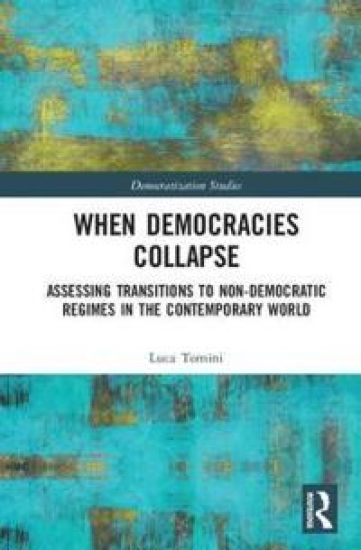
When Democracies Collapse

When Democracies Collapse

Luca Tomini

Routledge
2019
nidottu
While the process of democratization is nowadays an established scholarship, the reverse process of de-democratization has generated less attention even when the regression or even breakdown of democracy occurred on a regular basis over past decades.This book investigates both the different combination of explanatory factors triggering the transition from democratic rule as well as the role of the actors’ involved in the process. It aims to integrate different levels of analysis and explanatory factors through a comparative analysis of the phenomenon since the beginning of the third wave of democratization. As such, it addresses the existing divide between the approaches focused on the conditions and those focused on the processes of change, using a mixed-method research design.This text will be of key interest to scholars and students of comparative politics, democracy, democratization and de-democratization, political theory, and comparative political institutions.
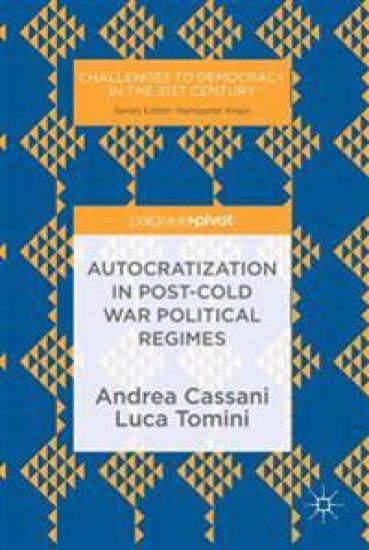
Autocratization in post-Cold War Political Regimes

Autocratization in post-Cold War Political Regimes

Andrea Cassani; Luca Tomini

Springer Nature Switzerland AG
2019
sidottu
This book deals with post-Cold War processes of autocratization, that is, regime change towards autocracy. While these processes are growing in number and frequency, autocratization remains a relatively understudied phenomenon, especially its most recent manifestations. In this volume, the authors offer one of the first cross-regional comparative analyses of the recent processes of regime change towards autocracy. Building on an original conceptual framework, the two authors engage in the empirical investigation of the spreading of this political syndrome, of the main forms that it takes, and of the modes through which it unfolds in countries ruled by different political regimes, with different histories and belonging to different regional contexts. The research is conducted through a mix of research techniques that include descriptive statistical analysis, Qualitative Comparative Analysis and case study. This book will be of interest to a heterogeneous readership that encompasses thebroader community of scholars, analysts, observers, journalists, and practitioners interested in political development and regime change in different geographical areas.
When Democracies Collapse

When Democracies Collapse

Luca Tomini

Routledge
2017
sidottu
While the process of democratization is nowadays an established scholarship, the reverse process of de-democratization has generated less attention even when the regression or even breakdown of democracy occurred on a regular basis over past decades.This book investigates both the different combination of explanatory factors triggering the transition from democratic rule as well as the role of the actors’ involved in the process. It aims to integrate different levels of analysis and explanatory factors through a comparative analysis of the phenomenon since the beginning of the third wave of democratization. As such, it addresses the existing divide between the approaches focused on the conditions and those focused on the processes of change, using a mixed-method research design.This text will be of key interest to scholars and students of comparative politics, democracy, democratization and de-democratization, political theory, and comparative political institutions.
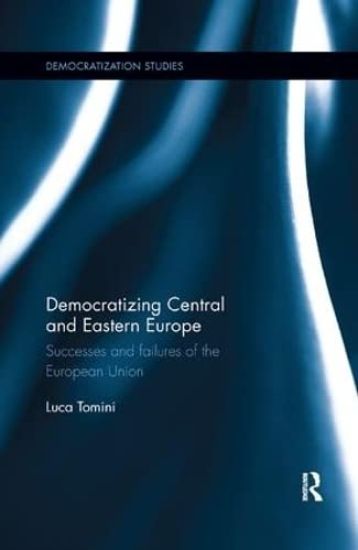
Democratizing Central and Eastern Europe
At first, it was believed that accession to the EU would have a positive effect on the process of democratization in former communist countries. However, over time it became clear that difficulties with the democratic system endured in a number of these countries. This book reconsiders the results of the process of democratization in Central and Eastern Europe and evaluates the nature and effectiveness of the Europeanization process. It comparatively explores the process of democratic consolidation and accession to the European Union in Poland, Slovakia and Bulgaria. Using these case studies, the book assesses the impact of the EU on the accountability and integrity of governments in this part of Europe.This text will be of key interest to scholars and students of democratization studies, European studies, EU studies, transition studies, area studies, and international relations.
Democratizing Central and Eastern Europe
At first, it was believed that accession to the EU would have a positive effect on the process of democratization in former communist countries. However, over time it became clear that difficulties with the democratic system endured in a number of these countries. This book reconsiders the results of the process of democratization in Central and Eastern Europe and evaluates the nature and effectiveness of the Europeanization process. It comparatively explores the process of democratic consolidation and accession to the European Union in Poland, Slovakia and Bulgaria. Using these case studies, the book assesses the impact of the EU on the accountability and integrity of governments in this part of Europe.This text will be of key interest to scholars and students of democratization studies, European studies, EU studies, transition studies, area studies, and international relations.