Kirjojen hintavertailu. Mukana 12 536 534 kirjaa ja 12 kauppaa.

Kirjailija

Luce Irigaray

Kirjat ja teokset yhdessä paikassa: 55 kirjaa, julkaisuja vuosilta 1973-2024, suosituimpien joukossa Je, Tu, Nous. Vertaile teosten hintoja ja tarkista saatavuus suomalaisista kirjakaupoista.

55 kirjaa

Kirjojen julkaisuhaarukka 1973-2024.

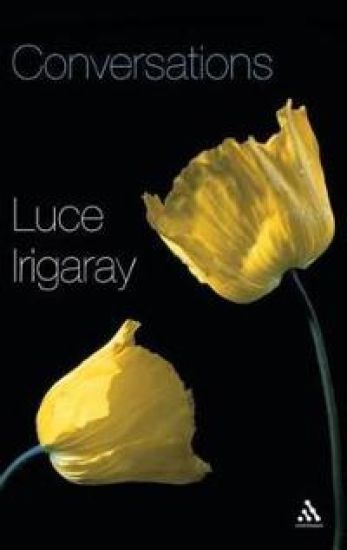
Conversations

Conversations

Luce Irigaray

Continuum International Publishing Group Ltd.
2008
sidottu
This is an important collection of interviews in which Luce Irigaray discusses the full range of her work and ideas with leading academics in the fields of Continental Philosophy, Feminist Theory and Critical Theory.Dialogue is a privileged method in Luce Irigaray's work. Covering all the key topics that have been central to her work in the last thirty years, this book offers an essential insight into Irigaray's career as one of the world's most important contemporary thinkers. The topics and theorists approached include: philosophy, in particular Hegel, Heidegger, Merleau-Ponty and Deleuze; language as information, communication-between and artistic expression; universality and difference; natural and cultural identities; motherhood and gendered subjectivities; cultivation of desire and love; building houses and sharing lives; being two and being in community; the other and others; relational identity and education; globalisation and ethics; politics and human rights; spirituality and religion; practice and culture of Yoga; and, of course, being and becoming woman.Ideal for students seeking an overview of Irigaray's thought, as well as those already familiar with her work, this collection brings together for the first time Irigaray's conversations over the years with the people who have been involved in studying and researching her enormous contribution to Continental Philosophy, Spirituality, Cultural Theory and Feminism.
Conversations

Conversations

Luce Irigaray

Continuum International Publishing Group Ltd.
2008
nidottu
This is an important collection of interviews in which Luce Irigaray discusses the full range of her work and ideas with leading academics in the fields of Continental Philosophy, Feminist Theory and Critical Theory.Dialogue is a privileged method in Luce Irigaray's work. Covering all the key topics that have been central to her work in the last thirty years, this book offers an essential insight into Irigaray's career as one of the world's most important contemporary thinkers. The topics and theorists approached include: philosophy, in particular Hegel, Heidegger, Merleau-Ponty and Deleuze; language as information, communication-between and artistic expression; universality and difference; natural and cultural identities; motherhood and gendered subjectivities; cultivation of desire and love; building houses and sharing lives; being two and being in community; the other and others; relational identity and education; globalisation and ethics; politics and human rights; spirituality and religion; practice and culture of Yoga; and, of course, being and becoming woman.Ideal for students seeking an overview of Irigaray's thought, as well as those already familiar with her work, this collection brings together for the first time Irigaray's conversations over the years with the people who have been involved in studying and researching her enormous contribution to Continental Philosophy, Spirituality, Cultural Theory and Feminism.
Sharing the World

Sharing the World

Luce Irigaray

Continuum International Publishing Group Ltd.
2008
sidottu
This exciting new book is the follow-up to Irigaray's "The Way of Love", arguably her most important and widely-discussed work to date.In this important new book, a follow up to "The Way of Love", Luce Irigaray, one of France's most influential contemporary theorists, turns once again to the concept of otherness.We are accustomed to considering the other as an individual without paying sufficient attention to the particular world or specific culture to which the other belongs. A phenomenological approach to this question offers some help, notably through Heidegger's analyses of 'Dasein', 'being-in-the-world' and 'being with'. Nevertheless, according to Heidegger, it remains almost impossible to identify an other outside of our own world. 'Otherness' is subjected to the same values by which we are ourselves defined and thus we remain in 'sameness'. In this age of multiculturalism and in the light of Nietzsche's criticism of our values and Heidegger's deconstruction of our interpretation of truth, Irigaray questions the validity of the 'sameness' that sits at the root of Western culture.
Way of Love

Way of Love

Luce Irigaray

Continuum International Publishing Group Ltd.
2004
nidottu
The Way of Love asks the question: How can we love each other? Here Luce Irigaray, one of the world's foremost philosophers, presents an extraordinary exploration of desire and the human heart. If Western philosophy has claimed to be a love of wisdom, it has forgotten to become a wisdom of love. We still lack words, gestures, ways of doing or thinking to approach one another as humans, to enter into dialogue, to build a world where we can live together.
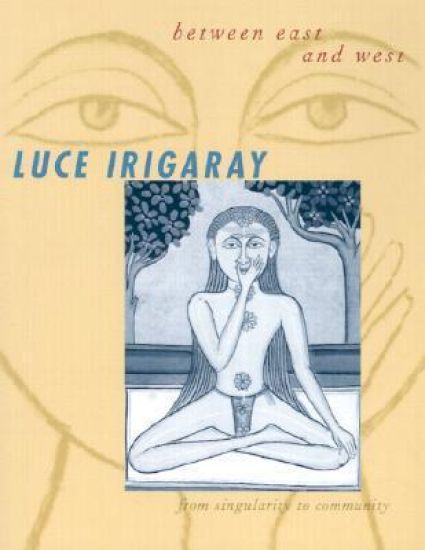
Between East and West

Between East and West

Luce Irigaray

Columbia University Press
2003
pokkari
With this book we see a philosopher well steeped in the Western tradition thinking through ancient Eastern disciplines, meditating on what it means to learn to breathe, and urging us all at the dawn of a new century to rediscover indigenous Asian cultures. Yogic tradition, according to Irigaray, can provide an invaluable means for restoring the vital link between the present and eternity-and for re-envisioning the patriarchal traditions of the West. Western, logocentric rationality tends to abstract the teachings of yoga from its everyday practice-most importantly, from the cultivation of breath. Lacking actual, personal experience with yoga or other Eastern spiritual practices, the Western philosophers who have tried to address Hindu and Buddhist teachings-particularly Schopenhauer-have frequently gone astray. Not so, Luce Irigaray. Incorporating her personal experience with yoga into her provocative philosophical thinking on sexual difference, Irigaray proposes a new way of understanding individuation and community in the contemporary world. She looks toward the indigenous, pre-Aryan cultures of India-which, she argues, have maintained an essentially creative ethic of sexual difference predicated on a respect for life, nature, and the feminine. Irigaray's focus on breath in this book is a natural outgrowth of the attention that she has given in previous books to the elements-air, water, and fire. By returning to fundamental human experiences-breathing and the fact of sexual difference-she finds a way out of the endless sociologizing abstractions of much contemporary thought to rethink questions of race, ethnicity, and globalization.
To Speak is Never Neutral

To Speak is Never Neutral

Luce Irigaray; Schwab Gail

ROUTLEDGE
2002
sidottu
Feminist philosopher, linguist, and psychoanalyst Luce Irigaray is renowned for her analyses of language, studies that can be precise and poetic at the same time. In this volume of her work on language, linguistics, and psychoanalysis, she is concerned with developing a model that can reveal those unconscious or pre-conscious structures that determine speech. A key element of her method is the comparison of spoken and written language, through which she teases out the sexual and social configurations of speech.
To Speak is Never Neutral

To Speak is Never Neutral

Luce Irigaray

Mansell Publishing
2002
pokkari
Contributing to our understanding of how scientific language functions., Luce Irigaray aims to dispel notion that scientific language is objective, unveiling the gendered - and, crucially, the prejudicial - dimensions of a range of psychoanalytic discourses. This selection of the range of Luce Irigaray's writings reveals the origin and development of many ideas central to her thought. The earliest essays included here reveal Irigaray's debt to structural linguistics and deconstruction drawn from her initial studies in the language of schizophrenia. The later essays present Irigaray's explorations of psychoanalysis and language.
To Speak is Never Neutral

To Speak is Never Neutral

Luce Irigaray

Mansell Publishing
2002
sidottu
To Speak is Never Neutral presents a vital selection of the range of Luce Irigaray's writings, revealing the origin and development of many ideas central to her thought. The earliest essays included here reveal Irigaray's debt to structural linguistics and deconstruction drawn from her initial studies in the language of schizophrenia. The later essays present Irigaray's highly original explorations of psychoanalysis and language.
Between East and West

Between East and West

Luce Irigaray

Columbia University Press
2001
sidottu
With this book we see a philosopher well steeped in the Western tradition thinking through ancient Eastern disciplines, meditating on what it means to learn to breathe, and urging us all at the dawn of a new century to rediscover indigenous Asian cultures. Yogic tradition, according to Irigaray, can provide an invaluable means for restoring the vital link between the present and eternity-and for re-envisioning the patriarchal traditions of the West. Western, logocentric rationality tends to abstract the teachings of yoga from its everyday practice-most importantly, from the cultivation of breath. Lacking actual, personal experience with yoga or other Eastern spiritual practices, the Western philosophers who have tried to address Hindu and Buddhist teachings-particularly Schopenhauer-have frequently gone astray. Not so, Luce Irigaray. Incorporating her personal experience with yoga into her provocative philosophical thinking on sexual difference, Irigaray proposes a new way of understanding individuation and community in the contemporary world. She looks toward the indigenous, pre-Aryan cultures of India-which, she argues, have maintained an essentially creative ethic of sexual difference predicated on a respect for life, nature, and the feminine. Irigaray's focus on breath in this book is a natural outgrowth of the attention that she has given in previous books to the elements-air, water, and fire. By returning to fundamental human experiences-breathing and the fact of sexual difference-she finds a way out of the endless sociologizing abstractions of much contemporary thought to rethink questions of race, ethnicity, and globalization.
Le Partage De La Parole

Le Partage De La Parole

Luce Irigaray

Legenda
2001
nidottu
Luce Irigray's "Zaharoff" lecture is part of an intellectual adventure begun with "Speculum". "De L'autre femme" (1974) and continued in "Ce sexe qui n'en est pas un" (1977) and "Ethique de al difference sexuelle" (1984). The present volume not only contains the text of "Le Partage de la parole" itself but also reprints two earlier essays that bear upon the same topic. Irigaray is a feminist philospher whose work has always had a practical dimension. In this collection, her arguments are underpinned by empirical research on the language of schoolchildren and should have wide implications not only for a range of academic disciplines but for educational policy-makers and for feminism as a political force.
To Be Two

To Be Two

Luce Irigaray

ROUTLEDGE
2001
sidottu
In this major new work, French philosopher Luce Irigaray continues to explore the issue central to her thought: the feminist redefinition of Being and Identity. For Irigaray, the notion of the individual is twinned with a reconceived notion of difference, or alterity. What does it mean to be someone? How can identity be created, or discovered, in relation to others? In To Be Two Irigaray gives new clarity to her project, grounding it in relation to such major figures as Sartre, Levinas, and Merleau-Ponty. Yet at the same time, she enriches her discussion with an attempt to bring the elements--earth, fire, water--into philosophical discourse. Even the polarities of heaven and earth come to play in this ambitious and provocative text. At once political, philosophical, and poetic, To Be Two will become one of Irigarary's central works.
Democracy Begins with Two

Democracy Begins with Two

Luce Irigaray

Continuum International Publishing Group Ltd.
2000
pokkari
In Democracy Begins with Two Luce Irigaray calls for a radical reconsideration of the so-called democratic bases of Western culture. In a series of essays covering the earlier 1990s she argues the urgent need for our society to grant full recognition to both the genders which contribute to its functioning. If we are to look on ourselves as fully democratic this recognition must take the form of specific civil rights guaranteeing women a separate civil identity of their own, equivalent to, though not simply the same as, that enjoyed by men. Ranging across topics as diverse as happiness, the family, the construction of the European Union, the transition from natural to civil existence and love, Irigaray exploits her resources as a writer - philosophical, linguistic, psychoanalytical, poetical -to their rhetorical limits. She interweaves her personal experience of an emotional and politico-professional partnership with her re-reading of History, past and present.
Thinking the Difference

Thinking the Difference

Luce Irigaray

Continuum International Publishing Group Ltd.
2000
pokkari
In these essays, the author discusses how language, religion, law, art science and technology have failed women and why. She goes beyond analysis and commentary to propose concrete changes tailored to women's specificity in all these fields - practical means of ensuring "our" culture is women's as well as men's. These changes, she argues, are crucial to the survival of humankind and the Earth itself. Irigary's other publications include "Elemental Passions" (1992), "The Ethics of Sexual Difference" (1993) and "Speech is Never Neuter" (1994).
Elemental Passions

Elemental Passions

Luce Irigaray

Continuum International Publishing Group Ltd.
2000
pokkari
The importance of Irigaray's work lies n the fact that feminist and philosophical discourses are brought together in a feminist appropriation of Spinoza. The author draws on both philosophy and psychoanalysis in a rejection of traditional literary modes and thus frees literature from male dominance. "Elemental Passions" was first published in France in 1982. It explores the man/woman relationship in a series of lyrical meditations on the senses and the four elements. Its form resembles a series of love-letters, in which, however, the identity and reality of the addresses are deliberately obscured in order to escape from conventional, male-imposed conceptual patterns.
Democracy Begins with Two

Democracy Begins with Two

Luce Irigaray

Continuum International Publishing Group Ltd.
2000
sidottu
In "Democracy Begins with Two" Luce Irigaray calls for a radical reconsideration of the so-called democratic bases of Western culture. In a series of essays covering the earlier 1990s she argues the urgent need for our society to grant full recognition to both the genders which contribute to its functioning. If we are to look on ourselves as fully democratic this recognition must take the form of specific civil rights guaranteeing women a separate civil identity of their own, equivalent to, though not simply the same as, that enjoyed by men. Ranging across topics as diverse as happiness, the family, the construction of the European Union, the transition from natural to civil existence and love, Irigaray exploits her resources as a writer - philosophical, linguistic, psychoanalytical, poetical -to their rhetorical limits. She interweaves her personal experience of an emotional and politico-professional partnership with her re-reading of History, past and present.
Thinking the Difference

Thinking the Difference

Luce Irigaray

Continuum International Publishing Group Ltd.
2000
sidottu
In these essays, the author discusses how language, religion, law, art science and technology have failed women and why. She goes beyond analysis and commentary to propose concrete changes tailored to women's specificity in all these fields - practical means of ensuring "our" culture is women's as well as men's. These changes, she argues, are crucial to the survival of humankind and the Earth itself. Irigary's other publications include "Elemental Passions" (1992), "The Ethics of Sexual Difference" (1993) and "Speech is Never Neuter" (1994).
To be Two

To be Two

Luce Irigaray

Continuum International Publishing Group Ltd.
2000
pokkari
In this major new work, French philosopher Luce Irigaray continues to explore the issue central to her thought: the feminist redefinition of Being and Identity. For Irigaray, the notion of the individual is twinned with a reconceived notion of difference, or alterity. What does it mean to be someone? How can identity be created, or discovered, in relation to others? In To Be Two Irigaray gives new clarity to her project, grounding it in relation to such major figures as Sartre, Levinas, and Merleau-Ponty. Yet at the same time, she enriches her discussion with an attempt to bring out the elements - earth, fire, water - into philosophical discourse. Even the polarities of heaven and earth come to play in this ambitious and provocative text. At once political, philosophical and poetic, To Be Two will become one of Irigaray's central works. Luce Irigaray is Director of Research in Philosophy at the Centre National de la Recherche Scientifique, Paris. Translators: Monique Rhodes and marco Cocito-Monoc
Why Different?

Why Different?

Luce Irigaray

Semiotext (E)
1999
pokkari
A collection of interviews that deal explicitly with the relationship between daughter and mother, the sexuation of language, the symbolic order, and the importance of both history and philosophy for the liberation of the feminine subject.For Luce Irigaray, one of the most original French feminist theorists, deconstructing the patriarchal tradition is not enough. She admits that it is not an easy task, but she believes that it is necessary to also define new values directly or indirectly suitable to feminine subjectivity and to feminine identity. She begins this project by analyzing and interpreting the absence of the feminine subject in the definition of dominant cultural values. She then wonders how these new values can be constructed without simply reversing the roles. Far from implying a hierarchy, difference affirms the coexistence and fruitful encounter of two different identities. These two heterogeneous identities, masculine and feminine, are not socially but ontologically constructed and describing the feminine requires establishing methods other than those already used by the masculine subject. Why Different? is a collection of interviews, conducted in both France and Italy, that deal explicitly with the relationship between daughter and mother, the sexuation of language, the symbolic order, and the importance of both history and philosophy for the liberation of the feminine subject. In Why Different? Irigaray elaborates on issues brought up in her other books, Speaking is Never Neutral, I Love to You, Thinking the Difference, and To Be Two and brings them to fruition.