Kirjailija
Luci Shaw
Kirjat ja teokset yhdessä paikassa: 26 kirjaa, julkaisuja vuosilta 2000-2025, suosituimpien joukossa Reversing Entropy. Vertaile teosten hintoja ja tarkista saatavuus suomalaisista kirjakaupoista.
26 kirjaa
Kirjojen julkaisuhaarukka 2000-2025.
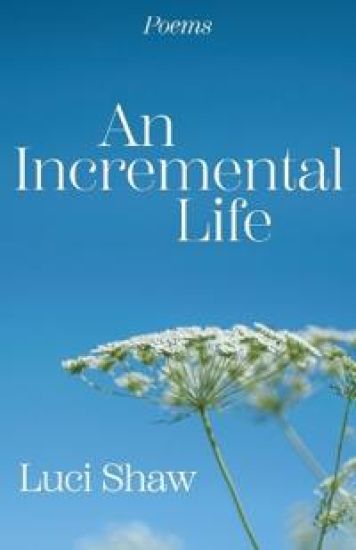
"Luci Shaw is a legend" --Christianity TodayThis captivating collection of poems by beloved author Luci Shaw, reflects on daily ideas and activities as they arrive, bit by bit, to illuminate us with their wisdom and enlarge on the meanings of human experience. Like small messages from beyond, these incidents call us to pay attention. In An Incremental Life, Shaw breathes life into the simpleness of the every-day and finds God in the memory of the mundane. Through her verses, she explores the intricate tapestry of existence, from the tender memories of childhood to the profound questions of mortality. Her poems are like windows opening to the soul, inviting readers to pause, reflect, and savor the beauty of the world around them. INCREMENTS I live by increments, single breaths of an ambient air, marking off hours, days. Apprenticed to grace, I tread statio in sequentiae, edging every step forward before venturing the next. Staggering up towards the stony crests of the foothills, dusty, I am almost undone with weariness, only half believing that the view will widen. In my falling upward into your home, O Faithful One, stay with me, your wind music playing the ear of my mind like an instrument. "This is how life happens, one day at a time, in increments And God is in each of them for us," Luci Shaw
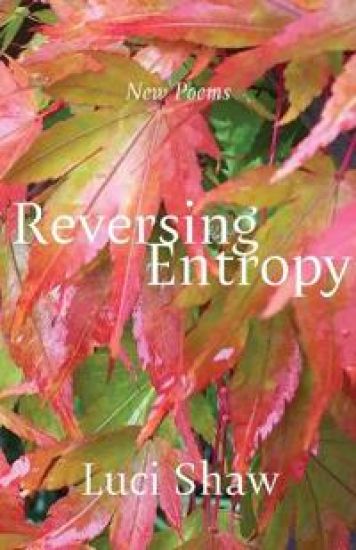
From the pen of beloved poet Luci Shaw comes a new collection that celebrates inspired creativity as an antidote to chaos. The poet's own words best describe the heart of this pinnacle collection of new work by beloved writer Luci Shaw: Entropy: A measure of the molecular disorder, or randomness, of a system, its lack of order or predictability, resulting in a gradual decline into disorder. Our universe, and the systems within it, constantly shift from their created states of order towards disorder, or chaos. The second law of thermodynamics asserts that entropy, or disorder, always increases with time. Creative human activities such as art, architecture, music, story or film are human efforts to halt and reverse this loss of meaning. Thus, smaller systems, like individual poems, become highly ordered as they receive energy from outside themselves, from the poet. They reverse entropy because they are moving from a state of disorder (all the random ideas, words and phrases available to the writer) into an orderly form designed by the writer to create meaningful images and concepts in the reader's mind (which is where the word "imag-ination" comes from.) This transfer of images, concepts and ideas into the mind of a reader is the task of poetry and the calling of the poet. Just as a composer of music gathers rhythms, notes, melodies, or harmony, organizing them into fugues or sonatas or concertos, so poets work and write to discover ways of arranging their responses to the world in words that introduce meaning and beauty in the mind of the reader. Which is what I've been trying to do for most of my life.
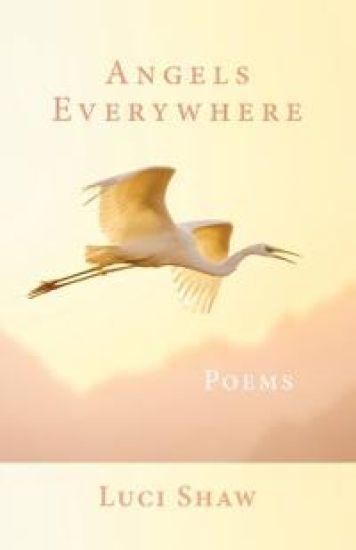
"The word 'angel' means 'messenger' and the title poem of this book, 'Angels Everywhere, ' presents the idea that what I often glimpse is a flicker of glancing light, as if a heavenly being is darting in and out of my viewing, allowing me entry into a realm beyond my physical, experiential world--brief revelatory messages from somewhere beyond. I'm hoping that as you read these poems, (more than once, aloud if possible) something like Wordsworth's 'intimations of immortality' will enliven your own perceptions of the world as you experience it. Maybe your own fleet of angels will show up " --Luci Shaw, from the Introduction Angels Everywhere is published under Paraclete Press's Iron Pen imprint. In the book of Job, a suffering man pours out his anguish to his Maker. From the depths of his pain, he reveals a trust in God's goodness that is stronger than his despair, giving humanity some of the most beautiful and poetic verses of all time. Paraclete's Iron Pen imprint is inspired by this spirit of unvarnished honesty and tenacious hope.
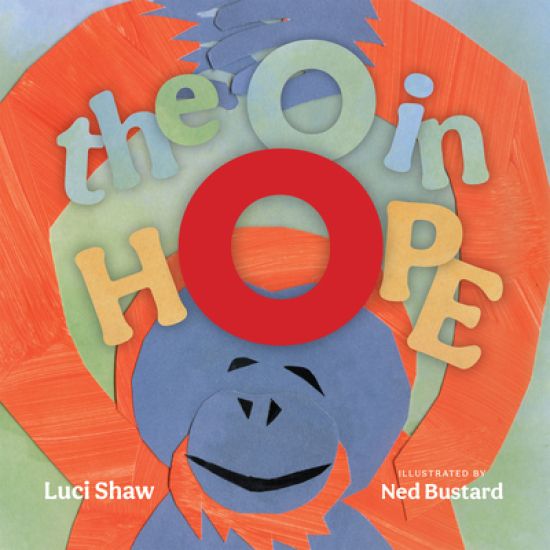
What do an orangutan, an ostrich, an orange, and the ocean all have in common? They all begin with the letter O! But other words also have an O—words like mouth or moon or wow, and even the word hope. Combining a joyful poem from the much-celebrated poet Luci Shaw with playful cut-paper art created by Ned Bustard, The O in Hope helps us experience the goodness of God's gifts of hope and love. This delightful book can be enjoyed by children and the adults who read with them. Also included is a note from the author to encourage further conversation about the content. Discover IVP Kids and share with children the things that matter to God!
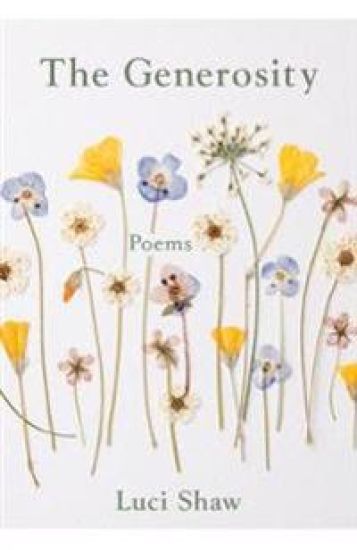
"Rejoice, readers, as you receive the generosity of Luci Shaw's 76 new grace-infused parable poems. Autobiography once more merges with theology as these poems illuminate in splendored natural detail how the seasons of creation parallel and explain the seasons of her life as a poet. Again and again, these poems shower us with glorious epiphanies from the natural world as it reflects God's generosity at work such as "spring's impossible news of green." These poems confirm that in poetry as in faith "ripeness is all." Like Wordsworth, Luci is celebrated for being a highly gifted landscape poet whose works are rich in imagery from the physical world—meadows filled with seeds, flowers, and also poems which are like "shoots" in Luci's writing life. Animals, too, great and small (beetles, cricket, and voles to bears and whales) play a major role in Luci's poetics of creation; God is likened to a great bear who leaves paw tracks for us to follow. In their deep faith and vibrant colors and designs, the poems in Generosity might be considered Luci's Book of Kells. We need to be like Luci's father who carried her poems in his briefcase to show his friends." —Philip C. Kolin, Author, Reaching Forever: Poems; Distinguished Professor of English (Emeritus), University of Southern Mississippi
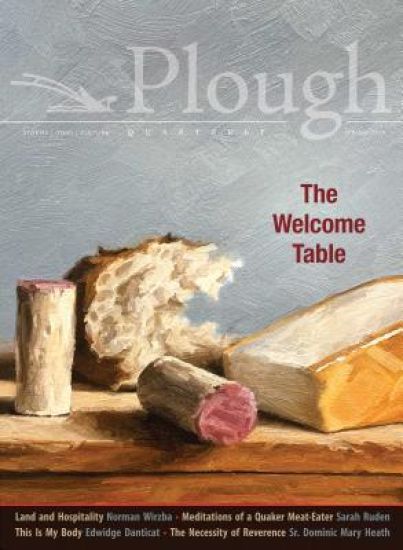
Plough Quarterly No. 20 - The Welcome Table
Edwidge Danticat; Sarah Ruden; Daniel Larison; Norman Wirzba; Luci Shaw; Elizabeth Genovise; Philip Britts; Aidan Hartley; Leah Libresco; Uk-Bae Lee; Johannes Meier; Richard Joyner; Ellesa Clay High; Claudio Oliver; Jane Sloan Peters
Plough Publishing House
2019
pokkari
Food – how it’s grown, how it’s shared – makes us who we are. This issue traces the connections between farm and food, between humus and human. According to the first book of the Bible, tending the earth was humankind’s first task: “The Lord God planted a garden in Eden, in the east; and there he put the man whom he had formed” (Gen. 2:8). The desire to get one’s hands dirty raising one’s own food, then, doesn’t just come from modern romanticism, but is built into human nature. The title, “The Welcome Table,” comes from a spiritual first sung by enslaved African-Americans. The song refers to the Bible’s closing scene, the wedding feast of the Lamb described in the Book of Revelation, to which every race, tribe, and tongue are invited – a divine pledge of a day of freedom and freely shared plenty, of earth renewed and humanity restored. In the case of food, the symbol is the substance. Every meal, if shared generously and with radical hospitality, is already now a taste of the feast to come. Also in this issue: poetry by Luci Shaw; reviews of books by Julia Child, Robert Farrar Capon, Peter Mayle, Albert Woodfox, and Maria von Trapp; and art by Michael Naples, Sieger Köder, Carl Juste, André Chung, Ángel Bracho, Winslow Homer, Raymond Logan, Sybil Andrews, Cameron Davidson, and Jason Landsel. Plough Quarterly features stories, ideas, and culture for people eager to put their faith into action. Each issue brings you in-depth articles, interviews, poetry, book reviews, and art to help you put Jesus’ message into practice and find common cause with others.
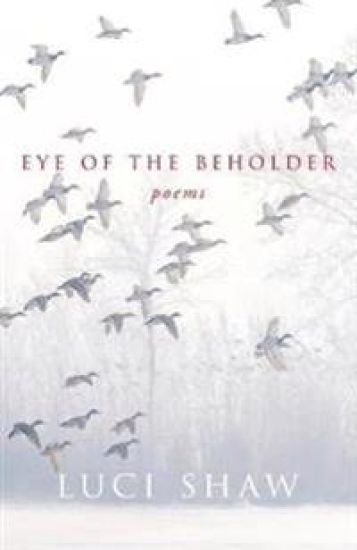
Luci Shaw is now 90 years old. The author of more than 35 collections of poetry and creative non-fiction over the last five decades, she describes her dedication to this art as a burden to “speak into a culture that finds it hard to listen.” This collection of new poems—all composed over the last two years—is in many ways the culmination of a stunning career. The joy and responsibility of the poet is to focus on particulars within the universe, finding fragments of meaning that speak to the imagination. Ordinary things may reveal the extraordinary for those willing to take time to investigate and ponder. In this fresh collection of poems, Luci Shaw practices the art of seeing, and then writing what she sees, realizing that beauty is often focused in the Eye of the Beholder. Eye of the Beholder is meant to awaken in readers awareness of the extraordinary in the ordinary. They will find in this collection a focus for meditation and be excited into their own imaginative writing.
We worship an endlessly creative God whose thumbprints are reflected everywhere we look-in sunsets, ocean waves and the invisible rhythms that shape our lives. Join Luci Shaw as she ponders through poetry and prose the unexpected places where she encounters God's fingerprints, and let it help you learn to see them in your life as well.
"The thumbprint . . . is for me a singular clue to human identity. . . . Just as each human thumbprint is unique, its pattern inscribed on the work of our hands and minds, the Creator's is even more so—the original thumbprints on the universe," declares poet Luci Shaw. We worship an endlessly creative God whose thumbprints are reflected everywhere we look—in sunsets, mountains, ocean waves—and in the invisible rhythms that shape our lives, such as the movement of planets around the sun. And this creative and ever-creating God has also left indelible thumbprints on us. We reflect God's imprint most clearly, perhaps, in our own creating and appreciation for beauty. A longing for beauty is inherent to being human. We don't create things that are purely practical; we desire them to be aesthetically pleasing as well. Beauty is also powerful, in its redemptiveness, generosity, inspiration. In reflecting on the role of beauty in our lives, Luci Shaw writes, "Beauty is Love taking form in human lives and the works of their hands." So come, join Luci Shaw as she ponders through the beauty of poetry and prose the places, sometimes unexpected, where she encounters God's fingerprints, and let it help you learn to see them in your life as well.
Adventure of Ascent – Field Notes from a Lifelong Journey
Luci Shaw
Inter-Varsity Press,US
2014
nidottu
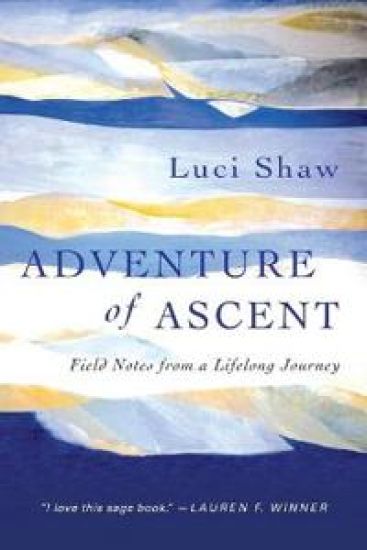
In this book, writer-poet Luci Shaw has given us a lifetime of exquisite reflections on nature, love, death, suffering, loss, faith, doubt, creativity, curiosity, lifelong learning—all of it drawn from the breadth of her own experience, harvested in penetrating and lyrical insights. Still active in her eighties, Luci now turns her attention to the season of edging toward the borders. Her spirit of adventure, her brave transparency, and her openness to all that life offers (as well as inflicts) makes her a captivating and hope-inspiring mentor. For most of us, growing older is a reality we put off as long as possible—until we realize with a shock that it is happening to us. We immediately look around to see how others on the path just ahead of us are dealing with it. So here is the intrepid Luci Shaw, taking readers on a virtual hike with her, with steps more deliberate and slow but also with surprising vistas that fill us with gratitude. In this book Luci serves as a fearless and eloquent scout. As she traverses new territory, she records her experiences lovingly, honestly, sorrowfully, joyfully—here's what it's like, and here's what to be ready for. These field notes will inform your own journey, no matter what your age.
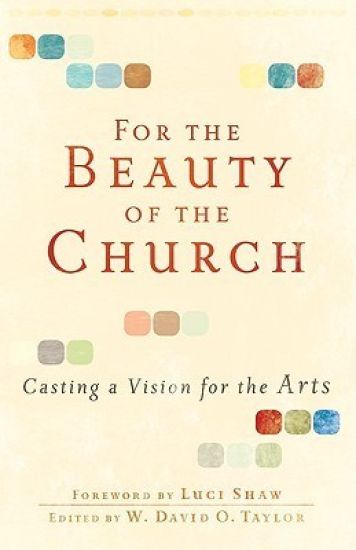
For the Beauty of the Church – Casting a Vision for the Arts
W. David O. Taylor; Luci Shaw
Baker Books, a division of Baker Publishing Group
2010
nidottu
Think of your local church. Without art--music, song, dance, etc.--it would be a much poorer place. But if protestants have any vision for the arts, it tends to be a thin one. This unique book is an attempt to contribute to a robust, expansive vision for the church and the arts. Its specific aim is to show how the many parts of the landscape of church and art hold together. You can think of it as a kind of helicopter flyover, but one with expert pilots. The guides include the likes of Eugene Peterson, Lauren Winner, Jeremy Begbie, Andy Crouch, and John Witvliet, helping to inspire readers and empower pastor-leaders with a vision of the church and the arts that is compelling, far-seeing, and profoundly transformative.
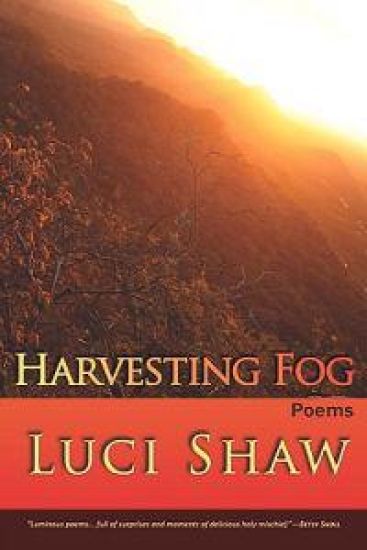
In arid coastal areas of South America, locals hang rags outside until they're saturated with fog. They wring out this water, all year long, as a means of survival. They call it "harvesting fog." And that, writes LUCI SHAW, is a lot like writing poems. In her poems, Shaw observes and contemplates nature and humanity: "I'm merely a floater in the eye of God." "Behold the fleck of ant... If by observation, we become part of an insect's life, is he aware of us?" Shaw's poems invite us to awaken the spirit of loving and giving: "The tide that outward ebbs, turns then and inward flows, And what I offer you, you'll multiply to me." Shaw's 10th volume of poetry satisfies a thirsty imagination. Shaw turns the details of our lives, the droplets, into the music of possibility.PRAISE for HARVESTING FOG: Luci Shaw sees in the natural world a dynamic incarnation of God's love. Luminous poems, of faith richly woven into the fabric of daily life and change, full of surprises and moments of delicious holy mischief.--Betsy ShollIntensely personal, her poems also draw deeply on the legacy she has embraced as an heir to Herbert, Hopkins, Dickinson, and others whose shadows fall gently across her lines, giving them texture and adding to their quiet contemporary beauty.--Marilyn McEntyreEnvision a long life through imaginative changes of lens. Light becomes a bookish beetle, the Infant Jesus is "a small sack of God," and idea is "a glitter of ash" to be flung over the ocean.--Jeanine HathawayOne might argue with Heidegger that only in poetry can Being achieve adequate articulation, find a "local habitation and a name," become known. For Shaw, whose poems so brilliantly and movingly locate authentic Being in the forms and processes of nature, the lyric impulse often approaches the incarnational.--B.H.FairchildSacramental poems offer nourishment for the starving soul with a topping of delightful whimsy, a "bowlful of cool" in the face.--Paul Willis
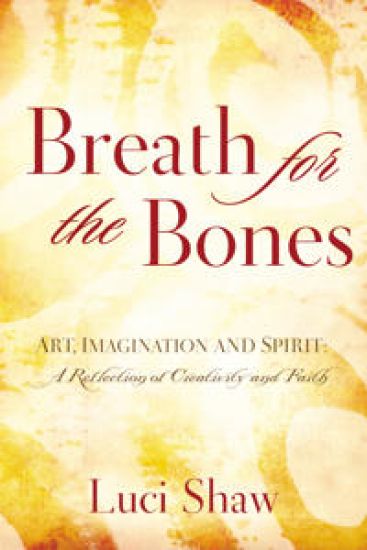
“The double question we must always ask is,‘How does faith inform art?’ and ‘How can art animate faith?’”Imagination, appreciation of beauty, creativity: all of these qualities have been given to us by God. For the Christian artist, the drive to create something wonderful is also a means to glorify and better understand our Lord. Using excerpts from her own works as well as those of writers who have gone before her—Emily Dickinson, Annie Dillard, C.S. Lewis, and others—poet and writer Luci Shaw proves that symbolism and metaphor provide ways for humans to experience God in new and powerful ways.Shaw offers a rich and thought-provoking exploration of art, creativity, and faith. Believing that art emanates from God, she shows how imagination and spirituality “work in tandem, each feeding on and nourishing the other.” Faith informs art and art enhances faith. They both, for each other, are “breath for the bones.”Provocative, enlightening, and above all, inspiring, Breath for the Bones will help readers discover the artist within, and bring them further along the path to God Himself.Include s Discussion Questions and Writing Exercises
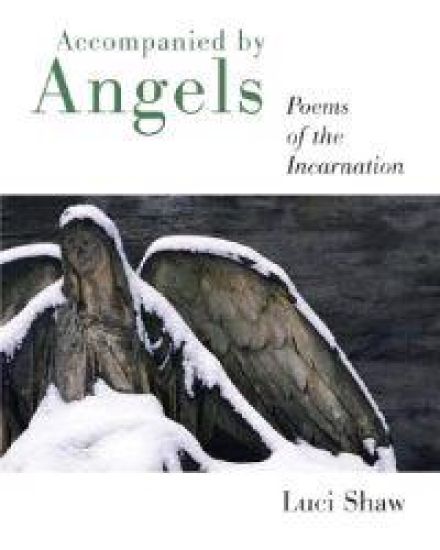
From the time she was a child in Toronto, celebrated poet Luci Shaw has sent Advent greetings to her friends and family with a carefully crafted original poem. What began as a simple childhood exercise has now become a beloved annual tradition. Though a number of these poems have appeared elsewhere, "Accompanied by Angels" gathers all of them for the first time into a collection for all readers for any season of the year. Beginning with the joy, terror, and wonder of the annunciation, Shaw leads the reader on a poetic journey through the birth, life, and death of Jesus the Christ, culminating in the joyous and unexpected wonder of his resurrection. Her subjects run from the mundane to the sublime, from birds in flight and waiting old men to fiery angels and storm-ravaged ridges.
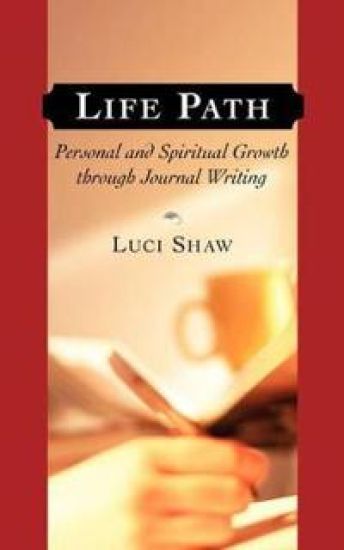
Life has a way of slipping away while we're not looking. And many of us are so numbed by mundane routine that we hardly miss its passing. Keeping a journal can bring it all back . . . * Those timeless moments when the mists part and you catch a glimpse of a loving Father. * Those rare insights where you suddenly see your life from a new perspective. * those welcome moments when the pain subsides and the healing begins. "Life Path will be a delight equally to inveterate journal keepers like me, and to those who've often thought they might like to keep a journal, but haven't known how to go about it." - Madeleine L'Engle Luci Shaw is author of eight volumes of poetry, among them Listen to the Green, Water Lines, and Polishing the Petoskey Stone. Her other books include Water My Soul and God in the Dark: Through Grief and Beyond. Since 1988 she has been adjunct faculty member and Writer in Residence at Regent College in Vancouver, British Columbia.