Kirjojen hintavertailu. Mukana 12 152 606 kirjaa ja 12 kauppaa.

Kirjailija

Lucian

Kirjat ja teokset yhdessä paikassa: 39 kirjaa, julkaisuja vuosilta 1913-2023, suosituimpien joukossa Lucian's Dialogues of the Courtesans: An Intermediate Greek Reader: Greek Text with Running Vocabulary and Commentary. Vertaile teosten hintoja ja tarkista saatavuus suomalaisista kirjakaupoista.

39 kirjaa

Kirjojen julkaisuhaarukka 1913-2023.

Lucian's Zeus the Tragedian: An Intermediate Greek Reader: Greek Text with Running Vocabulary and Commentary
The aim of this book is to make Zeus the Tragedian by Lucian of Samosata (c. 120 -190 CE) accessible to intermediate students of Ancient Greek. The running vocabulary and grammatical commentary are meant to provide everything necessary to read each page, so that readers can progress through the text, improving their knowledge of Greek while enjoying one of the most entertaining authors of antiquity. In Zeus the Tragedian Lucian weaves an amusing dialogue out of a whole range of literary genres and styles, making full use of his impressive mastery of classical literature and language.
Lucian

Lucian

Lucian

Cambridge University Press
2008
sidottu
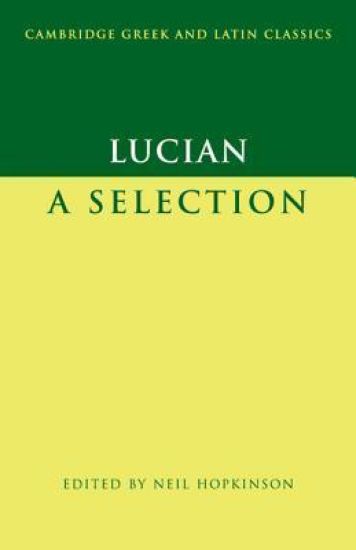
Lucian of Samosata is one of the most brilliant and wide-ranging writers from antiquity, and yet few commentaries are available for those who wish to read Lucian in Greek. This edition presents a selection of rhetorical and satirical works in the original Greek illustrating his range, wit and literary sophistication. Texts include both more and less well-known texts such as The Dream, The Fly, Timon, A Literary Prometheus, Sigma versus Tau and Dialogues of the Sea-Gods. The Introduction discusses his place in the Second Sophistic and his relationship to Cynic philosophy, and each section of commentary is preceded by a literary appraisal. The commentary is aimed primarily at advanced undergraduates and graduate students.
Lucian

Lucian

Lucian

Cambridge University Press
2008
pokkari
Lucian of Samosata is one of the most brilliant and wide-ranging writers from antiquity, and yet few commentaries are available for those who wish to read Lucian in Greek. This edition presents a selection of rhetorical and satirical works in the original Greek illustrating his range, wit and literary sophistication. Texts include both more and less well-known texts such as The Dream, The Fly, Timon, A Literary Prometheus, Sigma versus Tau and Dialogues of the Sea-Gods. The Introduction discusses his place in the Second Sophistic and his relationship to Cynic philosophy, and each section of commentary is preceded by a literary appraisal. The commentary is aimed primarily at advanced undergraduates and graduate students.
Lucian: Selections

Lucian: Selections

Lucian

Bristol Classical Press
1998
nidottu
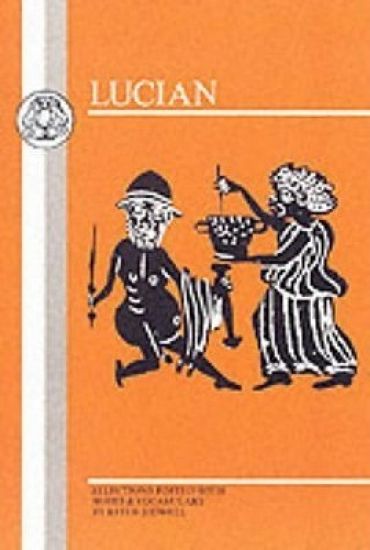
This selection from the writings of the second century AD satirist Lucian is aimed atbeginning and intermediate students of ancient Greek. It consists of the Greek text with facing vocabularies and explanations, an appendix on Lucian's life an works, exercises dealing with vocabulary, grammar and style, and a general vocabulary at the back of the book.
The Dead Come to Life or The Fisherman. The Double Indictment or Trials by Jury. On Sacrifices. The Ignorant Book Collector. The Dream or Lucian's Career. The Parasite. The Lover of Lies. The Judgement of the Goddesses. On Salaried Posts in Great Houses
Antiquity’s satirist supreme.Lucian (ca. AD 120–190), the satirist from Samosata on the Euphrates, started as an apprentice sculptor, turned to rhetoric and visited Italy and Gaul as a successful traveling lecturer before settling in Athens and developing his original brand of satire. Late in life he fell on hard times and accepted an official post in Egypt.Although notable for the Attic purity and elegance of his Greek and his literary versatility, Lucian is chiefly famed for the lively, cynical wit of the humorous dialogues in which he satirizes human folly, superstition, and hypocrisy. His aim was to amuse rather than to instruct. Among his best works are A True Story (the tallest of tall tales about a voyage to the moon), Dialogues of the Gods (a "reductio ad absurdum" of traditional mythology), Dialogues of the Dead (on the vanity of human wishes), Philosophies for Sale (great philosophers of the past are auctioned off as slaves), The Fisherman (the degeneracy of modern philosophers), The Carousal or Symposium (philosophers misbehave at a party), Timon (the problems of being rich), Twice Accused (Lucian's defense of his literary career) and (if by Lucian) The Ass (the amusing adventures of a man who is turned into an ass).The Loeb Classical Library edition of Lucian is in eight volumes.
Lucian, Volume II
Antiquity’s satirist supreme.Lucian (ca. AD 120–190), the satirist from Samosata on the Euphrates, started as an apprentice sculptor, turned to rhetoric and visited Italy and Gaul as a successful traveling lecturer before settling in Athens and developing his original brand of satire. Late in life he fell on hard times and accepted an official post in Egypt.Although notable for the Attic purity and elegance of his Greek and his literary versatility, Lucian is chiefly famed for the lively, cynical wit of the humorous dialogues in which he satirizes human folly, superstition, and hypocrisy. His aim was to amuse rather than to instruct. Among his best works are A True Story (the tallest of tall tales about a voyage to the moon), Dialogues of the Gods (a “reductio ad absurdum” of traditional mythology), Dialogues of the Dead (on the vanity of human wishes), Philosophies for Sale (great philosophers of the past are auctioned off as slaves), The Fisherman (the degeneracy of modern philosophers), The Carousal or Symposium (philosophers misbehave at a party), Timon (the problems of being rich), Twice Accused (Lucian’s defense of his literary career) and (if by Lucian) The Ass (the amusing adventures of a man who is turned into an ass).The Loeb Classical Library edition of Lucian is in eight volumes.
Lucian, Volume I

Lucian, Volume I

Lucian

LOEB
1913
sidottu
Antiquity’s satirist supreme.Lucian (ca. AD 120–190), the satirist from Samosata on the Euphrates, started as an apprentice sculptor, turned to rhetoric and visited Italy and Gaul as a successful traveling lecturer before settling in Athens and developing his original brand of satire. Late in life he fell on hard times and accepted an official post in Egypt.Although notable for the Attic purity and elegance of his Greek and his literary versatility, Lucian is chiefly famed for the lively, cynical wit of the humorous dialogues in which he satirizes human folly, superstition, and hypocrisy. His aim was to amuse rather than to instruct. Among his best works are A True Story (the tallest of tall tales about a voyage to the moon), Dialogues of the Gods (a “reductio ad absurdum” of traditional mythology), Dialogues of the Dead (on the vanity of human wishes), Philosophies for Sale (great philosophers of the past are auctioned off as slaves), The Fisherman (the degeneracy of modern philosophers), The Carousal or Symposium (philosophers misbehave at a party), Timon (the problems of being rich), Twice Accused (Lucian’s defense of his literary career) and (if by Lucian) The Ass (the amusing adventures of a man who is turned into an ass).The Loeb Classical Library edition of Lucian is in eight volumes.
True History

True History

Lucian

Graphic Arts Books
2021
pokkari
True History (2nd century C.E.) is a satirical novel by Lucian. Written in ancient Greek, True History is thought to be the first work of science fiction in all of Western literature. Intended as a criticism of the unbelievable scenarios populating ancient fiction, True History dramatizes the extent to which authors will relate fantastic or mythological material as truth to humorous and imaginative effect. Before beginning his narrative, Lucian admits that though the claims he will make are far from truth, he will make them, nonetheless. Accordingly, he weaves a tale of a voyage by sea thrown off course near the Pillars of Hercules by a powerful storm. Narrowly escaping disaster, Lucian and his fellow travelers find themselves on an island interwoven with rivers of wine, in which fish swim and bears feed and frolic. As if this weren’t enough, rumors of a divine presence and visions of trees like women encourages the travelers to seek safety elsewhere. Not far into the next leg of their journey, their ship is swept skyward by a storm so powerful it lands them on the Moon. There, they are swiftly swept up in a war between the armies of the Moon and Sun, vast alien forces vying for control of the Morning Star. Helping to organize a peace treaty, Lucian and his travelers take in the sights of the Moon before returning to Earth just in time to be swallowed by a massive whale. As the narrative unfolds, these poor lost voyagers encounter fish people, discover an island of cheese afloat on a sea of milk, and even meet the heroes of Troy themselves. True History is a wild and wonderful work of satire and science fiction that not only amazes as much as it delights, but serves as a reminder that the humor of the ancients is not so different from our own. With a beautifully designed cover and professionally typeset manuscript, this edition of Lucian’s True History is a classic of ancient Greek literature reimagined for modern readers.
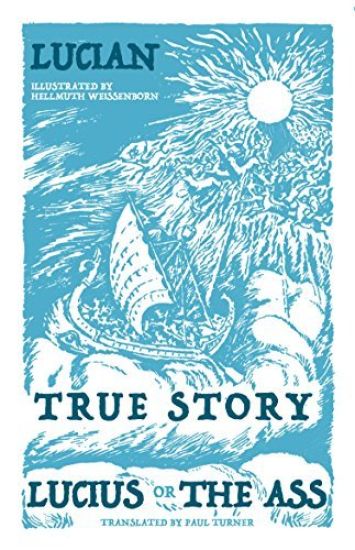
True Story, Lucius, or the Ass
True Story, Lucian’s best-known and most entertaining work, is a parody of the tall stories of fantastic journeys narrated by famous poets and historians. With his trademark wit and humour, Lucian informs his readers that he means to tell nothing but lies and impossibilities, and warns them not to believe a word he says. The result is a comical masterpiece that influenced Western literature throughout the centuries, and works such as Gulliver’s Travels and The Surprising Adventures of Baron Munchausen.Lucius, or the Ass, a satirical novel charting the adventures of a young man who has been transformed into a donkey, is usually attributed to Lucian and is thought to be a source of Apuleius’s Golden Ass.