Kirjojen hintavertailu. Mukana 12 595 353 kirjaa ja 12 kauppaa.

Kirjailija

Lucie Zinger

Kirjat ja teokset yhdessä paikassa: 2 kirjaa, julkaisuja vuodelta 2018, suosituimpien joukossa Environmental DNA. Vertaile teosten hintoja ja tarkista saatavuus suomalaisista kirjakaupoista.

2 kirjaa

Environmental DNA

Environmental DNA

Pierre Taberlet; Aurelie Bonin; Lucie Zinger; Eric Coissac

Oxford University Press
2018
nidottu
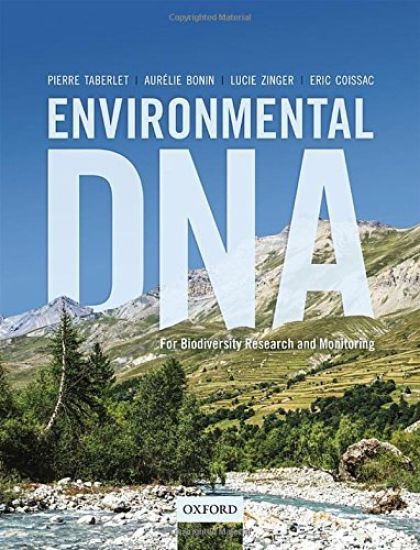
Environmental DNA (eDNA) refers to DNA that can be extracted from environmental samples (such as soil, water, feces, or air) without the prior isolation of any target organism. The analysis of environmental DNA has the potential of providing high-throughput information on taxa and functional genes in a given environment, and is easily amenable to the study of both aquatic and terrestrial ecosystems. It can provide an understanding of past or present biological communities as well as their trophic relationships, and can thus offer useful insights into ecosystem functioning. There is now a rapidly-growing interest amongst biologists in applying analysis of environmental DNA to their own research. However, good practices and protocols dealing with environmental DNA are currently widely dispersed across numerous papers, with many of them presenting only preliminary results and using a diversity of methods. In this context, the principal objective of this practical handbook is to provide biologists (both students and researchers) with the scientific background necessary to assist with the understanding and implementation of best practices and analyses based on environmental DNA.
Environmental DNA

Environmental DNA

Pierre Taberlet; Aurelie Bonin; Lucie Zinger; Eric Coissac

Oxford University Press
2018
sidottu
Environmental DNA (eDNA) refers to DNA that can be extracted from environmental samples (such as soil, water, feces, or air) without the prior isolation of any target organism. The analysis of environmental DNA has the potential of providing high-throughput information on taxa and functional genes in a given environment, and is easily amenable to the study of both aquatic and terrestrial ecosystems. It can provide an understanding of past or present biological communities as well as their trophic relationships, and can thus offer useful insights into ecosystem functioning. There is now a rapidly-growing interest amongst biologists in applying analysis of environmental DNA to their own research. However, good practices and protocols dealing with environmental DNA are currently widely dispersed across numerous papers, with many of them presenting only preliminary results and using a diversity of methods. In this context, the principal objective of this practical handbook is to provide biologists (both students and researchers) with the scientific background necessary to assist with the understanding and implementation of best practices and analyses based on environmental DNA.