Kirjojen hintavertailu. Mukana 12 595 353 kirjaa ja 12 kauppaa.

Kirjailija

Lucy Green

Kirjat ja teokset yhdessä paikassa: 11 kirjaa, julkaisuja vuosilta 1997-2024, suosituimpien joukossa Learning, Teaching, and Musical Identity. Vertaile teosten hintoja ja tarkista saatavuus suomalaisista kirjakaupoista.

11 kirjaa

Kirjojen julkaisuhaarukka 1997-2024.

Music Education as Critical Theory and Practice
This collection of previously published articles, chapters and keynotes traces both the theoretical contribution of Lucy Green to the emergent field of the sociology of music education, and her radical ’hands-on’ practical work in classrooms and instrumental studios. The selection contains a mixture of material, from essays that have appeared in major journals and books, to some harder-to-find publications. It spans issues from musical meaning, ideology, identity and gender in relation to music education, to changes and challenges in music curricula and pedagogy, and includes Green’s highly influential work on bringing informal learning into formal music education settings. A newly-written introduction considers the relationship between theory and practice, and situates each essay in relation to some of the major influences, within and beyond the field of music education, which affected Green’s own intellectual journey from the 1970s to the present day.
What Makes a Person?

What Makes a Person?

Mark Hanson; Lucy Green

Cambridge University Press
2022
pokkari
Ever wondered why your life and health can sometimes be so hard to control? Or why it seems so easy for other people? Mark Hanson and Lucy Green draw on their years of experience as scientists and educators to cut through the usual information on genetics and lifestyle to reveal the secrets of early development which start to make each of us unique, during our first 1,000 days from the moment of conception. Some surprising discoveries, based on little-known new research, show how events during our first 1,000 days make each of us who we are and explain how we control our bodies, processes that go way beyond just the genes which we inherited. Provoking new ways of thinking about being parents, this book empowers individuals and society to give the next generation the gift of a good start to life and future health.
Insights in Sound

Insights in Sound

David Baker; Lucy Green

Routledge
2019
nidottu
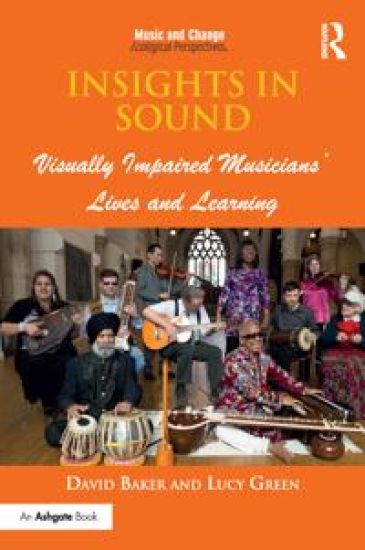
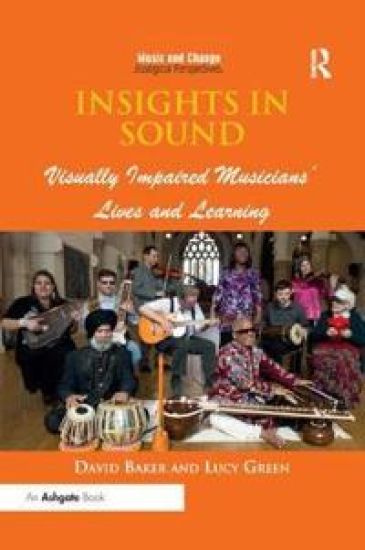
Music has long been a way in which visually impaired people could gain financial independence, excel at a highly-valued skill, or simply enjoy musical participation. Existing literature on visual impairment and music includes perspectives from the social history of music, ethnomusicology, child development and areas of music psychology, music therapy, special educational needs, and music education, as well as more popular biographical texts on famous musicians. But there has been relatively little sociological research bringing together the views and experiences of visually impaired musicians themselves across the life course. Insights in Sound: Visually Impaired Musicians’ Lives and Learning aims to increase knowledge and understanding both within and beyond this multifaceted group. Through an international survey combined with life-history interviews, a vivid picture is drawn of how visually impaired musicians approach and conceive their musical activities, with detailed illustrations of the particular opportunities and challenges faced by a variety of individuals. Baker and Green look beyond affiliation with particular musical styles, genres, instruments or practices. All 'levels' are included: from adult beginners to those who have returned to music-making after a gap; and from 'regular' amateur and professional musicians, to some who are extraordinarily 'elite' or 'successful'. Themes surrounding education, training, and informal learning; notation and ear playing; digital technologies; and issues around disability, identity, opportunity, marginality, discrimination, despair, fulfilment, and joy surfaced, as the authors set out to discover, analyse, and share insights into the worlds of these musicians.
How Popular Musicians Learn

How Popular Musicians Learn

Lucy Green

Routledge
2017
sidottu
Popular musicians acquire some or all of their skills and knowledge informally, outside school or university, and with little help from trained instrumental teachers. How do they go about this process? Despite the fact that popular music has recently entered formal music education, we have as yet a limited understanding of the learning practices adopted by its musicians. Nor do we know why so many popular musicians in the past turned away from music education, or how young popular musicians today are responding to it. Drawing on a series of interviews with musicians aged between fifteen and fifty, Lucy Green explores the nature of pop musicians' informal learning practices, attitudes and values, the extent to which these altered over the last forty years, and the experiences of the musicians in formal music education. Through a comparison of the characteristics of informal pop music learning with those of more formal music education, the book offers insights into how we might re-invigorate the musical involvement of the population. Could the creation of a teaching culture that recognizes and rewards aural imitation, improvisation and experimentation, as well as commitment and passion, encourage more people to make music? Since the hardback publication of this book in 2001, the author has explored many of its themes through practical work in school classrooms. Her follow-up book, Music, Informal Learning and the School: A New Classroom Pedagogy (2008) appears in the same Ashgate series.
Insights in Sound

Insights in Sound

David Baker; Lucy Green

Routledge
2017
sidottu
Music has long been a way in which visually impaired people could gain financial independence, excel at a highly-valued skill, or simply enjoy musical participation. Existing literature on visual impairment and music includes perspectives from the social history of music, ethnomusicology, child development and areas of music psychology, music therapy, special educational needs, and music education, as well as more popular biographical texts on famous musicians. But there has been relatively little sociological research bringing together the views and experiences of visually impaired musicians themselves across the life course. Insights in Sound: Visually Impaired Musicians’ Lives and Learning aims to increase knowledge and understanding both within and beyond this multifaceted group. Through an international survey combined with life-history interviews, a vivid picture is drawn of how visually impaired musicians approach and conceive their musical activities, with detailed illustrations of the particular opportunities and challenges faced by a variety of individuals. Baker and Green look beyond affiliation with particular musical styles, genres, instruments or practices. All 'levels' are included: from adult beginners to those who have returned to music-making after a gap; and from 'regular' amateur and professional musicians, to some who are extraordinarily 'elite' or 'successful'. Themes surrounding education, training, and informal learning; notation and ear playing; digital technologies; and issues around disability, identity, opportunity, marginality, discrimination, despair, fulfilment, and joy surfaced, as the authors set out to discover, analyse, and share insights into the worlds of these musicians.
Music Education as Critical Theory and Practice

Music Education as Critical Theory and Practice

Lucy Green

Ashgate Publishing Limited
2014
sidottu
This collection of previously published articles, chapters and keynotes traces both the theoretical contribution of Lucy Green to the emergent field of the sociology of music education, and her radical ’hands-on’ practical work in classrooms and instrumental studios. The selection contains a mixture of material, from essays that have appeared in major journals and books, to some harder-to-find publications. It spans issues from musical meaning, ideology, identity and gender in relation to music education, to changes and challenges in music curricula and pedagogy, and includes Green’s highly influential work on bringing informal learning into formal music education settings. A newly-written introduction considers the relationship between theory and practice, and situates each essay in relation to some of the major influences, within and beyond the field of music education, which affected Green’s own intellectual journey from the 1970s to the present day.
Learning, Teaching, and Musical Identity

Learning, Teaching, and Musical Identity

Lucy Green

Indiana University Press
2011
pokkari
Musical identity raises complex, multifarious, and fascinating questions. Discussions in this new study consider how individuals construct their musical identities in relation to their experiences of formal and informal music teaching and learning. Each chapter features a different case study situated in a specific national or local socio-musical context, spanning 20 regions across the world. Subjects range from Ghanaian or Balinese villagers, festival-goers in Lapland, and children in a South African township to North American and British students, adults and children in a Cretan brass band, and Gujerati barbers in the Indian diaspora.
Music On Deaf Ears

Music On Deaf Ears

Lucy Green

arima publishing
2008
pokkari
"Hooray! Professor Lucy Green's classic text is now available, in its second edition, to a new generation. The first edition contributed to the development of a new field, the sociology of music education. But the argument is of wider interest, and has been useful to me in better understanding the mechanics of the professional life as applicable to the working player." Robert Fripp, King Crimson RESPONSES TO THE FIRST EDITION OF MUSIC ON DEAF EARS: "This is a fine book indeed. The clarity of mind shining through the text is apparent, and the concern with music, musical experience and the development of children in our schools is self-evident. . Musicians and educators would do well to reflect upon these ideas and the inherent challenges to our comfortable but essentially problematic ways of thinking about and responding to music." Keith Swanwick, Music and Letters "The argument, necessarily simplified here, is powerfully and cogently made. It not only impinges on educational practice but is one of the best general discussions of musical meaning and ideology I have read."Richard Middleton, Popular Music "This analysis has considerable explanatory power, especially in regard to the response of school pupils to various musical styles.. I recommend this interesting and uncomfortable book not just to music teachers but to all those musicians and music lovers who think at all about the nature of their art." Christopher Small, British Journal of Music Education
Music, Informal Learning and the School: A New Classroom Pedagogy
This pioneering book reveals how the music classroom can draw upon the world of popular musicians' informal learning practices, so as to recognize and foster a range of musical skills and knowledge that have long been overlooked within music education. It investigates how far informal learning practices are possible and desirable in a classroom context; how they can affect young teenagers' musical skill and knowledge acquisition; and how they can change the ways students listen to, understand and appreciate music as critical listeners, not only in relation to what they already know, but beyond. It examines students' motivations towards music education, their autonomy as learners, and their capacity to work co-operatively in groups without instructional guidance from teachers. It suggests how we can awaken students' awareness of their own musicality, particularly those who might not otherwise be reached by music education, putting the potential for musical development and participation into their own hands. Bringing informal learning practices into a school environment is challenging for teachers. It can appear to conflict with their views of professionalism, and may at times seem to run against official educational discourses, pedagogic methods and curricular requirements. But any conflict is more apparent than real, for this book shows how informal learning practices can introduce fresh, constructive ways for music teachers to understand and approach their work. It offers a critical pedagogy for music, not as mere theory, but as an analytical account of practices which have fundamentally influenced the perspectives of the teachers involved. Through its grounded examples and discussions of alternative approaches to classroom work and classroom relations, the book reaches out beyond music to other curriculum subjects, and wider debates about pedagogy and curriculum.
How Popular Musicians Learn

How Popular Musicians Learn

Lucy Green

Ashgate Publishing Limited
2002
nidottu
Popular musicians acquire some or all of their skills and knowledge informally, outside school or university, and with little help from trained instrumental teachers. How do they go about this process? Despite the fact that popular music has recently entered formal music education, we have as yet a limited understanding of the learning practices adopted by its musicians. Nor do we know why so many popular musicians in the past turned away from music education, or how young popular musicians today are responding to it. Drawing on a series of interviews with musicians aged between fifteen and fifty, Lucy Green explores the nature of pop musicians' informal learning practices, attitudes and values, the extent to which these altered over the last forty years, and the experiences of the musicians in formal music education. Through a comparison of the characteristics of informal pop music learning with those of more formal music education, the book offers insights into how we might re-invigorate the musical involvement of the population. Could the creation of a teaching culture that recognizes and rewards aural imitation, improvisation and experimentation, as well as commitment and passion, encourage more people to make music? Since the hardback publication of this book in 2001, the author has explored many of its themes through practical work in school classrooms. Her follow-up book, Music, Informal Learning and the School: A New Classroom Pedagogy (2008) appears in the same Ashgate series.
Music, Gender, Education

Music, Gender, Education

Lucy Green

Cambridge University Press
1997
sidottu
This is the first book to focus on the role of education in relation to music and gender. Invoking a concept of musical patriarchy and a theory of the social construction musical meanings, Lucy Green shows how women’s musical practices and gendered musical meanings have been reproduced, hand in hand, through history. Covering a wide range of music, including classical, jazz and popular styles, Dr Green uses ethnographic methods to convey the everyday interactions and experiences of girls, boys, and their teachers. She views the contemporary school music classroom as a microcosm of the wider society, and reveals the participation of music education in the continued production and reproduction of gendered musical practices and meanings.