Kirjojen hintavertailu. Mukana 12 595 353 kirjaa ja 12 kauppaa.

Kirjailija

Lucy Newlyn

Kirjat ja teokset yhdessä paikassa: 12 kirjaa, julkaisuja vuosilta 1992-2021, suosituimpien joukossa William and Dorothy Wordsworth. Vertaile teosten hintoja ja tarkista saatavuus suomalaisista kirjakaupoista.

12 kirjaa

Kirjojen julkaisuhaarukka 1992-2021.

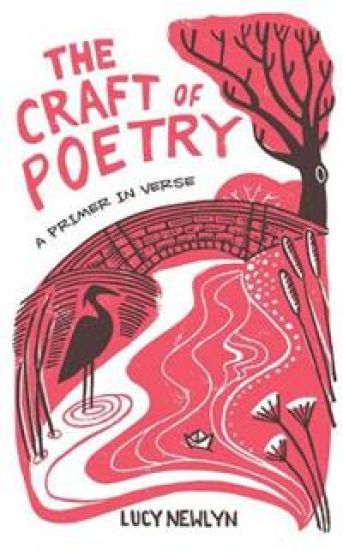
The Craft of Poetry

The Craft of Poetry

Lucy Newlyn

Yale University Press
2021
sidottu
A wonderfully accessible handbook to the art of writing and reading poetry—itself written entirely in verse“Reading this book, you get to know poetry from the inside, without the alienating or distracting effect of abstract definition. Knowledge of how poetry works is here imbibed not as a course of instruction but as a sustained pleasure."—Bernard O'Donoghue, University of Oxford, Winner of the Whitbread Prize for Poetry How does poetry work? What should readers notice and look out for? Poet Lucy Newlyn demystifies the principles of the form, effortlessly illustrating key approaches and terms—all through her own original verse. Each poem exemplifies an aspect of poetic craft—but read together they suggest how poetry can evoke a whole community and its way of life in myriad ways. In a series of beautiful meditations, Newlyn guides the reader through key aspects of poetry, from sonnets and haiku to volta and synecdoche. Avoiding glosses and notes, her poems are allowed to speak for themselves, and show that there are no limits to what poetry can communicate. Newlyn’s timeless verse will appeal to lovers of poetry as well as to practitioners, teachers, and students of all ages.Onomatopoeia You’d play here all day if you had your way— near the stepping-stones, in the clearest of rock-pools, where water slaps and slips; where minnows dart, and a baby trout flop-flips.
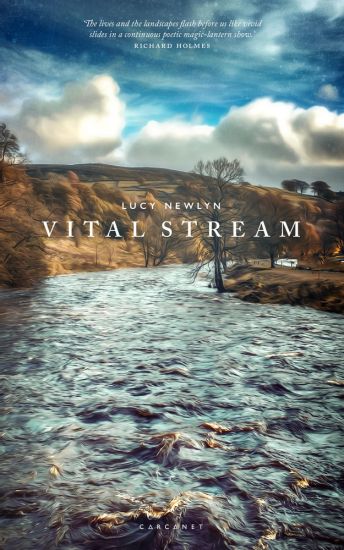
Vital Stream

Vital Stream

Lucy Newlyn

Carcanet Press Ltd
2019
nidottu
A work of historical fiction, an experiment in life writing and a verse drama designed to be read aloud. Vital Stream takes the form of a long sonnet sequence, revisiting six extraordinary months in 1802 - a threshold year for William and Dorothy Wordsworth. Parted when they were very young, the siblings had eventually set up home together in the Lake District, where they were to remain for the rest of their lives. After two years in Grasmere, William became engaged to Mary Hutchinson. There followed an intense period of re-adjustment for all three, and for his former lover Annette Vallon, who had borne him a daughter he had never met. During 1802 the Wordsworth siblings wrote some of their most beautiful work; these were their last months of living alone, and their writing has an elegiac quality. Their journey to see Annette Vallon and meet William's daughter for the first time took them through London to Calais during the brief Peace of Amiens, involving a careful dissociation from his past. Other complications coloured their lives, to do with Coleridge and his failing marriage. Lucy Newlyn draws all this material into the vital stream of her sequence. with a preface by Richard Holmes PUBLISHED IN ASSOCIATION WITH THE WORDSWORTH TRUST
Diary of a Bipolar Explorer

Diary of a Bipolar Explorer

Lucy Newlyn

Signal Books Ltd
2018
nidottu
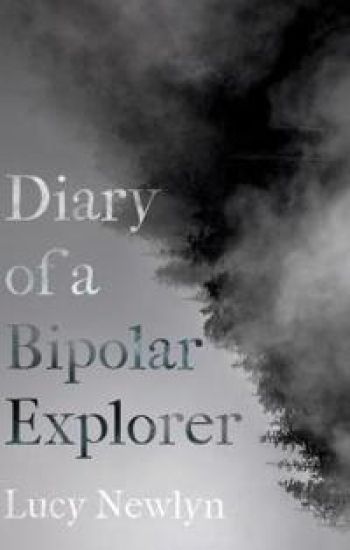
In 2002 Lucy Newlyn found herself incarcerated in a mental hospital in Leeds. She had been sectioned under the Mental Health Act as a danger to herself and others during a psychotic episode after several nights without sleep. The psychosis was triggered by nearly three years of grieving for a dead sister, followed by a vigil at her father's deathbed during which she hallucinated that his hospital ward was a trench in the First World War. The episode uncovered psychiatric problems, which led in due course to a diagnosis of Bipolar Disorder (manic depression). This condition, which involves extreme mood swings, is classified as a disability and requires medication; but it is also a source of creativity, giving access to some unusual dimensions of human experience. In her fifteen-year diary, Lucy Newlyn discloses recurring episodes of mania, depression, hallucination and paranoid delusion. Describing her struggles with family life and the workplace, she de-mystifies bipolarity and critiques an environment which still, even in the twenty-first century, is suspicious of mental illness. Above all, she celebrates the discovery that writing poetry enables a cathartic engagement with her own condition. Diary of a Bipolar Explorer is not a self-help manual but a candid confessional memoir which offers no easy solutions. It involves a mixture of observation and reflection, interspersing poetry with prose. Written accessibly, it will appeal to anyone interested in mental illness, creative process and the life of the mind.
William and Dorothy Wordsworth

William and Dorothy Wordsworth

Lucy Newlyn

Oxford University Press
2016
nidottu
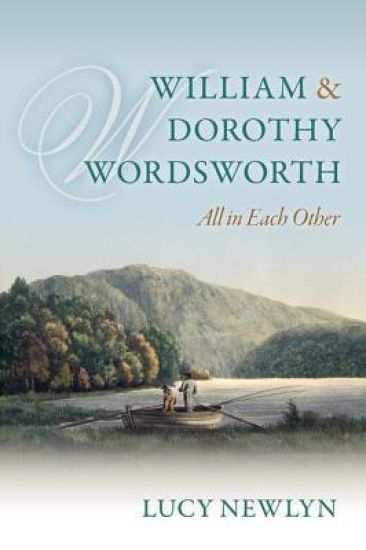
William Wordsworth's creative collaboration with his 'beloved Sister' spanned nearly fifty years, from their first reunion in 1787 until her premature decline in 1835. Rumours of incest have surrounded the siblings since the 19th century, but Lucy Newlyn sees their cohabitation as an expression of deep emotional need, arising from circumstances peculiar to their family history. Born in Cockermouth and parted when Dorothy was six by the death of their mother, the siblings grew up separately and were only reunited four years after their father had died, leaving them destitute. How did their orphaned consciousness shape their understanding of each other? What part did traumatic memories of separation play in their longing for a home? How fully did their re-settlement in the Lake District recompense them for the loss of a shared childhood? Newlyn shows how William and Dorothy's writings -- closely intertwined with their regional affiliations -- were part of the lifelong work of jointly re-building their family and re-claiming their communal identity. Walking, talking, remembering, and grieving were as important to their companionship as writing; and at every stage of their adult lives they drew nourishment from their immediate surroundings. This is the first book to bring the full range of Dorothy's writings into the foreground alongside her brother's, and to give each sibling the same level of detailed attention. Newlyn explores the symbiotic nature of their creative processes through close reading of journals, letters and poems -- sometimes drawing on material that is in manuscript. She uncovers detailed interminglings in their work, approaching these as evidence of their deep affinity. The book offers a spirited rebuttal of the myth that the Romantic writer was a 'solitary genius', and that William Wordsworth was a poet of the 'egotistical sublime' -- arguing instead that he was a poet of community, 'carrying everywhere with him relationship and love'. Dorothy is not presented as an undervalued or exploited member of the Wordsworth household, but as the poet's equal in a literary partnership of outstanding importance. Newlyn's book is deeply researched, drawing on a wide range of recent scholarship -- not just in Romantic studies, but in psychology, literary theory, anthropology and life-writing. Yet it is a personal book, written with passion by a scholar-poet and intended to be of some practical use and inspirational value to non-specialist readers. Adopting a holistic approach to mental and spiritual health, human relationships, and the environment, Newlyn provides a timely reminder that creativity thrives best in a gift economy.
Earth's Almanac

Earth's Almanac

Lucy Newlyn

Enitharmon Press
2015
nidottu
The poems in Earth's Almanac emerged over a fifteen-year period following the untimely death of the poet's sister. Lucy Newlyn adapts the tradition of the 'Shepherd's Calendar' to the phases of grief, condensing a long process of reflection and remembering into the passage of a single year. The poems shift through forms and move between places - Oxford, Borrowdale, and finally Cornwall, where the poet finds a second home near the sea. In these intense expressions of love and loss, anger and guilt, there is no smooth path towards consolation.
William and Dorothy Wordsworth

William and Dorothy Wordsworth

Lucy Newlyn

Oxford University Press
2013
sidottu
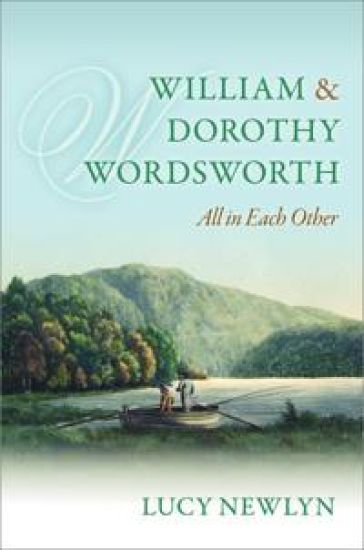
William Wordsworth's creative collaboration with his 'beloved Sister' spanned nearly fifty years, from their first reunion in 1787 until her premature decline in 1835. Rumours of incest have surrounded the siblings since the 19th century, but Lucy Newlyn sees their cohabitation as an expression of deep emotional need, arising from circumstances peculiar to their family history. Born in Cockermouth and parted when Dorothy was six by the death of their mother, the siblings grew up separately and were only reunited four years after their father had died, leaving them destitute. How did their orphaned consciousness shape their understanding of each other? What part did traumatic memories of separation play in their longing for a home? How fully did their re-settlement in the Lake District recompense them for the loss of a shared childhood? Newlyn shows how William and Dorothy's writings - closely intertwined with their regional affiliations - were part of the lifelong work of jointly re-building their family and re-claiming their communal identity. Walking, talking, remembering, and grieving were as important to their companionship as writing; and at every stage of their adult lives they drew nourishment from their immediate surroundings. This is the first book to bring the full range of Dorothy's writings into the foreground alongside her brother's, and to give each sibling the same level of detailed attention. Newlyn explores the symbiotic nature of their creative processes through close reading of journals, letters and poems - sometimes drawing on material that is in manuscript. She uncovers detailed interminglings in their work, approaching these as evidence of their deep affinity. The book offers a spirited rebuttal of the myth that the Romantic writer was a 'solitary genius', and that William Wordsworth was a poet of the 'egotistical sublime' - arguing instead that he was a poet of community, 'carrying everywhere with him relationship and love'. Dorothy is not presented as an undervalued or exploited member of the Wordsworth household, but as the poet's equal in a literary partnership of outstanding importance. Newlyn's book is deeply researched, drawing on a wide range of recent scholarship - not just in Romantic studies, but in psychology, literary theory, anthropology and life-writing. Yet it is a personal book, written with passion by a scholar-poet and intended to be of some practical use and inspirational value to non-specialist readers. Adopting a holistic approach to mental and spiritual health, human relationships, and the environment, Newlyn provides a timely reminder that creativity thrives best in a gift economy.
The Monstrous Debt

The Monstrous Debt

John Bayley; John Beer; Hugh Haughton; Harriet Devine Jump; Richard Marggraf-Turley; Emma Mason; Lucy Newlyn; Michael O'Neill

Wayne State University Press
2006
sidottu
The authors in this collection join an animated debate on the persistence of Romanticism. Even as dominant twentieth-century cultural movements have contested Romantic ""myths"" of redemptive Nature, individualism, perfectibility, the transcendence of art, and the heart's affections, the Romantic legacy survives as a point of tension and of inspiration for modern writers. Rejecting the Bloomian notion of anxious revisionism, ""The Monstrous Debt"" argues that various kinds of influences, inheritances, and indebtedness exist between well-known twentieth-century authors and canonical Romantic writers. Among the questions asked by this volume are: How does Blake's graphic mythology submit to ""redemptive translations"" in the work of Dylan Thomas? How might Ted Hughes' strong readings of a ""snaky"" Coleridge illuminate the ""mercurial"" poetic identity of Sylvia Plath? How does Shelley ""sustain"" the work of W. B. Yeats and Elizabeth Bishop with supplies of ""imaginative oxygen""? In what ways does Keats enable Bob Dylan to embrace influence? How does Keats prove inadequate for Tony Harrison as he confronts contemporary violence? How does ""cockney"" Romanticism succeed in shocking John Betjeman's poetry out of kitsch into something new and strange? ""The Monstrous Debt"" seeks to broaden our sense of what ""influence"" is by defining the complex of relations that contribute to the making of the modern literary text. Scholars and students of the Romantic era will enjoy this informative volume.
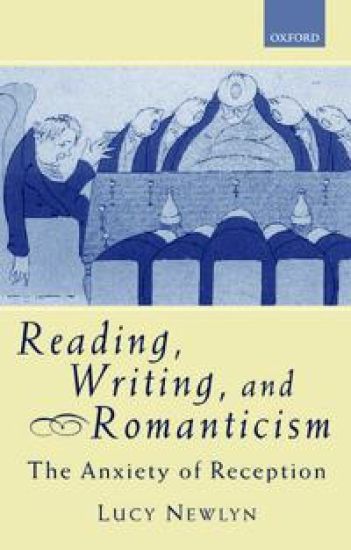
Reading, Writing, and Romanticism

Reading, Writing, and Romanticism

Lucy Newlyn

Oxford University Press
2003
nidottu
Informed by an historical awareness of Romantic hermeneutics and its later developments, (with due understanding of the relevant circumstances), this book explores how readers are imagined, addressed, figured, and theorised in Romantic poetry and criticism.
Coleridge, Wordsworth, and the Language of Allusion

Coleridge, Wordsworth, and the Language of Allusion

Lucy Newlyn

Oxford University Press
2001
nidottu
In this study of two creative minds, Lucy Newlyn offers a new version of the Coleridge-Wordsworth interaction during its most crucial years: 1797-1807. Rejecting all those accounts (including the poets' own) which have sought to construe difference as compatibility, Newlyn argues that it is only on the surface that each poet appears the other's ideal audience. Below the surface, there were radical differences, of a theoretical and imaginative kind, which led to misunderstanding. It is the central argument of Coleridge, Wordsworth, and the Language of Allusion that such 'misunderstanding' was creative and, for both poets, a means of self-definition. The key to this interpretation is in the poets' private language: they were not only 'men speaking to men', but poets speaking to poets, and it is in their use of literary allusion that their tacit opposition emerges. Indeed, by examining the range of strategies open to any writer using private allusion, Newlyn's study reveals this mode to be potentially the most aggressive of literary forms.
Paradise Lost and the Romantic Reader

Paradise Lost and the Romantic Reader

Lucy Newlyn

Oxford University Press
2001
nidottu
Was Milton on the side of the angels or the devils? Was he republican or anti-republican, feminist or misogynist? Did he value innocence or experience? Lucy Newlyn shows how the Romantic reader responds, in complex and often paradoxical ways, to multiple ambiguities inherent in the very language of Paradise Lost. She examines ambivalent allusions to Satan and God, in responses to the French Revolution (Coleridge and Wordsworth), in studies of the origin of evil (Godwin, Blake, the Shelleys), in accounts of the creative imagination; and looks at how Eve pervades representations of female sexuality (Byron and Keats). The book culminates in a chapter on Blake's Milton, and prose writers such as De Quincey, Lamb, Wollstonecraft, and Hazlitt are also considered. Milton emerges as a poet of indeterminacy, not an authority figure, whose concern with the problematic issues of revolution and religion, sexuality and selfhood, make his writing relevant and accessible.
Reading, Writing, and Romanticism

Reading, Writing, and Romanticism

Lucy Newlyn

Oxford University Press
2000
sidottu
Reading, Writing, and Romanticism bridges a perceived gulf between materialist and idealist approaches to the reader. Informed by an historical awareness of Romantic hermeneutics and its later developments (as well as by an understanding of the circumstances conditioning the production and consumption of literature in this period), the book explores how readers are imagined, addressed, figured and theorised in Romantic poetry and criticism (1790-1830). Models of canon-formation, intertextuality and reader-response are examined alongside the existence of reading-coteries, the social practices of reading, and reforms in copyright. Consideration is given to the philosophical and ideological influences which bear upon the status of reading at this time, as well as to the educational theories and practices which underpin reading-habits. Non-canonical writers are included, and special attention is given to the emergence of women's poetry - its repercussions for the poetics of reception.
'Paradise Lost' and the Romantic Reader

'Paradise Lost' and the Romantic Reader

Lucy Newlyn

Clarendon Press
1992
sidottu
Was Milton on the side of the angels or the devils? Was he republican or anti-republican, feminist or misogynist? Did he value innocence or experience? Lucy Newlyn shows how the Romantic reader responds, in complex and often paradoxical ways, to multiple ambiguities inherent in the very language of Paradise Lost. She examines ambivalent allusions to Satan and God, in responses to the French Revolution (Coleridge and Wordsworth), in studies of the origin of evil (Godwin, Blake, the Shelleys), in accounts of the creative imagination; and looks at how Eve pervades representations of female sexuality (Byron and Keats). The book culminates in a chapter on Blake's Milton, and prose writers such as De Quincey, Lamb, Wollstonecraft, and Hazlitt are also considered. Milton emerges as a poet of indeterminacy, not an authority figure, whose concern with the problematic issues of revolution and religion, sexuality and selfhood, make his writing relevant and accessible.