

Kirjailija
Ludwig Wittgenstein
Kirjat ja teokset yhdessä paikassa: 143 kirjaa, julkaisuja vuosilta 1921-2026, suosituimpien joukossa Tractatus Logico-Philosophicus. Vertaile teosten hintoja ja tarkista saatavuus suomalaisista kirjakaupoista.
143 kirjaa
Kirjojen julkaisuhaarukka 1921-2026.

V 2021 godu ispolnilos sto let s momenta pervoj publikatsii truda, kotoryj vo mnogom opredelil razvitie evropejskoj i mirovoj filosofii XX stoletija, - "Logiko-filosofskogo traktata" Ljudviga Vitgenshtejna (1889-1951). Vprochem, s publikatsiej "Traktata" ekstsentrichnyj molodoj uchenyj iz Veny Ljudvig Vitgenshtejn ne obrel mirovoj slavy: fakticheski ego idei poluchili rasprostranenie gorazdo pozzhe. Uzhe vo vtoroj polovine XX stoletija vokrug sochinenija Vitgenshtejna nachal skladyvatsja podlinnyj kult, izuchenie ego teksta voshlo v universitetskie programmy po sovremennoj filosofii i znakomstvo s nim stalo objazatelnym dlja cheloveka mysljaschego. "Traktat" zatmil soboj bolee pozdnie raboty Vitgenshtejna, opublikovannye posmertno, blagopoluchno perevalil cherez stoletnij rubezh svoego kulturnogo bytovanija, i, sudja po kolichestvu pereizdanij na raznykh jazykakh, emu ugotovana uchast neosporimoj i vechno aktualnoj klassiki. V nastojaschem izdanii vnimaniju chitatelej predlagaetsja novyj kommentirovannyj perevod traktata, priurochennyj k stoletnemu jubileju epokhalnogo truda Vitgenshtejna. Vpervye pri publikatsii "Traktata" na russkom jazyke avtorskaja struktura privoditsja ne linejno, a v vide logicheskogo dreva, kak bylo zadumano avtorom. V Prilozhenii vnimaniju chitatelja predlagaetsja podborka izvlechenij iz proizvedenij rjada avtorov, prinadlezhaschikh k chislu predtech sovremennoj kognitivistiki.Perevodchik: Korolev Kirill
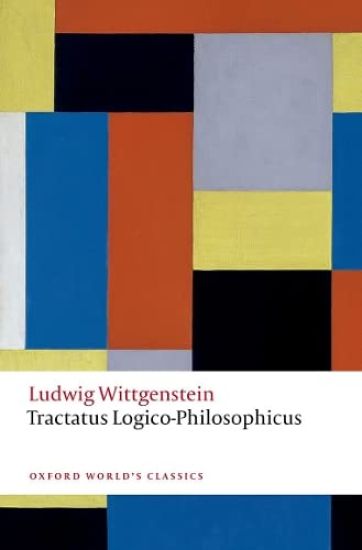
'what can be said at all can be said clearly; and of what one cannot talk, about that one must be silent' Wittgenstein's Tractatus Logico-Philosophicus, first published in German in 1921 and in English translation in 1922, is one of the most influential philosophical texts of the twentieth century. It played a fundamental role in the development of analytic philosophy, and its philosophical ideas and implications have been fiercely debated ever since. This new translation improves on the two main earlier translations, taking advantage of the scholarship over the last century that has deepened our understanding of both the Tractatus and Wittgenstein's philosophy more generally, scholarship that has also involved discussion of the difficulties in translating the original German text and the issues of interpretation that arise. Michael Beaney's translation is accompanied by two introductory essays, the first explaining the background to Wittgenstein's work, its main ideas and their subsequent development and influence, and some of the central debates, and the second providing an account of the history of the text and the two earlier translations. It is accompanied by detailed notes, explaining key points of translation and interpretation, a glossary, chronology, and other editorial material designed to help the reader understand the Tractatus and its place in the history of philosophy.

"Anstatt zu sagen, die Ethik ist die Untersuchung dessen, was gut ist, h tte ich sagen k nnen, die Ethik ist die Untersuchung dessen, was wertvoll ist oder was sehr wichtig ist; oder aber ich h tte sagen k nnen, die Ethik ist die Untersuchung des Sinns des Lebens oder des lebenswerten Lebens oder des richtigen Lebens." Wittgenstein in seiner "Lecture on Ethics" vor Studierenden der Heretics Society an der University of Cambridge. Gr ls-Klassiker (Edition Werke der Weltliteratur)

"Wenn ich von einem Papier sage, es sei rein wei , und es w rde Schnee neben das Papier gehalten und dieses s he nun grau aus, so w rde ich es in seiner normalen Umgebung doch mit Recht wei , nicht hellgrau, nennen. Es k nnte sein, da ich, im Laboratorium etwa, einen verfeinerten Begriff von Wei verwendete. Was l t sich daf r sagen, da Gr n eine prim re Farbe ist, keine Mischfarbe von Blau und Gelb? W re es richtig zu sagen: "Man kann das nur unmittelbar erkennen, indem man die Farben betrachtet?" Nein, - hier entscheiden Sprachspiele." Ludwig Wittgenstein (Gr ls-Klassiker)
Der Tractatus logico-philosophicus ist das erste Hauptwerk des sterreichischen Philosophen Ludwig Wittgenstein. Wie schon der Titel des Buches verspricht, enth lt es zum einen eine logische Theorie, zum anderen legt Wittgenstein darin eine philosophische Methode dar. Sein Hauptanliegen ist es, die Philosophie von Unsinn und Verwirrung zu bereinigen, denn, so LW, "die meisten S tze und Fragen, welche ber philosophische Dinge geschrieben worden sind, sind nicht falsch, sondern unsinnig." Gr ls-Klassiker (Edition Werke der Weltliteratur)

"Wenn ich von einem Papier sage, es sei rein wei , und es w rde Schnee neben das Papier gehalten und dieses s he nun grau aus, so w rde ich es in seiner normalen Umgebung doch mit Recht wei , nicht hellgrau, nennen. Es k nnte sein, da ich, im Laboratorium etwa, einen verfeinerten Begriff von Wei verwendete. Was l t sich daf r sagen, da Gr n eine prim re Farbe ist, keine Mischfarbe von Blau und Gelb? W re es richtig zu sagen: "Man kann das nur unmittelbar erkennen, indem man die Farben betrachtet?" Nein, - hier entscheiden Sprachspiele." Ludwig Wittgenstein (Gr ls-Klassiker)

Wittgenstein: "Ich wei , da ich ein Mensch bin." Um zu sehen, wie unklar der Sinn des Satzes ist, betrachte seine Negation. Am ehesten noch k nnte man ihn so auffassen: "Ich wei , da ich die menschlichen Organe habe." (Z. B. ein Gehirn, welches doch noch niemand gesehen hat.) Aber wie ist es mit einem Satze wie "Ich wei , da ich ein Gehirn habe"? Kann ich ihn bezweifeln? Zum Zweifeln fehlen mir die Gr nde Es spricht alles daf r, und nichts dagegen. Dennoch l t sich vorstellen, da bei einer Operation mein Sch del sich als leer erwiese." Gr ls-Klassiker (Edition Werke der Weltliteratur)
Der Tractatus logico-philosophicus ist das erste Hauptwerk des sterreichischen Philosophen Ludwig Wittgenstein. Wie schon der Titel des Buches verspricht, enth lt es zum einen eine logische Theorie, zum anderen legt Wittgenstein darin eine philosophische Methode dar. Sein Hauptanliegen ist es, die Philosophie von Unsinn und Verwirrung zu bereinigen, denn, so LW, "die meisten S tze und Fragen, welche ber philosophische Dinge geschrieben worden sind, sind nicht falsch, sondern unsinnig." Gr ls-Klassiker (Edition Werke der Weltliteratur)

"Anstatt zu sagen, die Ethik ist die Untersuchung dessen, was gut ist, h tte ich sagen k nnen, die Ethik ist die Untersuchung dessen, was wertvoll ist oder was sehr wichtig ist; oder aber ich h tte sagen k nnen, die Ethik ist die Untersuchung des Sinns des Lebens oder des lebenswerten Lebens oder des richtigen Lebens." Wittgenstein in seiner "Lecture on Ethics" vor Studierenden der Heretics Society an der University of Cambridge. Gr ls-Klassiker (Edition Werke der Weltliteratur)
Wittgenstein: "Ich wei , da ich ein Mensch bin." Um zu sehen, wie unklar der Sinn des Satzes ist, betrachte seine Negation. Am ehesten noch k nnte man ihn so auffassen: "Ich wei , da ich die menschlichen Organe habe." (Z. B. ein Gehirn, welches doch noch niemand gesehen hat.) Aber wie ist es mit einem Satze wie "Ich wei , da ich ein Gehirn habe"? Kann ich ihn bezweifeln? Zum Zweifeln fehlen mir die Gr nde Es spricht alles daf r, und nichts dagegen. Dennoch l t sich vorstellen, da bei einer Operation mein Sch del sich als leer erwiese." Gr ls-Klassiker (Edition Werke der Weltliteratur)
![Logisch-Philosophische Abhandlung. Tractatus Logico-Philosophicus. [Great Papers Philosopie]](/covers/9783150142462.jpg)
Logisch-Philosophische Abhandlung. Tractatus Logico-Philosophicus. [Great Papers Philosopie]
Ludwig Wittgenstein
Reclam Philipp Jun.
2023
pokkari
While the published works of Ludwig Wittgenstein reveal the final, coalesced thoughts of this philosophical giant, Wittgenstein’s diary reveals his process of doing philosophy. Only in his private writing does Wittgenstein's philosophical practice fully come to light. In particular, Wittgensten’s diary entries from the 1930s reveal themselves as a first-person spiritual epic. Wittgenstein agonizes over his relationship with Marguerite Respinger and tries to come to terms with its failure. He relates and interprets several of his dreams. He comments on his philosophical colleagues Frank Ramsey and G.E. Moore. He comments on musicians such as Beethoven, Bruckner and Brahms, and authors such as Kraus, Mann, Nietzsche, Dostoevsky, and Kierkegaard. He struggles to make confessions to a number of friends and family. He relates in painful detail his spiritual crisis in Norway in the late winter of 1937. From a man who once recommended silence about spiritual matters, we find here an honest and searing articulation of his attempts to believe and live what he finds in the Bible. Here are the raw materials for what could have been one of the great spiritual autobiographies of the twentieth century. It is available here for the first time in an affordable edition, with updated and expanded editorial notes to help the reader understand Wittgenstein’s many allusions, and with a new Introduction by Ray Monk, which places the diary in the larger arc of Wittgenstein life.
While the published works of Ludwig Wittgenstein reveal the final, coalesced thoughts of this philosophical giant, Wittgenstein’s diary reveals his process of doing philosophy. Only in his private writing does Wittgenstein's philosophical practice fully come to light. In particular, Wittgensten’s diary entries from the 1930s reveal themselves as a first-person spiritual epic. Wittgenstein agonizes over his relationship with Marguerite Respinger and tries to come to terms with its failure. He relates and interprets several of his dreams. He comments on his philosophical colleagues Frank Ramsey and G.E. Moore. He comments on musicians such as Beethoven, Bruckner and Brahms, and authors such as Kraus, Mann, Nietzsche, Dostoevsky, and Kierkegaard. He struggles to make confessions to a number of friends and family. He relates in painful detail his spiritual crisis in Norway in the late winter of 1937. From a man who once recommended silence about spiritual matters, we find here an honest and searing articulation of his attempts to believe and live what he finds in the Bible. Here are the raw materials for what could have been one of the great spiritual autobiographies of the twentieth century. It is available here for the first time in an affordable edition, with updated and expanded editorial notes to help the reader understand Wittgenstein’s many allusions, and with a new Introduction by Ray Monk, which places the diary in the larger arc of Wittgenstein life.
During the pandemic, Marjorie Perloff, leading scholar of global literature, found her mind ineluctably drawn to the profound commentary on life and death in the wartime diaries of eminent philosopher Ludwig Wittgenstein (1889–1951). Upon learning that these notebooks, which richly contextualise the early stages of his magnum opus, the Tractatus-Logico-Philosophicus, had never before been published in English, the Viennese-born Perloff determinedly set about translating them. Beginning with the anxious summer of 1914, this historic, en-face edition presents the first-person recollections of a foot soldier in the Austrian Army, fresh from his days as a philosophy student at Cambridge, who must grapple with the hazing of his fellow soldiers, the stirrings of a forbidden sexuality and the formation of an explosive analytical philosophy that seemed to draw meaning from his endless brushes with death. Much like Tolstoy’s The Gospel in Brief, Private Notebooks takes us on a personal journey to discovery as it augments our knowledge of Wittgenstein himself.


Logisch-Philosophische Abhandlung. Tractatus Logico-Philosophicus
Ludwig Wittgenstein
Reclam Philipp Jun.
2022
pokkari

Tractatus logico-philosophicus (Logisch-philosophische Abhandlung)
Ludwig Wittgenstein
Books on Demand
2022
pokkari
Ludwig Wittgenstein: Tractatus logico-philosophicus - Logisch-philosophische Abhandlung Neu lektorierte 2022er Ausgabe, mit Fu noten Der Tractatus logico-philosophicus ist eines der bedeutendsten Werke der Philosophiegeschichte. Ludwig Wittgenstein stellt darin den Erkenntnisgewinn traditioneller Philosophie in Frage, als Folge der Unsch rfe der in philosophischen Abhandlungen verwendeten Begriffe. Konsequenz: Ehe man philosophiert, muss ein konsistenter logischer Rahmen geschaffen werden. Wittgenstein setzt dies in seinem Tractatus in mathematischer Pr zision um und stellt damit die Philosophie vom Kopf auf die F e. - Bis heute gibt der Tractatus breiten Raum f r Interpretationen, sodass die Spannweite der Deutungen von einer wortw rtlichen Auslegung der Wittgenstein schen berlegungen ber eine Wissenschafts-Therapie bis hin zu einer fast sp ttischen Parabel auf die Unzug nglichkeit philosophischen Denkens - inclusive des Tractatus selbst - reicht.