Kirjailija
Luigi Barzini
Kirjat ja teokset yhdessä paikassa: 23 kirjaa, julkaisuja vuosilta 1991-2025, suosituimpien joukossa Al fronte (maggio-ottobre 1915). Vertaile teosten hintoja ja tarkista saatavuus suomalaisista kirjakaupoista.
23 kirjaa
Kirjojen julkaisuhaarukka 1991-2025.







The Little Match Man, has been regarded as significant work throughout human history, and in order to ensure that this work is never lost, we have taken steps to ensure its preservation by republishing this book in a contemporary format for both current and future generations. This entire book has been retyped, redesigned, and reformatted. Since these books are not made from scanned copies, the text is readable and clear.
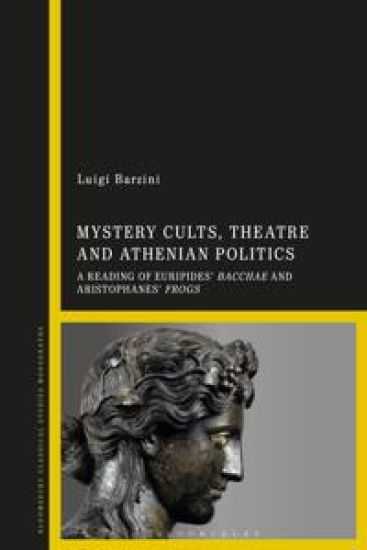
This new comparative reading of Euripides’ Bacchae and Aristophanes’ Frogs sets the two plays squarely in their contemporary social and political context and explores their impact on the audiences of the time. Both were composed during a crucial period of Athenian political life following the oligarchic seizure of power in 411 BC and the restoration of democracy in 410 BC, and were in all likelihood produced nearly simultaneously a few months before the rise of the Thirty Tyrants and the ensuing civil war. They also demonstrate significant similarities that are particularly notable among extant Attic theatre productions, including the role of the god Dionysos as protagonist and architect of religious and political action, and the presence of Demetrian and Dionysiac mystic choruses as proponents of the appeasement of civil discord as the cure for Athens’ ills. Focusing on the mystic, civic and political content of both Bacchae and Frogs, this volume offers not only a new reading of the plays, but also an interdisciplinary perspective on the special characteristics of mystery cults in Athens in their political context and the nature of theatrical audiences and their reaction to mystic themes. Its illumination of the function of each play at a pivotal moment in fifth-century Athenian politics will be of value to scholars and students of ancient Greek drama, religion and history.

Peking-Paris im Automobil; Eine Wettfahrt durch Asien und Europa in sechzig Tagen.
Luigi Barzini
ALPHA EDITION
2021
pokkari
Peking-Paris im Automobil; Eine Wettfahrt durch Asien und Europa in sechzig Tagen., a classic since it was first published. Has been considered important throughout the human history, and so that this work is never forgotten we have made efforts in its preservation by republishing this book in a modern format for present and future generations. This whole book has been reformatted, retyped and designed. These books are not made of scanned copies and hence the text is clear and readable.
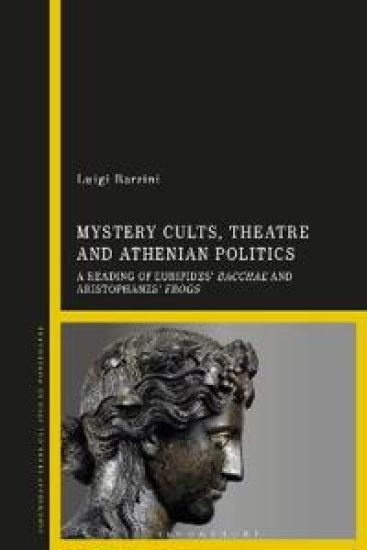
This new comparative reading of Euripides’ Bacchae and Aristophanes’ Frogs sets the two plays squarely in their contemporary social and political context and explores their impact on the audiences of the time. Both were composed during a crucial period of Athenian political life following the oligarchic seizure of power in 411 BC and the restoration of democracy in 410 BC, and were in all likelihood produced nearly simultaneously a few months before the rise of the Thirty Tyrants and the ensuing civil war. They also demonstrate significant similarities that are particularly notable among extant Attic theatre productions, including the role of the god Dionysos as protagonist and architect of religious and political action, and the presence of Demetrian and Dionysiac mystic choruses as proponents of the appeasement of civil discord as the cure for Athens’ ills. Focusing on the mystic, civic and political content of both Bacchae and Frogs, this volume offers not only a new reading of the plays, but also an interdisciplinary perspective on the special characteristics of mystery cults in Athens in their political context and the nature of theatrical audiences and their reaction to mystic themes. Its illumination of the function of each play at a pivotal moment in fifth-century Athenian politics will be of value to scholars and students of ancient Greek drama, religion and history.
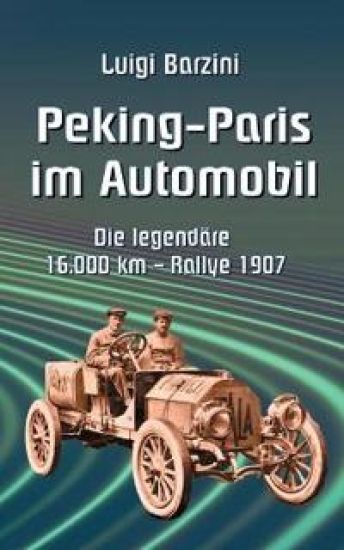
"Gibt es jemanden, der diesen Sommer eine Fahrt per Automobil von Peking nach Paris unternehmen wird?", fragte die Pariser Zeitung Le Matin am 31. Januar 1907. Es meldeten sich 40 Teilnehmer f r das Rennen an. Aufgrund un berwindlicher Schwierigkeiten starteten letztlich doch nur f nf Teams am 10. Juni um 8:00 Uhr in Peking. Der aus einer Patrizierfamilie stammende Scipione Borghese, der Sieger dieses Rennens, schreibt an sein Teammitglied, den Journalisten und Autor Luigi Barzini: "Uns ...] erwartete allgemeiner Beifall, erwartete die Genugtuung, einen Augenblick lang die Begeisterung der gro en Metropolen der Welt, der betriebsamen St dte, der stillen Flecken in ganz Europa erregt zu haben Am Punkt der Abfahrt die geheimnisvolle Hauptstadt des r tselhaften Reiches, aus dem das Ger usch des Lebens wegen der r umlichen Entfernung und des Abstandes im Denken nur ged mpft zu uns her berklingt; am Endpunkt der lauteste Resonanzboden der Welt, Paris, von wo jeder, auch der leiseste Hauch des Lebens sich verst rkt und in tausendfachem Echo vervielf ltigt ber die ganze Erde verbreitet ... Der Telegraph und die Presse, sie sind die unmittelbare Ursache der Volkst mlichkeit, deren sich unser Unternehmen zu erfreuen hatte. Diese beiden sind es, die Ihre spannende Darstellung berallhin verbreitet haben, die den eint nigen und f r uns nur allzu h ufig h chst verdrie lichen Zwischenf llen der Reise Interesse verlieh. ... Und das Publikum hat die Poesie gef hlt, die die einzelnen Kapitel dieser unserer modernsten Odyssee erf llt."

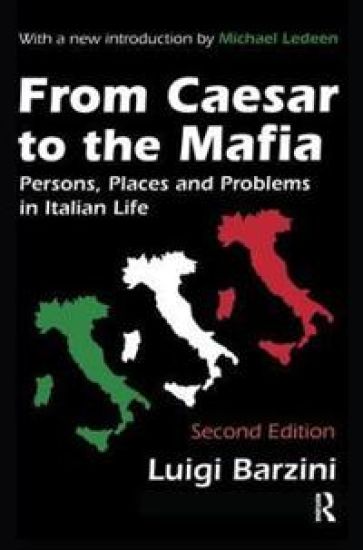
Described by Melvin Lasky as "one of the great journalists of our time," Luigi Barzini was also one of the great cultural historians of modern Italy. From Caesar to the Mafia brings together his finest essays, roughly half of them never before published in the English language. Whether discussing the deep Italian roots of Julius Caesar, Casanova's contribution to the art of living big, or Camillo Cavour's contribution to a democratic as well as integrated nation, Barzini makes Italian culture come alive. Whether he is dealing with heroes or villains, he never loses sight of how Italy became a distinct nation.From Caesar to the Mafia is not only about people, but also focuses on places and problems. When Barzini discusses the Sicilians, the Isle of Capri, or his birthplace of Milan, he has the distinct capacity to capture what is universal as well as what is intimate in each place. An innate sense of psychological profiling enriches these intimate sketches. Because Barzini had such a keen appreciation of Anglo-American culture he emphasizes people and places known to travelers to Italy, as well as readers of Italian literature. What makes the volume so special is Barzini's careful maneuvering between sentimentality on one side and brutality on the other.Italy is not only a state of mind for Barzini, but also a political culture. By discussing the exaggerated mannerism of Mussolini or the unusual capacity of Gramsci to grasp the principles of revolution making in an underdeveloped country, he helps us better understand the operations of fascism and communism as system and ideology. The final essays give voice to Barzini's ability as a political analyst. His examination of the Italian Communist Party's multiple personality disorders, the Christian Democrats as working compromise, the Mafia as a system of power designed not so much to kill as to intimidate and to rule in the absence of popular resistance, tells the reader about modern, postwar Italy. This is a volume not just to be read, but to be savored.