Kirjojen hintavertailu. Mukana 12 390 323 kirjaa ja 12 kauppaa.

Kirjailija

Luigi Boitani

Kirjat ja teokset yhdessä paikassa: 4 kirjaa, julkaisuja vuosilta 2016-2025, suosituimpien joukossa Camera Trapping for Wildlife Research. Vertaile teosten hintoja ja tarkista saatavuus suomalaisista kirjakaupoista.

4 kirjaa

Kirjojen julkaisuhaarukka 2016-2025.

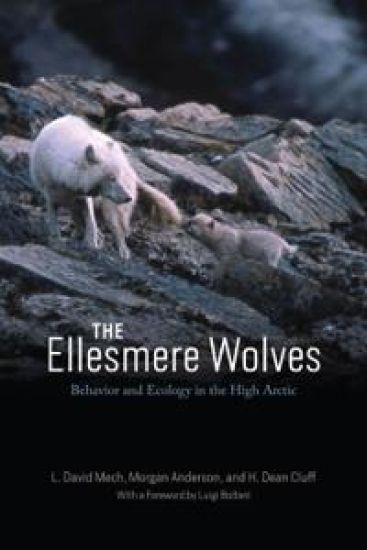
The Ellesmere Wolves

The Ellesmere Wolves

L. David Mech; Morgan Anderson; H. Dean Cluff; Luigi Boitani

THE UNIVERSITY OF CHICAGO PRESS
2025
nidottu
In a fascinating story of discovery and science, we meet a remote population of wolves unafraid of humans. For parts of twenty-four summers, wolf biologist L. David Mech lived with a group of wolves on Ellesmere Island, some six hundred miles from the North Pole. Elsewhere, most wolves flee from even the scent of humans, but these animals, evolving relatively free from human persecution, are unafraid. Having already spent twenty-eight years studying other populations of wolves more remotely by aircraft, snow-tracking, live-trapping, and radio-tracking, Mech was primed to join their activities up close and record their interactions with each other. This book tells the remarkable story of what Mech—and the researchers who followed him—have learned while living among the wolves. The Ellesmere wolves were so unconcerned with Mech’s presence that they allowed him to camp near their den and to sit on his all-terrain vehicle as he observed them, watching packs as large as seven adults and six pups go about their normal activities. In these extraordinarily close quarters, a pup untying his bootlace or an adult sniffing his gloved hand was just part of daily life. Mech accompanied the wolves on their travels and watched as they hunted muskoxen and arctic hares. By achieving the same kind of intimacy with his wild hosts’ every action that we might experience living with domesticated dogs, Mech gained new insights into common but rarely studied behaviors like pup feeding, food caching, howling, and scent-marking. After Mech’s time at Ellesmere ended, his coauthors and fellow wolf researchers Morgan Anderson and H. Dean Cluff spent parts of four summers studying the wolves via radio collars, further illuminating the creatures’ movements and ecology. This book synthesizes their findings, offering both a compelling scientific overview of the animals’ behavior—from hunting to living in packs to rearing pups—and a tale of adventure and survival in the Arctic.
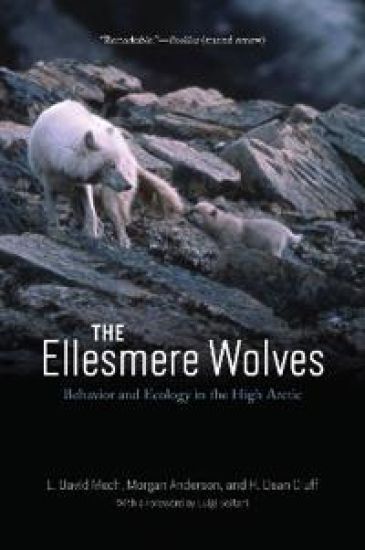
The Ellesmere Wolves

The Ellesmere Wolves

L. David Mech; Morgan Anderson; H. Dean Cluff; Luigi Boitani

THE UNIVERSITY OF CHICAGO PRESS
2025
sidottu
In a fascinating story of discovery and science, we meet a remote population of wolves unafraid of humans. For parts of twenty-four summers, wolf biologist L. David Mech lived with a group of wolves on Ellesmere Island, some six hundred miles from the North Pole. Elsewhere, most wolves flee from even the scent of humans, but these animals, evolving relatively free from human persecution, are unafraid. Having already spent twenty-eight years studying other populations of wolves more remotely by aircraft, snow-tracking, live-trapping, and radio-tracking, Mech was primed to join their activities up close and record their interactions with each other. This book tells the remarkable story of what Mech—and the researchers who followed him—have learned while living among the wolves. The Ellesmere wolves were so unconcerned with Mech’s presence that they allowed him to camp near their den and to sit on his all-terrain vehicle as he observed them, watching packs as large as seven adults and six pups go about their normal activities. In these extraordinarily close quarters, a pup untying his bootlace or an adult sniffing his gloved hand was just part of daily life. Mech accompanied the wolves on their travels and watched as they hunted muskoxen and arctic hares. By achieving the same kind of intimacy with his wild hosts’ every action that we might experience living with domesticated dogs, Mech gained new insights into common but rarely studied behaviors like pup feeding, food caching, howling, and scent-marking. After Mech’s time at Ellesmere ended, his coauthors and fellow wolf researchers Morgan Anderson and H. Dean Cluff spent parts of four summers studying the wolves via radio collars, further illuminating the creatures’ movements and ecology. This book synthesizes their findings, offering both a compelling scientific overview of the animals’ behavior—from hunting to living in packs to rearing pups—and a tale of adventure and survival in the Arctic.
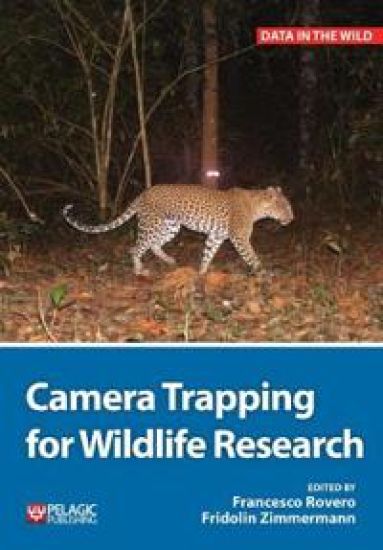
Camera Trapping for Wildlife Research

Camera Trapping for Wildlife Research

Luigi Boitani

Pelagic Publishing
2016
sidottu
Camera trapping is a powerful and now widely used tool in scientific research on wildlife ecology and management. It provides a unique opportunity for collecting knowledge, investigating the presence of animals, or recording and studying behaviour. Its visual nature makes it easy to successfully convey findings to a wide audience. This book provides a much-needed guide to the sound use of camera trapping for the most common ecological applications to wildlife research. Each phase involved in the use of camera trapping is covered: - Selecting the right camera type - Set-up and field deployment of your camera trap - Defining the sampling design: presence/absence, species inventory, abundance; occupancy at species level; capture-mark-recapture for density estimation; behavioural studies; community-level analysis - Data storage, management and analysis for your research topic, with illustrative examples for using R and Excel - Using camera trapping for monitoring, conservation and public engagement. Each chapter in this edited volume is essential reading for students, scientists, ecologists, educators and professionals involved in wildlife research or management.
Camera Trapping for Wildlife Research

Camera Trapping for Wildlife Research

Luigi Boitani

Pelagic Publishing
2016
nidottu
Camera trapping is a powerful and now widely used tool in scientific research on wildlife ecology and management. It provides a unique opportunity for collecting knowledge, investigating the presence of animals, or recording and studying behaviour. Its visual nature makes it easy to successfully convey findings to a wide audience. This book provides a much-needed guide to the sound use of camera trapping for the most common ecological applications to wildlife research. Each phase involved in the use of camera trapping is covered: - Selecting the right camera type - Set-up and field deployment of your camera trap - Defining the sampling design: presence/absence, species inventory, abundance; occupancy at species level; capture-mark-recapture for density estimation; behavioural studies; community-level analysis - Data storage, management and analysis for your research topic, with illustrative examples for using R and Excel - Using camera trapping for monitoring, conservation and public engagement. Each chapter in this edited volume is essential reading for students, scientists, ecologists, educators and professionals involved in wildlife research or management.