Kirjojen hintavertailu. Mukana 12 595 353 kirjaa ja 12 kauppaa.

Kirjailija

Luigi Spina

Kirjat ja teokset yhdessä paikassa: 8 kirjaa, julkaisuja vuosilta 2018-2023, suosituimpien joukossa Canova. Four Tempos Volume Iii. Vertaile teosten hintoja ja tarkista saatavuus suomalaisista kirjakaupoista.

8 kirjaa

Kirjojen julkaisuhaarukka 2018-2023.

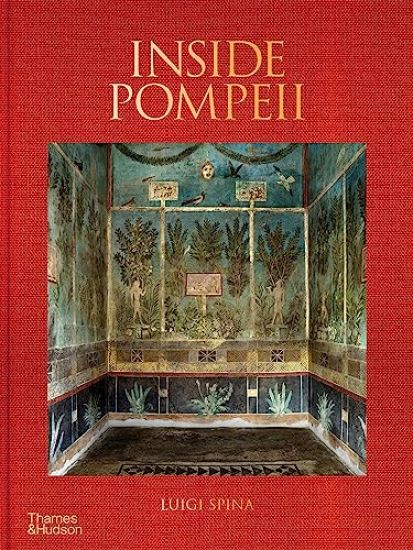
Inside Pompeii – A Financial Times Best Book of 2023
'Not just the best book of photographs of one of the greatest – and most photographed – places on earth but, amazingly (and appropriately), a book one can live in' Geoff Dyer 'Spina’s seductive photographs chronicle the lush interiors, the rich mosaics and frescoes and a vivid urban streetscape. A visual feast' Best books of 2023 - Edwin Heathcote, Financial Times A visually stunning, intimate photographic tour of Pompeii’s spaces, including many that have never been seen by the public. Pompeii, one of the most astonishing and well-preserved sites of classical antiquity, is also one of the world’s most visited architectural sites. This lavish volume takes readers on a tour of Pompeii through an array of visually compelling and original photographs by Italian artist Luigi Spina. Produced in partnership with the Parco Archeologico di Pompei, readers are expertly guided through the Roman city’s nine districts, including many hidden corners that are inaccessible to most visitors. Pompeii’s architecture is a central feature of the images, which were shot at all times of day, in all seasons, and in natural light. Lacy peristyles and rows of column fragments give way to intimate, atmospheric interior spaces. Mosaic floors and beautiful – albeit fragmentary – wall paintings are reproduced with stunning fidelity and sensitivity. The book also includes an essay by Gabriel Zuchtriegel, director of the Pompeii archaeological park, and several meditations on the history, architecture and natural beauty of the city. Inside Pompeii provides the wondrous experience of wandering through this remarkable site without ever leaving home.

The Riace Bronzes

The Riace Bronzes

Luigi Spina; Carmelo Malacrino

FIVE CONTINENTS EDITIONS
2022
sidottu
This publication was designed to celebrate the 50th anniversary of the discovery of the Riace Bronzes. In it, Luigi Spina’s photographic research dialogues with the texts written by Carmelo Malacrino. The photographer here develops a continued narrative, offering a direct comparison between the two sculptures, identified as A and B, exploring interpretations of the physicality of the two subjects as well as the three-dimensional quality of the bronze bodies, often concealed by the two-dimensional appearance of photographic images. Carmelo Malacrino analyses these famous 5th century BC masterpieces from two points of view: as ancient works of art on the one hand, and considering their significance for contemporary culture on the other. He retraces the story of the Bronzes beginning with their discovery in August, 1972, exploring the circumstances of their unearthing, the restoration they underwent, the exhibitions in which they were shown, as well as the impact they have had on the public, both nationally and internationally. Equally relevant is the reinterpretation of these two statues, beginning with their contextualisation in the sphere of ancient Greek art, the related stylistic issues, and the reflection upon the practices and the knowledge possessed by Classical sculpture workshops. This volume will be a pleasant surprise for those of you who love Classical sculpture, for archaeology enthusiasts, and for all those who aren’t satisfied with a quick glance when it comes to admiring a work of art.
Matteo Pugliese

Matteo Pugliese

Gabriella Belli; Luigi Spina

FIVE CONTINENTS EDITIONS
2021
sidottu
This book offers a review of Matteo Pugliese’s art over the past 20 years. The figures the Milanese sculptor creates are distinguished by their great power, revealing an inner torment that can no longer be disguised. The men depicted in his sculptures are all trying to break free of the wall that holds them, to throw off their limitations and assert their value as individuals in the hopes of escaping from dull uniformity and social and family expectations. These are people who are attempting to achieve a painful rebirth by struggling against materialised restraint — a wall — that seeks to prevent them expressing themselves, growing and therefore existing. The artist chooses to portray the moment of greatest effort, of supreme tension, the instant when a man regains control of his life and struggles against what is holding him trapped so as to restore a sense of purpose in his life. The carefully studied poses of his figures recall ancient models, in the same way as the material from which they are fashioned is also ancient. Luigi Spina’s lens knowingly lingers on these figures’ troubled birth and enables the reader, admirer, and art historian to acquire an intimate understanding of the sculpture and even to feel a part of the travails and manifest vulnerability that grip all of humanity. Text in English and Italian.
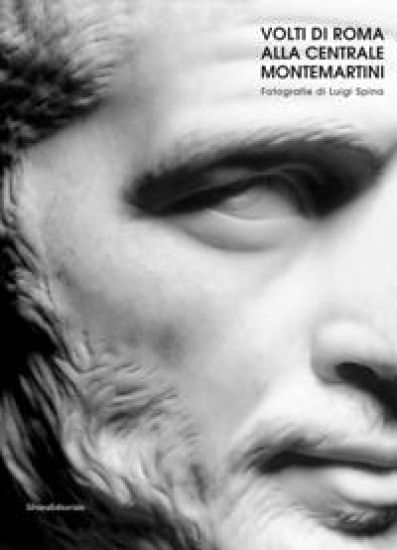
Faces of Rome at Centrale Montemartini

Faces of Rome at Centrale Montemartini

Claudio Parisi Presicce; Luigi Spina

Silvana
2019
sidottu
Front cover image Faces of Rome at Centrale Montemartini Photographs by Luigi Spina Claudio Parisi Presicce & Luigi Spina Not yet printed due - 06/19 9788836642724 Hardback Silvana Editoriale Territory: UK, Ireland, Scandinavia, Iceland, Germany, Eastern Europe & Austria Size: 300 mm x 240 mm Pages: 144 Illustrations: 60 b&w RRP £24.95 Sixty photographic prints depicting thirty-seven antique sculptures, covering a wide variety of types: Roman portraits from both the Republican and the Imperial periods Faces of Rome presents refined photographic research by Lugi Spina on the subject of ancient portraiture, carried out on the sculpture collection of the Capitoline Museums, housed in the Centrale Montemartini in Rome. At over 600 statues, the collection is one of the most important in the world. The photographs of the pieces have not been ordered and classified according to style and chronological order: instead, the author has set them out according to a system of evocations and similarities between the assorted faces, which are identified after long observation and deep analysis, and revealed through the skilful use of light and shadow. Text in English and Italian.
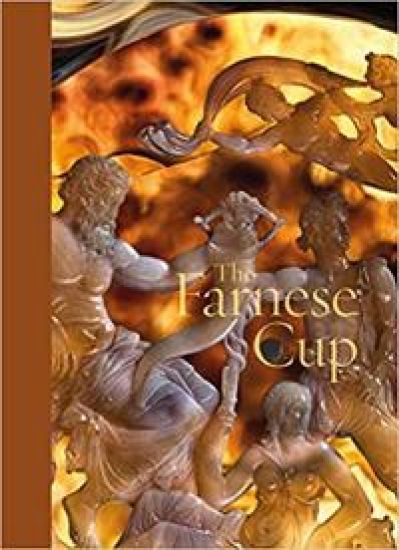
The Farnese Cup

The Farnese Cup

Valeria Sampaolo; Luigi Spina

Five Continents Editions
2018
sidottu
The Farnese Cup: the largest cameo hardstone cup to have survived from the ancient world. A treasured piece that travelled over centuries. A meticulously prepared publication illustrating the Farnese Cup in varying perspectives. A tour de force of a carver's skill and craftsmanship, the Farnese Cup is the largest cameo hardstone cup to have survived from the ancient world. Thought to be made in Hellenist Egypt sometime between 300 BC and 30 BC, the Cup was not an archaeological find but rather a treasured piece that travelled over centuries through many hands from Alexandria to Rome to Constantinople and back to Rome before joining the Farnese Collection now housed at the National Archeological Museum of Naples. The Cup, carved out of sardonyx agate, remains the subject of scholarly debate: what do the enigmatic figures in the inner scene mean? And the terrifying face of the Gorgon on the outside? Why was it made? And in what context? Whatever its inherent meaning, the piece itself is commanding, requiring a close-up view of each hand-carved detail, the balance and impact of the whole, and the subtle variations in the material itself. This book provides that close-up in a series of photographs and varying perspectives that pull back from the delicate infinitesimal cut to the magnificent, perfect whole. There is no better way - in fact no possible way - for the general reader or connoisseur to fully appreciate the Farnese Cup than through the pages of this meticulously prepared publication.
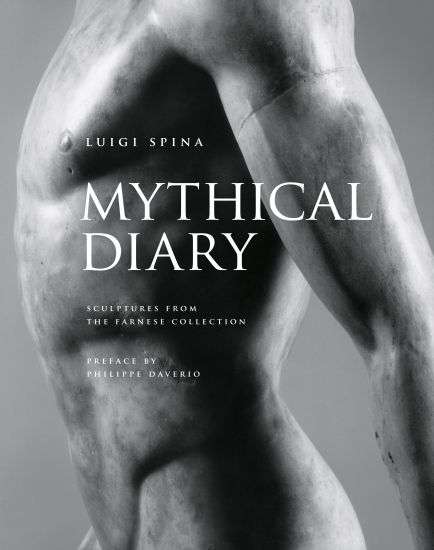
Mythical Diary – Sculptures from the Farnese Collection

Mythical Diary – Sculptures from the Farnese Collection

Luigi Spina; Daverio Philippe; Giovanni Fiorentino

Five Continents Editions
2018
sidottu
Mythical Diary is a visual journey through the classical sculpture of Museo Archeologico Nazionale di Napoli. It is a physical engagement with the marble bodies of myth. Through his black and white photography, Luigi Spina disassembles the limbs of the sculptures, emphasising their curves and hidden eroticism, humanising them to establish a dialogue with the observer. A sculpture is the sign of eternal, unchanging beauty: the only real evidence of the many lives that have passed and come to an end leaving a profound mark in the story of many other existences. For Spina, with his own vision of sculpture, a statue of Aphrodite is not merely a stereotypical portrayal of myth. In it are gathered the anxieties, dreams, hopes and joys of all those who have set eyes on her and dreamed or studied her. In a way, classical sculpture is profoundly present in our veins, in our very breath. The project takes the form of an imaginary diary covering fifteen days. But this is only an ephemeral period of time, a convention. The whole work developed over a period of days and months amounting to years, always in contact with the circumscribed space made of myriad lives and stories, which we call a museum. In Mythical Diary, Spina attempts to make classical sculpture interact with the viewer's desire to be a part of this ancient world that has always influenced our way of life, our culture and our society, proving itself to be contemporary with any period.
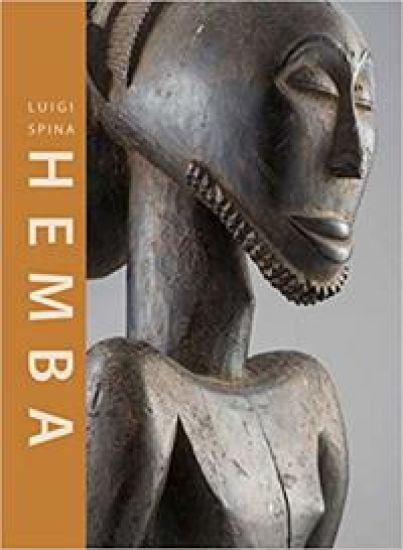
Hemba

Hemba

Luigi Spina; Contantine Petridis

Five Continents Editions
2018
sidottu
Expressing one of many Luba sub-styles, the tall, standing male figures created by master carvers of the Hemba culture in southeastern Congo since at least the mid-1800s arguably rank among the noblest sculptural depictions of the human figure in sub-Saharan Africa. With their serene gaze and meditative expression, they exude a tranquility and dignity that befits these idealised likenesses memorialising esteemed leaders of the past. Infused with a life-force or vital energy, these spirit-invested objects were able to communicate between the living and the dead. Thanks to their inner power they had the capacity to impact the material sphere by allowing the ancestors to positively influence the well-being of their surviving relatives. In this publication, through the perceptive lens of art photographer Luigi Spina, we discover nine of the most accomplished Hemba creations whose classical style has triggered comparisons with some kouroi sculptures of ancient Greece. Spina's photographic interpretations help us understand why these proportionally balanced and symmetrically conceived ancestral figures have earned the admiration of African art lovers around the world. These personal readings of the beloved Hemba commemorative portraits also confirm why these sensitive renderings of the human anatomy deserve inclusion in the universal history of artistic creativity and a place in André Malraux's 'Museum Without Walls'. Text in English and French.