Kirjojen hintavertailu. Mukana 12 390 323 kirjaa ja 12 kauppaa.

Kirjailija

Luis A. Vivanco

Kirjat ja teokset yhdessä paikassa: 6 kirjaa, julkaisuja vuosilta 2006-2026, suosituimpien joukossa Anthropology. Vertaile teosten hintoja ja tarkista saatavuus suomalaisista kirjakaupoista.

6 kirjaa

Kirjojen julkaisuhaarukka 2006-2026.

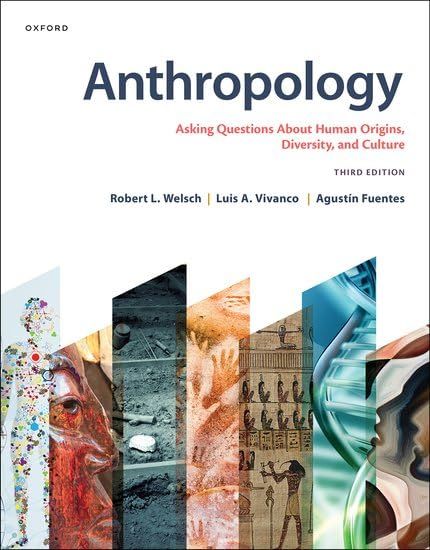
Anthropology

Anthropology

Robert L. Welsch; Luis A. Vivanco; Agustin Fuentes

OXFORD UNIVERSITY PRESS INC
2024
nidottu
This general anthropology text takes a holistic approach that emphasizes critical thinking, active learning, and applying anthropology to solve contemporary human problems. Building on the classical foundations of the discipline, Anthropology: Asking Questions About Human Origins, Diversity, and Culture, Third Edition, shows students how anthropology is connected to such current topics as food, health and medicine, and the environment. Full of relevant examples and current topics--with a focus on contemporary problems and questions--the book demonstrates the diversity and dynamism of anthropology today.
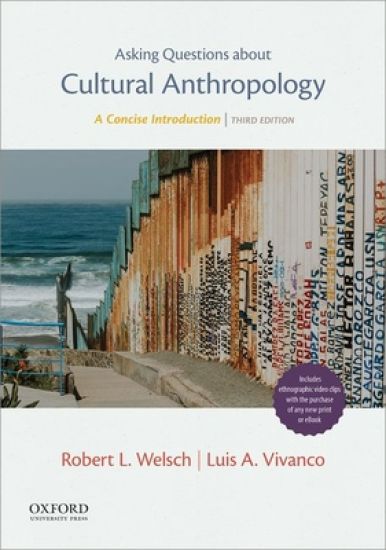
Asking Questions About Cultural Anthropology

Asking Questions About Cultural Anthropology

Robert L. Welsch; Luis A. Vivanco

OXFORD UNIVERSITY PRESS INC
2023
nidottu
Unlike textbooks that emphasize the memorization of facts, Asking Questions About Cultural Anthropology: A Concise Introduction, Third Edition, teaches students how to think anthropologically, helping them view cultural issues as an anthropologist might. This approach demonstrates how anthropological thinking can be used as a tool for deciphering everyday experiences. The book covers the essential concepts, terms, and history of cultural anthropology, introducing students to the widely accepted fundamentals and providing a foundation that can be enriched by the use of ethnographies, a reader, articles, lectures, field-based activities, and other kinds of supplements. It balances concise coverage of essential content with a commitment to an active, learner-centered pedagogy.
Cultural Anthropology: Asking Questions about Humanity

Cultural Anthropology: Asking Questions about Humanity

Robert L. Welsch; Luis A. Vivanco

Oxford University Press
2020
nidottu
What is cultural anthropology, and how can it explain--or even help resolve--contemporary human problems? Robert L. Welsch and Luis A. Vivanco's Cultural Anthropology: Asking Questions About Humanity, Third Edition, uses a questions-based approach to teach students how to think anthropologically, helping them view cultural issues and everyday experiences as an anthropologist might. Inspired by the common observation that ninety-nine percent of a good answer is a good question, Cultural Anthropology combines a question-centered pedagogy with the topics typically covered in an introductory course. It emphasizes up front what the discipline of anthropology knows and which issues are in debate, and how a cultural perspective is relevant to understanding social, political, and economic dynamics in the contemporary world. Cultural Anthropology also represents an effort to close the gap between the realities of the discipline today and traditional views that are taught at the introductory level by bringing classic anthropological examples, cases, and analyses to bear on contemporary questions.
Green Encounters

Green Encounters

Luis A. Vivanco

Berghahn Books
2007
pokkari
Since the 1970s and 1980s, Monte Verde, Costa Rica has emerged as one of the most renowned sites of nature conservation and ecotourism in Costa Rica, and some would argue, Latin America. It has received substantial attention in literature and media on tropical conservation, sustainable development, and tourism. Yet most of that analysis has uncritically evaluated the Monte Verde phenomenon, using celebratory language and barely scratching the surface of the many-faceted socio-cultural transformations provoked by and accompanying environmentalism. Because of its stature, Monte Verde represents an ideal case study to examine the socio-cultural and political complexities and dilemmas of practicing environmentalism in rural Costa Rica. Based on many years of close observation, this book offers rich and original material on the ongoing struggles between environmental activists and of collective and oppositional politics to Monte Verde’s new “culture of nature.”
Green Encounters

Green Encounters

Luis A. Vivanco

Berghahn Books
2006
sidottu
Since the 1970s and 1980s, Monte Verde, Costa Rica has emerged as one of the most renowned sites of nature conservation and ecotourism in Costa Rica, and some would argue, Latin America. It has received substantial attention in literature and media on tropical conservation, sustainable development, and tourism. Yet most of that analysis has uncritically evaluated the Monte Verde phenomenon, using celebratory language and barely scratching the surface of the many-faceted socio-cultural transformations provoked by and accompanying environmentalism. Because of its stature, Monte Verde represents an ideal case study to examine the socio-cultural and political complexities and dilemmas of practicing environmentalism in rural Costa Rica. Based on many years of close observation, this book offers rich and original material on the ongoing struggles between environmental activists and of collective and oppositional politics to Monte Verde’s new “culture of nature.”