Kirjailija
Luis Pérez-Oramas
Kirjat ja teokset yhdessä paikassa: 8 kirjaa, julkaisuja vuosilta 2014-2025, suosituimpien joukossa Venezia. Vertaile teosten hintoja ja tarkista saatavuus suomalaisista kirjakaupoista.
Mukana myös kirjoitusasut: Luis Pérez Oramas, Luis Perez Oramas
8 kirjaa
Kirjojen julkaisuhaarukka 2014-2025.
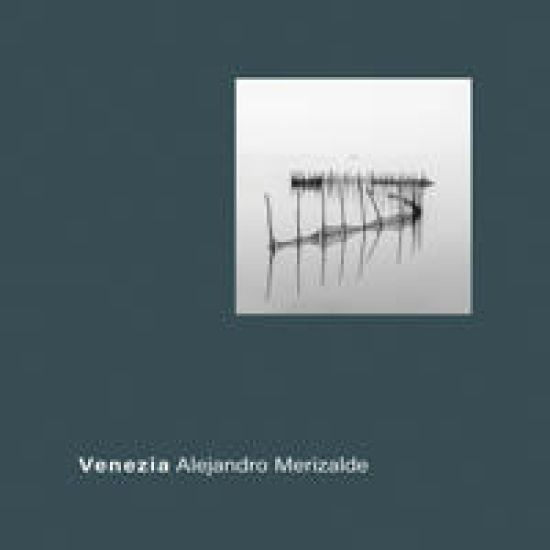
Alejandro Merizalde began photographing in Venice in 2008. In his early visits he found the city stiflingly overcrowded, but during a brief winter trip a few years later, the overcast skies and foggy atmosphere allowed him to draw out Venice's legendary beauty without the disruptions of mass tourism. In 2013 he started experimenting with longer exposures to eliminate the distractions of human activity and enable him to concentrate on his architectural compositions. This shift in approach was gradual, but it helped him realise that he was no longer interested in recording iconic features like St Mark’s Basilica, the Bridge of Sighs and the gondola, to name a few. From then on, he dropped the predictable locations and buildings and trained his lens on the Venice lagoon and areas of the city where Venetians actually spend their lives. Text in English, French and Italian.
Reconocimientos
Rafael Sánchez; Igor Barreto; Luis Pérez-Oramas; Claudio Lomnitz
FORDHAM UNIVERSITY PRESS
2025
sidottu
What is the relationship between a writer's life, milieu, and thought? In this daring and intellectually expansive text, part memoir and part political philosophy, the anthropologist Rafael Sánchez explores the forces and events that shaped him and the nations through which he moved. Reconocimientos is a book of both personal and political reckoning, from the thrillingly emancipatory possibilities of Venezuela's plazas to the political promise and disappointments of revolution. Written in the final year of his life, Reconocimientos moves from scenes of Sánchez's youth in Cuba to fieldwork on the cult of Maria Lionza in Venezuela to confront the terrifying and alluring forces of patriarchal privilege at the base of monumentalist authoritarianism. Sánchez's intimate prose speaks with the urgency both of his own mortality and of the political crises of our moment. Amid the resurgence of patriarchy, hierarchy, and the valorization of inequality that have become pillars of populist movements in Latin America and beyond, Sánchez finds a residual radical possibility in 'horizontal' spaces, where the forces of mimesis permit manifold transformations.
Reconocimientos
Rafael Sánchez; Igor Barreto; Luis Pérez-Oramas; Claudio Lomnitz
FORDHAM UNIVERSITY PRESS
2025
pokkari
What is the relationship between a writer's life, milieu, and thought? In this daring and intellectually expansive text, part memoir and part political philosophy, the anthropologist Rafael Sánchez explores the forces and events that shaped him and the nations through which he moved. Reconocimientos is a book of both personal and political reckoning, from the thrillingly emancipatory possibilities of Venezuela's plazas to the political promise and disappointments of revolution. Written in the final year of his life, Reconocimientos moves from scenes of Sánchez's youth in Cuba to fieldwork on the cult of Maria Lionza in Venezuela to confront the terrifying and alluring forces of patriarchal privilege at the base of monumentalist authoritarianism. Sánchez's intimate prose speaks with the urgency both of his own mortality and of the political crises of our moment. Amid the resurgence of patriarchy, hierarchy, and the valorization of inequality that have become pillars of populist movements in Latin America and beyond, Sánchez finds a residual radical possibility in 'horizontal' spaces, where the forces of mimesis permit manifold transformations.
Jose Leonilson
Cecilia Brunson; Yuji Kawasima; Luis Perez Oramas; Gabriela Rangel; Susan Segal; Jenni Sorkin; Susanna V. Temkin
Verlag der Buchhandlung Walther Konig
2018
sidottu
Jos Leonilson (1957-93) came of age as an artist as part of the 1980s generation in Brazil. What he shared with the diverse artistic milieu of that time was a so-called "joy of painting," rediscovered in the years following the end of Brazil's dictatorship. What separated him from his contemporaries was his personal way of working and his distinct aesthetic centered on raw emotional feelings, introspective musings and private affairs.Focusing on Leonilson's production as a mature artist, this volume features nearly 50 paintings, drawings and embroideries made between the mid-1980s until 1993, when the artist died of AIDS. In this short yet prolific period, Leonilson fully developed a unique artistic language in dialogue with other contemporary art practices, Brazilian vernacular traditions and global issues prompted by the AIDS crisis.
Detta är en fascinerande bok som utforskar tankar och filosofi kring tjurfäktning ur ett amerikanskt perspektiv. Med djupa och insiktsfulla reflektioner inbjuder författaren läsarna att ompröva relationen mellan liv, död och tjurfäktning, och utforskar dess kulturella och symboliska betydelse.
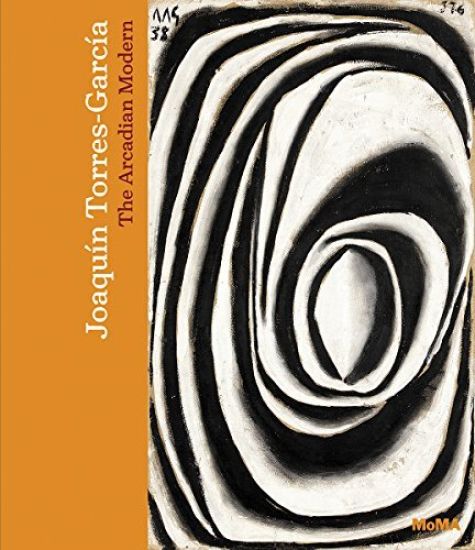
Joaqu n Torres-Garc a is one of the most complex and emblematic modern masters from the first half of the 20th century, whose work determined transformational paths for modern art on both sides of the Atlantic. Drawn toward both the avant-garde and the primitive, the schematic and the utopian, he participated in some of the most crucial intellectual and artistic discussions of the past century. His close involvement with several early modern and avant-garde movements, from Catalan Noucentisme to Cubism, Ultraism, Vibrationism and Neo-Plasticism, make him an unparalleled figure in the history of modernism in the Americas.Published in conjunction with the first major, all-inclusive retrospective of the artist's work in the US since the 1970s, this richly illustrated publication presents Torres-Garc a's long and wide-ranging career, from the late 19th century to the 1940s, and includes drawings, paintings, objects, sculptures and rare manuscripts. Combining a chronological presentation with a thematic approach, the book is structured as a series of chapters interspersed with plates that encompass the artist's entire oeuvre, followed by an illustrated chronology and an extensive bibliography.Joaqu n Torres-Garcia was born in Montevideo, Uruguay, in 1874. By the turn of the century he had relocated to Spain, where he attended the Escola Municipal d'Arts I Oficis, the Escola Oficial de Belles Artes La Llotja and the Academia Baixas, becoming a central figure in the Catalonian artistic scene of the early 20th century. He lived in Madrid, Paris, New York, Livorno and Villefranche-sur-mer, before returning to Montevideo in 1934, where he established the Asociaci n de Arte Constructivo, followed by the Taller Torres-Garc a, key platforms in his pedagogical enterprise alongside his numerous published writings and conferences. He died in Montevideo in 1949.
Detta är en hypnotiserande konstbok som utforskar djupet av kreativitet, visar konstnärens unika vision och bjuder in läsarna till en visuell och intellektuell utforskning av skönhet, symbolik och konstens kraft.
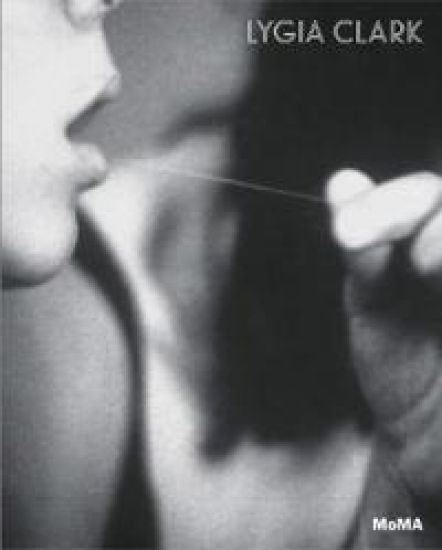
Published in conjunction with a major monographic retrospective of the work of Brazilian painter, sculptor and performance artist Lygia Clark, this publication presents a linear and progressive survey of the artist’s groundbreaking practice. Having trained with modern masters from the late 1940s to mid-1950s, Clark was at the forefront of Constructivist and Neo-Concretist movements in Brazil and fostered the active participation of the spectator through her works. Examining Clark’s output from her early abstract compositions to the ‘biological architectures’ and ‘relational objects’ she created late in her career, this is the most comprehensive volume on the artist available in English. Three sections based on key phases throughout her career – Abstraction, Neo-Concretism and The Abandonment of Art – examine these critical moments in Clark’s production, anchor significant concepts or constellations of works that mark a definitive step in her work, and shed light on groundbreaking sets of circumstances in her life as an artist. Each section is accompanied by a selection of works by other artists that provide context for understanding the circumstances that shaped her artistic investigations, as well works by a younger generation of Brazilian artists that reflect Clark’s own landmark influence. Featuring a significant selection of previously unpublished archival texts of Clark’s personal writings, it is a vital source of primary documentation for twentieth-century art history scholarship.