Kirjojen hintavertailu. Mukana 12 390 323 kirjaa ja 12 kauppaa.

Kirjailija

Luke A. Nichter

Kirjat ja teokset yhdessä paikassa: 6 kirjaa, julkaisuja vuosilta 2014-2024, suosituimpien joukossa Richard M Nixon. Vertaile teosten hintoja ja tarkista saatavuus suomalaisista kirjakaupoista.

Mukana myös kirjoitusasut: Luke A Nichter

6 kirjaa

Kirjojen julkaisuhaarukka 2014-2024.

The Year That Broke Politics

The Year That Broke Politics

Luke A. Nichter

YALE UNIVERSITY PRESS
2024
pokkari
The unknown story of the election that set the tone for today’s fractured politics A Wall Street Journal Best Book of 2023: Politics “The book is a delightful demolition of the many political myths that continue to muddy our understanding of that election year. . . . Nichter’s book stands out for its clear, direct prose and the scrupulous research on which it’s based.”—Barton Swaim, Wall Street Journal The 1968 presidential race was a contentious battle between vice president Hubert Humphrey, Republican Richard Nixon, and former Alabama governor George Wallace. The United States was reeling from the assassinations of Martin Luther King, Jr., and Robert F. Kennedy and was bitterly divided on the Vietnam War and domestic issues, including civil rights and rising crime. Drawing on previously unexamined archives and numerous interviews, Luke A. Nichter upends the conventional understanding of the campaign. Nichter chronicles how the evangelist Billy Graham met with Johnson after the president’s attempt to reenter the race was stymied by his own party, and offered him a deal: Nixon, if elected, would continue Johnson’s Vietnam War policy and also not oppose his Great Society, if Johnson would soften his support for Humphrey. Johnson agreed. Nichter also shows that Johnson was far more active in the campaign than has previously been described; that Humphrey’s resurgence in October had nothing to do with his changing his position on the war; that Nixon’s “Southern Strategy” has been misunderstood, since he hardly even campaigned there; and that Wallace’s appeal went far beyond the South and anticipated today’s Republican populism. This eye-opening account of the political calculations and maneuvering that decided this fiercely fought election reshapes our understanding of a key moment in twentieth-century American history.
The Year That Broke Politics

The Year That Broke Politics

Luke A. Nichter

YALE UNIVERSITY PRESS
2023
sidottu
The unknown story of the election that set the tone for today’s fractured politics A Wall Street Journal Best Book of 2023: Politics “The book is a delightful demolition of the many political myths that continue to muddy our understanding of that election year. . . . Nichter’s book stands out for its clear, direct prose and the scrupulous research on which it’s based.”—Barton Swaim, Wall Street Journal The 1968 presidential race was a contentious battle between vice president Hubert Humphrey, Republican Richard Nixon, and former Alabama governor George Wallace. The United States was reeling from the assassinations of Martin Luther King, Jr., and Robert F. Kennedy and was bitterly divided on the Vietnam War and domestic issues, including civil rights and rising crime. Drawing on previously unexamined archives and numerous interviews, Luke A. Nichter upends the conventional understanding of the campaign. Nichter chronicles how the evangelist Billy Graham met with Johnson after the president’s attempt to reenter the race was stymied by his own party, and offered him a deal: Nixon, if elected, would continue Johnson’s Vietnam War policy and also not oppose his Great Society, if Johnson would soften his support for Humphrey. Johnson agreed. Nichter also shows that Johnson was far more active in the campaign than has previously been described; that Humphrey’s resurgence in October had nothing to do with his changing his position on the war; that Nixon’s “Southern Strategy” has been misunderstood, since he hardly even campaigned there; and that Wallace’s appeal went far beyond the South and anticipated today’s Republican populism. This eye-opening account of the political calculations and maneuvering that decided this fiercely fought election reshapes our understanding of a key moment in twentieth-century American history.
The Last Brahmin

The Last Brahmin

Luke A. Nichter

Yale University Press
2020
sidottu
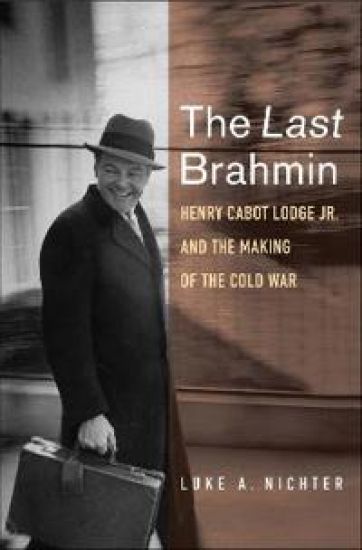
The first biography of a man who was at the center of American foreign policy for a generation, The Last Brahmin “sheds insight into the evolving politics of the 20th century.” (Library Journal)“Comprehensive, . . . dramatic.”—Gerald J. Russello, Wall Street Journal Few have ever enjoyed the degree of foreign-policy influence and versatility that Henry Cabot Lodge Jr. did—in the postwar era, perhaps only George Marshall, Henry Kissinger, and James Baker. Lodge, however, had the distinction of wielding that influence under presidents of both parties. For three decades, he was at the center of American foreign policy, serving as advisor to five presidents, from Dwight Eisenhower to Gerald Ford, and as ambassador to the United Nations, Vietnam, West Germany, and the Vatican. Lodge’s political influence was immense. He was the first person, in 1943, to see Eisenhower as a potential president; he entered Eisenhower in the 1952 New Hampshire primary without the candidate’s knowledge, crafted his political positions, and managed his campaign. As UN ambassador in the 1950s, Lodge was effectively a second secretary of state. In the 1960s, he was called twice, by John F. Kennedy and by Lyndon Johnson, to serve in the toughest position in the State Department’s portfolio, as ambassador to Vietnam. In the 1970s, he paved the way for permanent American ties with the Holy See. Over his career, beginning with his arrival in the U.S. Senate at age thirty-four in 1937, when there were just seventeen Republican senators, he did more than anyone else to transform the Republican Party from a regional, isolationist party into the nation’s dominant force in foreign policy, a position it held from Eisenhower’s time until the twenty-first century. In this book, historian Luke A. Nichter gives us a compelling narrative of Lodge’s extraordinary and consequential life. Lodge was among the last of the well-heeled Eastern Establishment Republicans who put duty over partisanship and saw themselves as the hereditary captains of the American state. Unlike many who reach his position, Lodge took his secrets to the grave—including some that, revealed here for the first time, will force historians to rethink their understanding of America’s involvement in the Vietnam War.
Richard Nixon and Europe

Richard Nixon and Europe

Luke A. Nichter

Cambridge University Press
2017
pokkari
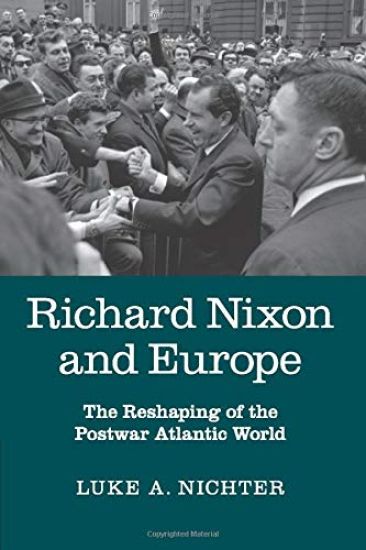
The US-European relationship remains the closest and most important alliance in the world. Since 1945, successive American presidents each put their own touches on transatlantic relations, but the literature has reached only into the presidency of Lyndon Johnson (1963–9). This first study of transatlantic relations during the era of Richard Nixon shows a complex, turbulent period during which the postwar period came to an end, and the modern era came to be on both sides of the Atlantic in terms of political, economic, and military relations.
Richard Nixon and Europe

Richard Nixon and Europe

Luke A. Nichter

Cambridge University Press
2015
sidottu
The US-European relationship remains the closest and most important alliance in the world. Since 1945, successive American presidents each put their own touches on transatlantic relations, but the literature has reached only into the presidency of Lyndon Johnson (1963–9). This first study of transatlantic relations during the era of Richard Nixon shows a complex, turbulent period during which the postwar period came to an end, and the modern era came to be on both sides of the Atlantic in terms of political, economic, and military relations.
Richard M Nixon

Richard M Nixon

Luke A Nichter

Nova Science Publishers Inc
2014
sidottu
In the twenty years since Richard Nixon's death, both his achievements and his failures remain hotly contested. His domestic achievements included revenue sharing, the end of the military draft, new anticrime laws, and a broad environmental program. In terms of foreign policy, he opened relations with the People's Republic of China, signed the Strategic Arms Limitation Treaty with the Soviet Union, and ended the war in Vietnam. For these achievements, he was re-elected in 1972 by one of the largest margins in American history, defeating Democratic candidate Senator George McGovern. In the 20th century, the only comparable victories were Franklin D Roosevelt in 1936 and Lyndon B Johnson in 1964. The shadow of Watergate continues to hang over Nixon's presidency, and is often the first thing most people associate with Richard Nixon. Fairly or unfairly, there remains much to learn about Watergate and Nixon's presidency due to the large number of records and White House tapes still being opened. In addition, as subsequent presidential scandals have occurred, Watergate fades slightly, although it does not completely disappear. Only gradually have scholars turned their attention to subjects other than Watergate, observing the plea by President Clinton in his eulogy of Nixon that we judge the 37th president on his full record, and not just his shortcomings. As more records from his presidency are opened, he will continue to receive fuller biographical treatment.