Nick Hornby
Nick Hornby; Hannah Higham; Helen Pheby; Luke Syson; Matt Price
Anomie Publishing
2022
sidottu
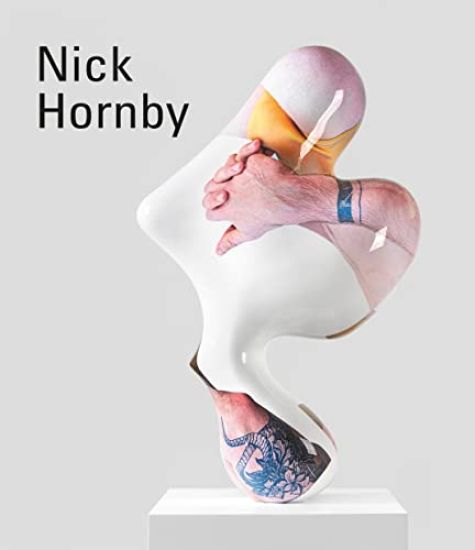
Nick Hornby (b. 1980, London) is one of the leading sculptors of his generation in Britain today, creating works on both intimate and monumental scales, and at the intersection of art history and contemporary technology. Hornby’s practice uses software that allows him to extract, alter and hybridise sculptures from art history into new works made from marble, steel, bronze, resin, wood and composite materials. It could be said that Hornby has opened up a new sculptural language for the twenty-first century.This, his first major monograph, features approximately 175 images, many of which are reproduced here for the first time or have been commissioned for the publication. Alongside documentation of works presented in galleries and outdoor spaces are production images taken in the studio and fabrication workshops. Hornby’s practice is here divided into four categories: Intersections, Extrusions, Hydrographics and Collaborations.A foreword by Luke Syson, Director of the Fitzwilliam Museum, Cambridge, offers insight into Hornby’s internal and external relationship with sculpture, considering the links between two and three dimensions, abstraction and representation, the ‘real’ and the digital.Editor Matt Price’s introduction takes readers on a whistlestop tour of the artist’s oeuvre, from his early family life and studies at Chelsea and The Slade in London, to his latest major exhibitions and commissions. Price covers a range of significant aspects such as the importance of music and sound, which were key elements of Hornby’s early work, to sculptures made in collaboration with others, and recent pieces combining art history with technology in their design and fabrication.An essay by Dr Hannah Higham, Senior Curator of Collections and Research at the Henry Moore Foundation, provides the most substantial piece of critical writing on Hornby’s work to date, drawing out specific touchstones in the history of art and discussing the relationship between the work and time. Higham further explores the ways that the motion and position of the viewer alter the experience of the sculptures, with new angles revealing fresh artistic inspirations from Hans Arp or Elizabeth Frink to ideas from communities Hornby has worked with and other contemporary artists with whom he has collaborated.An interview with Dr Helen Pheby, Associate Director, Programme, at Yorkshire Sculpture Park, probes the artist further about his cultural and theoretical inspirations, methods, materials and ideologies, including his views on collaboration, the public nature of art and its accessibility. Their conversation provides an insight into the thinking of the artist at a crucial stage in his career.The monograph brings together works spanning Hornby’s career for the first time. It follows Hornby’s first institutional solo exhibition at MOSTYN, Wales, and his first permanent outdoor sculptural commission for Harlow Science Park in Essex. The publication is edited by Matt Price, designed by Herman Lelie, printed by EBS, Verona, and published by Anomie, London. Nick Hornby, born in 1980, is a British artist living and working in London. Hornby studied at The Slade School of Art and Chelsea College of Art where he was awarded the UAL Sculpture Prize. In the UK he has exhibited at Tate Britain, Southbank Centre, Leighton House (all London), Cass Sculpture Foundation, Sussex, MOSTYN, Wales, and the Fitzwilliam Museum, Cambridge. International exhibitions have been held at the Museum of Arts and Design, New York and Poznan Biennale, Poland, along with residencies with Outset, Israel, and Eyebeam, New York. In 2014 Hornby was made a Fellow of the Royal Society of Sculptors.